Search
DC MCB for Solar PV Systems | 250V-1200V DC | CE Certified
Reliable DC Protection from Expert Manufacturer
KRIPAL offers DC miniature circuit breakers (DC MCBs) specifically engineered for photovoltaic (PV) string protection and energy storage systems. Our product range includes the UKB7Z and UKB8Z series, featuring rated voltages from 250V up to 1200V DC and current ratings from 6A to 63A. The UKB7Z series complies with IEC/EN 60898 standards, offering a 6kA breaking capacity suitable for various DC applications. The high-performance UKB8Z series adheres to the IEC 60947-2 standard, providing 1200V high-voltage protection, optional B/C characteristic curves, and an electrical lifespan of up to 10,000 cycles, making it the ideal choice for large-scale industrial PV and energy storage projects. All products feature a compact, modular design for standard DIN-rail mounting, available in 1P, 2P, 3P, and 4P configurations to meet diverse requirements for combiner boxes and inverter installations.
Get A Quote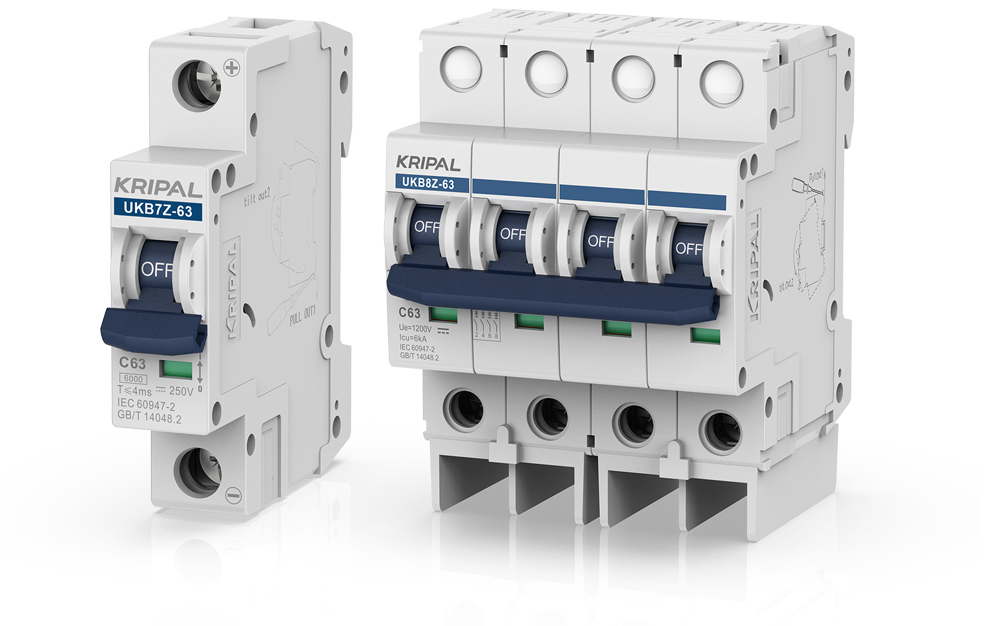
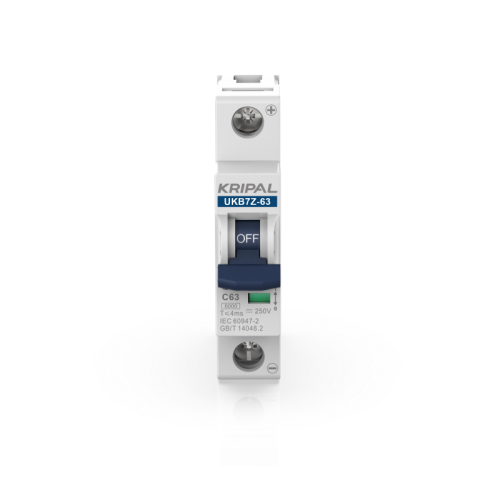

UKB7Z DC MCB 1P 63A 250V DC Mini Circuit Breaker 6kA
UKB7Z miniature circuit breaker provides advanced electrical protection for DC systems with a rated voltage up to 1000V and a rated current up to 63A.
Ask a Quote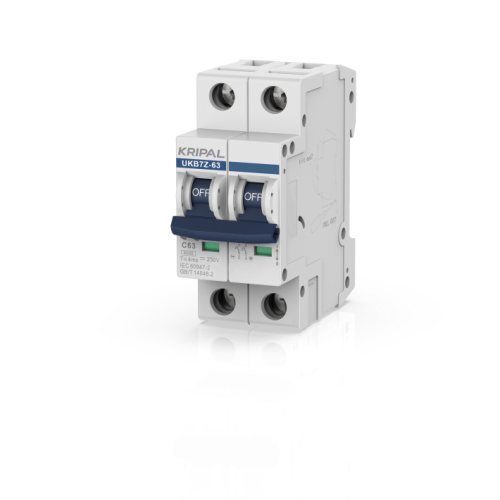
UKB7Z 2P 63A 500V DC Mini Circuit Breaker for PV solar DC MCB CE certified
UKB7Z miniature circuit breaker provides advanced electrical protection for DC systems with a rated voltage up to 1000V and a rated current up to 63A.
Ask a Quote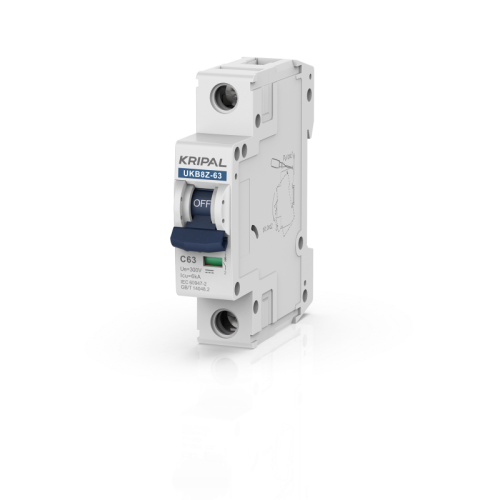

UKB8Z DC Mini Circuit Breaker 1Pole 63A 300V DC MCB 6kA
The UKB8Z-63 high-breaking-capacity DC miniature circuit breaker is designed for use in photovoltaic (PV) DC systems.
Ask a Quote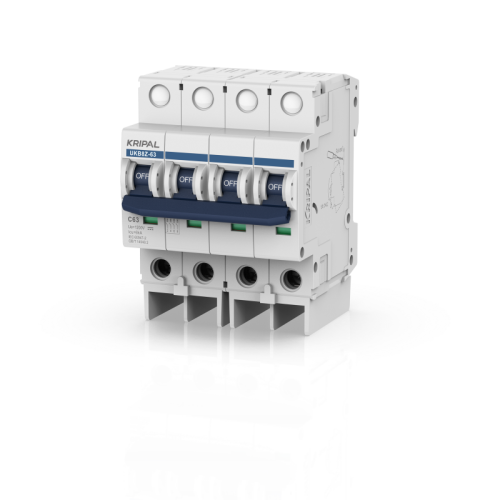
UKB8Z DC Miniature Circuit Breaker 6kA 4P 63A 1200V DC MCB
The UKB8Z-63 high-breaking-capacity DC miniature circuit breaker is designed for use in photovoltaic (PV) DC systems.
Ask a QuoteDC MCB Selection Guide for PV Systems and Battery Storage
A DC miniature circuit breaker (DC MCB) protects photovoltaic strings and DC branch circuits against overloads and short circuits. KRIPAL’s DC MCBs utilize a permanent magnet arc chamber for rapid arc extinction. This guide helps you specify the correct breaker based on your system requirements.
Kripal MCB Series Technical Specifications
Small-Scale Applications: The UKB7Z Series
The UKB7Z series is designed for residential and light DC applications, featuring rated operational voltages of 250V (1P) and 500V (2P). These units feature a non-polarized design, which supports installation flexibility in systems where DC polarity may be ambiguous.
High-Voltage Industrial Applications: The UKB8Z Series
For higher voltage requirements, the UKB8Z series covers operational voltages of 600V (2P), 900V (3P), and 1200V (4P). Specifically engineered for commercial and utility-scale PV systems, this series provides superior reliability with a 10,000-cycle electrical lifespan and compliance with IEC 60947-2 industrial standards.
Trip Curve Selection and Coordination
Kripal DC MCBs are available in B-curve and C-curve (7-15 In instantaneous trip for UKB7Z). For PV string protection, the C-curve is recommended to handle inductive-capacitive loads like inverter DC inputs and battery charge controllers while avoiding nuisance tripping during irradiance transients.
Performance, Installation, and Certifications
Both series achieve a 6kA DC breaking capacity (Icu) through a permanent magnet blowout system and a multi-plate segmented arc chute, which keeps let-through energy low to reduce thermal stress. Each pole occupies 18mm of DIN-rail width, and the IP20 finger-safe housing accepts both pin and fork type busbars. All units carry CE marking and are manufactured in accordance with IEC/EN 60947-2 for DC applications.
Specify DC MCBs for Your PV Project
- Datasheet and Coordination Tables: Request voltage-specific I²t curves and selectivity tables for your combiner box design.
- Compliance Documentation: Obtain certification documents, factory test reports, and component recognition certificates for your local project requirements.
- Volume OEM Pricing: Contact our solar components team for project-level pricing on UKB7Z and UKB8Z breakers with customized busbar accessories.
Protecting Solar PV Strings in Residential, Commercial and Utility Installations
KRIPAL DC MCBs provide string-level overcurrent protection across the full spectrum of photovoltaic installations. By leveraging the UKB7Z series for compact residential needs and the UKB8Z series for high-voltage industrial demands, we offer a 6kA breaking capacity that ensures safety across various DC circuit topologies.
Residential Rooftop PV String Protection
In single-phase residential installations (3-8 kW), we recommend the UKB7Z-250V 1P or UKB7Z-500V 2P DC MCBs to protect individual strings between the junction box and the inverter. Their compact design (18mm per pole) fits standard enclosures, and the non-polarized design eliminates installation errors common in transformerless inverter systems.
Commercial Rooftop and Ground-Mount Arrays
Commercial installations (30-500 kW) utilize the UKB8Z series (600V 2P or 900V 3P) at the combiner box output. The ganged multi-pole design simultaneously isolates all conductors of a bipolar array, meeting IEC 60364-7-712 requirements. The 6kA breaking capacity reliably handles the combined short-circuit contribution of parallel strings.
Utility-Scale Solar Farm DC Combiner Boxes
For utility-scale plants (1 MW and above), we deploy the UKB8Z-1200V 4P DC MCBs in central combiner boxes. At these high system voltages, the permanent magnet arc chute provides consistent 6kA fault interruption without the need for derating. The non-polarized design is critical for managing reverse currents in large-scale high-voltage arrays.
Battery Energy Storage DC Branch Protection
Lithium-ion battery racks in C&I and utility storage systems use the UKB8Z series (up to 1000V) to protect individual strings against cell and cable faults. The C-curve provides adequate inrush delay for BMS pre-charge circuits while ensuring rapid clearance of bolted faults. The DIN-rail form factor integrates easily into standard battery cabinet control panels.
DC Fast Charging Station Auxiliary Circuits
For 50-350 kW EV chargers, UKB7Z-250V 1P DC MCBs protect auxiliary power supplies for controllers, cooling fans, and communication modules. These compact units provide high voltage headroom for 24V or 48V DC buses, and the screw-clamp terminals are compatible with standard fine-stranded control wiring.
Engineer Your DC Circuit Protection
- Selectivity Study Support: Send us your single-line diagram, and our engineers will return a complete protection coordination table with recommended UKB7Z or UKB8Z ratings.
- Sample Testing Program: Request evaluation samples for your combiner box prototype with full type-test certification data for AHJ submission.
- Custom Busbar Solutions: Request evaluation samples for your combiner box prototype with full type-test certification data for AHJ submission.
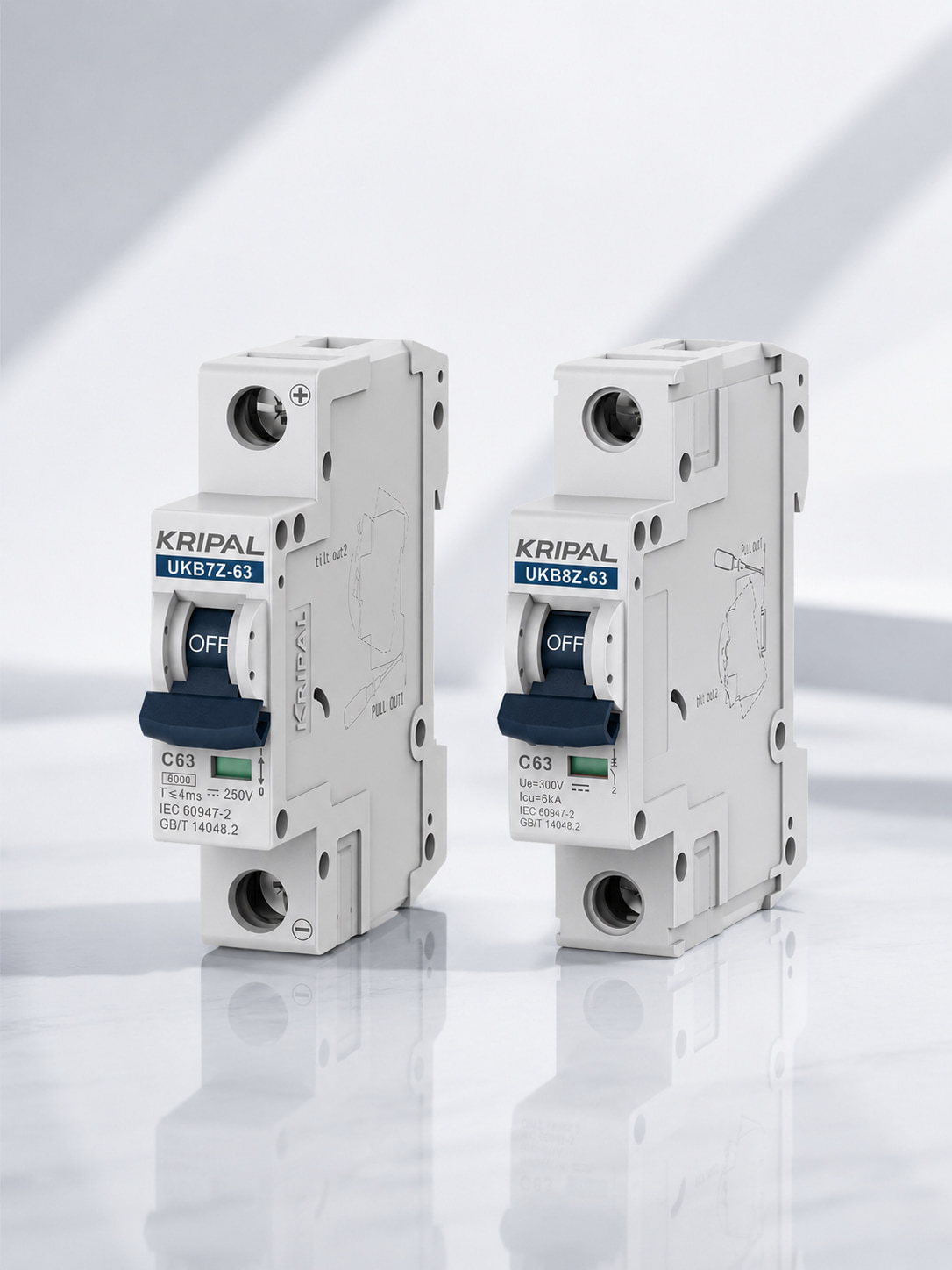
KRIPAL DC MCB Manufacturing: Precision Engineering for Solar Applications
KRIPAL DC miniature circuit breakers are manufactured in our dedicated solar protection production cell in Zhejiang. From permanent magnet arc chambers to precision-calibrated thermal-magnetic trip units and silver-graphite contacts, every component is assembled and tested in-house, ensuring consistent DC interruption performance for global PV system integrators and solar EPC contractors.
Permanent Magnet Arc Extinguishing Chamber Assembly
Each DC MCB is fitted with a high-performance permanent magnet arc chamber that forces the DC arc into a splitter stack for rapid extinguishing. Magnet orientation and arc runner geometry are verified per production lot to maintain consistent 6kA DC breaking capacity across the UKB7Z (up to 500V) and UKB8Z (up to 1200V) series ranges.
Thermal-Magnetic Trip Unit Calibration
Bimetal strips are individually calibrated on automated test benches that simulate overload current profiles defined in IEC 60947-2. Cold-state calibration data is recorded per unit, with trip time tolerances held within ±10% of the published time-current curve across the full 1A to 63A range.
Non-Polarized Design Verification
Each production batch undergoes polarity-independent short-circuit testing in both current directions. Our symmetrical contact and arc chamber design eliminates installation risks in PV string wiring where polarity reversal may occur during commissioning or maintenance.
Environmental Stress Screening for PV Applications
Completed DC MCBs are subjected to thermal cycling from -25°C to +70°C in environmental chambers before final electrical testing. Units destined for high-altitude PV installations receive additional dielectric testing at reduced air pressure simulating 4000m altitude conditions.
Distributor Stock Holding Programs
KRIPAL supports distributor inventory programs with agreed stock levels for standard DC MCB models. Shipments are planned based on demand data, with scheduled replenishment to maintain stable supply and consistent fill rates.
Private Label and OEM Branding
Laser-marked part numbers aligned with your catalog, OEM-branded packaging, and customized multilingual instruction sheets are available. Unbranded supply is provided upon request for private label production of DC MCBs.
Multi-Region Certification and Compliance Support
Full CE, UKCA, and IEC 60947-2 Annex P compliance documentation is provided according to target export markets. Technical documentation files are maintained and updated in line with evolving regulatory requirements, supporting solar PV system conformity assessments.
Direct Technical Access to KRIPAL Production Engineers
Your technical team communicates directly with the engineers who designed and tested your DC MCBs, rather than a distributor’s sales representative. Application questions receive answers within 24 hours during China business hours.
Frequently Asked Questions
Explore FAQ >Recent Blog
Explore Blog >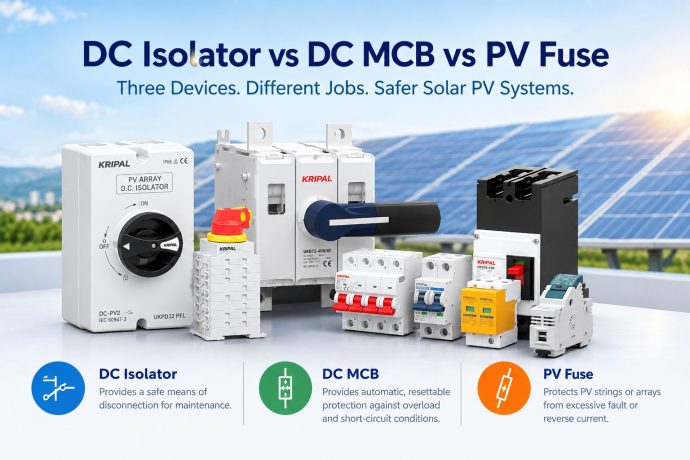
DC Isolator, DC MCB, or DC Fuse? What Protects What in a Solar System
Learn how DC isolators, DC MCBs, and PV fuses protect solar PV systems differently—and how to select the right device for each circuit.
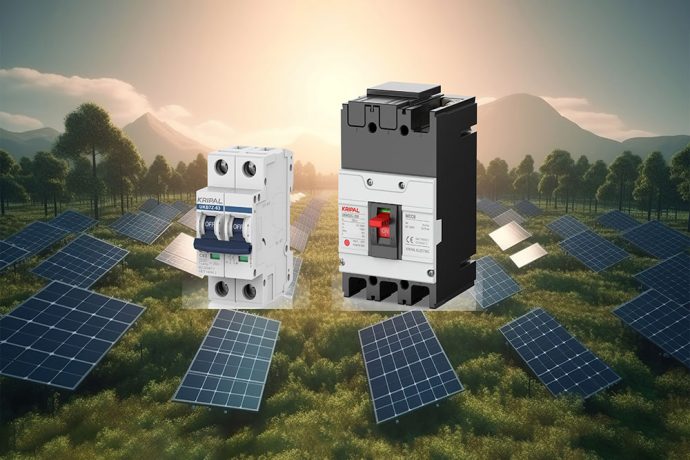
Understanding DC MCCBs and DC MCBs
Compare DC MCCBs and DC MCBs for circuit protection. Learn how to choose the right breaker based on current, voltage, and application for solar...
Direct from Manufacturer
How Can We Assist You?
Tell us a bit more so we can route your request to the right engineer. Get factory-direct pricing and custom specifications within 24 hours.