Search
RCCB Residual Current Circuit Breakers 16A-80A, 10mA-500mA
Electrical Circuit Protection-RCCB/ELCB/RCD
KRIPAL manufactures the UKF7 series of residual current circuit breakers (RCCBs) for reliable earth leakage protection in residential, commercial, and industrial low-voltage installations. These devices utilize a sensitive toroidal current transformer to detect current imbalances between line and neutral conductors, instantly tripping when thresholds are exceeded to prevent electric shock and electrical fires. Available in 2P and 4P configurations, the UKF7 series supports rated currents from 16A to 80A and multiple sensitivities ranging from 10mA to 500mA, complying fully with IEC/EN 61008 standards. They feature an independent electromechanical trip mechanism that operates even if the upstream line conductor is broken, an integrated test button for routine verification, and both Type AC and Type A variants designed to prevent nuisance tripping from modern electronic equipment.
Get A Quote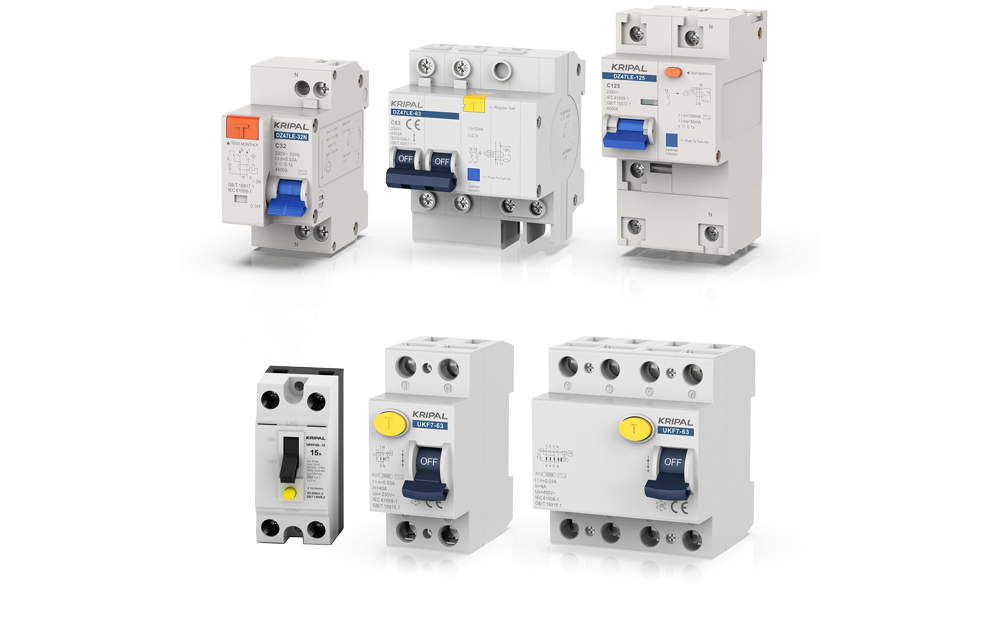
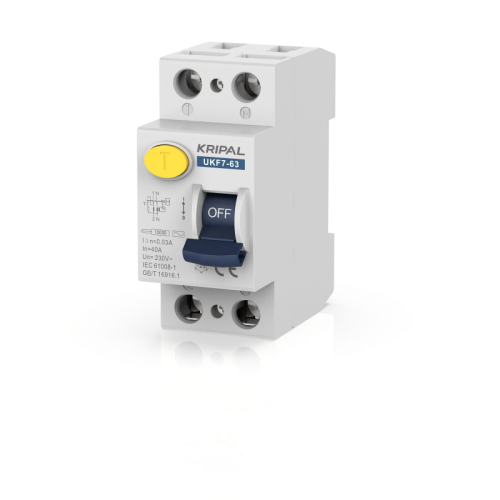


UKF7 ELCB 2Pole 230V AC RCD 30mA 40A Residual Current Circuit Breaker
The UKF7-63 Earth leakage Circuit Breaker is a high-performance 2-Pole Earth Leakage Circuit Breaker (ELCB), also known as a Residual Current Device (RCD).
Ask a Quote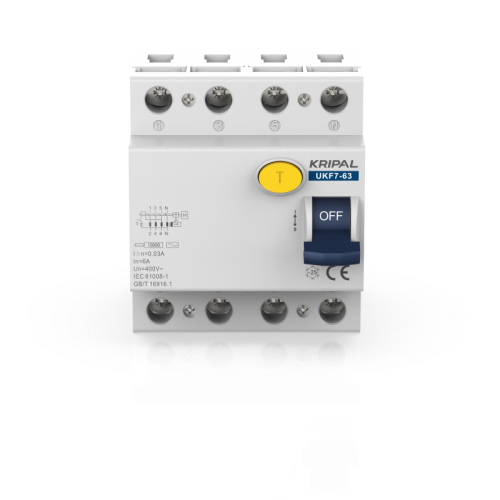
UKF7-63 ELCB 4Pole 400V AC RCD 30Ma 6A Residual Current Circuit Breaker
The UKF7-63 Earth leakage Circuit Breaker is a high-performance 2-Pole Earth Leakage Circuit Breaker (ELCB), also known as a Residual Current Device (RCD).
Ask a QuoteRCCB Protection: How Earth Leakage Detection Prevents Electric Shock and Fire
An RCCB, also known as an RCD (Residual Current Device) or ELCB (Earth Leakage Circuit Breaker), is a protective device that disconnects a circuit when it detects current leaking to earth. Unlike an MCB which protects against overcurrent, an RCCB protects against electric shock (current flowing through a person to earth) and earth leakage fires (current flowing through degraded insulation to earthed metalwork, heating the leakage path until ignition). An RCCB works by passing the line and neutral conductors through a toroidal current transformer: in a healthy circuit, the magnetic fields cancel because the line and neutral currents are equal and opposite; when earth leakage occurs, the imbalance creates a net magnetic flux that induces a voltage in the secondary winding, which triggers the trip mechanism. This selection guide covers sensitivity (such as AC type and A type), time delay features (Non-delayed, G type, and S type selectivity), rated current (16A to 80A), and pole configuration (2P and 4P).
UKF7 RCCB Series Technical Specifications
Sensitivity Selection for Personnel and Fire Protection
The RCCB sensitivity (I delta n) is selected based on protection goals. 10mA and 30mA provide personal protection against electric shock, with 30mA being the IEC 60364 standard for socket circuits. 100mA offers fire protection by disconnecting before degraded insulation leakage ignites surroundings. 300mA and 500mA protect equipment and serve as upstream selectivity RCCBs in cascaded systems where downstream units use 30mA. A 100mA RCCB must not serve as the sole personal protection means.
RCCB Type: AC, A and the Importance of DC Immunity
Type AC RCCBs respond to sinusoidal AC residual currents for circuits without electronic loads. Type A RCCBs handle both AC and pulsating DC residual currents, required for single-phase rectifier loads like LED drivers and computer power supplies. Per IEC 60364-5-53, Type A is the minimum modern recommendation due to widespread electronic power supplies. Always verify that the RCCB type matches the connected equipment’s expected leakage waveform.
Electromechanical Trip and Voltage Independence
The UKF7 utilizes an electromechanical trip mechanism deriving energy directly from the toroidal transformer’s secondary winding rather than mains voltage. This voltage-independent operation ensures tripping during an earth fault even if the upstream line conductor is broken. The design meets IEC 61008-1 requirements—including G-type (≥10ms delay) and S-type (≥40ms delay)—to ensure fibrillation protection under human body impedance models.
Selective (Time-Delayed) RCCBs for Cascaded Installations
In cascaded installations (e.g., a 300mA incoming RCCB with 30mA circuit units), a time-delayed (Type S, selective, ≥40ms delay) upstream RCCB prevents total power loss during a local fault. The UKF7-S variant introduces an intentional delay to let downstream instantaneous RCCBs trip first. Combined with a higher sensitivity (300mA or 500mA), it delivers precise discrimination in both current magnitude and time domain, preventing nuisance disconnections.
Specify RCCBs for Your Installation
- RCCB Selection Assistance: Provide your circuit list and equipment types, and we recommend the correct RCCB sensitivity, type and selectivity scheme.
- Type-Test Certificates: Obtain IEC 61008-1 test reports for your distribution board certification and building control compliance documentation.
- OEM Bulk Supply: Order UKF7 RCCBs in bulk packs for your panel building operation with your choice of sensitivity, type and current rating.
Earth Leakage Protection Across Residential, Commercial and Industrial Installations
KRIPAL UKF7 RCCBs are installed in distribution boards and consumer units worldwide wherever earth leakage protection is specified by the wiring regulations. From the main incoming RCCB in a domestic consumer unit to the equipment-level RCCB in an industrial control panel, these devices provide the first line of defense against electric shock and electrical fire.
Domestic Consumer Unit Main Incoming RCCB
A typical UK domestic consumer unit uses a 100A 30mA Type A RCCB as the main incoming device to protect all downstream circuits. Connected directly to the meter tails ahead of individual MCBs, it trips the entire installation during an earth fault—an accepted practice for domestic premises where occupants can easily investigate and reset. Split-load consumer units or individual RCBOs offer better discrimination for higher-availability needs.
Commercial Distribution Board Sub-Main Protection
Commercial boards utilize a 100mA or 300mA selective (Type S) RCCB as the sub-main incoming device. This ensures cable fire protection while letting downstream 30mA devices clear final-circuit faults independently. Selectivity relies on both current thresholds and a delay (≥ 40ms) that allows instantaneous downstream units to trip first, satisfying IEC 60364-5-53 for continuous supply.
Construction Site Temporary Distribution Board
Per IEC 60364-7-704, site temporary boards require 30mA RCCB protection on socket outlets below 32A. Housed in IP65 enclosures, KRIPAL UKF7 electromechanical units operate reliably despite generator voltage sags or damaged supply cables. Daily test-button checks prevent mechanism seizure from dust and vibration, while compact 2-pole (35mm) and 4-pole (70mm) modular widths fit portable site boards.
Agricultural Building Circuit Protection
Agricultural environments (barns and milking parlors) demand 30mA RCCB protection with ≤ 0.3s tripping per IEC 60364-7-705 due to high shock risks from livestock and wet floors. KRIPAL UKF7 30mA Type A units feature electromechanical designs that resist high-humidity and high-ammonia corrosion inside IP65 enclosures, supported by monthly safety checks.
Swimming Pool and Fountain Circuit Protection
Pool pumps and underwater lighting require 30mA RCCB protection with a ≤ 0.1s tripping time per IEC 60364-7-702 to mitigate high shock risks caused by lowered wet-skin impedance. KRIPAL UKF7 RCCBs are specified for these areas with monthly operational tests, and must be installed in plant rooms out of users’ reach yet visible to operators.
Specify Earth Leakage Protection
- Selectivity Design: Our engineers design a cascaded RCCB scheme for your installation with verified time-current discrimination between upstream and downstream devices.
- Leakage Current Audit: Provide your connected equipment list and we calculate the expected standing earth leakage to verify your chosen RCCB sensitivity will not cause nuisance tripping.
- OEM Distribution Board Supply: Source UKF7 RCCBs with your branded distribution boards, fully certified and tested.
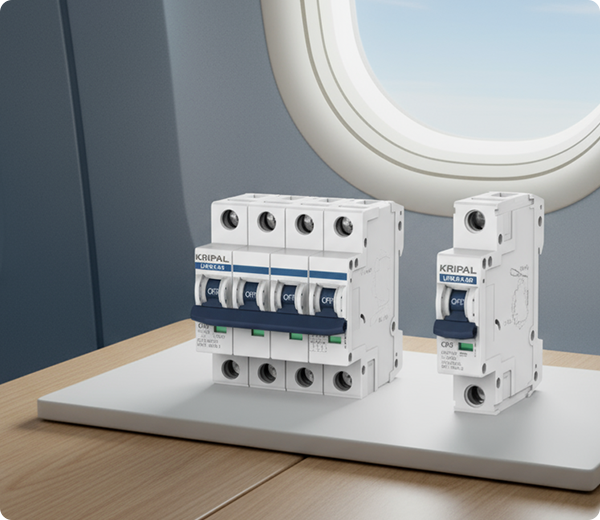
KRIPAL RCCB Manufacturing: Precision Sensing for Life Safety Protection
KRIPAL residual current circuit breakers are manufactured on a dedicated RCD assembly line where the summation current transformer core is wound and tested, the sensitive trip relay is calibrated to the rated residual operating current, and the complete RCCB undergoes a ramp test and trip time verification for global residential and industrial earth leakage protection.
Summation Current Transformer Core Winding and Test
Toroidal cores made from high-permeability nanocrystalline or permalloy strip are wound with precision secondary turns on a toroidal winding machine. Each completed summation transformer is tested for output voltage at the rated residual current (10mA, 30mA, 100mA, 300mA, 500mA) using a calibrated primary injection test set, with sensitivity verified within plus or minus 20 percent of rated I-delta-n.
Trip Relay Calibration and Assembly
The electromagnetic trip relay is assembled from a permanent magnet, armature, and precision spring. Spring tension is adjusted and locked on an automated calibration station that injects the rated residual current and verifies tripping within the required time limits per IEC 61008-1 (including G-type with at least 10ms delay and S-type with at least 40ms delay). Calibrated relays are serialized for traceability.
Ramp Test and Trip Time Verification
Every RCCB undergoes an automated ramp test where residual current is increased from zero at a controlled rate until tripping occurs, verifying that the trip threshold falls within 0.5 to 1.0 times the rated I-delta-n. A subsequent trip time test confirms operation within maximum limits per IEC 61008-1 specifications, with results recorded per serial number.
Test Button and Indicator Assembly Verification
The integrated test button circuit is verified on every unit by an automated actuator that presses the test button and confirms trip relay operation. The contact position indicator is visually inspected by an automated camera system to confirm positive indication in both ON and tripped states.
Distributor Stock Holding Programs for RCCBs
KRIPAL supports distributor inventory programs with agreed stock levels for standard models across 16A to 80A in 10mA, 30mA, 100mA, 300mA, and 500mA sensitivities. Shipments are planned based on demand data, with scheduled replenishment to maintain stable supply.
Private Label and OEM Branding for RCCBs
Laser-marked part numbers aligned with your catalog, OEM-branded packaging, and customized instruction sheets are available. Unbranded supply is provided upon request for private label production of RCCBs.
Multi-Region Certification and Compliance Support
CE, UKCA, and IEC 61008-1 (EN 61008-1) / GB/T 16916.1 compliance documentation is provided according to target export markets. Technical documentation files are maintained and updated in line with evolving electrical safety regulatory requirements.
Direct Technical Access to KRIPAL Production Engineers
Your technical team communicates with the engineers who designed and calibrated your RCCBs, not a distributor’s sales engineer reading from a catalog. Application questions including discrimination of series-connected RCDs receive answers within 24 hours during China business hours.
Frequently Asked Questions
Explore FAQ >Recent Blog
Explore Blog >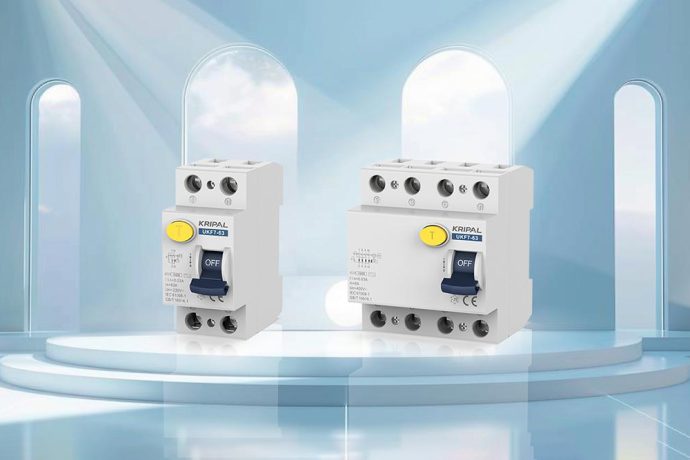
Are RCDs, ELCBs and RCCBs the Same Thing?
Are RCDs, ELCBs and RCCBs the same thing? No. Learn key differences, applications, and how each residual current device protects against electric shock.
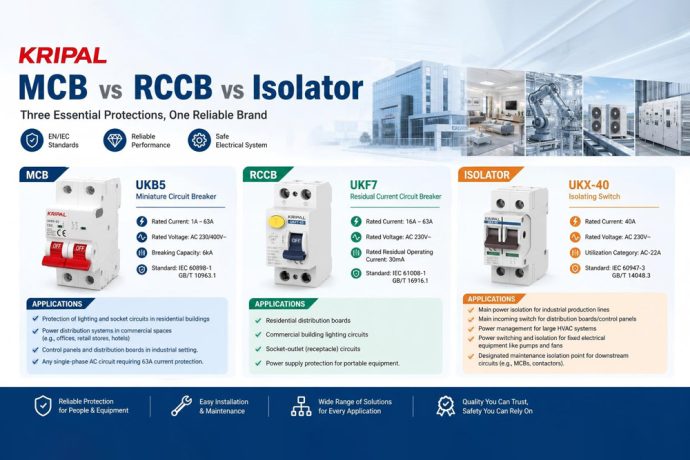
MCB vs RCCB vs Isolator: Differences, Functions, IEC Standards and Real Applications
Learn the key differences between MCBs, RCCBs, and isolators — their functions, IEC standards, real-world applications, and how they work together in modern electrical...
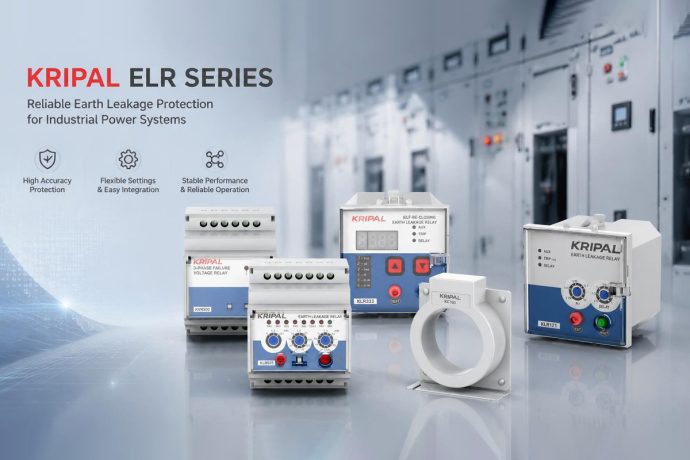
ELR vs ELCB: Differences, Working Principles and Selection Guide for Industrial Power Systems
Discover the differences between ELR and ELCB. Learn how earth leakage relays work, their applications, and how to choose the right protection for your...
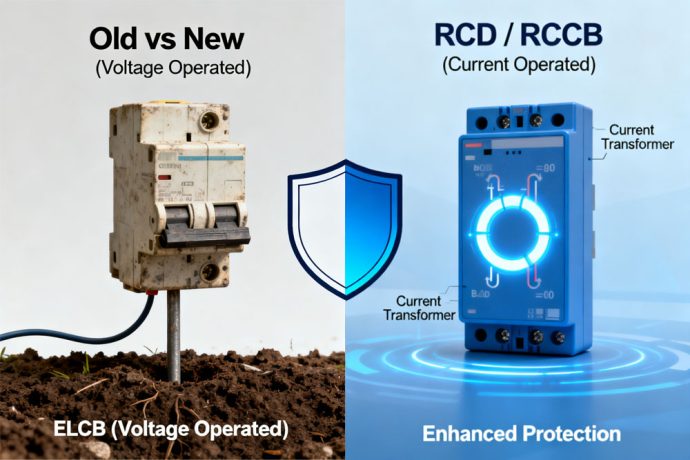
Understanding Earth Leakage Protection with ELCB / RCD
ELCB or RCD? Understand the difference in earth leakage protection. Learn why modern RCDs offer better safety against electric shocks than older ELCBs.
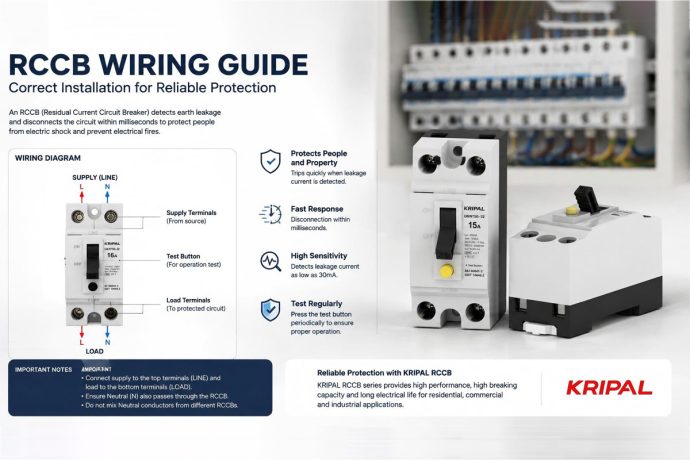
How to Wire an RCD (Residual Current Device): Principles, Wiring Guide and Installation Tips
Learn how to wire an RCD correctly: Type AC/A/B selection, RCCB and RCBO wiring rules, common mistakes, and testing methods.
Direct from Manufacturer
How Can We Assist You?
Tell us a bit more so we can route your request to the right engineer. Get factory-direct pricing and custom specifications within 24 hours.