Search
High Voltage DC Contactors for ESS & EV | 12V-1000V DC | 50A-300A | Ceramic Sealed
KRIPAL Premium High Voltage DC Contactor - UKD-H Series
The KRIPAL UKD-H series is engineered for EV charging, battery energy storage (BESS), and DC microgrid applications. Rated for up to 1000V DC with currents from 50A to 300A, this series ensures superior switching performance in rigorous environments. Featuring advanced ceramic sealing and an optimized arc chamber, the UKD-H ensures fast, safe disconnection under full load. Its double-break silver alloy contacts provide low contact resistance, excellent anti-welding properties, and long mechanical life. Furthermore, the integrated energy-saving coil minimizes power consumption and heat generation within sealed enclosures, enhancing overall efficiency. Available with flexible coil voltage configurations and optional microswitches for precise status feedback, the UKD-H meets strict industrial standards. It is the ideal core switching device for EV fast chargers, battery rack isolation, and DC bus-tie circuits.
Get A Quote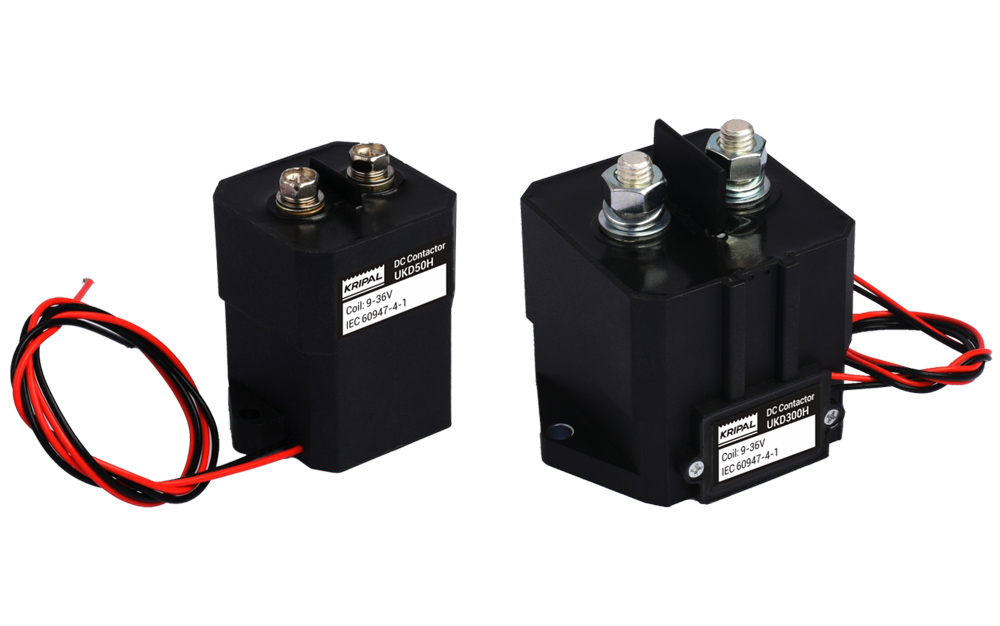
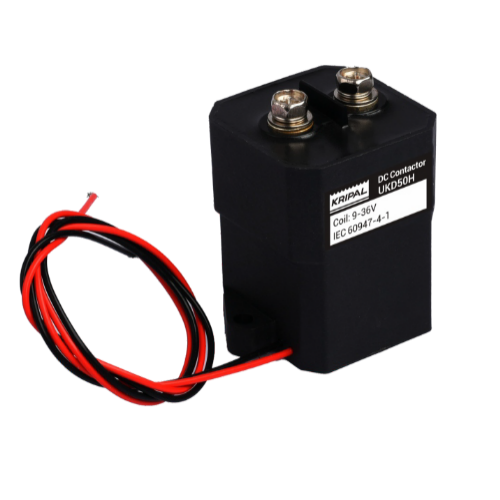
UKD50H Fully Sealed High Voltage DC Contactor 50A 9-36V
UKD-H series High Voltage DC Contactor is primarily designed for reliable power switching control in critical DC power systems.
Ask a Quote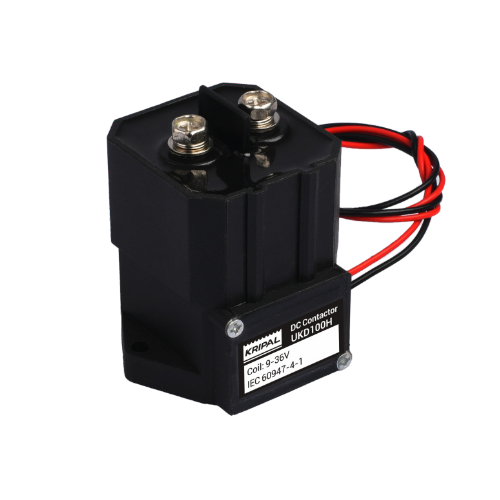
UKD100H Fully Sealed High Voltage DC Contactor 100A 9-36V
UKD-H series High Voltage DC Contactor is primarily designed for reliable power switching control in critical DC power systems.
Ask a Quote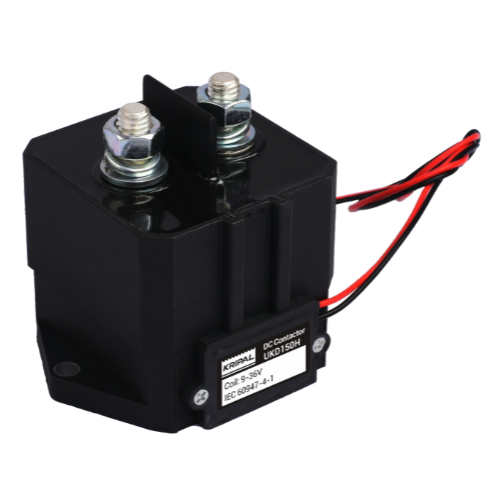
UKD150H Fully Sealed High Voltage DC Contactor 150A 9-36V
UKD-H series High Voltage DC Contactor is primarily designed for reliable power switching control in critical DC power systems.
Ask a Quote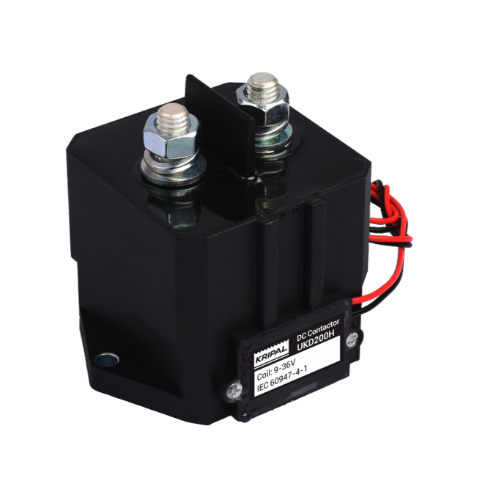
UKD200H Fully Sealed High Voltage DC Contactor 200A 9-36V
UKD-H series High Voltage DC Contactor is primarily designed for reliable power switching control in critical DC power systems.
Ask a Quote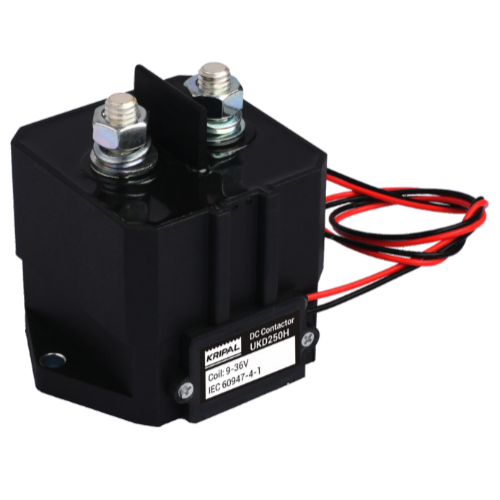
UKD250H Fully Sealed High Voltage DC Contactor 250A 9-36V
UKD-H series High Voltage DC Contactor is primarily designed for reliable power switching control in critical DC power systems.
Ask a Quote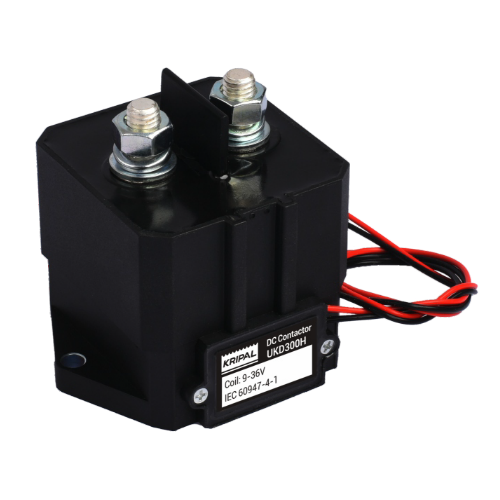
UKD300H Fully Sealed High Voltage DC Contactor 300A 9-36V
UKD-H series High Voltage DC Contactor is primarily designed for reliable power switching control in critical DC power systems.
Ask a QuoteHV DC Contactor Selection for Battery Storage and DC Power Systems
A high voltage DC contactor is an electrically operated switch designed to break DC circuits under load using an electromagnetic coil and a gas-filled sealed chamber. Unlike AC contactors, DC contactors must actively force arc extinction via contact separation speed and gas cooling. The UKD-H hermetically sealed design prevents arc gases from escaping, which is critical in sealed battery containers to avoid potential hydrogen explosion hazards. This guide covers current ratings, coil voltages, and mounting configurations for the UKD-H series.
UKD-H DC Contactor Series Technical Specifications
Current Rating and Thermal Management
The UKD-H is available in ratings from 50A to 300A continuous current (Ith) at 40°C ambient. Ratings are based on thermal verification per IEC 60947-4-1, ensuring terminal temperatures remain within safe limits. For installations in sealed enclosures with restricted airflow, derating factors should be applied. The terminal design is optimized for secure busbar connections, ensuring reliable electrical contact throughout the service life.
Gas-Filled Hermetic Arc Chamber Technology
The UKD-H arc chamber is a ceramic-to-metal brazed assembly that maintains a gas-tight seal for the contactor’s design life. The chamber is filled with an optimized gas mixture to ensure rapid DC arc quenching. Each unit undergoes rigorous helium leak testing to ensure gas integrity. This sealed technology also enables reliable operation at altitudes up to 4000 meters, where lower air density would otherwise compromise performance.
Coil Voltage and Economizer Circuit
The UKD-H coil is available in 12V, 24V, and 48V DC. An integrated PWM coil economizer reduces power consumption by 80% after pull-in, minimizing thermal load inside enclosures and extending component life. The circuit includes built-in protection against reverse polarity and transient voltage spikes, safeguarding sensitive control systems like BMS or PLC outputs from inductive kickback.
Bidirectional Switching and Non-Polarized Design
The UKD-H is a non-polarized contactor, allowing it to make and break DC current in either direction with equal reliability. This is essential for battery storage and V2G applications, where current flows bidirectionally during charge and discharge cycles. The symmetrical permanent magnet arc blowout system ensures consistent arc suppression regardless of current direction, verified through extensive make-break cycle testing.
Specify DC Contactors for Your Application
- Application Review: Submit your DC switching requirements—including voltage, current, duty cycle, and enclosure type—for a recommended UKD-H model and optimal mounting configuration.
- DC Switching Endurance Data: Request make-break endurance test reports tailored to your specific voltage and current parameters to ensure reliable system design and performance prediction.
- Custom Coil Options: Require a non-standard coil voltage or specific connector interface? Our engineering team offers custom configurations for OEM volumes exceeding 500 units.
Critical DC Switching in BESS, EV Charging and DC Microgrids
KRIPAL UKD-H high-voltage DC contactors serve as the primary switching devices for remote load control in applications ranging from EV fast chargers to grid-scale battery storage. The hermetically sealed, gas-filled arc chamber ensures reliable DC load-breaking at voltages up to 1500V, eliminating the arc flash and explosion risks associated with open-type contactors in confined enclosures.
EV DC Fast Charger Power Delivery Contactor
A 350 kW DC fast charger utilizes the UKD-H (e.g., 300A/1000V) contactor on the output DC bus between power modules and the charging cable. The contactor closes only after the charger performs an isolation test and negotiates parameters with the vehicle BMS via CCS protocol. In emergency stops or insulation fault events, the UKD-H’s sealed design prevents switching arcs from escaping, ensuring safety within the charger enclosure. Its 1 million mechanical operation rating supports the high cycle demands of public charging stations.
Battery Energy Storage Rack Isolation Contactor
Utility-scale BESS containers deploy the UKD-H (e.g., 250A/1500V) contactor per rack as the main isolation device. Controlled by the BMS, the contactor disconnects within 50 milliseconds upon detecting over-voltage, under-voltage, over-temperature, or over-current conditions. The hermetically sealed chamber is critical here to prevent the ignition of trace hydrogen generated by battery racks. Furthermore, the non-polarized design reliably handles bidirectional current flow during charge and discharge cycles.
DC Microgrid Bus-Tie Contactor
In data centers and industrial facilities, UKD-H contactors function as bus-tie devices for connecting or isolating DC sections. For a 380V DC system, the contactor connects the battery storage bus to the load bus upon grid outage and disconnects once AC-DC rectifiers synchronize. The integrated coil economizer reduces standby power consumption to under 5W, significantly optimizing the facility’s Power Usage Effectiveness (PUE) ratio.
DC Shore Power Connection for Electric Ferries
Electric ferries use the UKD-H (e.g., 300A) contactor as the primary connection point between shore-side chargers and the vessel battery. The sealed ceramic chamber provides essential protection against salt-laden marine air and condensation, which would otherwise corrode open-type contacts. The system ensures safe connection only after successful insulation monitoring (per IEC 61851-23) and pre-charge equalization to prevent massive inrush currents.
DC Motor Control in Industrial Vehicles
Electric forklifts and mining vehicles use UKD-H contactors to switch the traction motor supply. These contactors effectively manage motor starting inrush currents (typically 3–5 times rated) and high inductive flyback voltages during circuit opening. With a 1500V DC rating providing ample margin for field-collapse spikes and a 1 million mechanical operation life, the UKD-H is engineered for the high-frequency start-stop demands of industrial service.
Integrate DC Contactors into Your System
- Pre-Charge Circuit Design Support: Our engineering team provides expert guidance on sizing pre-charge resistors and defining contactor sequencing logic to effectively prevent inrush current damage to the UKD-H contacts.
- Coil Driver Circuit Reference Design: Request our proven reference schematics for a robust coil driver, featuring integrated flyback protection, economizer control, and diagnostic feedback capabilities.
- OEM Integration Program: We offer dedicated UKD-H contactor variants tailored to your specific connector interfaces, coil voltages, and mounting bracket requirements for seamless integration into your OEM product lines.
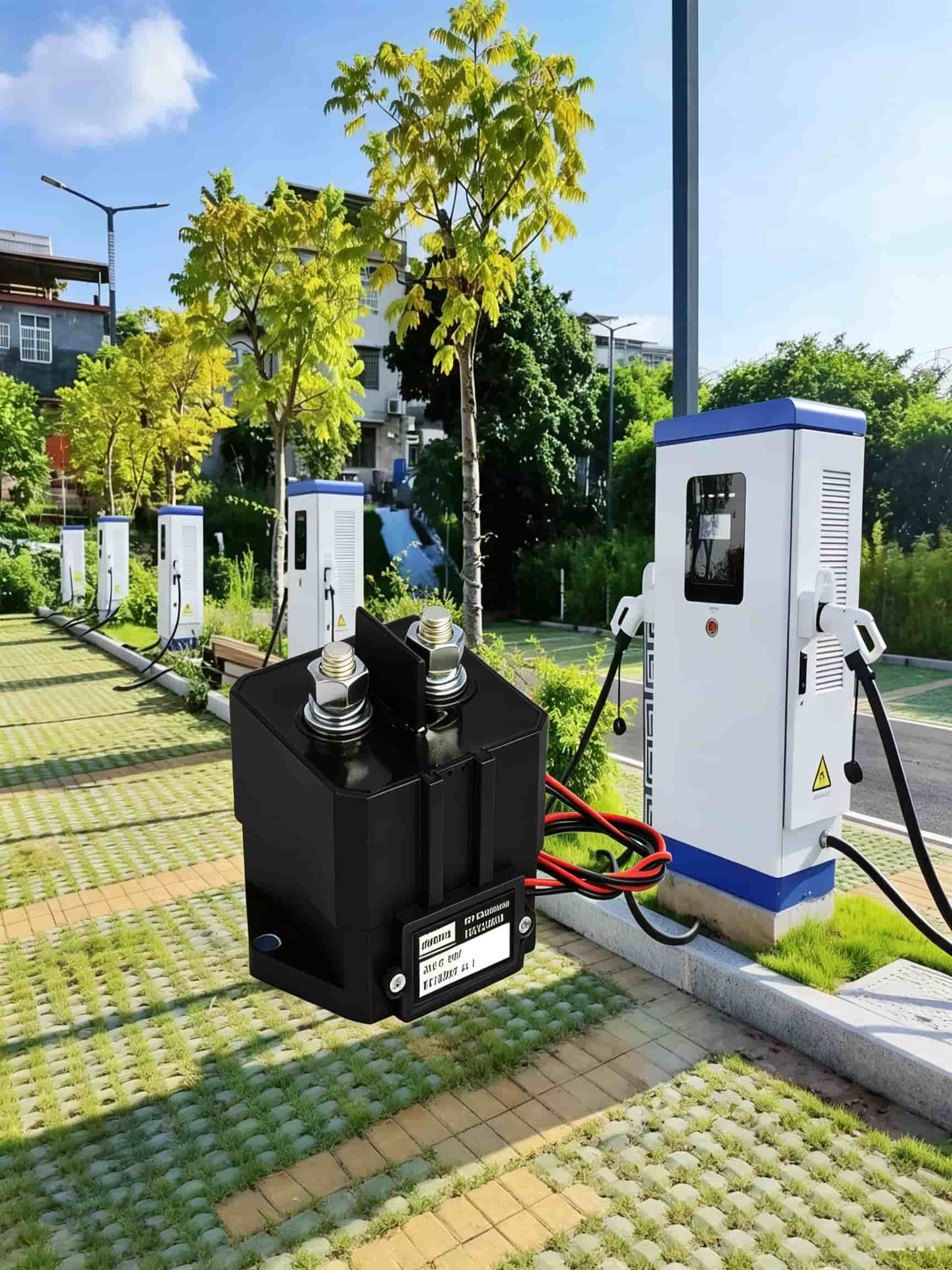
KRIPAL HV DC Contactor Manufacturing: Sealed for Reliable DC Switching
KRIPAL UKD-H series high-voltage DC contactors are manufactured in a cleanroom environment, where the hermetically sealed ceramic arc chamber is evacuated and backfilled with a high-purity hydrogen-nitrogen gas mixture. Each contactor undergoes rigorous pickup and dropout voltage verification, contact resistance measurement, and dielectric withstand testing to meet the demanding requirements of global battery energy storage and EV charging infrastructure.
Hermetic Ceramic Chamber Sealing and Gas Filling
The ceramic-to-metal seal assembly is performed in a controlled-atmosphere environment. After evacuation to below 10 to the power of minus 3 Pa, the chamber is backfilled with a hydrogen-nitrogen gas mixture optimized for arc quenching in DC switching. Each sealed chamber is helium leak-tested to verify hermeticity below 1 times 10 to the power of minus 8 Pa-cubic-meters per second.
Magnetic Blowout Arc Extinguishing Design
Permanent magnets positioned outside the ceramic chamber create a transverse magnetic field across the contact gap, forcing the DC arc into an elongated path for rapid extinction. Magnet position and field strength are verified on each production batch using a Hall-effect gaussmeter to ensure consistent DC breaking performance up to the rated voltage.
Coil Economizer Circuit Integration
Each UKD-H contactor incorporates a PWM coil economizer module that reduces holding current by up to 85% after pull-in. The economizer PCB is assembled in-house and functionally tested for pickup voltage (typically 70% of nominal), dropout voltage, and holding current before installation into the contactor body.
Contact Resistance and Dielectric Verification
Every HV DC contactor undergoes a four-wire contact resistance measurement at 100A test current, with values recorded against the production serial number. A 2500V DC dielectric withstand test is performed between the main terminals and the coil circuit, and between open contacts, with leakage current monitored to ensure insulation integrity.
Consigned Inventory Programs for HV DC Contactors
KRIPAL supports distributor inventory programs with agreed stock levels for standard UKD-H models from 12V to 1500V DC. Shipments are planned based on demand data, with scheduled replenishment to maintain stable supply and consistent fill rates.
Private Label and OEM Branding for HV DC Contactors
We provide laser-marked part numbers aligned with your catalog, OEM-branded packaging, and customized multilingual instruction sheets. Unbranded supply is provided upon request to support private label production of HV DC contactors.
Multi-Region Certification and Compliance Support
Compliance documentation for CE, UKCA, IEC 60947-4-1, and UL 60947-4-1 is provided according to your target export markets. Technical files are maintained and updated in line with evolving regulatory requirements, supporting conformity assessments for battery storage systems.
Direct Technical Access to KRIPAL Production Engineers
Your technical team communicates directly with the engineers who designed and tested your HV DC contactors, rather than a sales engineer reading from a catalog. Application-related inquiries receive responses within 24 hours during China business hours.
Frequently Asked Questions
Explore FAQ >Recent Blog
Explore Blog >
High Voltage vs Low Voltage: Key Differences, Safety Standards & Applications
Compare high voltage and low voltage electrical systems — key differences in safety standards, energy efficiency, applications, and equipment selection. A comprehensive guide covering...
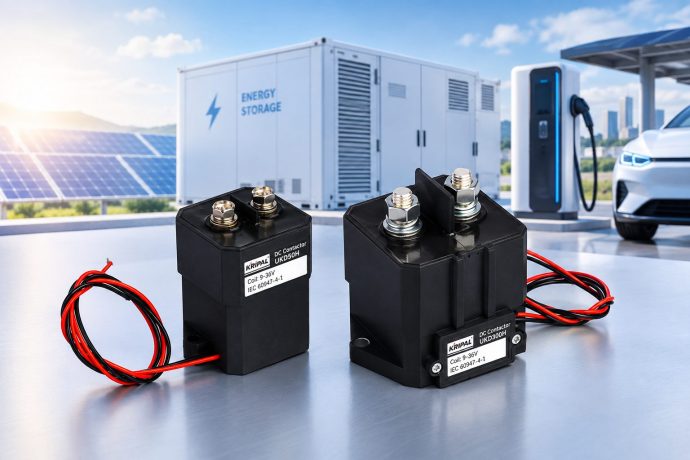
How to Choose a High-Voltage DC Contactor for EV and Energy Storage
Select a high-voltage DC contactor for EV and energy storage by checking current, DC voltage, breaking capability, coil control, life, and environment.
Direct from Manufacturer
How Can We Assist You?
Tell us a bit more so we can route your request to the right engineer. Get factory-direct pricing and custom specifications within 24 hours.