Search
Cam Switches Rotary Changeover Selector Switches | 10A-63A | Multi-Position
Isolator Switch - Cam Switch
KRIPAL manufactures cam-operated rotary switches for circuit selection, control switching and instrumentation applications in industrial control panels and equipment. These switches use a cam-driven contact mechanism where rotating the handle turns a shaped cam that opens and closes individual contact elements in a programmed sequence, enabling complex switching functions such as ammeter and voltmeter selection, motor control (forward/reverse/stop), star-delta starting, and multi-speed motor control. Available with rated thermal currents from 10A to 63A at 400V AC, they can accommodate up to 12 contact elements on a single switch body with switching angles of 30, 45, 60 or 90 degrees. The modular build-up design allows the switch to be configured for specific applications by selecting the number of contact elements, the switching program (make-before-break or break-before-make), and the handle type (knob, lever or key-operated). Certified to IEC 60947-3 and IEC 60947-5-1 for control circuit devices, KRIPAL cam switches are used extensively by panel builders for motor control, instrumentation switching and process control applications.
Get A Quote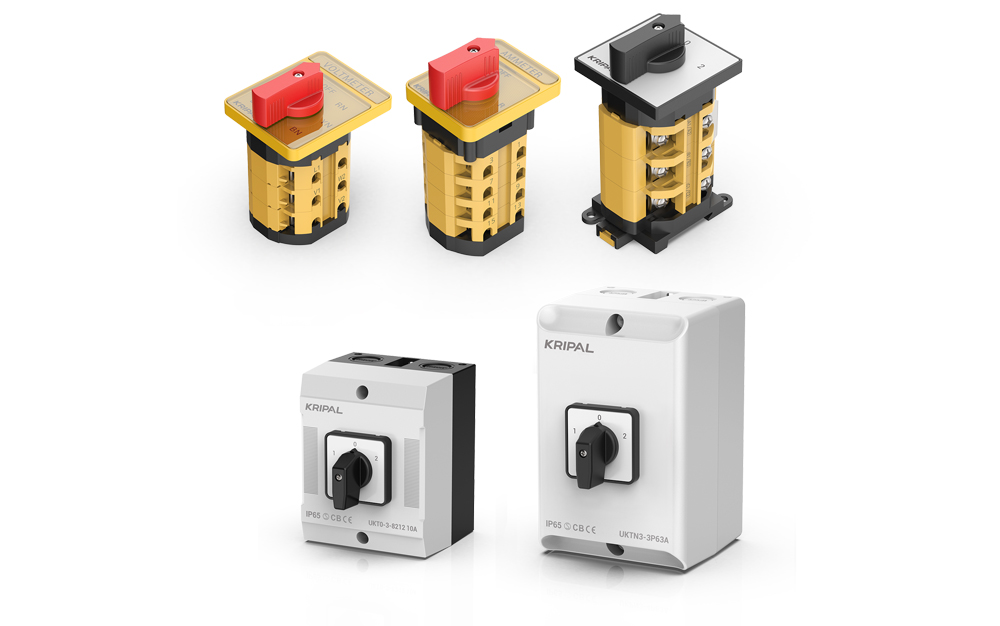
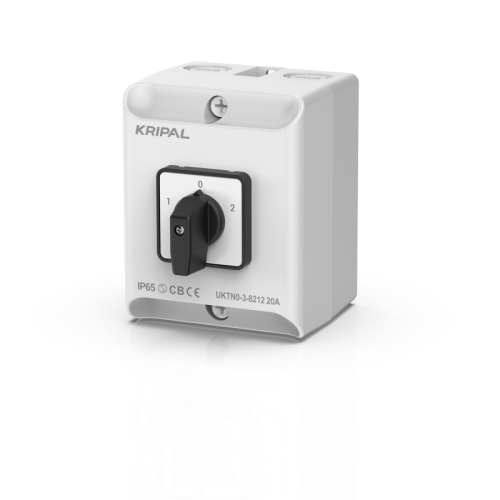


UKTN Series Rotary Changeover Switch 20A 3 Position IP65 Cam Switch
UKTN Series Cam Switches are engineered for reliable performance in circuits up to 440V AC, 50Hz.
Ask a Quote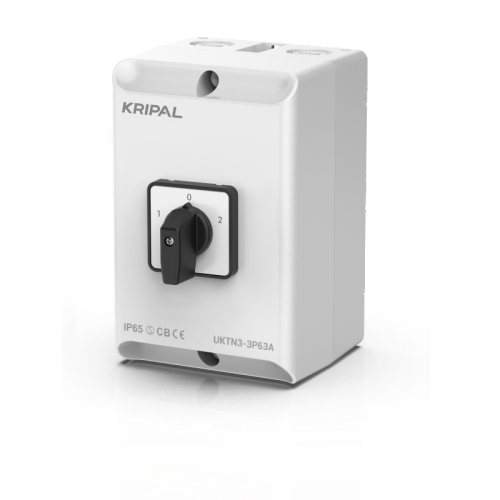
UKTN3 Rotary Changeover Switch 40A/63A/100A 3 Position IP65 Cam Switch
UKTN Series Cam Switches are engineered for reliable performance in circuits up to 440V AC, 50Hz.
Ask a Quote-500x500.png)
UKTN5 Cam Switch 3 Pole 100A 3 Position IP65 Rotary Changeover Switch
UKTN Series Cam Switches are engineered for reliable performance in circuits up to 440V AC, 50Hz.
Ask a Quote
KRIPAL UKT0 Rotary Changeover Switch 10A/16A/20A 230-440V 3 Position Cam Switch IP65
UKT Series rotary switches are engineered for reliable performance in circuits up to 440V AC, 50Hz.
Ask a Quote
KRIPAL UKT3 Rotary Changeover Switch 40A/63A/80A/100A 3 Position Cam Switch IP65
UKT Series rotary switches are engineered for reliable performance in circuits up to 440V AC, 50Hz.
Ask a Quote
KRIPAL UKT5 Rotary Changeover Switch 3Pole 100A 3 Position Cam Switch IP65
UKT Series rotary switches are engineered for reliable performance in circuits up to 440V AC, 50Hz.
Ask a Quote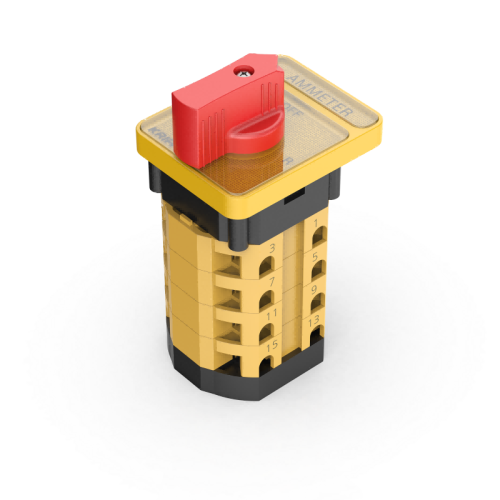
UKG1-20 Rotary Switch 3P/6P 4 Position Ammeter Cam Switch 20A Knob Actuator Panel Mount
KRIPAL UKG1 Series supports flexible customization to meet diverse customer requirements.
Ask a Quote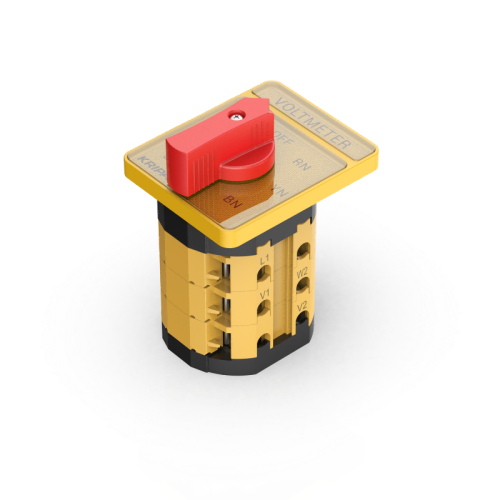
UKG1-40 Rotary Switch 3P/6P 7 Position Voltmeter Cam Switch 40A Knob Actuator Panel Mount
KRIPAL UKG1 Series supports flexible customization to meet diverse customer requirements.
Ask a Quote-500x500.png)
UKG1-63 Rotary Switch 3P 3 Position Motor Reversing Cam Switch 63A Knob Actuator DIN Rail Mount
KRIPAL UKG1 Series supports flexible customization to meet diverse customer requirements.
Ask a QuoteCam Switch Selection Guide: Multi-Position Switching for Industrial Control
A cam switch uses a rotating cam to determine the contact sequence as the handle turns. Each cam lobe pushes against a contact bridge to open or close the circuit at a precise angular position. By stacking multiple contact elements on a common shaft, the switch executes a predetermined sequence as customized per the customer’s switching program specification.
Cam Switch Series Technical Specifications
Switching Programs and Contact Configuration
The cam profiles define the switching program. Standard options include ON-OFF, changeover, ammeter, voltmeter, and motor control. Each contact element is a double-break design with silver-alloy contacts, assembled on a common shaft and secured by through-bolts.
Handle Types and Panel Mounting
Options include knob handles, lever handles for high torque, and key-operated handles for security. The handle mechanism provides positive tactile feedback via a detent plate, with optional spring-return features for automatic positioning.
Motor Control Applications
These switches are widely used for motor control, including forward-reverse switching, star-delta starting, and two-speed Dahlander winding configurations to manage motor operations and reduce starting current.
Instrumentation and Measurement Switching
Standard configurations include ammeter switches (AS) and voltmeter switches (VS). AS-3 switches use make-before-break contacts to protect CT secondary circuits from dangerous open-circuit voltages, while VS-3 models measure multi-phase voltages with a single voltmeter to save panel space and cost.
Configure Your Cam Switch Application
- Switching Program Design: Describe your switching sequence and our engineers design the cam profiles and contact configuration.
- Contact Development Diagram: We provide a diagram showing the switch contact states at each position for your panel schematic integration.
- OEM Supply: Source switches pre-configured for your standard panel designs with part numbers for repeat ordering.
Rotary Switching for Control Panels, Generator Transfer and Instrument Selection
KRIPAL cam switches provide the multi-position, multi-contact switching capability for motor control, instrumentation and process control applications in industrial panels. From the forward-reverse switch on a workshop machine tool to the ammeter selector switch on a main switchboard, the configurable cam profiles and modular contact stack design deliver exactly the switching sequence required for each application.
Machine Tool Motor Control
A lathe or drilling machine uses a forward-reverse switch to control spindle motor direction. The 3-position (FWD-OFF-REV) switch incorporates electrical and mechanical interlocks to prevent simultaneous coil energization, while a spring-return handle automatically stops the motor upon release for enhanced safety.
Main Switchboard Ammeter and Voltmeter Selection
Factory switchboards use ammeter (AS-3) and voltmeter (VS-3) selector switches to monitor all three phases using a single analog meter. The AS-3 utilizes make-before-break contacts to safely protect CT secondaries from open-circuit voltages during phase selection.
Pump and HVAC System Selection
Water pumping stations utilize duty-standby selector switches to manage lead/lag pump operations and balancing running hours. Similarly, building HVAC control panels use mode selector switches (HEAT-OFF-COOL-AUTO) to handle multi-deck circuit configurations with a single handle rotation, reducing operational conflicts.
Generator Control Panel Mode Selection
Standby generator control panels use mode selector switches with AUTO-TEST-OFF positions to manage utility monitoring, weekly test runs under load, and system disabling. Key-operated options ensure the switch cannot be accidentally left in the OFF position following maintenance.
Configure Cam Switches for Your Panel
- Application Configuration: Describe your required switching sequence and our engineers specify the contact configuration and cam program.
- Panel Integration: Request 2D panel cutout drawings and wiring diagrams for your specific switch configuration.
- OEM Supply: Source switches pre-configured for your standard panel designs with dedicated part numbers.
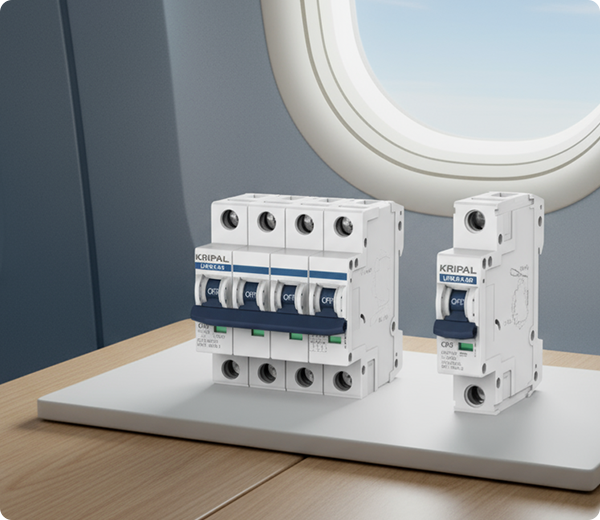
KRIPAL Cam Switch Manufacturing: Precision Cam Mechanisms
KRIPAL cam switches are manufactured on a dedicated rotary switch assembly line where the cam-operated contact stacks, multi-position detent mechanism, and panel-mount or enclosure housing are produced, assembled, and tested. Each cam switch undergoes contact sequence verification and dielectric testing for global multi-position switching and control circuit applications.
Cam-Operated Contact Stack Assembly
The cam switch contact mechanism uses a series of cam discs mounted on a common shaft that actuate double-break contact pairs according to a programmed switching sequence. Cams are precision-molded from reinforced thermoplastic with the switching profile verified on an optical comparator. Contact stacks are assembled with silver-nickel contacts rated for the specified operational current.
Multi-Position Detent Mechanism with Positive Indexing
The detent mechanism providing discrete switching positions (2, 3, 4, or more positions with maintained or spring-return action) is assembled with a hardened steel index plate and spring-loaded roller. Detent torque and position accuracy are verified on every switch, with the mechanical life rated at 100,000 operations minimum per IEC 60947-3.
Contact Sequence and Switching Program Verification
Each cam switch undergoes a contact sequence test where a programmable tester rotates the switch through all positions and verifies the make/break pattern of every contact against the specified switching program. Standard programs include voltmeter selection (V0-V1-V2-V3), ammeter selection, ON-OFF-ON changeover, and step control sequences.
Dielectric Withstand and Insulation Testing
Every cam switch undergoes dielectric withstand testing at 2500V AC between open contacts, between adjacent contact stacks, and between live parts and the mounting panel or handle. Insulation resistance is measured at 500V DC with a minimum acceptable value of 5 megaohms per IEC 60947-3 for new, clean switches.
Distributor Stock Holding Programs for Cam Switches
KRIPAL supports distributor inventory programs with agreed stock levels for standard cam switch models including voltmeter and ammeter selection switches, changeover switches, and step switches. Custom contact sequence configurations are available with defined lead times.
Private Label and OEM Branding for Cam Switches
Custom front-plate engraving, OEM part numbering, and distributor-branded packaging are available. KRIPAL supports the supply of cam switches with customer-specified switching program diagrams pre-configured at the factory.
Multi-Region Certification and Compliance Support
CE, UKCA, and IEC 60947-3 EN 60947-3 compliance documentation is provided according to target export markets. Technical documentation files including switching program diagrams are maintained and updated in line with evolving regulatory requirements.
Direct Technical Access to KRIPAL Production Engineers
Your technical team communicates with the engineers who designed and assembled your cam switches. Application questions including custom switching program design and contact rating for specific loads receive answers within 24 hours during China business hours.
Frequently Asked Questions
Explore FAQ >Recent Blog
Explore Blog >
How to Calculate Voltage Drop Across a Resistor and Electrical Circuits?
Learn how to calculate voltage drop across resistor and electrical circuits with Ohm’s Law. Get step-by-step formulas, examples, and tips to reduce voltage drop...
Direct from Manufacturer
How Can We Assist You?
Tell us a bit more so we can route your request to the right engineer. Get factory-direct pricing and custom specifications within 24 hours.