Search
DC Switch Disconnectors for Solar PV Applications | Up to 1500V DC | 16A-1000A
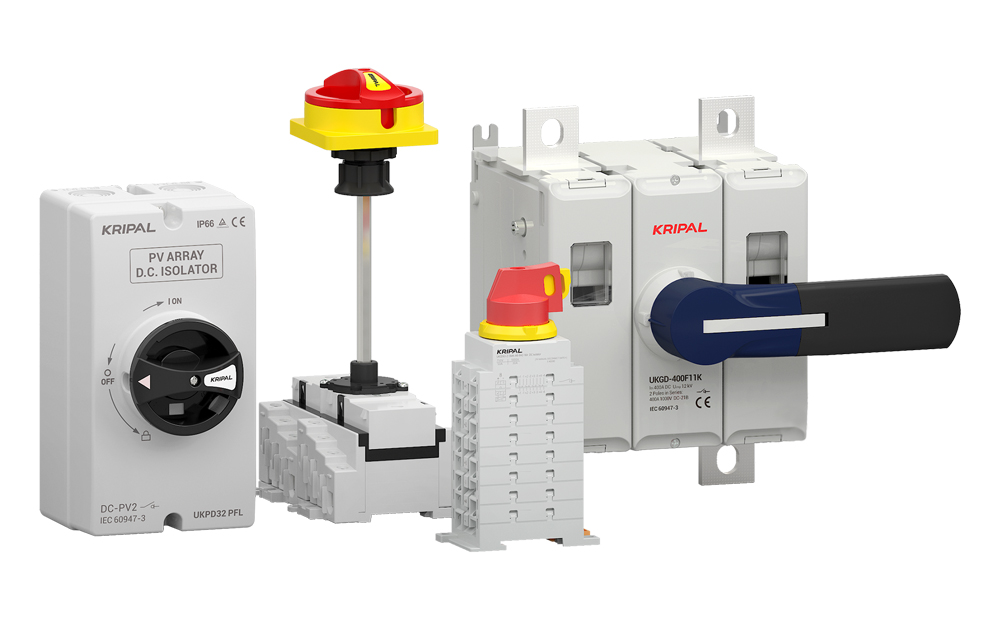
KRIPAL DC switch disconnectors provide safe and reliable switching and isolation solutions for photovoltaic (PV) DC applications. Designed for demanding solar environments, these isolators ensure dependable DC load switching, maintenance isolation, and system protection for PV installations.
UKGD & UKPD32 DC switch disconnectors are suitable for a wide range of applications, including solar/PV systems, PV combiner boxes, inverter DC inputs, energy storage systems (ESS), and DC distribution applications.
The product portfolio covers solutions up to 1500 VDC:
– UKPD Series, 16…32 Amperes
– UKGD Series,100…1000 Amperes
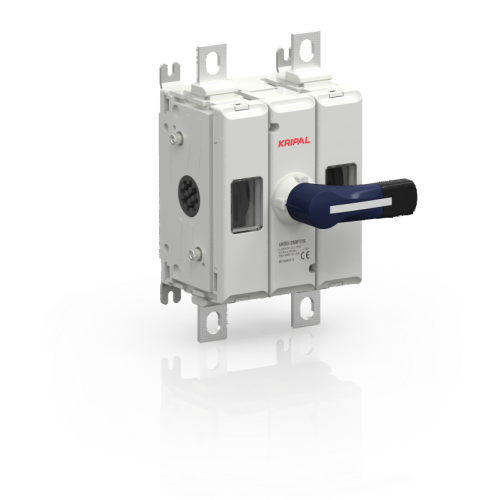

UKGD250 Switch Disconnector 1000V DC 2 Pole 250A PV Solar Isolator Switch
The UKGD250 DC Switch Disconnector is engineered for high-performance applications.
Ask a Quote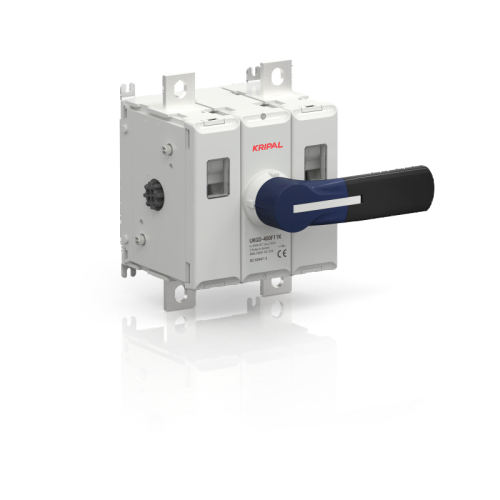
UKGD400 Switch Disconnector 1000V DC 400A 2 Pole PV Solar DC Isolator Switch
The UKGD400 DC Switch Disconnector is engineered for high-performance applications.
Ask a Quote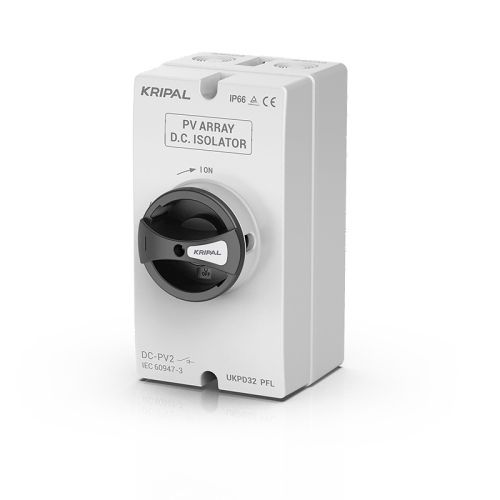


UKPD32 DC Isolator Switch 4 Pole 16A 1200V DC Switch Disconnector IP66 Surface Mount
Switch disconnector UKPD32, 4‑pole for up to 1200 V DC and 16 A rating, IP66 surface‑mount.
Ask a Quote
UKPD32 DC Switch Disconnector 32A 4Pole 1200V DC Isolator Switch for PV Solar CE TUV Certified
DC disconnector switch UKPD32 (4‑pole, 32 A, up to 1200 V DC) for solar PV applications, CE & TÜV certified.
Ask a Quote
UKPD32 DC Isolator Switch 25A 4 Pole 1200V DC Disconnector Surface Mount TUV Certified
Benedict isolator switch UKPD32 – 4‑pole, 25 A, 1200 V DC disconnect device.
Ask a Quote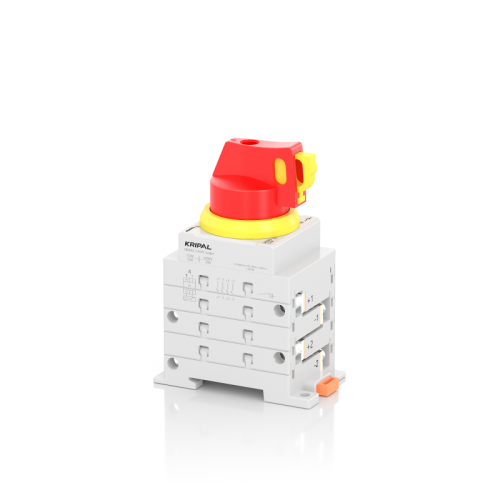
UKGD63 DC Isolator Switch 1500V DC 2P 3P 4P 6P 8P Disconnect Switch PV Solar system Din Rail Mount
The UKGD63 series photovoltaic DC isolation switch is designed to provide reliable circuit isolation and switching for solar energy applications.
Ask a Quote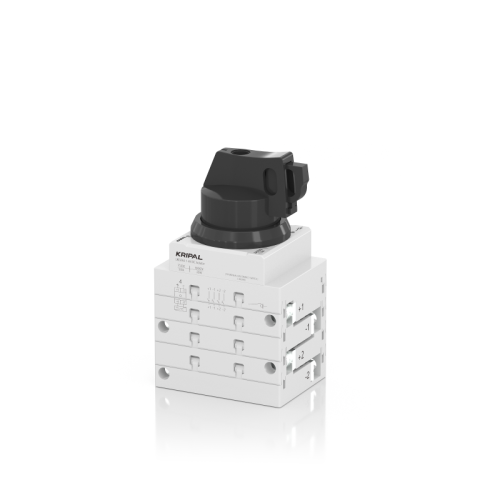
UKGD63 DC Switch Disconnectors 1500V DC 2P 3P 4P 6P 8P Solar DC Isolator Switch Panel Mount
DC isolator switch UKGD63 for up to 1500 V DC, available in 2‑,3‑,4‑,6‑ and 8‑pole versions.
Ask a QuoteTechnical Guide: DC Isolator Switch for PV System Designers
A DC isolator switch provides a manual disconnect point in a PV DC circuit rated to break the full load current and withstand the system voltage under both normal and fault conditions. Unlike a circuit breaker, an isolator does not provide automatic overcurrent protection; its primary function is to guarantee a visible air-gap isolation for personnel safety during maintenance. The KRIPAL UKGD series is specifically designed and tested to serve as a reliable main switch for various levels of photovoltaic systems. This selection guide outlines the technical specifications and structural advantages of the UKGD series to match your system topology and installation requirements.
UKGD DC Isolator Switch Series Technical Specifications
Voltage Rating and System Voltage Matching
The UKGD series is engineered for high-performance PV applications, supporting a rated insulation voltage of up to 1500VDC. With a frame current range covering 250A, 325A, 400A, 630A, 800A, and 1000A, the series accommodates a wide variety of large-scale solar projects. When selecting a model, ensure the rated voltage meets the maximum system voltage requirements of your PV array.
DC Load-Break Switching Performance
The UKGD series complies with the DC-21B/PV2 utilization category. Its superior load-break capability is achieved through a rotary double-break contact mechanism that effectively meets strict isolation and insulation requirements, significantly enhancing overall product performance. The design features an independent arc-extinguishing chamber that facilitates load-break operations and helps extend electrical lifespan while improving breaking capacity. Furthermore, the operating mechanism is equipped with energy storage to ensure rapid switching, providing excellent breaking performance even at 1500VDC.
Contact Visualization and Operational Flexibility
Safety is the core of the UKGD design philosophy. The product is equipped with a transparent window, allowing technicians to clearly observe the contact status (on/off), providing intuitive safety assurance. The series offers versatile operation options, including front and side operation, and supports either door-mounted (P) or direct-mounted (K) handles to adapt to various cabinet and system designs.
Safety Interlock and Maintenance Features
The UKGD series is designed to ensure rigorous safety during maintenance operations. The operating mechanism supports standardized locking configurations, allowing for secure lockout-tagout (LOTO) procedures. This ensures that the switch remains in the safe position during array maintenance, providing comprehensive protection for field personnel. By combining these safety features with the robust electrical design, the UKGD series provides a reliable solution for long-term PV system operation and maintenance.
Specify DC Isolators for Your PV Installation
- DC Isolator Sizing Tool: Submit your PV array Voc and Isc values, and we will provide the correct UKGD voltage class and pole count within one business day.
- Technical Drawings and Customization: Request 2D CAD drawings detailing the cable entry positions and physical dimensions for integrating UKGD isolators into your PV array mounting structure.
- Volume OEM Pricing: Contact our solar components team for competitive project pricing on UKGD isolators, which can be bundled with other DC protection components for your combiner box or inverter cabinet assembly.
- Operational Safety Support: Consult with our team to determine the optimal configuration for your site, including selecting between front or side operation and door-mounted (P) or direct-mounted (K) handle options.
- Verification of Compliance: Ensure your installation meets international standards; our team can provide documentation confirming the CCC, CB, CE, and TUV certifications for your chosen UKGD model.
Mandatory DC Isolation for Solar PV Systems Worldwide
KRIPAL UKGD DC isolator switches are deployed at every level of photovoltaic DC distribution where a manual, visible-break isolation point is required. From string-level isolation to main DC disconnects, these switches provide guaranteed air-gap isolation—enhanced by a transparent window for contact visualization—that maintenance teams rely on before servicing DC conductors.
Rooftop PV Array String-Level Isolation
For commercial flat-roof installations (100–500 kW), UKGD DC isolators are installed in IP65 enclosures at the end of each module row, providing string-level isolation. The padlockable OFF position facilitates secure lockout-tagout (LOTO) procedures. The transparent enclosure cover allows maintenance crews to visually confirm the contact status without opening the housing, ensuring enhanced safety during panel cleaning or electronics replacement.
Inverter DC Input Main Disconnect
String and central inverters integrate a UKGD DC isolator as the main disconnect switch between DC input terminals and bus capacitors. The UKGD’s rotary double-break contact mechanism and independent arc-extinguishing chamber with non-polarity magnetic blow-out satisfy safety requirements for isolating PV sources from power conversion circuits with margin. Optional auxiliary contacts can signal the inverter controller to execute a safe soft-start sequence.
Battery Storage System DC Service Disconnect
Residential and commercial battery storage systems utilize UKGD DC isolators as a service disconnect between the battery rack and hybrid inverter. The compact, modular design integrates easily within battery cabinets, while the robust terminals accommodate the fine-stranded cables typically used for storage system DC connections.
EV Charger DC Input Isolation
DC fast chargers with battery buffering use UKGD DC isolators to provide a visible air-gap between the energized battery and power modules. The rotary handle’s color coding (red for ON, green for OFF) provides intuitive status indication for technicians, allowing them to verify isolation before accessing the power module compartment.
Solar Pumping System DC Motor Isolator
In off-grid agricultural solar pumping systems, UKGD DC isolators are deployed between the PV array and the motor controller. This provides a manual disconnect point for pump servicing without requiring technicians to access the rooftop. The IP65 enclosure variant withstands the dust, humidity and temperature extremes of outdoor agricultural environments across sub-Saharan Africa, South Asia and outback Australia.
Specify DC Isolation for Your PV System
- Application Review: Send us your single-line diagram, and we will confirm the correct UKGD model, pole count, and enclosure rating for every isolation point in your system.
- Compliance Documentation: Obtain IEC 60947-3 type-test reports and certificates (CCC, CB, CE, TUV) for AHJ permit submissions and project technical due diligence packages.
- Sample Evaluation Program: Request samples of our modular UKGD isolators for mechanical fit-check in your combiner box or inverter enclosure design.
- Technical Support: Consult with our team for expert advice on configuring the optimal handle (P/K), auxiliary contact, and mounting arrangement for your specific project requirements.
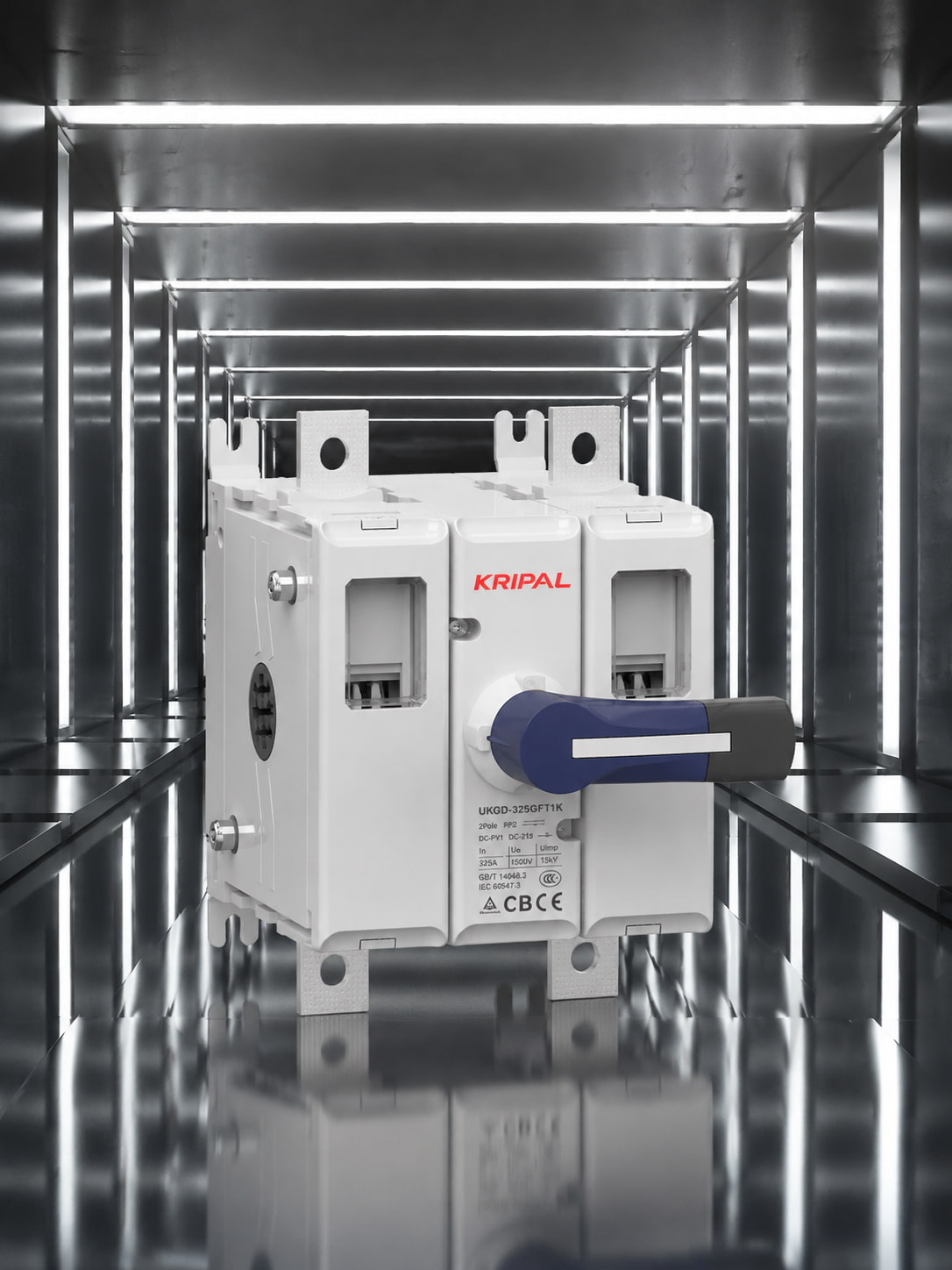
KRIPAL DC Isolator Manufacturing: Engineered for PV Safety Compliance
KRIPAL DC isolator switches are produced on a dedicated high-precision assembly line, where core components—including our proprietary DC-rated rotary double-break mechanism, independent arc-extinguishing chambers with non-polarity magnetic blow-out, and robust IP66-rated enclosures—are manufactured and integrated. Every unit undergoes rigorous testing under ISO 9001 quality management standards to ensure compliance with global PV safety requirements. Featuring modular design for versatile installation and a transparent window for real-time contact visualization, the UKGD series provides the reliable, high-performance isolation essential for professional solar PV applications.
DC-Rated Contact Mechanism
The UKGD series utilizes a rotary double-break contact mechanism designed for robust DC performance. The system ensures reliable load-break capabilities at 1500VDC, supported by an independent arc-extinguishing chamber with non-polarity magnetic blow-out for rapid arc extinction. Silver-alloy contact tips are engineered for longevity, supporting frequent operations while preventing contact welding.
UV-Stabilized IP66 Enclosure
Enclosures are manufactured from high-performance, UV-stabilized polycarbonate materials tested for 1000 hours of accelerated UV exposure (ASTM G154 Cycle 1). The IP66 sealing gasket consists of a one-piece silicone mold that maintains ingress protection even after repeated cover removals during installation and maintenance.
Terminal and Connection Testing
To ensure reliability, terminal connections undergo rigorous batch testing. For models with cable entry options, glands are IP66-tested against specified cable diameter ranges using a water jet test at 100 liters per minute from a 3-meter distance.
Distributor Inventory Support
KRIPAL supports distributor inventory programs by maintaining agreed stock levels for standard UKGD models. Shipments are planned based on demand data, with scheduled replenishment to ensure a stable supply and consistent fill rates.
Private Label and OEM Branding
We offer comprehensive customization, including laser-marked part numbers aligned with your catalog, OEM-branded packaging, and customized multilingual instruction sheets. Unbranded supply is also available upon request for private label production.
Multi-Region Certification and Compliance
We provide complete compliance documentation, including CE, UKCA, and IEC 60947-3/EN 60947-3 certificates, tailored to your target export markets. Technical files are proactively maintained to support PV system safety compliance and conformity assessments.
Direct Technical Engineering Access
Your technical team gains direct access to the engineers who designed and tested the UKGD isolators, rather than relying on sales intermediaries. Application-specific inquiries receive expert responses within 24 hours during China business hours.
Quality Management and Performance Verification
Every UKGD isolator is manufactured on a high-precision assembly line and undergoes comprehensive quality management under ISO 9001 standards. All products are verified for key performance metrics, including rated operational current and breaking capacity, to ensure global PV safety compliance.
Frequently Asked Questions
Explore FAQ >Recent Blog
Explore Blog >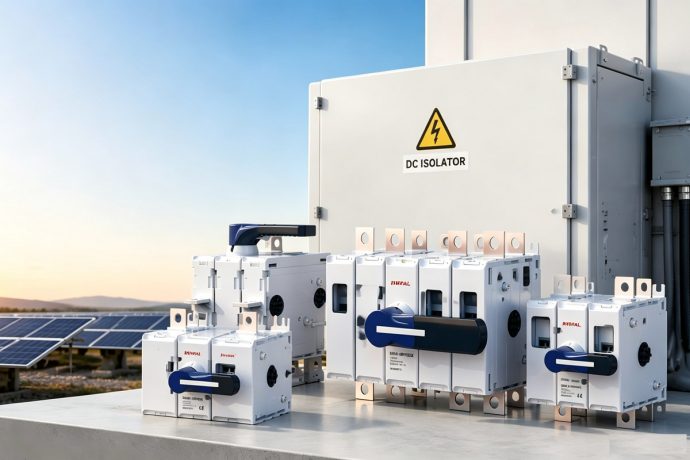
DC Isolator Switch Installation for Solar PV: Wiring, Placement and Safety Guide
Master DC isolator switch installation for solar PV systems. Learn practices for placement, polarity wiring, arc prevention, and IEC 60364-7-712 compliance.
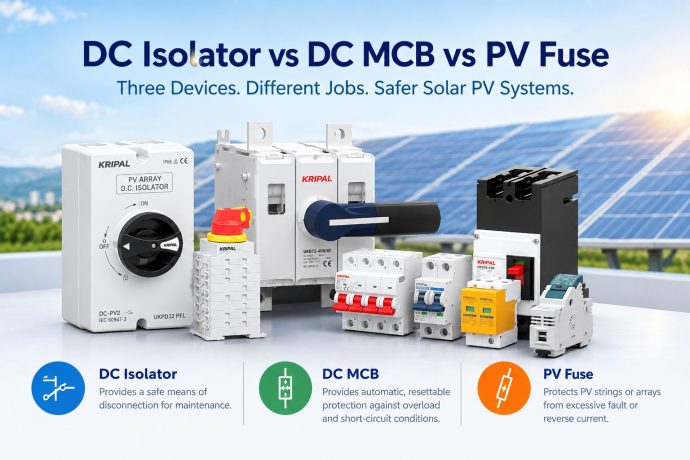
DC Isolator, DC MCB, or DC Fuse? What Protects What in a Solar System
Learn how DC isolators, DC MCBs, and PV fuses protect solar PV systems differently—and how to select the right device for each circuit.
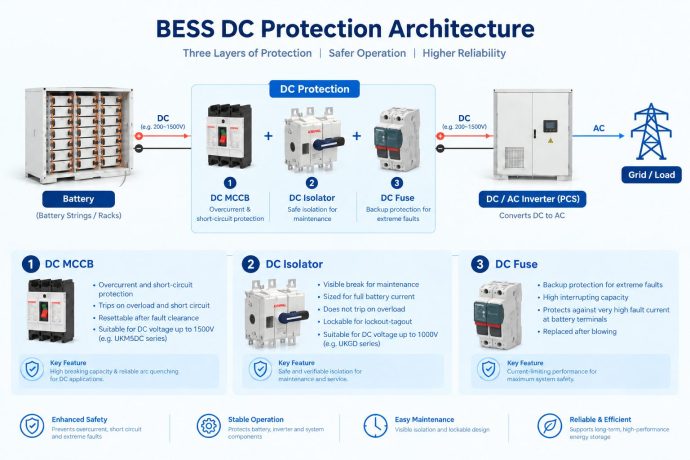
BESS DC Protection: How to Select MCCBs, Isolators and Fuses
Learn how to select BESS DC MCCBs, isolators, and fuses by voltage, current, fault current, interrupting rating, and protection coordination.
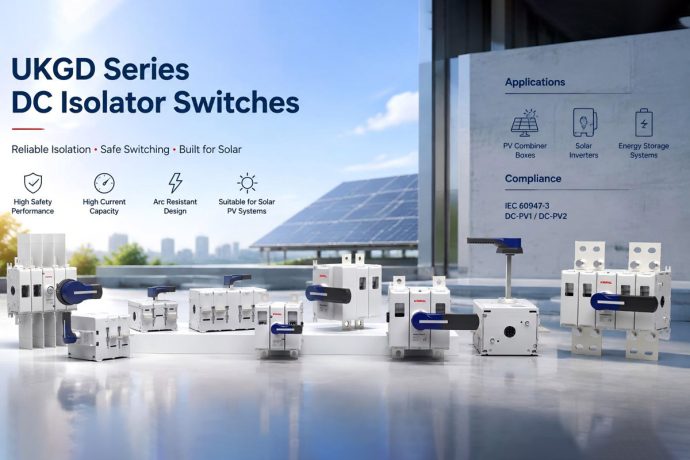
Comprehensive Guide to DC Isolator Switch Installation for Solar PV Systems
Learn where to install a DC isolator switch in solar PV systems, correct polarity wiring, DC arc prevention, IEC standards and how to select...
Direct from Manufacturer
How Can We Assist You?
Tell us a bit more so we can route your request to the right engineer. Get factory-direct pricing and custom specifications within 24 hours.