Search
Fuse Holders and Fuse Links for Power Distribution | 32A-125A | Cylindrical
Reliable AC fuse supports for 10x38mm, 14x51mm, and 22x58mm fuse-links up to 125A.
KRIPAL UKRT18 series fuse holders provide reliable overcurrent protection for residential, commercial, and industrial distribution boards. Designed for AC 50Hz systems (up to 690V), this range supports 10x38mm, 14x51mm, and 22x58mm fuse-links (gG, aM, aR types) per IEC 60269 standards. Key features include built-in fuse status indicator lights, modular multi-phase configuration for power isolation, and secure 35mm DIN rail mounting. Constructed from high-quality heat-resistant materials with a 100kA short-circuit stability rating, these CE-compliant components ensure safe and consistent operation in power distribution cabinets, control systems, and machinery.
Get A Quote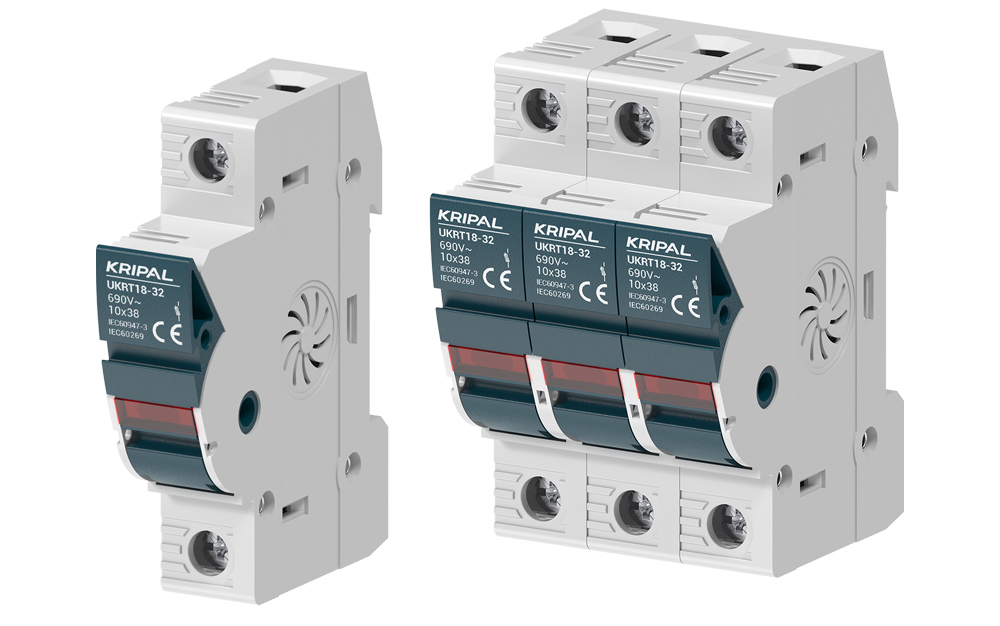
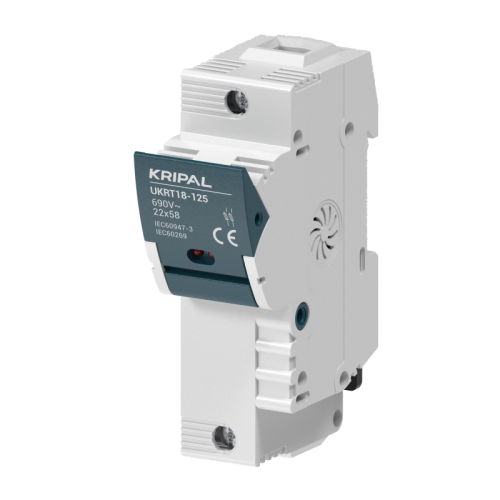

UKRT18 AC Fuse Holder 1P/2P/3P 125A for 22 x 58 Fuse CE Certified
It is primarily used in electrical circuits as a support for various fuse-links (such as types gG, aM, aR, etc.) with dimensions up to 22×58.
Ask a Quote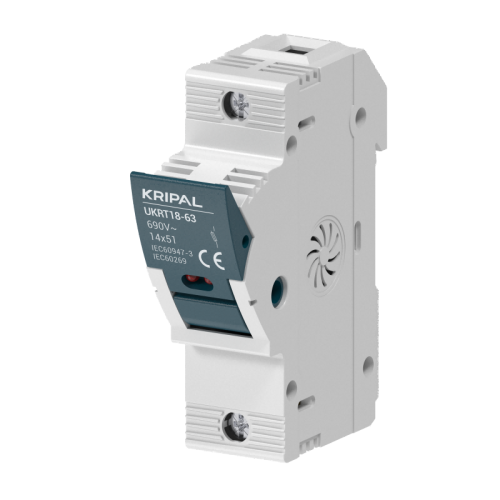
UKRT18-63 AC Fuse Holder 63A 1P/2P/3P for 14 x 51mm Fuse CE Certified
It is primarily used in electrical circuits as a support for various fuse-links (such as types gG, aM, aR, etc.) with dimensions up to 22×58.
Ask a Quote
UKRT18-32 Fuse Holder 32A 1P 2P 3P for 10x38mm Fuse CE Certified
It is primarily used in electrical circuits as a support for various fuse-links (such as types gG, aM, aR, etc.) with dimensions up to 22×58.
Ask a QuoteFuse Holder and Fuse Link Technical Guide for Industrial Protection
A fuse holder, also known as a fuse base, provides the mechanical mounting and electrical connection for a fuse-link. The holder must securely retain the fuse-link, provide low-resistance contact between the fuse-link end-caps and the circuit conductors, and contain arc energy during operation. The UKRT18 series cylindrical fuse holders support 10x38mm, 14x51mm, and 22x58mm fuse-links with rated insulation voltages up to 690V and conventional thermal currents up to 125A. These fuse holders support various fuse types (gG, aM, aR) per IEC 60269 standards, featuring a built-in fuse status indicator light and a 100kA short-circuit stability rating. Configured in multi-phase combinations, they provide the function of power isolation, featuring a secure 35mm DIN rail mounting structure for residential, commercial, and industrial distribution boards. This selection guide covers fuse holder type, rated current, fuse-link compatibility, and switching capability.
UKRT18 Fuse Holder Series Technical Specifications
Fuse Holder Type Selection by Application
Cylindrical fuse holders—specifically the UKRT18 series in 10x38mm, 14x51mm, and 22x58mm sizes covering 32A, 63A, and 125A—are used in residential, commercial, and industrial distribution boards, where their compact form factor fits onto a standard 35mm DIN rail. These fuse supports are designed for AC 50Hz systems with a rated insulation voltage up to 690V. The fuse holder must be rated for the same or higher current and voltage as the fuse-link it will contain.
UKRT18 Fuse Holder Isolation and Status Indication
The UKRT18 series fuse holders provide the function of isolating the power supply when configured in multi-phase combinations. Each unit is equipped with a built-in fuse indicator light that signals immediately when a fuse-link has blown. Constructed from high-quality, heat-resistant molded plastic shells with contact and fuse carrier components, these supports are built for reliable performance in standard electrical environments.
Fuse-Link Compatibility and Utilization Categories
The UKRT18 series supports various fuse-link types (such as gG, aM, aR, etc.) per IEC 60269 standards, providing strong adaptability for different load circuits like lighting and power distribution. gG fuse-links provide general-purpose protection, while aM and other specialized categories match specific industrial and equipment protection requirements within the specified current parameters.
Breaking Capacity and Short-Circuit Stability
UKRT18 series fuse holders have the ability to withstand conventional thermal currents and expected short-circuit impact currents up to 100kA dynamic and thermal stability. Complying with national standards GB 13539.1, GB/T 13539.2, and international standards IEC 60269-1 and IEC 60269-2, these components ensure reliable overcurrent protection and structural stability in industrial control systems and power distribution cabinets.
Specify Fuse Holders for Your Distribution Board
- Fuse Holder Selection: Provide your circuit requirements, and we will recommend the optimal UKRT18 holder type, size, and compatible fuse-link rating.
- Coordination Study: Request technical data and parameters for proper upstream and downstream circuit protection coordination.
- OEM Bulk Supply: Source UKRT18 series holders and fuse-links in bulk for your panel building and power distribution equipment production line.
Fuse Protection for Switchboards, MCCs and Distribution Panels
KRIPAL UKRT18 series fuse holders and fuse-links provide high-breaking-capacity overcurrent protection at every level of low-voltage power distribution. The combination of a robust mechanical holder and a precisely calibrated fuse-link provides reliable protection that maintains stability and performance under rated operating conditions.
Distribution Board and Control Panel Protection
KRIPAL UKRT18 series cylindrical fuse holders support 10x38mm, 14x51mm, and 22x58mm fuse-links with a rated insulation voltage up to 690V and conventional thermal currents up to 125A. These supports accommodate various fuse-link types (gG, aM, aR) per IEC 60269 standards, delivering reliable circuit protection with dynamic and thermal stability up to 100kA.
Industrial Distribution and Control Circuit Applications
Designed for AC 50Hz systems, these fuse holders are widely utilized in industrial control systems, building electrical installations, and power distribution cabinets. The range features built-in fuse status indicator lights and multi-phase combinations that provide the function of power isolation.
Motor and Equipment Protection Support
The UKRT18 series offers robust adaptability to protect different load circuits, including motor drives and power distribution units, ensuring operational continuity. aM and gG fuse-links coordinate effectively within the specified current parameters to safeguard industrial machinery against overcurrents and short circuits.
Building Electrical and Riser Protection
Built with high-quality, heat-resistant molded shells, UKRT18 fuse holders ensure long-term reliable operation in standard commercial and residential building distribution branches. They comply with national standards GB 13539.1, GB/T 13539.2, and international standards IEC 60269-1 and IEC 60269-2.
Control Panel Internal Circuit Protection
The compact modular design of UKRT18 fuse holders enables secure 35mm DIN rail mounting inside control panels and distribution boards. By removing the carrier or utilizing multi-phase configurations, these components facilitate efficient circuit management, safety isolation, and fault indication across diverse electrical installations.
Source Fuse Holders for Your Panel Building Operation
- Fuse Specification: Provide your circuit schedule and we specify the correct UKRT18 holder and fuse-link type, size and rating for each circuit.
- Discrimination Tables: Request technical data to verify circuit protection and coordination.
- Bulk Fuse-Link Supply: Order UKRT18 series holders complete with factory-fitted fuse-links of your specified rating for delivery to your assembly line.

KRIPAL Fuse Holder Manufacturing: Precision Contacts for Reliable Protection
KRIPAL UKRT18 series fuse holders and fuse-links are manufactured using high-quality heat-resistant molded shells and precision-engineered internal components designed for low-voltage power distribution applications. Each production batch undergoes rigorous inspection to ensure stable performance for industrial and commercial use
UKRT18 Series Fuse Holder Shell Molding and Construction
Fuse holder bodies are formed from high-quality, electricity and heat-resistant plastic pressed shells combined with contacts and fuse carriers, which can be riveted or welded to form multi-phase structures. The material formulation provides excellent mechanical strength, anti-aging performance, and superior insulation characteristics. Dimensional and structural inspections verify proper fit for standard cylindrical form factors.
Precision Contact Design and Terminal Configuration
Internal contacts and terminals are engineered to provide consistent contact pressure and low contact resistance on fuse-link terminals across regular operation. Contact force and terminal alignment are optimized for standard cylindrical fuse-links across sizes 10x38mm, 14x51mm, and 22x58mm.
Fuse-Link Compatibility and Multi-Phase Assembly
Fuse supports are designed to accommodate various standard fuse-link types (gG, aM, aR) per IEC 60269 standards, delivering reliable circuit protection. Multi-phase combinations are easily configured to provide the function of power isolation, supported by built-in fuse status indicator lights.
Short-Circuit Stability and Performance Testing
Fuse holder and link assemblies are designed to withstand conventional thermal currents and expected short-circuit impact currents up to 100kA dynamic and thermal stability. Operating parameters are verified against IEC 60269-1/2 and GB 13539 limits to ensure safety and reliability.
Distributor Stock Holding Programs for Fuse Holders
KRIPAL supports distributor inventory programs with agreed stock levels for standard UKRT18 fuse holder and fuse-link models. Shipments are planned based on demand data, with scheduled replenishment to maintain stable supply and consistent fill rates.
Private Label and OEM Branding for Fuse Holders
Laser-marked part numbers aligned with your catalog, OEM-branded packaging, and customized instruction sheets are available. Unbranded supply is provided upon request for private label production of fuse holders and fuse links.
Multi-Region Certification and Compliance Support
CE and compliant documentation with IEC 60269-1/2 and GB 13539 standards is provided according to target export markets. Technical documentation files are maintained and updated in line with regulatory requirements for industrial power distribution.
Direct Technical Access to KRIPAL Production Engineers
Your technical team communicates directly with experienced engineers regarding product specifications and application parameters. Application questions regarding fuse compatibility, ratings, and technical parameters receive prompt support during business hours.
Frequently Asked Questions
Explore FAQ >Recent Blog
Explore Blog >
How to Understand Link Fuses?
Learn the fundamentals of link fuses. This guide covers working principles, fuse types, application scenarios, and expert selection methods for electrical safety.
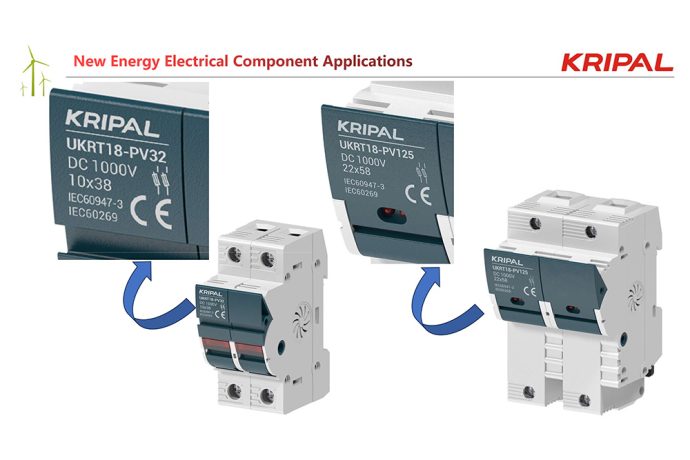
What Is the Difference Between DC Fuses and AC Fuses?
What's the difference between DC and AC fuses? Learn how DC fuses vs AC fuses work: DC handles continuous current & arc, while AC...
Fuse vs Circuit Breaker: A 2026 Comprehensive Selection Guide for Industrial Applications
Compare fuse vs circuit breaker for industrial applications. Learn key differences, selection criteria, and how to choose the right protection device.
Direct from Manufacturer
How Can We Assist You?
Tell us a bit more so we can route your request to the right engineer. Get factory-direct pricing and custom specifications within 24 hours.