Search
Disconnector Switches Load Break | 160A-800A | AC-23A & DC-21B | Panel Mount DIN Rail
Isolator Switch - Photovoltaic DC & AC Isolator Switch
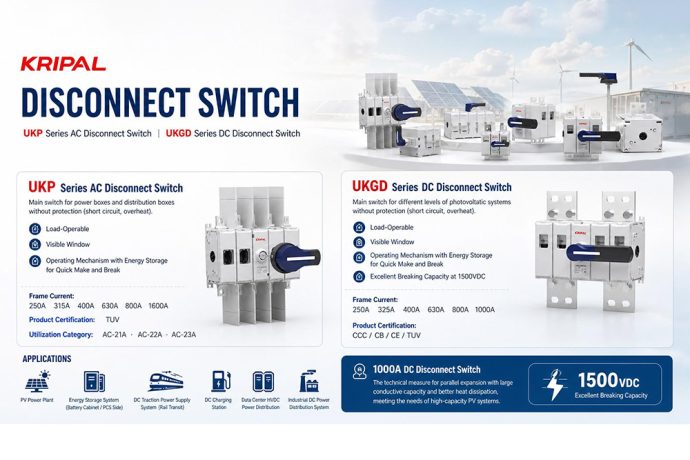
KRIPAL manufactures disconnector switches (also called load-break disconnectors) in the UKP (AC) and UKGD (DC) series for high-current circuit isolation in low-voltage main switchboards, photovoltaic systems, and motor control centers.These switches provide visible isolation and load-break switching capability for circuits from 160A to 800A at rated operational voltages up to 1000V AC/DC.The UKP series features utilization categories up to AC-23A per IEC standards, certifying them for reliable switching of individual motors and heavy-duty loads.The UKGD series is specifically engineered for photovoltaic systems, complying with UL98B standards and applicable to NEC Article 690 requirements.Featuring visual contact technology, these switches provide high-level safety assurance by allowing operators to clearly verify contact status.Available in 2P, 3P, and 4P configurations with front-operated or side-operated rotary mechanisms, as well as direct-mounting or door-installation handles.Certified to international standards, KRIPAL disconnector switches serve as ideal main incoming devices and load-isolation solutions combining reliable circuit protection and operational control.
Get A Quote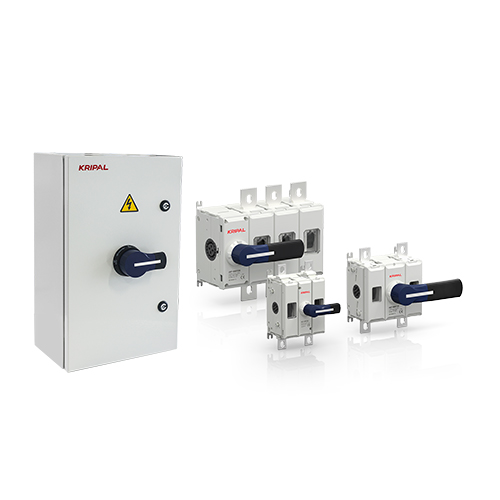
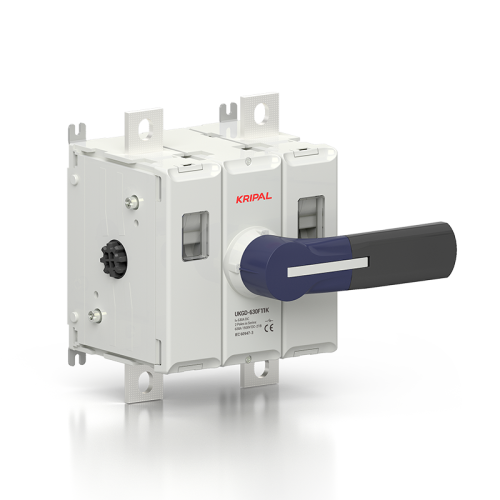


UKGD-630F11K 630A High-Current DC1500V Switch Disconnector for Battery PCS and Solar Power Stations
UKGD-630F11K 630A DC1500V high-current switch disconnector for battery PCS and solar power stations.
Ask a Quote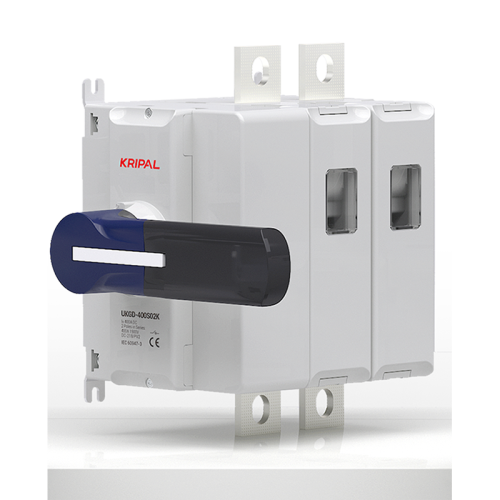
UKGD-400S02K 2P 400A DC1500V Switch Disconnector Side-Mounted Handle CE/CB/TUV Certified DC Isolator
UKGD-400S02K 400A DC1500V side-mounted switch disconnector, CE/CB/TUV certified.
Ask a Quote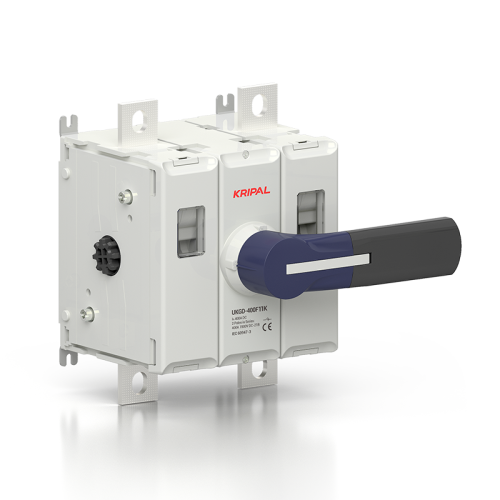
UKGD-400F11K 400A 2-Pole DC1500V Main Isolating Switch for PV and Energy Storage Cabinets
UKGD-400F11K 400A 2-pole DC1500V main isolating switch for PV and energy storage cabinets.
Ask a Quote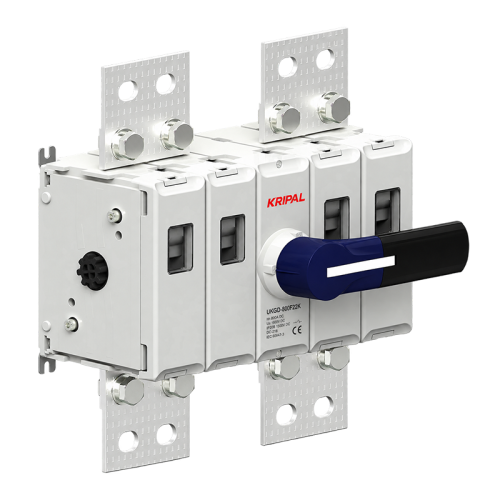
UKGD-800F22K 800A DC1500V Parallel-Pole Switch Disconnector for Large-Scale Energy Storage Systems
UKGD‑800F22K 800A DC1500V parallel‑pole switch disconnector for energy storage & PV systems.
Ask a Quote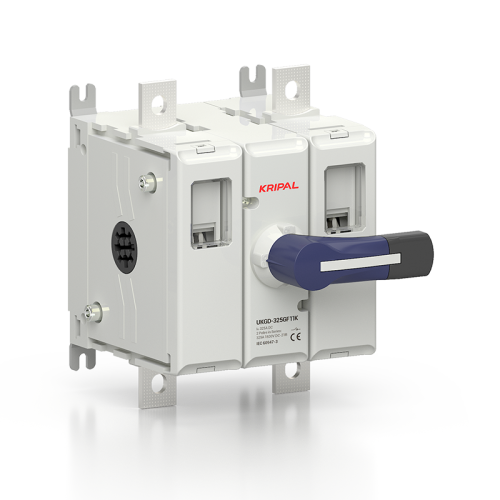
UKGD-325GF11K 325A 1500V DC Solar Array Disconnect Switch for Utility PV Combiner Systems
UKGD-325GF11K 325A 1500V DC solar array disconnect switch, designed for safe isolation in utility-scale PV combiner systems and solar farms.
Ask a Quote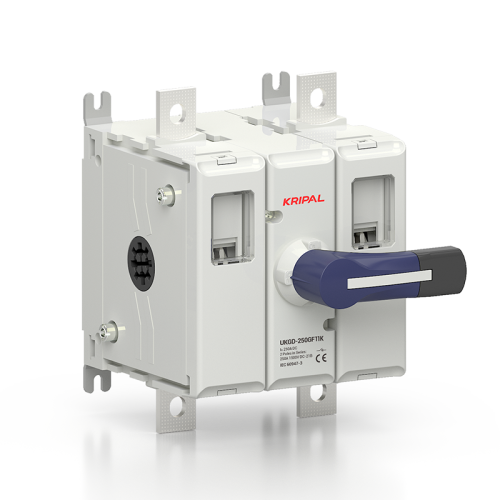
UKGD-250GF11K 250A 2-Pole 1500V DC PV2 Load-Break Isolation Switch for Solar Inverters
UKGD-250GF11K 250A 2-pole 1500V DC PV2 load-break isolation switch, designed for reliable disconnect.
Ask a Quote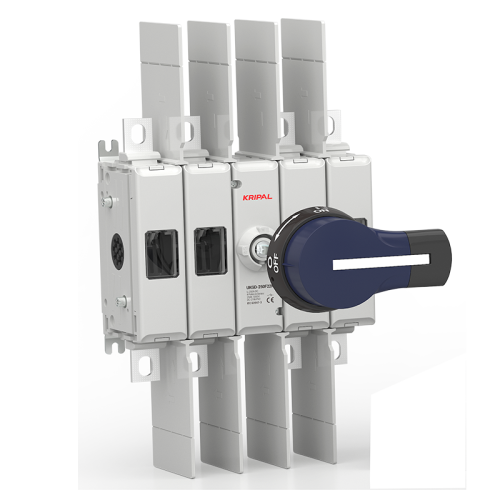
UKGD-250F22P 4-Pole 250A DC1000V PV Isolator with Door-Coupling Handle, Extension Shaft and Phase Barriers
UKGD-250F22P 250A 4-pole DC1000V PV isolator with door-coupling handle, extension shaft.
Ask a Quote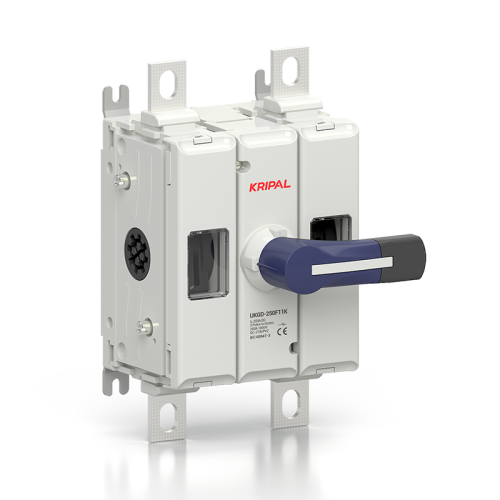
UKGD-250F11K 250A 2-Pole 1000V DC Switch Disconnector Base Mount for PV Combiner Box
UKGD-250F11K 250A 2-pole 1000V DC switch disconnector. Base mount isolator for PV combiner boxes.
Ask a Quote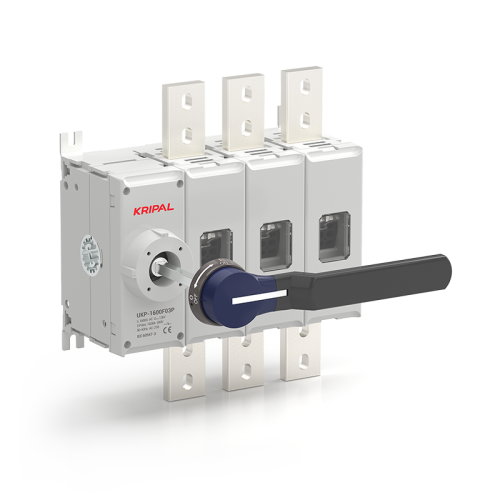

UKP-1600F03P 1600A 3-Pole Switch Disconnector with Door-Mounted Handle & Extension Shaft – External Operation Isolator for Enclosed Switchgear
UKP-1600F03P 1600A 3-pole switch disconnector with door-mounted handle & extension shaft for safe external operation of enclosed switchgear.
Ask a QuoteDisconnector Switch Selection: Load-Break Isolation for Power & Photovoltaic Circuits
A disconnector switch (also called a switch-disconnector or load-break switch) is a mechanical switching device that provides the isolation function of a disconnector (guaranteed air-gap in the OFF position) combined with the ability to make and break rated current under load. In the IEC 60947-3 classification, a switch-disconnector satisfies the requirements for both a switch (makes and breaks load current) and a disconnector (provides isolation gap). The UKP and UKGD series are designed for main incoming, photovoltaic system, and bus-coupler positions in switchboards where circuit protection is provided by upstream devices, and the disconnector switch provides local isolation and operational switching functions. This selection guide covers current rating, switching capability, mounting configuration, and accessory integration.
UKP & UKGD Disconnector Switch Series Technical Specifications
Current Rating and AC-23A / DC-21B Load Switching
The UKP series is rated from 160A to 800A in standard frame sizes with utilization categories up to AC-23A, certifying the switch to handle heavy-duty motor and load switching. The UKGD series is specifically engineered for photovoltaic systems up to 1500V DC (complying with UL98B standards). These high making and breaking capacities allow the disconnector switches to operate under load and meet strict safety isolation requirements, though frequent motor switching should utilize dedicated contactors
Visual Contact Technology and Contact System
KRIPAL disconnector switches feature advanced visual contact technology that provides a high-level safety assurance by allowing operators to clearly verify contact status. Each unit is built with robust mechanical structures, ensuring reliable contact separation and arc extinction to guarantee personal safety during operation.
Cable/Busbar Connection and Short-Circuit Withstand
The terminals are designed for secure connection to standard copper cables or busbars, utilizing terminal screws ranging from M8 to M12 (such as M8x25 for 160A-250A and M12x40 for 630A-800A models) with specified locking torques (e.g., 15-75 Nm). The switches offer high rated short-time withstand current capabilities (Icw) to ensure the device can safely carry prospective short-circuit currents until upstream protection clears faults.
Operating Mechanisms and Handle Configuration
The switches are available in 2P, 3P, and 4P configurations with front-operated or side-operated rotary mechanisms. Handle options include direct-mounting handles (K) or door-installation handles with shafts (P). They offer clear position indicators and reliable locking features to maintain safety during maintenance.
Specify Disconnector Switches for Your Switchboard
- Switchboard Integration: Our engineers review your single-line diagram and specify the UKP and UKGD ratings and configurations for each position.
- IEC 61439 Verification: Request type-test reports for your switchboard assembly verification package.
- OEM Supply: Source UKP and UKGD switches pre-assembled with handle mechanisms and accessories for your switchboard production.
Local Equipment Isolation for Motors, HVAC and Production Machinery
KRIPAL UKP and UKGD disconnector switches serve as main incoming, bus-coupler, and large feeder isolation points in low-voltage and photovoltaic switchboards where circuit protection is provided by upstream devices, and operational switching and visible isolation are handled by the disconnector switch. From high-current incoming switches on factory main switchboards to photovoltaic DC systems and feeder switches on motor control centers, these switches combine high-current load switching with the safety of a guaranteed visible isolation gap.
Fuse-Switch Combination Main Incoming Unit
A factory main switchboard or photovoltaic system uses a UKP or UKGD disconnector switch as the incoming device, with upstream protection providing overcurrent and short-circuit protection. The disconnector switch provides local isolation and operational switching: plant electricians can isolate the switchboard for maintenance by switching the device to OFF and padlocking the handle. The AC-23A rating for AC or DC-21B rating for DC allows the switch to break full loads during controlled shutdowns. The visible isolation gap provides positive confirmation before work begins.
Dual-Supply Bus-Coupler Application
A dual-supply switchboard uses a UKP disconnector switch as the bus-coupler between busbar sections. During normal operation, the bus-coupler is open, and each supply feeds its own section. If one supply fails, the affected incomer is opened, the bus-coupler is closed, and the load is supplied from the remaining source. The AC-23A rating ensures safe closing onto busbars where motors and transformers draw inrush currents. Door interlocks and padlocks allow maintenance teams to lock the bus-coupler securely.
Motor Control Center Incoming Disconnector
A motor control center serving a production line uses a UKP disconnector switch as the main incoming device, with upstream fuses providing overcurrent protection. The disconnector provides single-point isolation for the entire MCC, allowing safe de-energization for maintenance. Auxiliary contacts signal the PLC that the supply has been disconnected, preventing motor starters from attempting to close. The AC-23A rating ensures reliable switching without contact welding.
Capacitor Bank Switching Application
Power factor correction capacitor banks use UKP disconnector switches as incoming devices, with AC-23A ratings covering capacitive load switching requirements. Spring-assisted quick-make mechanisms ensure contacts close at full speed through the pre-arcing region, minimizing contact erosion from capacitive inrush currents.
Generator Incomer and Photovoltaic DC Isolation
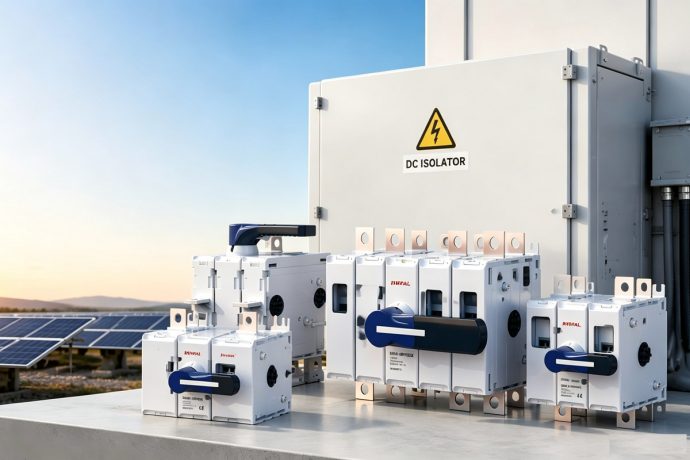
Standby generator installations and photovoltaic systems use UKP AC or UKGD DC disconnector switches to provide reliable isolation during maintenance and operational switching for system testing. The UKGD series is specifically engineered for photovoltaic applications up to 1500V DC in compliance with UL98B standards. These switches provide visual contact technology and robust mechanical performance to ensure safety before supply restoration or system servicing.
Integrate Disconnector Switches into Your Switchboard
- Application Engineering: Our switchboard engineers specify the UKP and UKGD rating, configuration, and mounting for your single-line diagram.
- Type-Test Package: Obtain complete test documentation for your switchboard IEC 61439 verification.
- OEM Supply: Source UKP and UKGD switches pre-assembled with handles, interlocks, and auxiliary contacts for your switchboard production line.
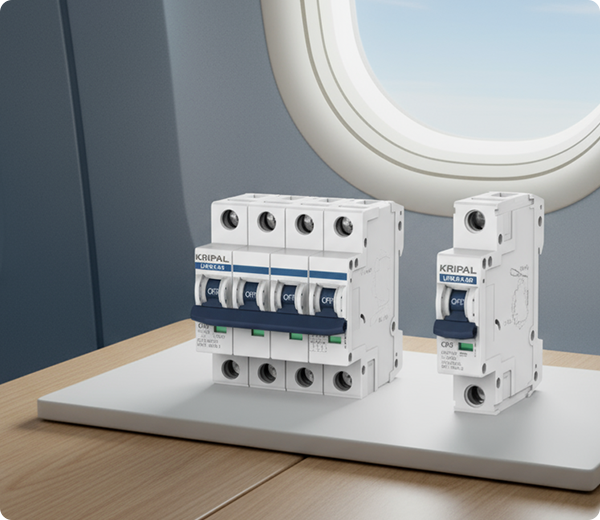
KRIPAL Disconnector Switch Manufacturing: Safe Load-Break Switching
KRIPAL disconnector switches are manufactured on a load-break switch assembly line where the contact mechanism is designed for load making and breaking capability at the specified utilization category. Each disconnector undergoes AC-22A, AC-23A, or DC-21B switching verification, dielectric testing, and mechanical endurance cycling for global industrial, motor load, and photovoltaic switching applications.
Load-Break Contact Mechanism with Arc Extinguishing
The disconnector contact mechanism incorporates a spring-loaded snap-action design with arc extinguishing chambers for each pole. This provides defined making and breaking capacity for load switching, differentiating the disconnector from a simple isolator. Arc chute plates are assembled with precise spacing verified by gauge on each unit to ensure consistent arc splitting performance.
Utilization Category Testing Per Batch
Sample disconnectors from each production batch are tested at the specified utilization category: AC-22A for mixed resistive and inductive loads, AC-23A for motor loads and other highly inductive loads, or DC-21B for photovoltaic applications. The test simulates making and breaking requirements under rated operational voltages up to 1000V AC/DC, verifying load-switching capability.
Mechanical Endurance Cycling on Samples
Sample units from each production batch undergo mechanical endurance testing up to 10,000 operations minimum per IEC 60947-3. Contact resistance is measured before and after endurance cycling, with the maximum increase limited to 50 percent of the initial value. The operating mechanism is inspected for wear on cam surfaces and detent components.
Adjustable Shaft and Handle Assembly for Panel Integration
Disconnectors offered with extended shafts for through-door operation are assembled with adjustable shaft lengths and door interlock mechanisms. Each assembled unit is tested for correct interlock operation: door cannot open with switch ON, switch cannot close with door open (defeat mechanism tested). Handle position indication alignment is verified.
Distributor Stock Holding Programs for Disconnector Switches
KRIPAL supports distributor inventory programs with agreed stock levels for standard disconnector models from 160A to 800A in 2-pole, 3-pole, and 4-pole configurations. Door-mount kits (P), direct-mount handles (K), shaft extensions, and auxiliary contact blocks are stocked for panel builder fulfillment.
Private Label and OEM Branding for Disconnector Switches
Laser-marked part numbers aligned with your catalog, OEM-branded packaging, and customized instruction sheets are available. Unbranded supply is provided upon request for private label production of disconnector switches.
Multi-Region Certification and Compliance Support
CE, UKCA, UL98B, and IEC 60947-3 compliance documentation is provided according to target export markets. Technical documentation files are maintained and updated in line with evolving machinery safety, photovoltaic, and electrical isolation requirements.
Direct Technical Access to KRIPAL Production Engineers
Your technical team communicates with the engineers who designed and tested your disconnector switches. Application questions including utilization category selection, motor load switching, photovoltaic DC isolation, and accessory compatibility receive answers within 24 hours during China business hours.
Frequently Asked Questions
Explore FAQ >Recent Blog
Explore Blog >
Isolator Switch Maintenance: Testing, Inspection and Replacement
Recommended inspection intervals, contact resistance and insulation testing procedures, visual checklist, and when to replace an isolator switch.
What Is a Knife Switch and What Has It Become in Modern Electrical Systems?
Why are knife switches obsolete? Learn about modern enclosed switch-disconnectors, AC/DC utilization categories (AC-23, DC-PV2), and key selection criteria.
DC Isolator Switch Installation for Solar PV: Wiring, Placement and Safety Guide
Master DC isolator switch installation for solar PV systems. Learn practices for placement, polarity wiring, arc prevention, and IEC 60364-7-712 compliance.
Direct from Manufacturer
How Can We Assist You?
Tell us a bit more so we can route your request to the right engineer. Get factory-direct pricing and custom specifications within 24 hours.