Search
Electronic MCCB with Full Digital Protection | LCD Display | 40A-1250A | Energy Monitoring
KRIPAL: Your Professional Molded Case Circuit Breaker Manufacturer
KRIPAL manufactures electronic molded case circuit breakers in the UKM32 series, replacing thermal-magnetic trip units with a microprocessor-based electronic trip unit providing programmable protection, real-time current measurements, and Modbus RTU communication for integration with power monitoring and SCADA systems. Available in frame sizes from 250A to 1250A with breaking capacities up to 150kA at 400V AC, the UKM32 offers advanced protection and measurement capabilities comparable to an ACB in a compact MCCB format. The STK series electronic trip unit provides adjustable long-time (L), short-time (S), and instantaneous (I) protection, flexible curve settings, a 90%/105% Ir pre-alarm alert, and maintenance tracking functions. The display shows real-time phase currents and protection parameters, while programmable digital outputs can be configured for trip, pre-alarm, or maintenance alert functions. The UKM32 is ideal where power monitoring and high breaking capacity are required but space or budget constraints exclude a full ACB, such as sub-distribution boards, MCC incomers, and critical equipment feeders.
Get A Quote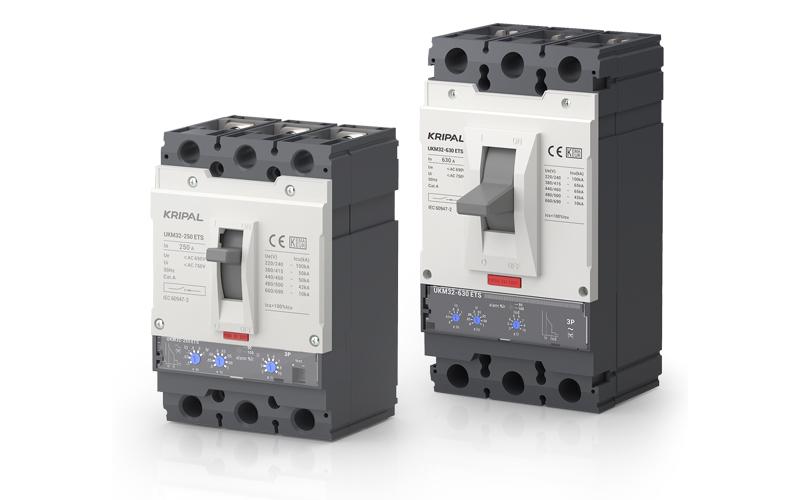
Understanding Full Electronic MCCBs
An electronic MCCB replaces the traditional bimetallic thermal unit and magnetic coil with a microprocessor-based system that senses current via internal current transformers (CTs) and executes protection algorithms through advanced software. The electronic approach delivers inherently more precise protection with wide adjustment ranges, customizable tripping curves, and integrated monitoring functions that transform the circuit breaker into an intelligent node. The UKM32 series combines the compact footprint and cost efficiency of a standard MCCB with the advanced functionality and protection accuracy typical of an ACB. This selection guide covers the protection functions, measurement capabilities, and communication options available across the UKM32 range.
UKM32 Electronic MCCB Series Technical Specifications
Microprocessor Protection with Programmable Curves
The UKM32 electronic MCCB provides multi-stage microprocessor-based protection via the advanced STK series trip unit. Long-time (L) protection features an adjustable pickup Ir from 0.4 to 1.0 X In with thermal memory for intermittent overload protection. Short-time (S) protection offers an adjustable pickup Isd from 2 to 10 X Ir with time delay options for precise selective coordination. Instantaneous (I) protection ensures ultra-fast fault clearing during high short-circuit events. The unit also integrates 90% and 105% Ir pre-alarm status indicators, allowing operators to mitigate load risks before a trip occurs. Settings and protection statuses are conveniently configured and monitored via the trip unit interface.
Precision Current Sensing Technology
The UKM32 uses integrated high-precision current transformers (CTs) to directly measure phase and neutral currents for the microprocessor trip unit. This electronic sensing approach delivers superior accuracy compared to standard thermal-magnetic bimetals, preventing nuisance tripping caused by ambient temperature changes. The linear response of the internal CTs across a wide current spectrum allows accurate sensing up to full breaking capacities (up to 150kA at 400V AC), while maintaining the standard, compact frame dimensions of the UKM series.
Real-Time Measurement and Diagnostic Display
The UKM32 front panel features an intuitive digital interface and status LEDs displaying real-time phase currents (Ia, Ib, Ic, In), operating states, and fault indication. The STK trip unit continuously monitors system health, indicating overload status via 90% Ir (flashing) and 105% Ir (solid) pre-alarm alerts. Integrated test ports and trip status query functions enable rapid diagnostics and condition-based maintenance tracking, reducing downtime during troubleshooting.
Modbus Communication and System Integration
The UKM32 supports optional RS-485 Modbus RTU communication, allowing real-time transmission of current measurements, protection parameters, alarm states, and fault history directly to SCADA or Building Management Systems (BMS). Utilizing standard daisy-chain networking over RS-485, multiple UKM32 breakers can be linked into a centralized power monitoring system, enabling remote status monitoring, automated alarm generation, and data logging for energy management and facility automation.
Deploy Electronic MCCBs for Intelligent Power Distribution
- Protection and Monitoring Design: Our engineers configure the UKM32 microprocessor protection parameters and Modbus communication settings tailored to your specific power distribution network requirements.
- Modbus Integration Support: Request our official register map and reference configuration files for seamless integration into your SCADA, BMS, or energy management systems.
- OEM Supply: Source UKM32 MCCBs pre-configured with your customized protection thresholds and communication options, fully ready for plug-and-play installation.
Applications of Full Electronic MCCBs in Smart Infrastructure
KRIPAL UKM32 electronic MCCBs bring ACB-level intelligence to sub-distribution and equipment feeder levels, providing precise electronic protection, status monitoring, and Modbus communication capabilities that were previously only available in full-size air circuit breakers. From the sub-main distribution boards in commercial buildings to critical equipment feeders in industrial facilities, the UKM32 transforms every circuit breaker into an intelligent, connected power monitoring node.
Commercial Building Sub-Main with Energy Monitoring
A commercial building utilizes UKM32 electronic MCCBs on all sub-main feeders from the main switchboard to each floor distribution board. Each UKM32 measures real-time phase currents and energy consumption, reporting parameters via Modbus RTU to the building energy management system to enable per-floor tenant energy billing. Integrated STK series trip units track protection parameters and operational status. Should an event occur, the system identifies trip statuses without requiring immediate manual inspection at individual distribution boards. The facilities team leverages these real-time operational metrics and pre-alarm alerts to perform targeted diagnostics and schedule proactive maintenance, ensuring reliable power supply across all tenant zones.
Critical Manufacturing & Pharmaceutical Process Protection
Pharmaceutical and high-precision manufacturing plants deploy UKM32 electronic MCCBs on feeders powering critical process equipment where an unexpected outage risks costly batch loss. The UKM32 features adjustable long-time (Ir), short-time (Isd), and instantaneous (Ii) protection curves alongside 90% and 105% Ir pre-alarm alert indicators. Maintenance teams receive immediate pre-alarm status updates on increasing current loads before a trip threshold is breached. Real-time phase currents (Ia, Ib, Ic, In) are logged into SCADA and batch management systems via Modbus RTU, supporting regulatory quality compliance and enabling rapid root-cause analysis during deviation investigations.
Data Center & Wastewater SCADA Integration
Data centers and automated municipal facilities integrate UKM32 electronic MCCBs across critical equipment feeders—such as CRAC cooling units, UPS outputs, and wastewater pumps—directly into central SCADA or DCIM systems. Utilizing RS-485 Modbus RTU communication, the UKM32 transmits real-time current measurements and operational states every few seconds. In data centers, this data feeds continuous Power Usage Effectiveness (PUE) monitoring algorithms. In unmanned utility plants, immediate trip notifications automatically alert on-call technicians with specific fault statuses, enabling rapid diagnosis, standby pump switching, and significantly reduced mean-time-to-repair (MTTR).
EV Charging Hub & Dynamic Load Distribution
Commercial EV charging hubs with multi-point DC fast chargers employ UKM32 electronic MCCBs on feeder circuits supplying groups of high-power chargers. Connecting to the Central Management System (CMS) via Modbus RTU, the UKM32 provides real-time current telemetry across all active charging phases. If total hub current approaches site supply limits, the CMS initiates dynamic load balancing to curtail secondary charger output rather than tripping incoming main breakers. High breaking capacity (up to 150kA at 400V AC) combined with adjustable electronic trip curves ensures robust short-circuit protection against cable faults, maintaining uninterrupted operation for commercial EV infrastructure.
Upgrade to Intelligent MCCB Protection
- Protection and Monitoring Design: Our application engineers configure the UKM32 microprocessor protection parameters and Modbus settings for your specific protection coordination and power monitoring requirements.
- SCADA Integration Support: Request the Modbus RTU register map, communication settings guide, and reference SCADA configuration templates for quick implementation.
- OEM Supply: Source UKM32 MCCBs pre-configured and factory-tested, ready for seamless integration into your intelligent switchboard assemblies.
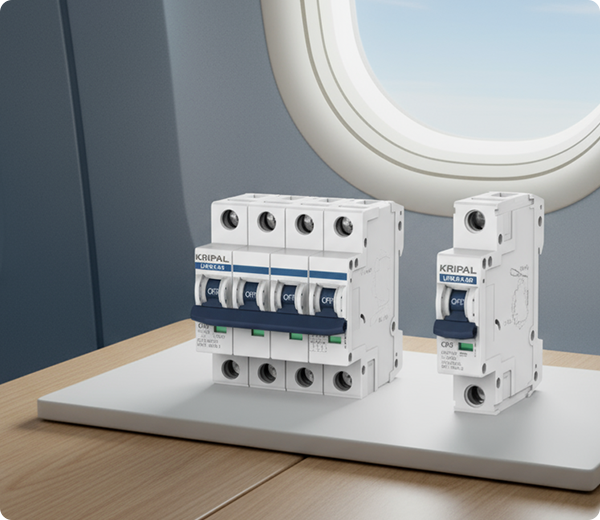
KRIPAL Electronic MCCB Manufacturing and OEM Services
KRIPAL UKM32 electronic MCCBs with full digital protection are manufactured in an advanced electronics assembly and testing facility where microprocessor-based STK trip units, precision current transformers, and Modbus RTU communication modules are integrated into compact MCCB bodies. Each electronic MCCB undergoes a comprehensive automated test sequence covering full protection parameter calibration, status monitoring, and communication functionality to guarantee total reliability for global intelligent power distribution applications.
Integrated Current Measurement and Parameter Calibration
The built-in electronic measurement function is calibrated against precision test equipment. Current sensing accuracy for phase currents (Ia, Ib, Ic, In) is rigorously verified during end-of-line testing across multiple load levels to ensure precise digital protection and real-time current telemetry.
True RMS Sensing and Electronic Protection Functions
The microprocessor trip unit utilizes True RMS current sensing to accurately measure distorted AC waveforms. This ensures that protection algorithms evaluate the actual heating effect of non-linear loads, preventing nuisance tripping while maintaining accurate long-time, short-time, and instantaneous protection.
Event Logging and Status Memory Verification
The onboard memory logging trip events, alarm conditions, and operation status is tested for accuracy and data retention in non-volatile memory. Power-off memory retention is confirmed by cycling supply power to ensure all fault indicators and settings remain intact after system power restoration.
Full Automated End-of-Line Test Sequence
Each UKM32 electronic MCCB undergoes an automated test sequence: contact resistance, dielectric withstand, trip unit calibration across all protection functions (L, S, I), pre-alarm logic verification, display check, and Modbus RTU communication loopback test. Test reports are archived against each unit’s serial number.
Distributor Stock Holding Programs for Electronic MCCBs
KRIPAL supports distributor inventory programs with agreed stock levels for standard UKM32 electronic MCCB frame sizes and popular current ratings. Technical support and trip unit configuration guidance are provided to assist distribution partners in local system setup.
Private Label and OEM Branding for Electronic MCCBs
OEM default protection parameter presets and project-specific configuration files pre-loaded at the factory are available for UKM32 breakers. Neutral packaging, customized nameplates, and private-label branding options are offered for commercial partners.
Multi-Region Certification and Compliance Support
Comprehensive IEC 60947-2, CE, and UKCA compliance documentation, including EMC test reports and short-circuit breaking capacity verification (up to 150kA at 400V AC), is provided to streamline client project approvals and regulatory filings.
Direct Technical Access to KRIPAL Electronics and Application Engineers
Your technical team communicates directly with KRIPAL engineers who design the UKM32 hardware, STK trip units, and Modbus integration options. Application inquiries regarding protection coordination, switchboard integration, and SCADA connectivity receive prompt responses within 24 hours.
Frequently Asked Questions
Explore FAQ >Recent Blog
Explore Blog >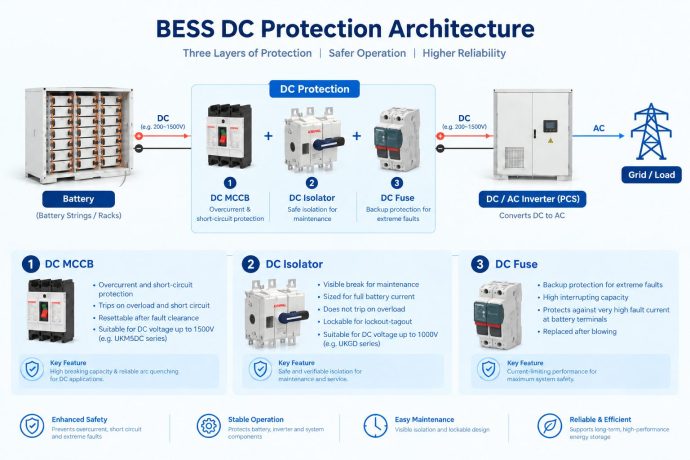
BESS DC Protection: How to Select MCCBs, Isolators and Fuses
Learn how to select BESS DC MCCBs, isolators, and fuses by voltage, current, fault current, interrupting rating, and protection coordination.
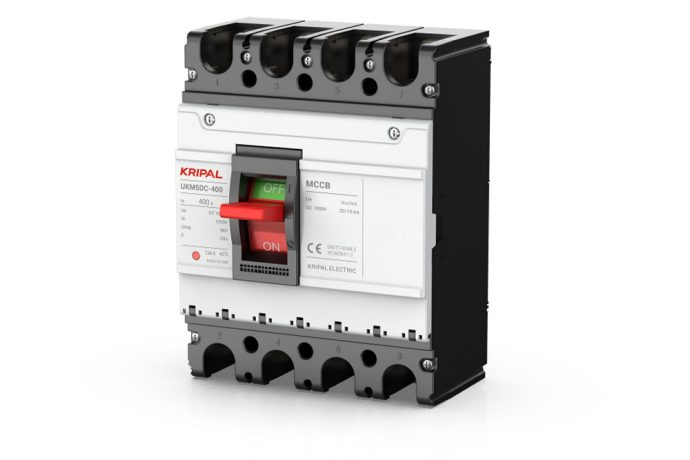
What are the Difference of MCCB and ACB?
Compare MCCB and ACB on breaking capacity, cost, maintenance & applications, learn core differences to select the right circuit breaker.

How to Choose a Reliable Circuit Breaker Supplier
Learn how to verify circuit breaker suppliers through certificates, factory audits, sample testing, traceability, and total cost analysis.
Direct from Manufacturer
How Can We Assist You?
Tell us a bit more so we can route your request to the right engineer. Get factory-direct pricing and custom specifications within 24 hours.