Search
Type 2 DC Surge Protective Devices (SPDs) | 500V-1200V | IEC 61643-31
KRIPAL Modular SPC Series DC SPDs
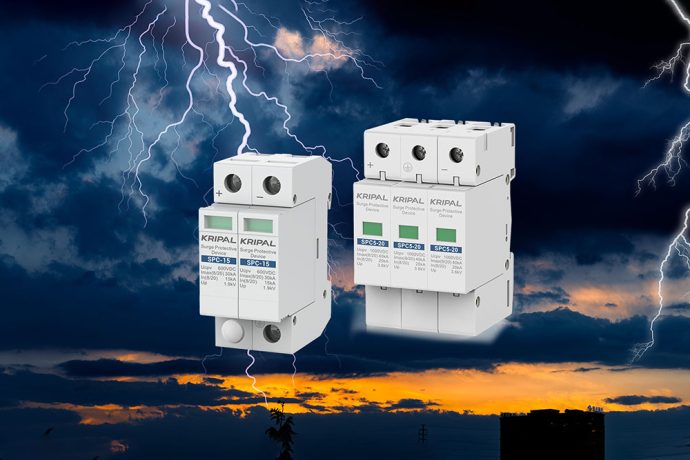
KRIPAL SPC series DC surge protective devices are engineered for reliable lightning and surge protection in PV systems. Certified to IEC 61643-31 and EN 50539-11, these C-class (Type 2) SPDs protect PV inverters and combiner boxes with a maximum continuous operating voltage (Ucpv) of up to 1200V DC. This series offers a nominal discharge current of 15kA or 20kA and a maximum discharge current up to 40kA per pole. The pluggable modular design supports hot-swap replacement for easy maintenance without power interruption, while the built-in thermal disconnector and visual green/red fault indicator ensure reliable status monitoring. These units feature optional remote or sound-light signaling for SCADA integration and are constructed with reinforced, flame-retardant PA66 material for durability in harsh environments. The SPC series is available in multiple pole configurations from 1P to 4P to accommodate various grounded and ungrounded PV system requirements.
Get A Quote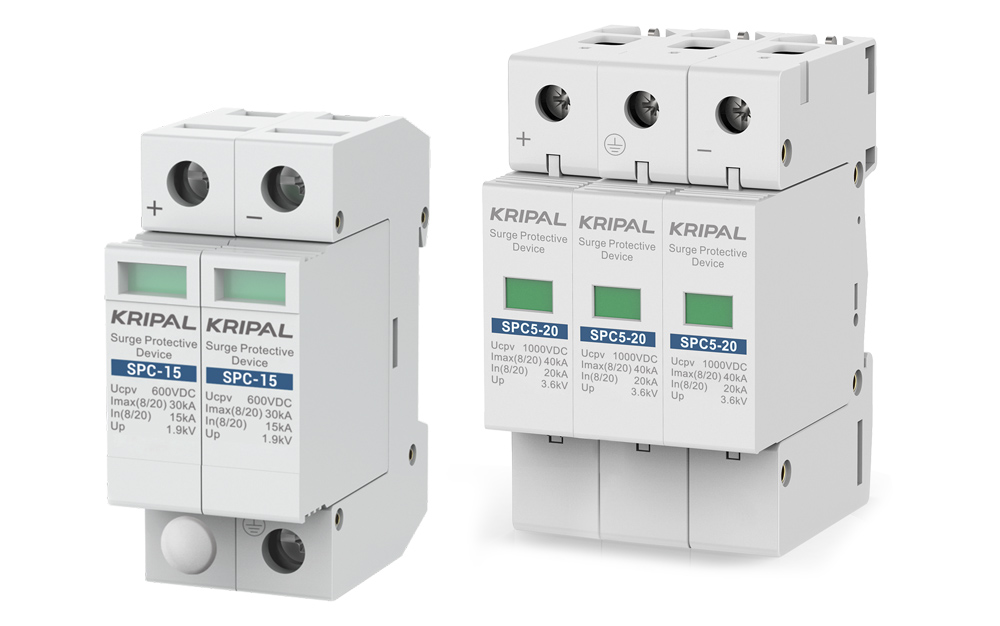
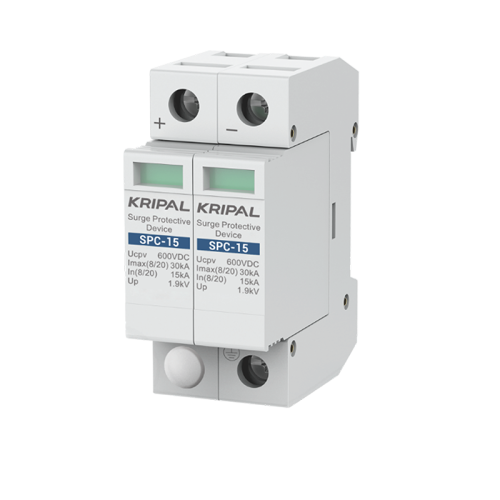

SPC-15 DC Surge Protector 2Pole 600V DC SPD 15kA~30kA Surge Arrester
The SPC-15 2p Surge Arrester provides equipotential bonding at the boundaries of LPZ1, LPZ2, and LPZ3 zones.
Ask a QuoteDC SPD Application and Selection for Solar DC Circuits
A DC surge protective device diverts lightning-induced transient overvoltages from PV conductors to earth, protecting inverter power electronics and combiner box components from damage. Unlike AC systems, PV circuits lack a natural zero-crossing point for follow-current extinction, requiring a higher Uc (maximum continuous operating voltage) and a specialized DC-specific varistor formulation. This guide covers SPD selection, voltage protection levels, and wiring configurations to match your PV system’s lightning risk and surge withstand capabilities.
SPC Series Technical Specifications & Selection Guide
SPD Type Selection per Lightning Risk Zone
IEC 61643-31 establishes protection zones that dictate the necessary SPD type. At the boundary between LPZ 1 and LPZ 2/3 where the PV inverter is typically installed, a Type 2 SPD rated for 8/20 microsecond impulse current is sufficient. The KRIPAL SPC series is specifically engineered for these requirements, providing reliable surge suppression at the inverter DC input and within combiner boxes for both rooftop and utility-scale solar installations.
Voltage Protection Level and Inverter Coordination
The voltage protection level (Up) of the SPD must remain at least 20 percent lower than the impulse withstand voltage (Uw) of the PV inverter’s DC input. KRIPAL SPC units offer various Up ratings (e.g., 1.7kV to 4.8kV) to ensure an adequate safety margin for most string and central inverters. To maintain this effectiveness, connecting leads must be kept under 0.5 meters in total length, as excess lead inductance adds approximately 1kV per meter during a surge, which can undermine the device’s protection.
Wiring Configuration for Grounded and Ungrounded Arrays
The SPC series supports multiple wiring configurations for diverse PV systems. A 2P SPD in common mode protects grounded arrays by clamping surges from L+ and L- to earth. For floating ungrounded arrays, a 3P SPD adds a differential mode element to clamp surges between positive and negative conductors. Bipolar arrays utilize a 4P SPD to protect all three conductors to earth while providing differential protection between pairs, all using a pluggable design for field-swappable modules.
Pluggable Module and End-of-Life Indication
Each SPC protection element is housed in a pluggable module with a mechanical coding key to prevent the insertion of an incorrectly rated replacement. A thermal disconnector safely isolates the module when the varistor degrades, while a green-to-red visual indicator provides an at-a-glance status update. The base unit includes an optional changeover contact for remote SCADA monitoring, and modules can be replaced without tools or power interruption, ensuring long-term durability with its reinforced, flame-retardant PA66 casing.
Specify DC Surge Protection for Your PV System
- Risk Assessment Tool: Submit your site GPS coordinates and array configuration for a lightning risk zone assessment with recommended SPC series SPD type and installation points.
- SPD Coordination Study: Request a cascaded SPD scheme showing SPC series protection levels coordinated with your inverter internal SPD and AC-side surge protection.
- Replacement Module Stock: Order spare pluggable modules with your initial shipment for 5-year on-site spares coverage without minimum order quantities.
Protecting Solar Inverters from Surge Damage Across All PV System Scales
KRIPAL SPC series DC surge protective devices are installed at every distribution level where transient overvoltage protection is required. From array junction boxes to inverter DC inputs and battery storage buses, these SPDs form a coordinated cascaded protection scheme that diverts surge energy to earth, safeguarding sensitive power electronics.
PV Array Junction Box Lightning Protection
In lightning-prone regions, SPC Type 2 SPDs are installed in array-level junction boxes to manage induced surges caused by lightning strikes on module frames. The pluggable modular design allows for rapid replacement after surge events without the need to disconnect DC cabling, ensuring continuous system operation and safety for maintenance personnel.
Inverter DC Input Surge Protection
String and central inverters often require external DC SPDs at the input terminals. The SPC-1000V Type 2 SPD mounts on DIN-rails within the DC disconnect enclosure. To minimize lead inductance and ensure optimal protection, connecting leads are kept under 0.5 meters, while optional remote signaling allows the inverter controller to alert O&M teams of fault events in real-time.
Battery Storage DC Bus Protection
Utility-scale BESS systems utilize SPC SPDs at battery rack busbars and PCS DC inputs. Long cable runs between racks can act as antennas for induced surges, and the SPC 3P configuration provides essential differential mode protection, preventing surge voltages from damaging sensitive PCS IGBT modules.
EV Charging Station DC Power Module Protection
DC fast chargers protect SiC MOSFET switching devices—which are highly susceptible to overvoltage—by using compact SPC SPDs at each power module DC input. The DIN-rail form factor fits easily into power module enclosures, with remote signaling contacts integrated into the charger management system for centralized health monitoring.
Off-Grid Solar Mini-Grid DC Distribution
Rural mini-grids use SPC SPDs to protect DC distribution networks (e.g., 48V or 110V) from surges induced on long overhead lines. By installing SPC-250V units with a low Up of 1.2kV and 20kA discharge capacity at source and consumer connection points, the system effectively prevents damage to household DC-DC converters and infrastructure assets.
Protect Your PV Investment with Coordinated Surge Protection
- Site-Specific SPD Scheme: Submit your site lightning flash density map, and we will design a coordinated SPD scheme using SPC series devices at every required protection zone boundary.
- Type-Test Certification: Obtain IEC 61643-31 and EN 50539-11 test reports for your project insurance underwriter and AHJ permit package.
- Spare Module Program: Pre-purchase replacement pluggable modules at the project start to guarantee 10-year availability of the exact MOV batch used in your installed SPC series SPDs.
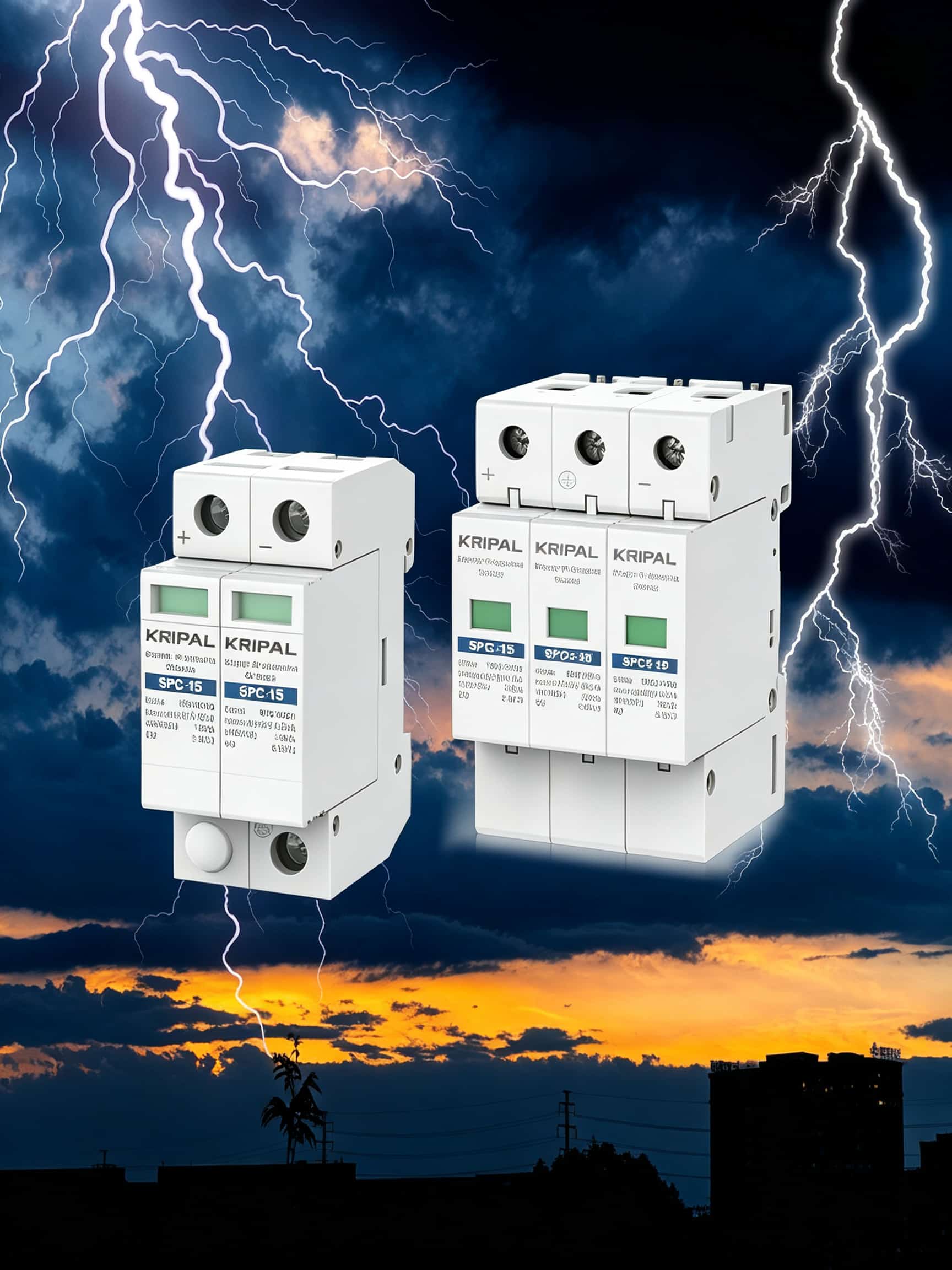
KRIPAL DC SPD Production: Engineered to Absorb Lightning Strikes
KRIPAL SPC series DC surge protective devices are manufactured in a dedicated facility where zinc oxide varistor discs are formulated, pressed, sintered, and metallized in-house. Every production lot undergoes rigorous 8/20 microsecond impulse testing on sample units to ensure global compliance for PV system lightning protection.
Zinc Oxide Varistor Disc Production In-House
We formulate ZnO varistor powders with precise dopant additions to optimize nonlinear V-I characteristics. Discs are pressed, sintered in computer-controlled tunnel kilns, and metallized with silver electrodes via screen printing, ensuring consistent clamping voltage performance across every batch.
Thermal Disconnector Assembly and Verification
Each SPD features a soldered thermal disconnector engineered to isolate the device at specific temperature thresholds upon MOV end-of-life. The solder alloy and joint geometry are verified on samples from every lot via calibrated hot-air testing to guarantee disconnection within the safety windows defined by IEC 61643-31.
8/20 Microsecond Impulse Testing Per Batch
Every production batch is tested using a computer-controlled 8/20 microsecond combination wave generator capable of 40kA peak current. Residual voltage at nominal discharge current (In) and maximum discharge current (Imax) is strictly recorded against published protection levels (Up) to ensure full traceability.
Status Indication and Remote Signaling Assembly
Visual green/red fault indicators and volt-free changeover contacts for remote monitoring are tested per unit. The mechanical flag mechanism triggered by thermal disconnection is verified for positive operation in all mounting orientations prior to final packaging.
Distributor Stock Holding Programs
KRIPAL supports distributor inventory through agreed stock levels for standard SPC models. Shipments are optimized via demand-based planning and scheduled replenishment to ensure supply stability and consistent fill rates.
Private Label and OEM Branding
We offer laser-marked part numbers aligned with your catalog, OEM-branded packaging, and customized multilingual instructions. Unbranded supply is also available upon request for private label requirements.
Multi-Region Certification and Compliance Support
Compliance documentation for CE, UKCA, and IEC/EN 61643-31 is provided according to your target export markets. Technical files are continuously maintained to support PV lightning protection system conformity assessments.
Direct Technical Access to KRIPAL Production Engineers
Your team gains direct access to the engineers who designed and tested your SPC series SPDs, ensuring expert responses to application questions within 24 hours during China business hours.
Frequently Asked Questions
Explore FAQ >Recent Blog
Explore Blog >
How Do DC Surge Protectors Safeguard Your Direct Current Systems?
Learn how a DC surge protector safeguards direct current systems. Compare MOV, GDT, TVS, and selection tips for solar, battery, and communication applications.
How to Choose Surge Protection for AC and DC Systems?
Learn how to choose surge protection for AC and DC systems. Compare SPD types, voltage ratings, and key selection factors for solar, grid, or...
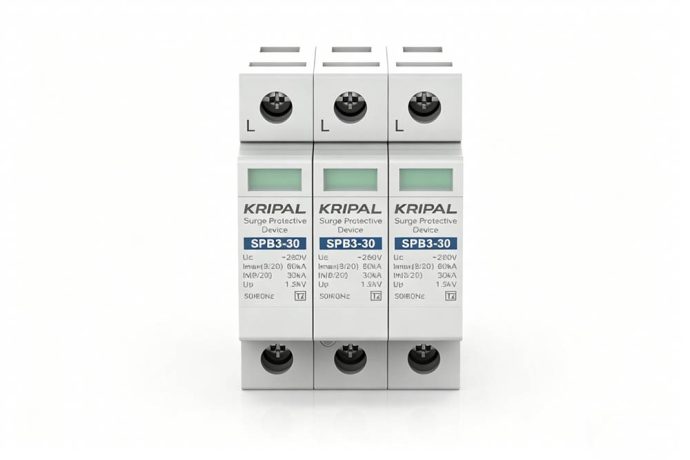
What Is the Difference Between AC and DC Surge Protective Devices?
Learn the difference between AC and DC surge protective devices (SPD). Compare voltage, arc suppression, standards, and selection for solar or AC systems.
Direct from Manufacturer
How Can We Assist You?
Tell us a bit more so we can route your request to the right engineer. Get factory-direct pricing and custom specifications within 24 hours.