Search
AC Surge Protection Devices for Power Distribution | Type 1, 2, 3 SPD | 275V-440V
KRIPAL offers a comprehensive range of modular AC Surge Protective Devices (SPDs)
KRIPAL manufactures high-performance AC surge protective devices (SPDs) in SPI, SPB, SPC, and SPD series for low-voltage power systems, protecting equipment against transient overvoltages from lightning and utility switching. Classified as Type 1, 2, and 3 per IEC 61643-11, these SPDs support maximum continuous operating voltages of 275V, 385V, and 440V AC, with nominal discharge currents from 5kA to 100kA. The series utilizes metal oxide varistor (MOV) technology with built-in thermal disconnectors and a pluggable design for hot-swap replacement without power disconnection. Featuring green-to-red visual status indicators and optional remote signaling, they ensure easy health monitoring. Compliant with GB/T 18802.11 and IEC 61643-11, KRIPAL SPDs are installed across main and sub-distribution boards to provide coordinated multi-stage protection.
Get A Quote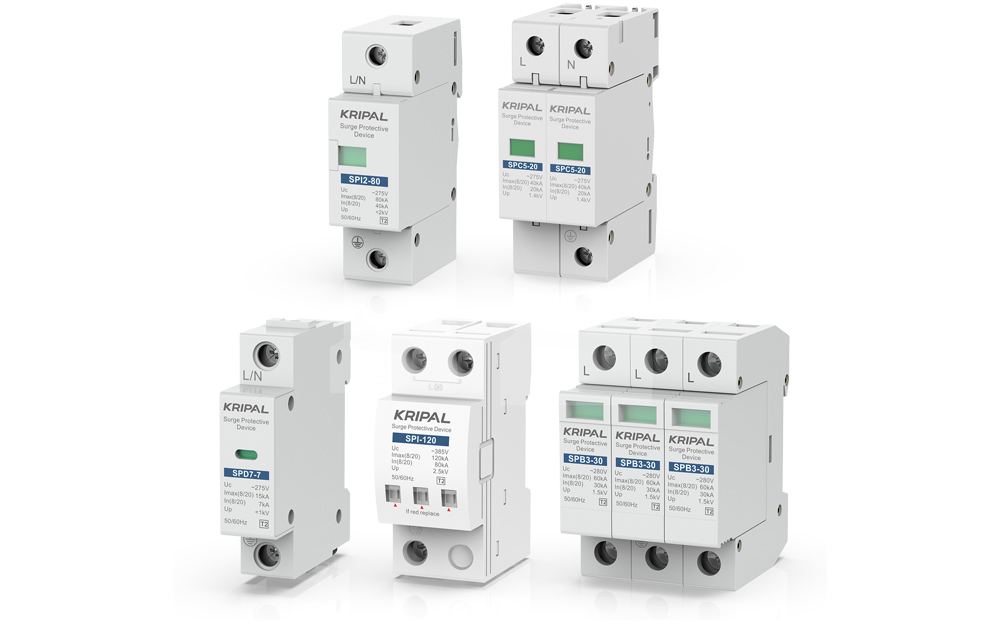
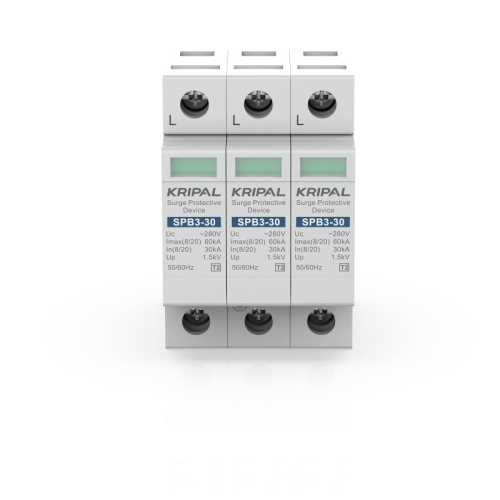
SPB Series AC Power Surge Protector 3Pole 280V SPD 30kA~60kA Surge Arrester
The SPB Series Class B SPD is designed for 50/60Hz AC systems up to 1000V, supporting TT, IT, TN-S, TN-C-S, and PV AC/DC power networks.
Ask a QuoteAC SPD Selection Guide: Protecting Power Distribution from Surge Damage
An AC surge protective device diverts transient overvoltages from power conductors to earth, limiting the residual voltage (Up) reaching downstream equipment below its impulse withstand voltage. Lightning electromagnetic pulses (LEMP) couple into power lines via direct or induced strikes, generating impulses of 10/350 microseconds (Type 1) or 8/20 microseconds (Type 2/3) per IEC 61643-11. A coordinated SPD scheme places a high-energy Type 1 SPD at the service entrance, a Type 2 SPD at the sub-distribution board, and a Type 3 SPD at sensitive equipment outlets, cascading surge energy so each stage reduces the surge safely. Compliant with GB/T 18802.11 and IEC 61643-11, this selection guide covers SPD type, voltage protection level, and installation location.
AC SPD Series Technical Specifications
SPD Type Selection: Where to Install Each Type
Type 1 SPDs (tested with 10/350 microsecond impulse) are installed at the main distribution board where the supply enters the building, handling the direct energy of a lightning strike to the power line. Type 2 SPDs (8/20 microsecond) are installed at sub-distribution boards, handling the residual surge energy that passes through the Type 1 SPD plus induced surges from nearby strikes. Type 3 SPDs are installed at the equipment outlet, providing the final protection stage for sensitive electronics. Protection levels must be coordinated from service entrance down to equipment level. The minimum conductor cross-section varies by series (up to 35mm² for SPI/SPB and down to 6mm² for D-grade), keeping connecting leads as short as possible.
System Voltage and SPD Uc Selection
The SPD maximum continuous operating voltage (Uc) must be at least 1.1 times the nominal system voltage for TN systems and 1.6 times for IT systems to withstand phase-to-phase voltages during earth faults. For standard 230/400V networks, Uc options of 275V, 385V, and 440V AC are fully supported. KRIPAL SPDs are available in 1P, 2P, 3P, 4P, 1+N, 2+N, and 3+N configurations, connecting each phase or neutral conductor to the protective earth (PE) busbar. The neutral-to-earth SPD (N-PE) utilizes specialized high-energy components to safely handle combined surge currents from all active lines.
Pluggable Module and End-of-Life Management
Each KRIPAL MOV module is a pluggable unit featuring a modular design that allows convenient online replacement without powering down. The built-in thermal disconnector automatically opens the circuit when the MOV degrades to end-of-life after absorbing multiple high-energy surge events. The visual indicator changes from green (normal) to red (fault), while an optional remote signaling contact alerts the central management system simultaneously. This pluggable structure enables electricians to replace only the degraded module in minutes without rewiring the base, ensuring maximum uptime and safety.
Backup Overcurrent Protection for SPDs
An SPD installed on the power distribution network requires its own backup overcurrent protection (fuse or MCB) to disconnect the device if the internal thermal disconnector fails under a short-circuit condition. Backup device ratings are strictly specified by KRIPAL’s technical parameters (ranging from 10A/16A for D-grade, 32A for C-grade, up to 63A/125A for B-grade series) to coordinate with short-circuit ratings. Backup protection must be installed as close as practicable to the SPD to minimize unprotected conductor lengths and prevent potential arcing. KRIPAL provides a recommended backup protection table in the official installation manual specifying exact device types and ratings for each model.
Design Your Surge Protection Scheme
- Risk Assessment: Submit your building location and supply configuration for a lightning risk assessment per IEC 62305-2 with SPD recommendations.
- Coordinated SPD Scheme: Our engineers design a three-stage SPD scheme with SPI, SPB, SPC, and SPD devices at the main board, sub-board and equipment level.
- Replacement Module Stock: Pre-order spare pluggable modules with your initial SPD purchase for guaranteed 10-year spares availability.
Surge Protection for Buildings, Industrial Plants and Infrastructure
KRIPAL AC surge protective devices form a three-stage coordinated protection scheme in low-voltage power distribution systems, from the building service entrance to the equipment outlet. Each stage reduces the surge energy and the residual voltage to a level that the downstream equipment’s insulation system can withstand, protecting the investment in electrical infrastructure and connected electronic equipment.
Building Main Distribution Board Type 1 SPD
A commercial building’s main LV switchboard installs a KRIPAL Type 1 SPD (such as the high-capacity SPI series with 100kA 10/350 microsecond performance) at the incoming supply, connected between each phase and the main earth bar through dedicated conductors kept shorter than 0.5 meter. This SPD handles the direct energy of a lightning strike to the overhead supply line that feeds the building, dissipating heavy impulse currents to earth. The backup overcurrent protection is coordinated so that the SPD absorbs the surge securely, while the built-in thermal disconnector and backup fuse protect against sustained short-circuits. The remote signaling contact can be wired to the building management system for central SPD health monitoring across multiple buildings on a campus.
Floor Sub-Distribution Board Type 2 SPD
Each floor sub-distribution board in a multi-story office building installs a KRIPAL Type 2 SPD (such as the SPC or SPB series providing 8/20 microsecond protection) on the incoming side of the board main switch, protecting all downstream circuits against residual surge energy. The Type 2 SPD offers a low voltage protection level (Up) to further reduce the surge voltage reaching downstream circuits. The 35mm standard DIN-rail mounting allows the SPD to be installed alongside MCBs and RCCBs in the distribution board. The pluggable module design means the building maintenance electrician can visually check the status via the green-to-red indicator and replace any degraded module during scheduled maintenance without powering down.
Sensitive Electronic Equipment Type 3 Protection
Server racks, medical imaging equipment and laboratory instruments install a KRIPAL Type 3 SPD at the equipment power inlet, providing the final stage of surge protection with an optimized voltage protection level below the impulse withstand voltage of Category I electronic equipment. The Type 3 SPD connects to equipment power inputs to protect switch-mode power supply input rectifiers and DC-link capacitors from overvoltage damage. Utilizing reliable MOV technology with built-in thermal protection, these units ensure robust safety for sensitive electronics.
Industrial Control Panel Protection
Factory automation control panels using PLCs, VFDs and HMI touchscreens install KRIPAL Type 2 SPDs on the panel’s 230V AC control power input to protect sensitive electronics against switching surges from nearby motor contactors and welders, which generate repetitive impulses that can degrade semiconductor junctions over time. The SPD is wired to ensure stability during control transformer operations. The MOV-based SPD absorbs surge energy, and internal safety disconnector mechanisms handle thermal and over-current faults safely.
Renewable Energy AC Combiner Panel
Solar PV AC combiner panels aggregating multiple inverter outputs before the site transformer install KRIPAL Type 2 SPDs on the AC busbar to protect the inverters’ AC output filter circuits against induced surges from nearby lightning strikes to overhead AC collection lines. The SPD must have a Up and Uc rating matching system requirements, supporting standard options such as 385V and 440V AC to accommodate utility voltage tolerances. The pluggable module design is valued by O&M providers who can replace a degraded SPD module during routine inverter maintenance without scheduling a separate site visit.
Protect Your Electrical Installation
- Site Survey: Our engineers can visit or video-call your site to assess the existing SPD installation and recommend a coordinated protection upgrade.
- SPD Coordination Report: Request a report showing the Up cascade from your Type 1 to Type 3 SPDs, verified against your equipment impulse withstand ratings.
- Bulk Supply for Panel Builders: Order SPI, SPB, SPC, and SPD units in bulk with your distribution boards for one-supplier logistics.
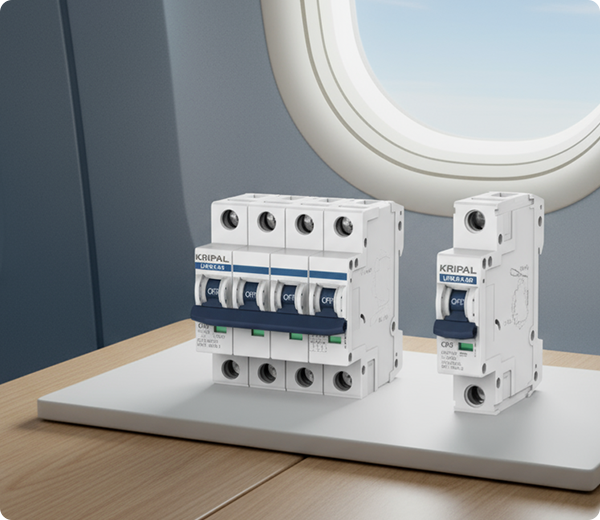
KRIPAL AC SPD Manufacturing: Multi-Stage Protection from One Factory
KRIPAL AC surge protective devices are manufactured in a dedicated production facility where metal oxide varistor (MOV) discs are produced, classified by voltage rating, and assembled with thermal disconnectors and status indicators. Each SPD undergoes strict impulse testing on sample units from every production lot for global low-voltage power distribution surge protection.
MOV Disc Classification and Matching
Zinc oxide varistor discs are individually tested for varistor voltage (V1mA) and classified into narrow voltage bands. For multi-pole SPDs, discs are matched within plus or minus 5 percent V1mA to ensure equal voltage sharing under surge conditions. Classification data is recorded per disc and cross-referenced to the assembled SPD serial number.
Thermal Disconnector Soldering Process
The low-temperature solder joint that forms the thermal disconnector is applied using a controlled soldering process where solder alloy composition, joint volume, and heating profile are precisely managed. Sample joints from each production batch are subjected to a calibrated test to verify disconnection within the specified temperature and time window.
Type 1, Type 2, and Type 3 Classification Testing
SPDs are classified according to IEC 61643-11 test classes through impulse testing. Type 1 SPDs are tested with 10/350 microsecond waveform, Type 2 with 8/20 microsecond waveform, and Type 3 with a combination wave. Production samples from each batch are verified against the published protection level (Up) for their classification.
Visual Status and Remote Signaling Verification
The green-to-red visual status indicator and the volt-free changeover contact for remote signaling are tested on every unit. The mechanical flag mechanism is verified for positive transition upon thermal disconnection. Remote signaling contact transition is confirmed by continuity measurement in both normal and disconnected states.
Distributor Stock Holding Programs for AC SPDs
KRIPAL supports distributor inventory programs with agreed stock levels for standard AC SPD models from Type 1 through Type 3. Shipments are planned based on demand data, with scheduled replenishment to maintain stable supply and consistent fill rates.
Private Label and OEM Branding for AC SPDs
Laser-marked part numbers aligned with your catalog, OEM-branded packaging, and customized instruction sheets are available. Unbranded supply is provided upon request for private label production of AC SPDs.
Multi-Region Certification and Compliance Support
CE, UKCA, IEC 61643-11, and EN 61643-11 compliance documentation is provided according to target export markets. Technical documentation files are maintained and updated in line with evolving surge protection regulatory requirements.
Direct Technical Access to KRIPAL Production Engineers
Your technical team communicates with the engineers who designed and tested your AC SPDs, not a distributor’s sales engineer reading from a catalog. Application questions including SPD coordination and backup overcurrent protection receive answers within 24 hours during China business hours.
Frequently Asked Questions
Explore FAQ >Recent Blog
Explore Blog >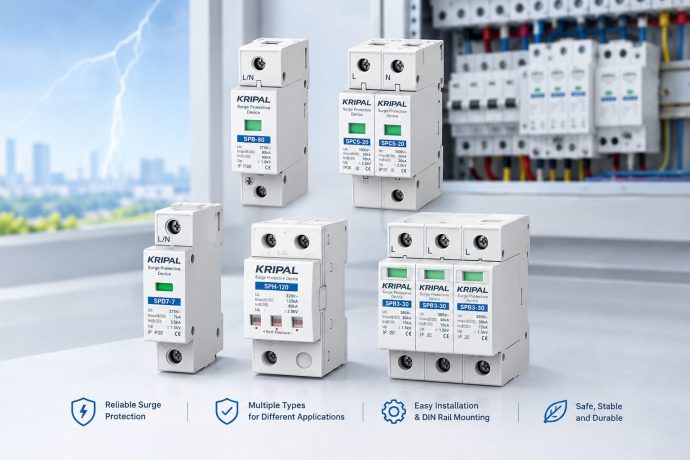
How to Install an SPD: Where to Place It and How to Wire It
Learn where to install Type 1, Type 2, and Type 3 SPDs, how to wire them correctly, and why short conductors and backup protection...
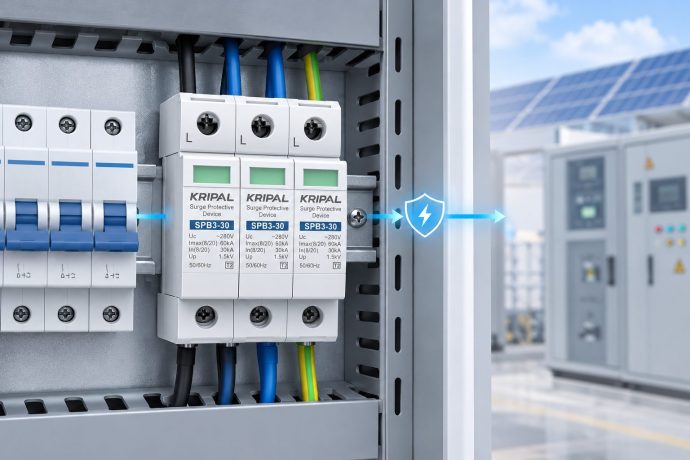
How to Read an SPD Datasheet: Uc, Up, In, Imax and Iimp Explained
Understand SPD datasheet ratings including Uc, Up, In, Imax, and Iimp so you can match surge protection to the system and equipment.
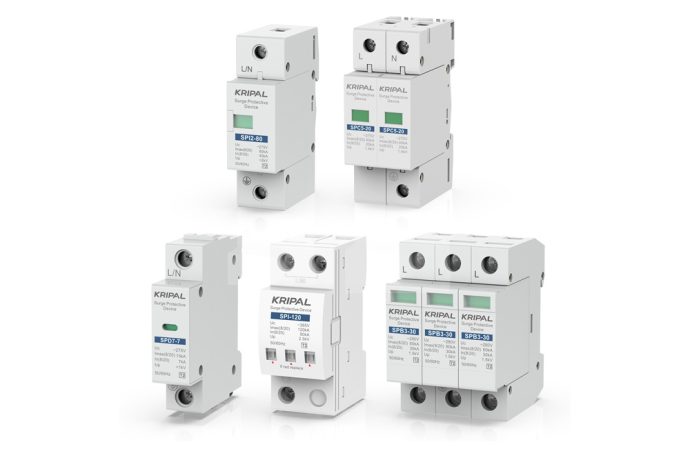
Which SPD Type Should You Choose for Type 1, Type 2, and Type 3 Surge Protection?
Learn SPD type selection for Type 1, 2, and 3 surge protection. Compare waveforms, placement, and layered strategies to safeguard electrical systems.
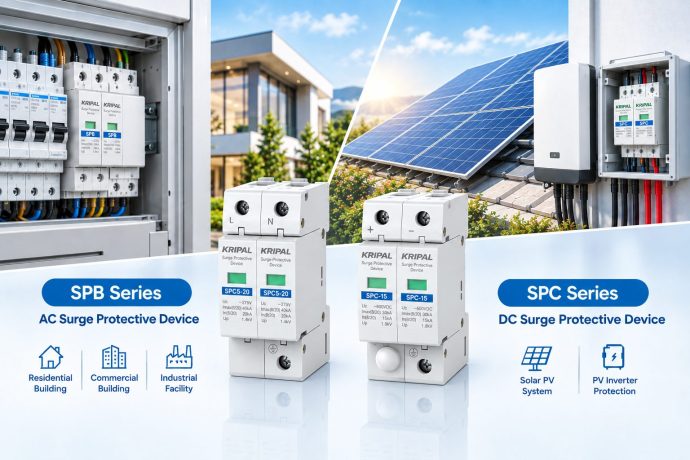
Are Surge Protection Devices Mandatory? NEC, UK & EU Requirements
Learn when surge protection devices may be required under NEC, UK BS 7671, and European IEC/EN standards, including solar PV SPD guidance.
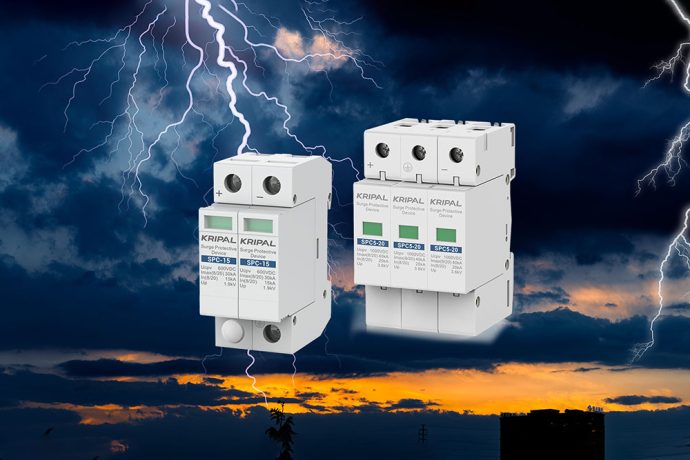
How to Choose Surge Protection for AC and DC Systems?
Learn how to choose surge protection for AC and DC systems. Compare SPD types, voltage ratings, and key selection factors for solar, grid, or...
Direct from Manufacturer
How Can We Assist You?
Tell us a bit more so we can route your request to the right engineer. Get factory-direct pricing and custom specifications within 24 hours.