Search
AC Isolator Switches for Safe Power Isolation | 10A-150A | IP65 Enclosed | IEC 60947
Industrial Waterproof AC Disconnect Switches
KRIPAL manufactures AC isolator switches in the UKP series for safe manual disconnection of low-voltage AC circuits in distribution boards, motor control panels and equipment isolation applications. These rotary-operated load-break switches provide reliable power isolation for maintenance safety, with rated operational currents from 10A to 150A at 230V to 440V AC conforming to international standards IEC/EN 60947. The UKP series features a double-break contact mechanism for extended service life, utilizing high-grade materials free from PCBs, CFCs, asbestos, silicone resins, and cadmium in contacts, while providing a high protection capability up to IP65 for surface installation. The rotary handle provides clear ON-OFF position indication with a padlockable OFF position (allowing up to 3 padlocks at the O-position) to ensure operator safety during maintenance. Featuring flexible installation options and terminals equipped with protective covers complying with VDE 0106 for touch-safe operation, KRIPAL AC isolators are widely specified for main switches and maintenance switches across diverse industrial and power distribution systems.
Get A Quote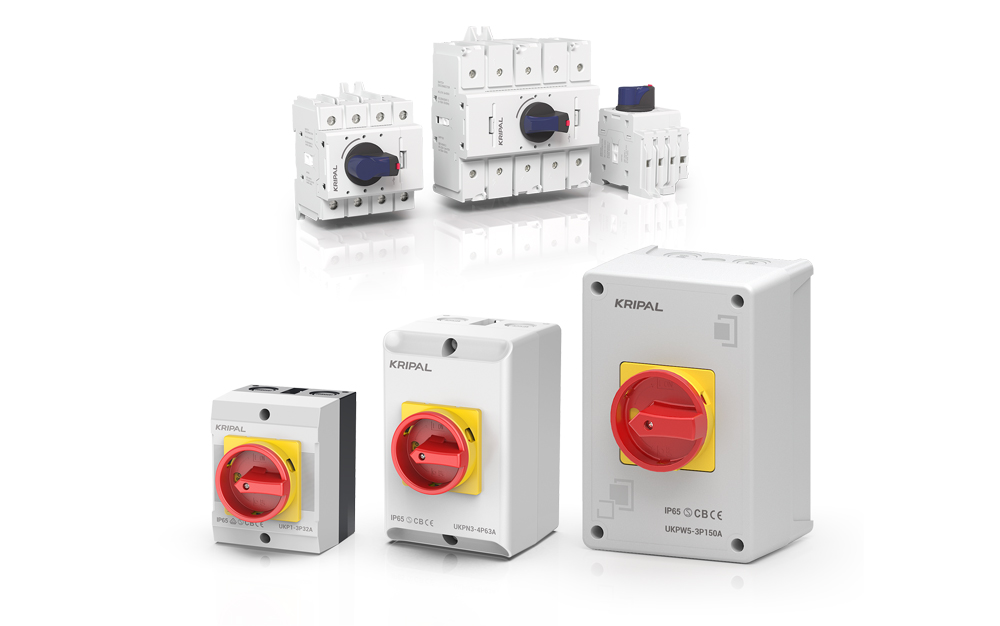
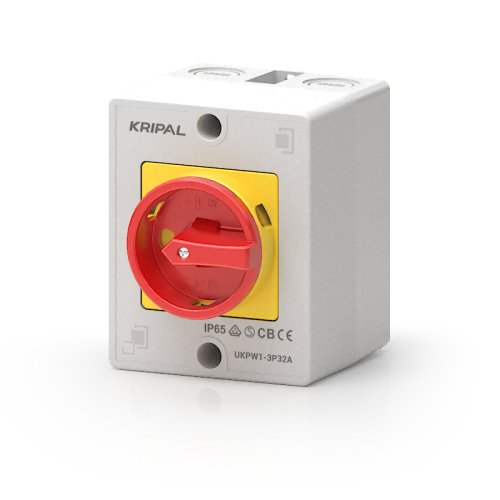


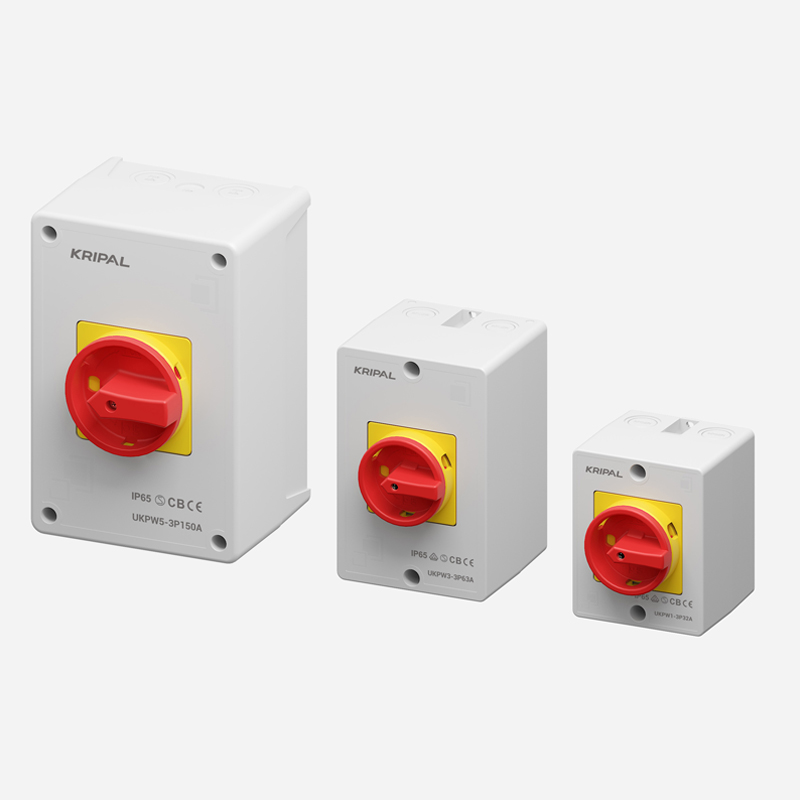
UKPW1 AC Isolator Switch 3Pole 20A/25A/32A Rotary Switch Enclosed IP65 Switch Disconnector
The UKPW Enclosed Isolators is a high-quality product continuously improved with the times.
Ask a Quote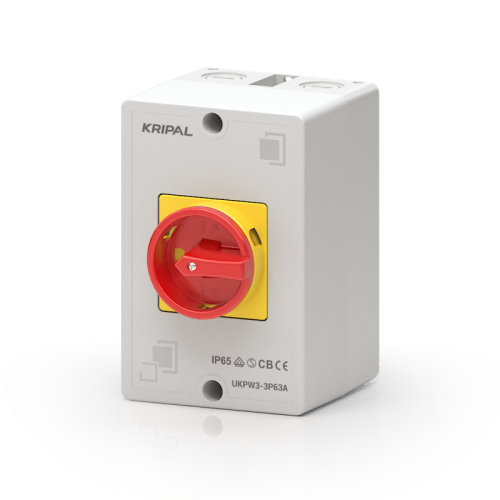
UKPW3 Rotary Isolating Switch 3Pole 63A Waterproof Switch Disconnector IP65 AC Isolator
The UKPW Enclosed Isolators is a high-quality product continuously improved with the times.
Ask a Quote
UKPW5 Rotary Isolation Switch 3Pole 150A Waterproof Switch Disconnector IP65 AC Isolator
The UKPW Enclosed Isolators is a high-quality product continuously improved with the times.
Ask a Quote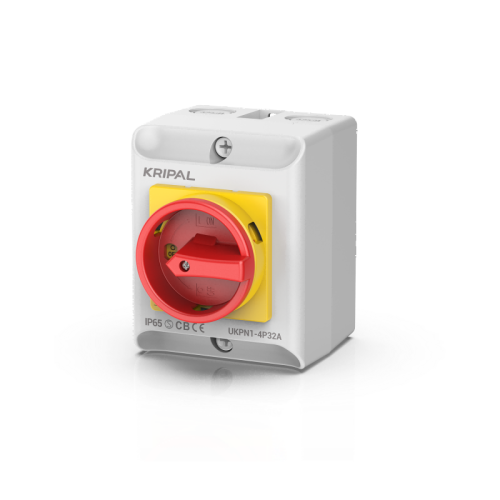
UKPN1 Rotary Isolating Switch 4Pole 20A/25A/32A IP65 Switch Disconnector Waterproof AC Isolator
The UKPN Enclosed Isolators offers contact combinations, providing almost limitless switching configuration possibilities.
Ask a Quote-500x500.png)
UKPN3 Rotary Isolating Switch 4Pole 63A IP65 Switch Disconnector Waterproof AC Isolator
The UKPN Enclosed Isolators offers contact combinations, providing almost limitless switching configuration possibilities.
Ask a Quote
UKPN5 Rotary Isolating Switch 4Pole 100A IP65 Switch Disconnector Waterproof AC Isolator
The UKPN Enclosed Isolators offers contact combinations, providing almost limitless switching configuration possibilities.
Ask a Quote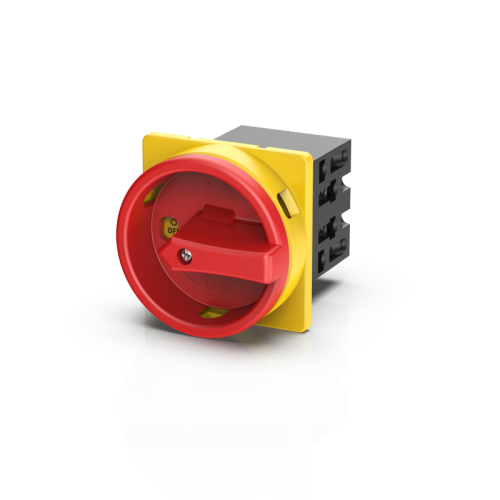
UKP Rotary Isolating Switch 3P/4P/5P 10A-100A Panel Mount AC Disconnect Switch
It operates at rated voltages from 230V to 440V and handles currents from 10A up to 150A.
Ask a Quote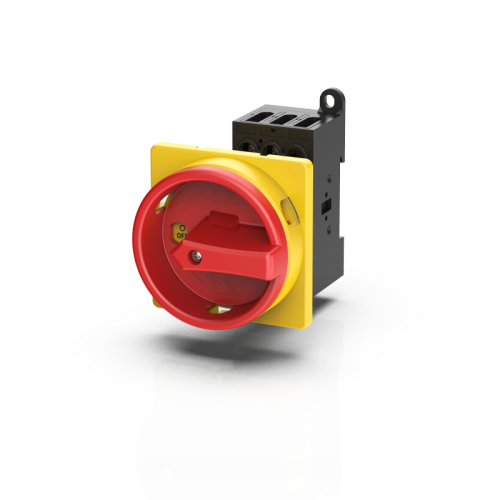
UKP Rotary Isolating Switch 3P/4P/5P 10A-150A DIN Rail AC Disconnect Switch
It operates at rated voltages from 230V to 440V and handles currents from 10A up to 150A.
Ask a Quote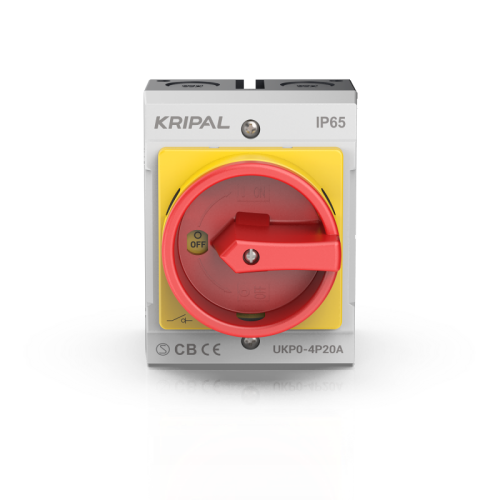
UKP0 Rotary Isolating Switch 2P/3P/4P 10A 16A 20A IP65 AC Disconnect Switch
The UKP Load Disconnect Switch is a high-quality product continuously improved with the times.
Ask a QuoteAC Isolator Switch Selection: Precision in Power Isolation
An AC isolator switch is a manually operated mechanical switching device that provides a guaranteed air-gap isolation between the supply and the load circuit for safe maintenance. Unlike a circuit breaker, an isolator does not provide automatic overcurrent protection, and unlike a simple switch, an isolator is designed and tested to provide a defined isolation gap that can withstand specified overvoltage conditions in accordance with international standard IEC/EN 60947. KRIPAL manufactures AC isolators in the UKP series (including UKP0, UKP1, UKP3, and UKP5) to provide this function across a wide range of surface-mounted, waterproof configurations. This selection guide covers current rating, pole configuration, load-break capability and isolation safety features.
UKP Series AC Isolator Switch Series Technical Specifications
Current Rating and Load-Break Capability
The UKP series offers current ratings ranging from 10A up to 150A (such as 10A, 16A, 20A, 25A, 32A, 40A, 50A, 63A, 80A, 100A, 125A, and 150A) to match circuit demands across models UKP0, UKP1, UKP3, and UKP5. These rotary-operated load-break switches feature a double-break contact mechanism designed to safely disconnect circuits under load while preventing contact welding or excessive erosion. For circuits where the isolator is routinely operated under full load, selecting an appropriate capacity provides extended contact life and reliable performance in demanding industrial and power distribution systems.
Pole Configuration and Switching Sequence
The UKP series provides flexible pole configurations including 2P, 3P, 4P, and 5P options across models like UKP0, UKP1, UKP3, and UKP5 to suit diverse single-phase and three-phase requirements. Multi-pole UKP switches use a common mechanism that mechanically links all poles, ensuring synchronized and reliable operation for main incoming isolation and equipment switching. Terminals equipped with protective covers comply with VDE 0106 to ensure touch-safe operation, and the contact combinations offer versatile configuration possibilities for different installation needs.
Padlock Facility and Lockout-Tagout Compliance
The UKP series OFF position accepts up to 3 padlocks, locking the rotary handle in the OFF position to ensure operator safety during maintenance. The padlock facility is designed to prevent misoperation by non-professional personnel and complies with safety demands in power distribution. For installations requiring strict safety protocols, this lockout feature provides the personal lockout point required before maintenance personnel can work on de-energized equipment or isolate generators and transformers.
Auxiliary Contacts and Remote Indication
The UKP series is manufactured under strict quality control with multiple international approvals, offering nearly limitless contact combinations for diverse application needs. Free from harmful substances such as PCBs, CFCs, asbestos, silicone resins, and cadmium in contacts, these switches ensure environmental safety. They are widely specified for main switches and maintenance switches in industrial automation, power transmission, and equipment isolation.
Specify Isolator Switches for Your Installation
- Isolator Selection: Provide your circuit details and we recommend the correct UKP series current rating and pole configuration across models UKP0, UKP1, UKP3, and UKP5.
- Door Interlock Integration: Request panel cutout drawings and technical specifications for UKP series mechanisms to meet your industrial installation needs.
- OEM Supply: Source UKP series isolators pre-assembled with reliable contact combinations and protective terminal covers complying with VDE 0106 for your panel building line.
Safe Isolation for Industrial Machinery, HVAC and Power Distribution
KRIPAL UKP series AC isolator switches provide the guaranteed air-gap isolation point for safe maintenance, emergency disconnection and equipment local isolation in low-voltage installations. From the main incoming isolator to the local isolator adjacent to a factory machine, the UKP series’ visible contact gap and padlockable handle provide the safety assurance that maintenance personnel depend on before touching de-energized conductors.
Domestic Consumer Unit Main Switch
A domestic consumer unit uses a UKP series isolator as the main switch, providing single-point isolation for the entire installation. The electrician isolates the supply before working on any circuit, padlocks the handle in OFF, and retains the key, satisfying the safe isolation procedure. The compact width fits within standard consumer units alongside circuit protection devices, and the clear ON-OFF handle position is visible, allowing users to verify the installation is isolated before performing maintenance tasks.
Motor Control Panel Local Isolator
Industrial motor control panels use a UKP series isolator as the local disconnection point for each motor, mounted on the panel door or adjacent to the machinery. The isolator provides the means of isolation required for machine safety, allowing maintenance personnel to lock off the motor supply before working on driven equipment. The robust rating ensures the isolator can safely disconnect the motor under full load conditions. The padlock facility accepts the technician’s personal lock, preventing accidental re-energization during maintenance.
Solar PV Inverter AC Isolator
Grid-tied PV inverters require a dedicated AC isolator adjacent to the inverter per installation standards, allowing it to be isolated from the grid for maintenance or emergency disconnection. A UKP series 2P/3P/4P isolator provides this function, with the handle clearly indicating the OFF position. The isolator is wired between the inverter AC output and the distribution circuit, providing reliable local isolation without requiring access to the main distribution board.
Building Services Equipment Local Isolation
Building mechanical services (air handling units, pumps, chillers) use UKP series isolators as the local disconnection point for each item of equipment, mounted adjacent to the equipment per standard requirements for mechanical maintenance. The isolator allows the HVAC maintenance technician to safely de-energize a single unit for filter replacement or belt adjustment without shutting down the entire distribution system. The padlock facility is used when the technician is working inside the enclosure, ensuring complete safety.
Firefighter Emergency Isolation Switch
Commercial buildings install a UKP series isolator adjacent to the building entrance as an emergency isolation switch for fire safety. The switch is housed in an enclosure designed for clear identification to allow operators to isolate the building’s electrical supply before entering to handle emergencies, eliminating the risk of electric shock from damaged cables or water contact. The auxiliary contact signals the system that the supply has been isolated.
Specify AC Isolators for Your Installation
- Application Review: Our engineers review your installation layout and specify the correct UKP series rating and configuration for each isolation point.
- Safety Compliance: Obtain international standard test certificates and installation guidance for lockout-tagout compliance documentation.
- OEM Supply: Source UKP series isolators in bulk for panel building and electrical wholesaler distribution.
Why Partner with KRIPAL for AC Isolator Switches?
KRIPAL AC isolator switches are manufactured on a rotary switch assembly line where the double-break contact mechanism, padlockable handle interlock, and enclosure housings across models UKP0, UKP1, UKP3, and UKP5 are produced, assembled, and tested under strict quality management for global industrial power isolation and safety disconnect applications.
Double-Break Contact Mechanism with Visible Isolation
Each AC isolator incorporates a double-break per pole contact design that provides reliable power isolation. Contacts are assembled into a robust rotary mechanism, with every unit complying with international standard requirements and utilizing high-grade materials free from hazardous substances such as PCBs, CFCs, asbestos, silicone resins, and cadmium.
Rotary Handle and Padlock Interlock Assembly
Handle mechanisms are designed for clear ON-OFF position indication with a padlockable OFF position (allowing up to 3 padlocks at the O-position) to ensure operator safety during maintenance. This padlock facility effectively prevents misoperation by non-professional personnel in demanding power distribution environments.
AC-23A Motor Load Switching Verification
Sample units from each production batch are tested to verify performance, ensuring that switches consistently meet the safety and reliability demands required for industrial automation, motor control panels, and generator or transformer isolation.
Thermal and Dielectric Production Testing
Every AC isolator switch is manufactured in accordance with international standard IEC/EN 60947 and has passed testing at KRIPAL’s Low Voltage Testing Center. Terminals equipped with protective covers comply with VDE 0106 to ensure touch-safe operation across all operating conditions.
Distributor Stock Holding Programs for AC Isolators
KRIPAL supports distributor inventory programs with standard AC isolator models ranging from 10A to 150A across the UKP series. Handle variants and installation kits are maintained for rapid shipment to panel builders and wholesale partners.
Private Label and OEM Branding for AC Isolators
Laser-marked part numbers aligned with your catalog, OEM-branded packaging, and customized instruction sheets are available. Unbranded supply is also provided upon request for private label production of AC isolator switches.
Multi-Region Certification and Compliance Support
Compliance documentation and international approvals—including CCC, CE, CB, SEMKO, and VDE—are provided according to target export markets. Technical documentation files are maintained in line with evolving electrical safety and regulatory requirements.
Direct Technical Access to KRIPAL Production Engineers
Your technical team communicates directly with the specialists who design and test your AC isolators. Application questions regarding model selection, pole configurations, and switch specifications receive prompt, professional support.
Frequently Asked Questions
Explore FAQ >Recent Blog
Explore Blog >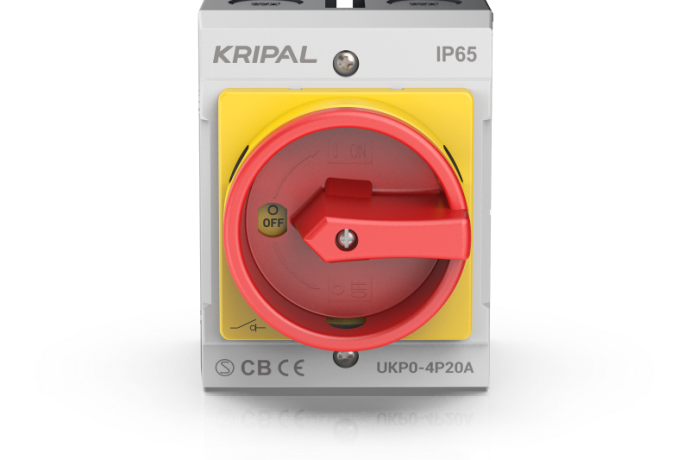
Comprehensive Guide of AC Isolators and Switches
Your guide to AC isolators & switches. Learn key types, selection criteria, safety standards, and applications for low-voltage electrical systems. Essential for engineers.
How to Calculate Voltage Drop Across a Resistor and Electrical Circuits
Learn how to calculate voltage drop in circuits and cables. Discover standard formulas, real-world examples, and troubleshooting tips from Kripal.
Prospective Fault Current Explained: How to Calculate and Measure PSCC and PFC
Learn the difference between PFC, PSCC, and PEFC. Discover how to calculate prospective fault current and select the right protective devices with KRIPAL.
Direct from Manufacturer
How Can We Assist You?
Tell us a bit more so we can route your request to the right engineer. Get factory-direct pricing and custom specifications within 24 hours.