Search
Knowledge Center
Isolator Switch Maintenance: Testing, Inspection and Replacement
Recommended inspection intervals, contact resistance and insulation testing procedures, visual checklist, and when to replace an isolator switch.
 June 28, 2026
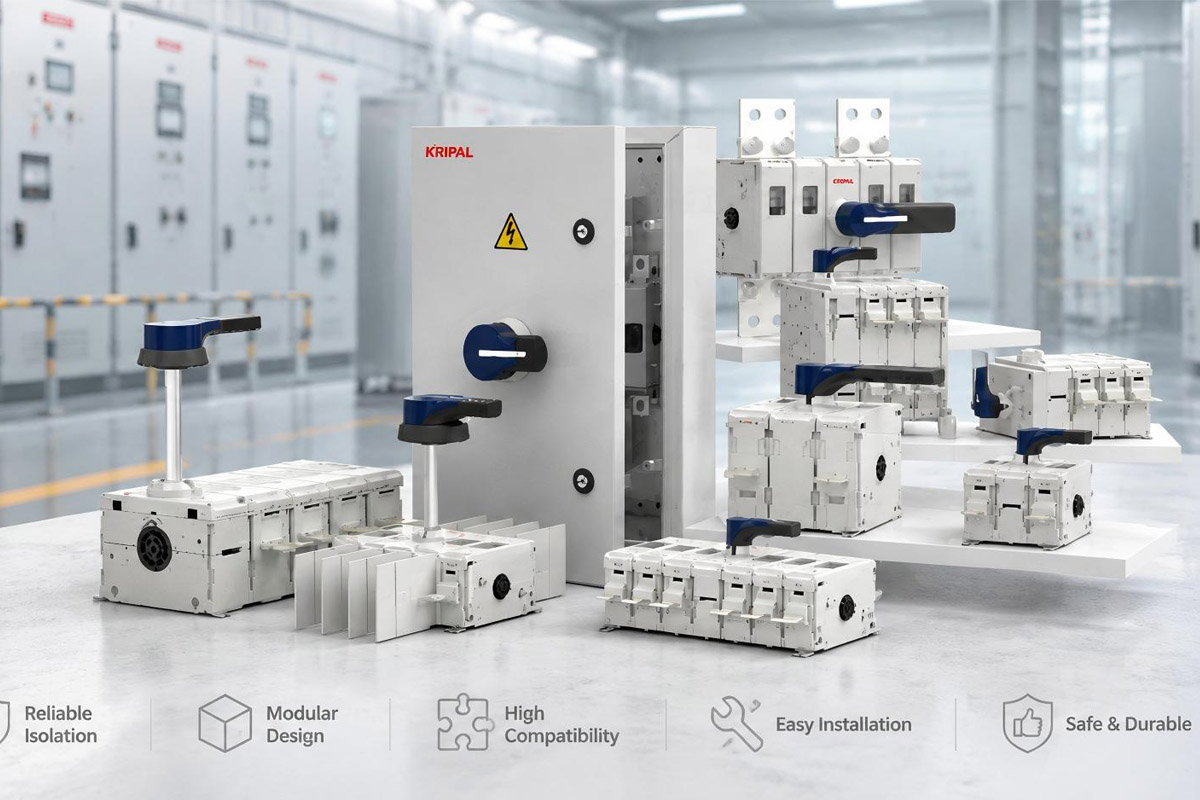
Many low voltage isolator switches can provide 10–20 years of service life under normal operating conditions, depending on switching frequency, environment, and maintenance quality. Contact surfaces oxidize, mechanical linkages develop play, and insulation resistance decreases. Without a structured maintenance program, a degraded isolator may fail to provide reliable isolation when required, especially after mechanical wear or contact damage.
This article covers recommended inspection intervals, key test procedures, and signs that indicate replacement is required.
Why Regular Isolator Switch Maintenance Matters
An isolator switch that functions correctly today may not function correctly next month. Environmental factors, including dust accumulation, humidity, vibration, and thermal cycling, contribute to gradual degradation. In industrial settings, airborne contaminants can settle on contact surfaces and increase contact resistance. In coastal or high humidity environments, corrosion can attack terminals and moving parts.
The consequences of a failed isolator range from nuisance downtime to serious safety incidents. If an isolator fails to close properly, the downstream equipment cannot be energized. If it fails to open, maintenance personnel may be exposed to live conductors. A structured maintenance program reduces these risks and extends the service life of the switch. The cost of scheduled testing and inspection is minimal compared to the cost of unplanned downtime or a safety incident.
Recommended Inspection Intervals
The frequency of inspection depends on the operating environment and duty cycle. The table below provides general guidance based on installation conditions:
| Environment | Visual Inspection | Electrical Testing | Full Functional Test |
|---|---|---|---|
| Clean indoor (office, data center) | Every 12 months | Every 24 months | Every 36 months |
| Normal industrial (factory, workshop) | Every 6 months | Every 12 months | Every 24 months |
| Harsh (dust, humidity, vibration) | Every 3 months | Every 6 months | Every 12 months |
| Safety critical (hospital, emergency system) | Every 3 months | Every 6 months | Every 12 months |
Note: The following intervals are general maintenance guidelines rather than mandatory requirements. Equipment manufacturers and local regulations may specify shorter intervals. Always defer to the more conservative interval when there is a conflict between standards.
Key Testing Procedures
Contact Resistance Testing
Contact resistance testing measures the electrical resistance across the closed contacts of the isolator. Elevated contact resistance indicates oxidation, pitting, or loose mechanical connections. The test is performed using a micro ohmmeter or a digital low resistance ohmmeter (DLRO).
Procedure
De-energize and lock out the circuit upstream of the isolator.
Close the isolator switch.
Connect the test leads across each pole, from the line terminal to the corresponding load terminal.
Apply the test current and record the resistance value.
Compare the measured values to the manufacturer specification and to previous test records.
A resistance value higher than the manufacturer limit, or a significant increase from the baseline measurement, indicates degradation that requires further investigation. For KRIPAL UKF and UKX series isolators, typical contact resistance values for a new switch range from 0.05 to 0.2 milliohms, depending on the current rating. A significant increase compared with the original baseline measurement should trigger further investigation.
Insulation Resistance Testing
Insulation resistance testing (commonly known as a megger test) verifies the integrity of the insulation between live conductors and between live conductors and earth. Degraded insulation can lead to leakage currents, nuisance tripping of upstream protective devices, and in severe cases, flashover or electric shock.
Procedure
De-energize and isolate the switch.
Open the isolator, so the contacts are separated.
Using an insulation resistance tester set to 500 V DC for 230/400 V systems, or 1000 V DC for 690 V systems:
Test between each phase terminal and earth.
Test between each pair of phase terminals.
On 4 pole switches, test between neutral and earth, and between neutral and each phase.
Record all values.
The minimum acceptable insulation resistance for low voltage equipment is typically 1 megohm per IEC 60364-6. In practice, a healthy isolator should read well above 100 megohms. Values below 10 megohms warrant investigation. Values below 1 megohm require immediate corrective action.
Visual Inspection Checklist
Between formal electrical tests, visual inspections can catch many problems before they become failures. A thorough visual inspection should include the following checks:
Enclosure and Housing
Look for cracks, discoloration from overheating, or signs of impact damage.
Handle and Operating Mechanism
Operate the switch on and off several times. The action should be smooth with a positive detent at each position. Any stiffness, grinding, or looseness indicates a mechanical issue.
Terminals
Check for signs of overheating, such as discolored insulation, melted cable sheathing, or corrosion on terminal screws.
Cable Entry Points
Verify that cable glands or grommets are intact and that there is no cable strain on the terminals.
Labeling and Markings
Ensure that the switch rating label, ON and OFF indicators, and any circuit identification labels are legible and intact.
Auxiliary Contacts
If the isolator has auxiliary contacts for status signaling, verify that they operate correctly when the switch changes position.
When to Replace an Isolator Switch
Not every degraded isolator needs replacement. Some issues, such as loose terminal screws or surface dust, can be corrected during maintenance. However, certain conditions indicate that the switch has reached the end of its service life and should be replaced:
- Contact resistance exceeding three times the manufacturer specified maximum
- Insulation resistance below 1 megohm that cannot be recovered by cleaning
- Mechanical binding or free play in the operating mechanism that cannot be adjusted
- Visible arc damage on contact surfaces
- Cracks in the switch body or housing
- Failure to maintain the OFF position (switch drifts toward ON)
- Operating cycle count exceeding the mechanical endurance rating
When replacement is required, select a switch with equal or higher ratings and the same form factor to minimize modifications to the enclosure and busbar arrangement.
Frequently Asked Questions
How often should I test the insulation resistance of an isolator switch?
For normal industrial environments, every 12 months. For harsh environments or safety critical applications, every 6 months. Always follow local regulations and equipment manufacturer recommendations.
Can a high contact resistance reading be fixed by cleaning?
Sometimes, yes. If the contacts are accessible, cleaning with an approved electrical contact cleaner and re-torquing terminal connections may restore acceptable resistance values. After cleaning, re-test contact resistance to confirm the improvement. If resistance remains high, replacement is required.
What is the typical service life of a KRIPAL isolator switch?
Under normal operating conditions and with proper maintenance, KRIPAL isolator switches have a service life of 15 to 20 years. The mechanical endurance rating varies by model. UKF switches are typically rated for 10,000 mechanical operations, while UKP and UKGD models are tested to higher endurance levels.
Do I need to disconnect power to test an isolator switch?
Yes. Contact resistance and insulation resistance tests require the switch to be de-energized. These tests involve connecting test equipment directly to the switch terminals that must not be live under any circumstances. Always follow proper lockout tagout procedures.
What is the difference between a DLRO and a standard multimeter for contact resistance testing?
A standard multimeter applies a low test current and is not accurate in the milliohm range. A DLRO applies a higher test current, typically 10 A or more, to overcome surface oxidation and provide a reliable low resistance measurement. Multimeter readings on switch contacts can be misleading and should not be used for maintenance decisions.
Can I use infrared thermography instead of contact resistance testing?
Infrared thermography can detect hot spots caused by high contact resistance while the equipment is energized, making it a useful complementary technique. However, it cannot provide the quantitative resistance values needed for trend analysis and comparison against manufacturer specifications. Both methods are valuable parts of a comprehensive maintenance program. For more on electrical maintenance, see our surge protection device resources.
Maximize Safety and Service Life with Proactive Maintenance
An isolator switch is a critical safety barrier in any electrical system. While KRIPAL isolators are engineered for exceptional durability and long service life, neglecting routine maintenance can turn a reliable component into a hidden hazard. By implementing a structured inspection and testing program incorporating visual checks, contact resistance, and insulation resistance testing, you can identify degradation before it leads to costly downtime or dangerous failures.
When testing reveals that a switch has reached the end of its operational life, timely replacement is absolutely necessary. Whether you need the compact UKF series for commercial distribution or the high capacity UKPD series for main switchboards, KRIPAL offers a direct, high performance upgrade for your application.
Explore our complete range of KRIPAL isolator switches for detailed technical specifications, or contact our engineering team for guidance on selecting the right replacement components for your facility. For weatherproof options, see the UKF series weatherproof isolating switches.
Related Resources
Explore Knowledge Center >
Need a matching KRIPAL product?
Share voltage, quantity and destination. An engineer will reply with options and lead time.