Search
Knowledge Center
How to Calculate Voltage Drop Across a Resistor and Electrical Circuits
Learn how to calculate voltage drop in circuits and cables. Discover standard formulas, real-world examples, and troubleshooting tips from Kripal.
 June 16, 2026

Key Takeaways
- Voltage drop follows Ohm’s Law: V = I × R.
- In series circuits, voltage divides across resistors while current stays the same.
- Cable voltage drop depends on current, resistance per length, and conductor length.
- Many designs aim to keep voltage drop within about 3% for branch circuits and 5% overall, subject to local standards.
What Is Voltage Drop?
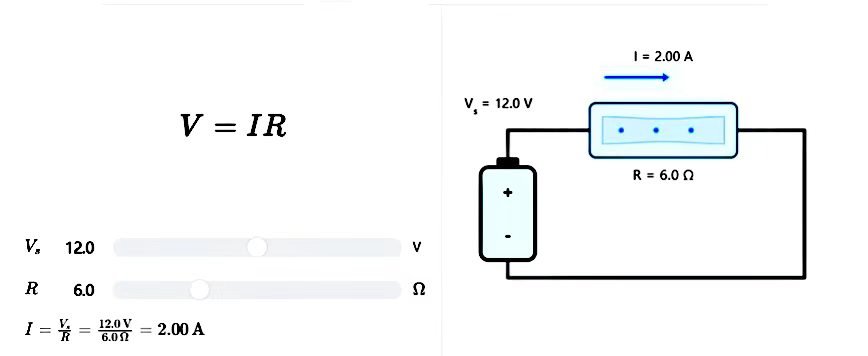
Voltage drop occurs whenever current passes through a resistance.
According to Ohm’s Law:
Where:
- V = Voltage (Volts)
- I = Current (Amps)
- R = Resistance (Ohms)
The higher the resistance or current, the greater the voltage drop.
For example:
- Long cables create more resistance
- Thin wires have higher resistance
- Heavy electrical loads draw more current
All of these increase voltage drop in a circuit.
Voltage Drop Across a Resistor
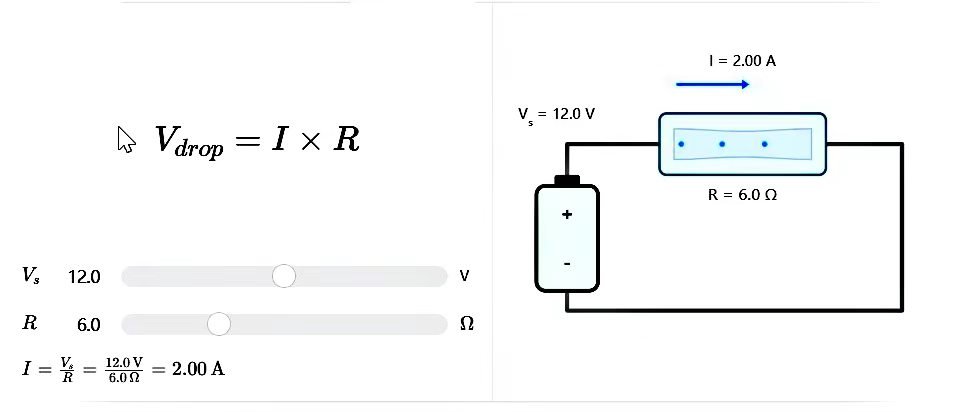
In electronics, voltage drop across a resistor is calculated directly using Ohm’s Law.
The formula is:
This means the voltage across a resistor equals the current flowing through it multiplied by the resistor value.
Example 1: Voltage Drop Across a Single Resistor
Suppose a circuit contains:
- Supply voltage = 12V
- Resistor = 4Ω
- Current = 2A
Using the formula:
Vdrop = 8V
The voltage drop across the resistor is 8V.
If the supply voltage is 12V, the remaining voltage in the circuit is:
This follows Kirchhoff’s Voltage Law, where the total voltage drops equal the source voltage.
Voltage Drop in Series Circuits
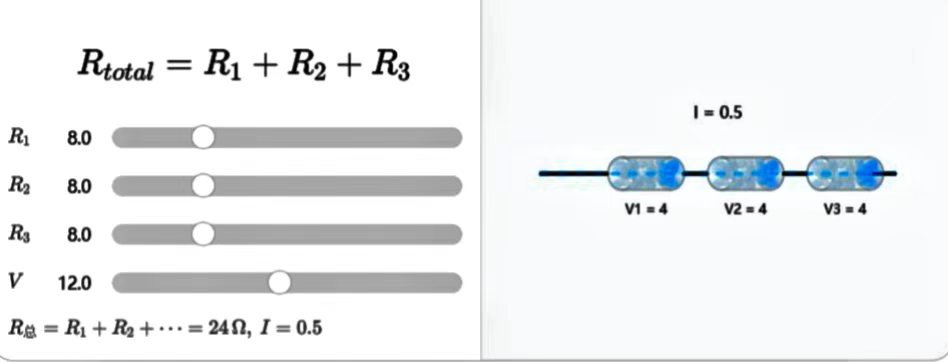
In a series circuit:
- Current is the same through all resistors
- Voltage is divided between the resistors
Voltage division depends on resistance ratio.
The voltage drop across each resistor depends on its resistance value.
Formula for Total Resistance
Example 2: Voltage Drop in a Series Circuit
Circuit values:
- Supply voltage = 24V
- R1 = 4Ω
- R2 = 8Ω
Step 1: Find Total Resistance
Step 2: Find Circuit Current
I = 24 / 12 = 2A
Step 3: Calculate Voltage Drop Across Each Resistor
For R1:
For R2:
Step 4: Verify Total Voltage
The voltage drops add up to the supply voltage.
Voltage Drop in Electrical Wiring
Voltage drop also occurs in cables and conductors because wires have resistance.
Long cable runs and high-current loads can cause noticeable voltage loss between the power source and equipment.
For single-phase circuits, the common formula is:
Where:
- I = Current (A)
- R = Resistance per unit length
- L = One-way cable length
For single-phase two-wire circuits, the factor 2 represents the total conductor length of the outgoing and return paths.
For three-phase systems, different voltage drop formulas are used because current flows through three conductors with phase relationships.
To prevent excessive voltage drop in long outdoor runs, ensure your installation uses high-quality weatherproof isolators and properly sized cables from Kripal. Explore isolator switches and UKF weatherproof isolating switches for outdoor installations.
Example 3: Voltage Drop in a Cable
Assume:
- Current = 20A
- Cable resistance = 0.0015Ω/m
- Cable length = 30m
Using the formula:
Vdrop = 1.8V
If the supply voltage is 230V:
The voltage drop is approximately 0.78%.
Voltage Drop Percentage Formula
Voltage drop is often expressed as a percentage of supply voltage.
The formula is:
Many electrical design guidelines commonly recommend keeping voltage drop within approximately 3% for branch circuits and 5% for total circuits, although exact limits depend on local standards and application requirements.
Simplified Voltage Drop Formula for DC and Resistive AC Loads
The basic principle is similar for both AC and DC systems, but AC circuits may also include reactance and power factor effects.
For simple DC circuits:
For AC power circuits, impedance may replace pure resistance:
Where:
- Z = Impedance
- R = Resistance
- X = Reactance
In motor circuits and long AC feeders, reactance and power factor can significantly affect voltage drop calculations.
Common Causes of Excessive Voltage Drop
Excessive voltage drop can be caused by several factors within an electrical installation. Common causes include long cable distances, undersized conductors, high current loads, loose or damaged connections, corroded terminals, and poor-quality wiring.
These conditions increase electrical resistance within the circuit, leading to greater voltage loss between the power source and the connected equipment. Reducing circuit resistance or lowering the load current can help minimize voltage drop and improve system performance.
How to Reduce Voltage Drop
Several methods can be used to reduce voltage drop in an electrical installation. Common approaches include using larger cable sizes, shortening cable runs, reducing load current, using higher supply voltages where appropriate, and improving the quality of electrical connections.
Among these methods, proper conductor sizing is one of the most effective ways to control voltage drop and maintain efficient system performance.
Conclusion
Voltage drop calculations are based on the fundamental relationship between voltage, current, and resistance. Whether analyzing a small resistor in an electronic circuit or evaluating cable losses in an electrical installation, the same electrical principles apply. By using Ohm’s Law and standard voltage drop formulas, engineers and electricians can determine voltage across resistors, select correct conductor sizes, improve circuit efficiency, prevent equipment performance issues, and troubleshoot electrical systems more effectively.
Explore Kripal for reliable electrical solutions and practical voltage drop guidance for safer, more efficient installations.
If you need help selecting the right products, feel free to contact us.
FAQ
Q1: What causes excessive voltage drop?
Long cable runs, undersized conductors, high current loads, and poor connections can increase voltage drop.
Q2: What voltage drop is acceptable?
Most designs aim to keep voltage drop within recommended limits depending on local standards and application requirements.
Q3: Does voltage drop affect circuit breakers?
Voltage drop normally does not cause a breaker to trip, but excessive voltage loss can affect equipment performance.
Related Resources
Explore Knowledge Center >


Need a matching KRIPAL product?
Share voltage, quantity and destination. An engineer will reply with options and lead time.