Search
Knowledge Center
Are Surge Protection Devices Mandatory? NEC, UK & EU Requirements
Learn when surge protection devices may be required under NEC, UK BS 7671, and European IEC/EN standards, including solar PV SPD guidance.
 July 27, 2026
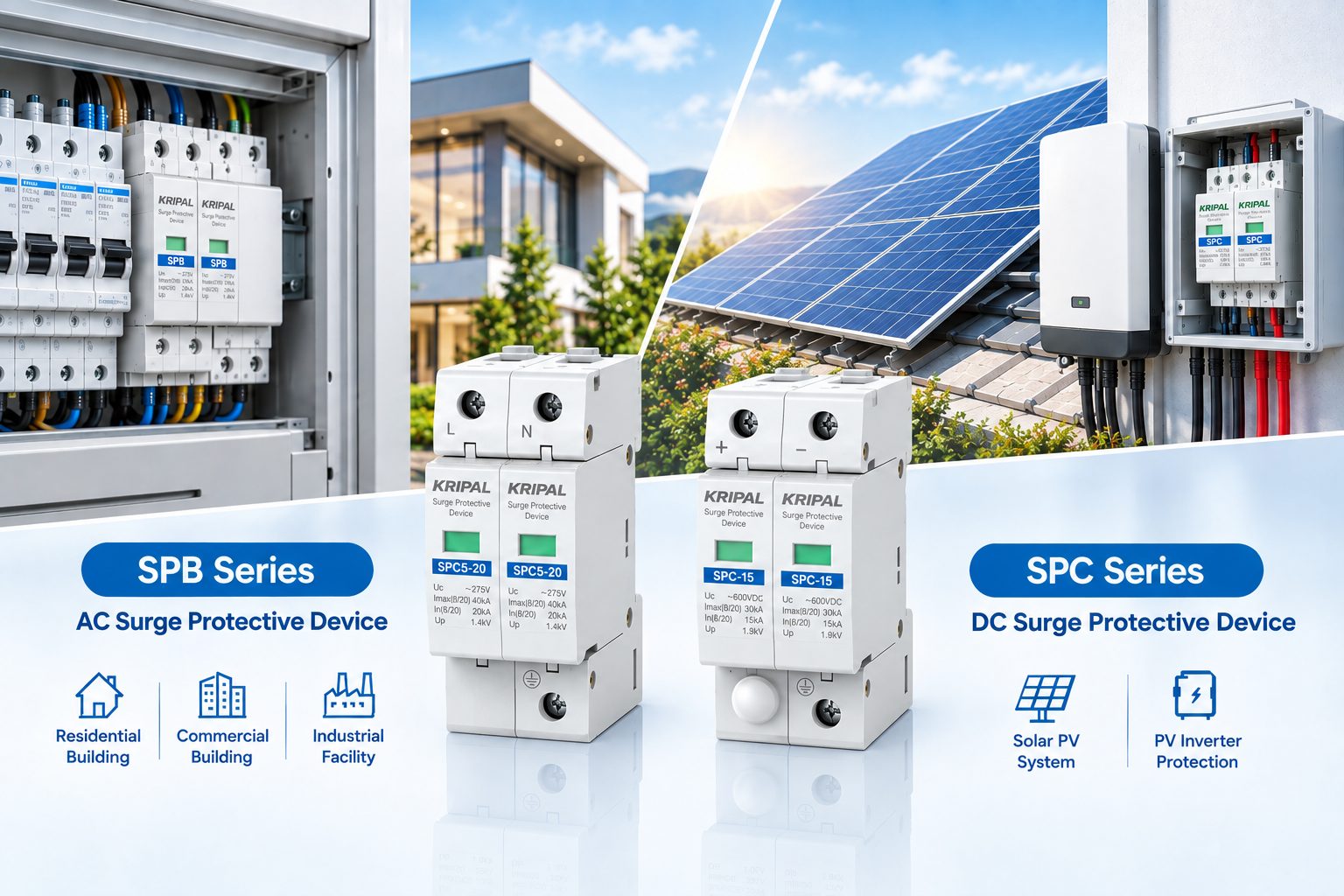
Surge protection is required for many electrical installations, but the exact requirement depends on the country, code edition, installation type, and consequences of a transient overvoltage. In the US, the NEC includes specific SPD requirements for covered dwelling-unit services. In the UK, BS 7671 sets requirements for protection against transient overvoltages, with important changes introduced by the 2023 Corrigendum. Across Europe, there is no single EU-wide electrical installation code; national requirements work alongside IEC/EN standards covering electrical installations and lightning protection.
This guide explains when surge protection may be required in the US, UK, and European markets, and how to approach SPD selection for conventional electrical systems and solar PV installations.
Are Surge Protection Devices Mandatory?
There is no single worldwide rule stating that every electrical installation must have an SPD. Whether surge protection is mandatory depends on the applicable electrical code and the characteristics of the installation.
In general, SPD requirements are intended to reduce the risk of damage caused by transient overvoltages from sources such as lightning and switching events. The relevant standards may consider factors such as the type of installation, the consequences of equipment failure, lightning exposure, and the characteristics of the electrical system.
The important point is that “mandatory” does not mean the same thing in every market. A requirement under the US NEC should not automatically be applied to a UK installation, and IEC standards should not be treated as a single EU electrical code.
US Surge Protection Requirements: NEC 230.67
One of the clearest residential SPD requirements is found in the US National Electrical Code.
NEC Section 230.67 requires services supplying specified dwelling-related occupancies to be provided with a surge-protective device. The provision was introduced in the 2020 NEC and includes dwelling units, certain dormitory and hotel accommodations, and specified patient sleeping areas. The SPD must be incorporated into or installed immediately adjacent to the service equipment, subject to the alternatives provided by the code. NEC 230.67 also specifies that the SPD is to be a Type 1 or Type 2 SPD.
This means that in a jurisdiction using an applicable NEC edition containing this requirement, surge protection is not simply an optional upgrade for covered residential services.
However, it is important to check the locally adopted NEC edition and any amendments rather than assuming that the same rule applies identically in every US jurisdiction.
What About Commercial Buildings?
NEC 230.67 is specifically focused on services supplying the occupancies covered by that section. It should therefore not be interpreted as a universal requirement for every commercial service.
Other NEC articles can contain SPD requirements for particular systems or applications. Emergency, standby, healthcare, communications, and other specialized installations may have additional requirements depending on the system and applicable NEC provisions.
For this reason, commercial projects should be evaluated against the complete code requirements applicable to the installation rather than using NEC 230.67 alone.
UL 1449 and SPD Listing
UL 1449 is an important US product safety standard for surge protective devices. However, it is better to distinguish between the electrical code requirement and the product listing or certification used to demonstrate product suitability.
For a US installation, buyers should verify that the selected SPD is appropriately listed for its intended application and compatible with the applicable electrical system. UL 1449 is a key standard associated with SPDs in the US market, but the exact listing, certification, installation, and inspection requirements should be confirmed for the specific project.
UK Surge Protection Requirements: BS 7671
The UK approach is different.
The current 18th Edition framework is based on BS 7671:2018+A2:2022, together with the May 2023 Corrigendum and other applicable updates. The 2023 Corrigendum made significant changes to Section 443, which deals with protection against transient overvoltages. IET describes these changes as one of the most important effects of the Corrigendum because they simplified and changed the way SPD requirements are assessed.
Under the corrected requirements, protection against transient overvoltages is required where the consequences of an overvoltage could result in serious injury or loss of human life, or significant financial or data loss. For other cases, protection is generally provided unless the installation owner formally accepts that the potential loss or damage is tolerable and accepts the associated risk.
This is why it is no longer accurate to reduce the UK rule to a simple statement such as “overhead supply means an SPD is mandatory.”
What About Lightning Protection Systems?
A separate distinction is important when a building incorporates, or may require, a lightning protection system.
IET guidance explains that where a lightning protection system is installed, or where the relevant lightning protection requirements apply, the BS EN 62305 series should be considered.
Therefore, a UK installation should be assessed using the applicable BS 7671 requirements together with the relevant lightning protection standards rather than relying on one simple trigger.
Does BS 7671 Always Require an SPD?
No.
BS 7671 establishes minimum safety requirements, but the decision to install SPDs can also consider equipment protection and potential economic or data losses. The installation owner may have a role in accepting certain risks where the standard permits this, and the decision should be properly documented.
The exact SPD type, location, rating, and coordination also depend on the design of the electrical installation. It is therefore better to select an SPD based on the actual system rather than assuming that every UK installation requires the same Type 2 device in the same location.
European Requirements: IEC/EN Standards and National Rules
Europe should not be described as having one single “EU electrical code” for SPD installation.
Instead, designers and installers may need to consider national wiring rules together with applicable IEC/EN standards.
For low-voltage electrical installations, IEC 60364 is an important reference framework. IEC 60364-4-44 addresses protection against voltage disturbances and electromagnetic disturbances, and the 2024 edition includes updated wording related to DC SPDs.
The IEC 62305 series serves a different but complementary purpose. It focuses on protection against lightning. IEC 62305-2 provides a risk-management methodology for structures exposed to lightning, while IEC 62305-4 addresses surge protection measures for electrical and electronic systems within structures. The current IEC 62305 series was technically revised in 2024.
Therefore, an installation in Europe should be assessed against the national requirements and the relevant IEC/EN standards, rather than treating IEC 62305 as a universal EU electrical installation code.
Do Solar PV Systems Need Surge Protection?
Solar PV systems deserve particular attention because they include long outdoor conductors and sensitive electronic equipment such as inverters.
PV installations may require coordinated surge protection on both the DC and AC sides, depending on the system design, lightning exposure, cable arrangement, applicable standards, and local requirements.
The DC and AC sides must not be treated as interchangeable. A PV DC SPD must be specifically suitable for the voltage and operating conditions of the DC circuit. The applicable installation standard should also be considered when determining where protection is required and how multiple SPDs should be coordinated.
IEC 60364-4-44:2024 specifically updated Clause 443 to improve the treatment of DC SPDs, while IEC 62305-4:2024 includes additional material relevant to surge protection measures and PV installations.
AC SPD vs DC/PV SPD
An AC-rated SPD should not simply be substituted for a DC/PV-rated SPD.
PV circuits can operate at high DC voltages, and DC circuits have different switching and fault characteristics from AC circuits. A suitable PV SPD therefore needs an appropriate maximum continuous operating voltage and must be designed for the specific DC application.
For example, a PV system may use SPDs rated for 600 V, 1000 V, 1200 V, or 1500 V DC depending on the system design. The correct rating must be determined from the actual maximum system voltage and applicable requirements rather than selected solely from the nominal module voltage.
How to Determine Whether Your Installation Requires an SPD
Before selecting an SPD, work through the following questions:
1
Which code or standard applies?
Identify the locally adopted electrical code and its edition. A US NEC requirement, UK BS 7671 requirement, and national European requirement should not be treated as interchangeable.
2
What type of installation is it?
Residential, commercial, industrial, healthcare, emergency, standby, and PV installations can have different requirements.
3
What are the consequences of a transient overvoltage?
Consider risks to people, safety-related functions, electrical equipment, data, and financially important systems.
4
Is the building exposed to lightning or connected systems that can introduce surges?
Where lightning protection is involved, the relevant IEC/EN 62305 requirements may also need to be considered.
5
What type of SPD is appropriate?
The SPD must match the system voltage, earthing arrangement, circuit type, installation position, and required protection characteristics.
6
Is the SPD properly coordinated?
Where multiple SPDs are installed, their ratings and protection levels should be coordinated as part of the overall installation design.
Recommended SPD Solutions for Different Applications
| Application | SPD Type | Key Selection Considerations | KRIPAL Solution |
|---|---|---|---|
| Residential and commercial AC distribution | AC SPD | System voltage, earthing arrangement, installation location, and applicable local code | SPB Series |
| Main distribution boards | AC SPD | Maximum continuous operating voltage, protection level, short-circuit conditions, and coordination with upstream/downstream protection | SPB Series |
| Solar PV DC systems | DC/PV SPD | Maximum PV system voltage, UCPV, installation configuration, and applicable PV requirements | SPC Series |
| PV inverter DC input | DC/PV SPD | DC voltage rating, PV-specific design, cable arrangement, and coordination with other SPDs | SPC Series |
| AC side of solar PV systems | AC SPD | AC system voltage, earthing arrangement, inverter configuration, and applicable installation requirements | SPB Series |
Note: The table provides general product guidance only. The final SPD type, rating, installation location, and coordination should be determined according to the electrical system design, applicable local regulations, and manufacturer requirements.
Review KRIPAL’s surge protection device category and wider circuit protection range when comparing devices for an installation.
FAQ
Are surge protection devices mandatory?
They can be mandatory depending on the applicable electrical code, installation type, and risk or consequence criteria. In the US, NEC 230.67 establishes specific SPD requirements for covered dwelling-unit services. In the UK, BS 7671 contains requirements for protection against transient overvoltages, while European installations must also consider applicable national requirements and IEC/EN standards.
Does the NEC require surge protection?
Yes, NEC 230.67 requires an SPD for services supplying the occupancies covered by that section, including dwelling units. The requirement specifies a Type 1 or Type 2 SPD and defines its installation relationship to the service equipment. The locally adopted NEC edition and amendments should always be checked.
Does BS 7671 require surge protection in the UK?
BS 7671 requires protection against transient overvoltages in specified circumstances. The current requirements should be assessed using BS 7671:2018+A2:2022 together with the May 2023 Corrigendum and any applicable updates. The decision is not accurately represented by a single rule based only on whether the supply is overhead or underground.
Do solar systems need surge protection?
Some PV installations require or benefit from coordinated surge protection on the DC and AC sides. The exact requirements depend on the system design, exposure, cable arrangement, applicable standards, and local regulations.
Do I need a DC SPD for a solar PV system?
Where DC surge protection is required, the SPD must be specifically suitable for the PV DC circuit. Its voltage rating and other characteristics must match the actual system. An AC SPD should not be used as a substitute for a properly rated DC/PV SPD.
What happens if a required SPD is not installed?
If an SPD is required by the applicable code and is omitted, the installation may not comply with the relevant requirements and could fail inspection. More importantly, the electrical system may remain exposed to transient overvoltage damage that appropriate protection could have reduced.
Conclusion
Surge protection is mandatory in many electrical installations, but there is no single rule that applies to every country or every building. In the US, NEC 230.67 establishes specific requirements for covered dwelling-unit services. In the UK, BS 7671 provides requirements for transient overvoltage protection, with important clarifications introduced by the 2023 Corrigendum. In Europe, national installation rules work together with IEC/EN standards such as IEC 60364 and IEC 62305.
The correct approach is therefore to identify the applicable code, understand the installation and its exposure, determine the consequences of surge damage, and then select an SPD that matches the electrical system.
For AC distribution applications, KRIPAL’s SPB Series provides an option to consider, while the SPC Series is designed for DC/PV applications. Always confirm the final product selection, installation method, and compliance requirements against the applicable local regulations and manufacturer documentation.
Related Resources
Explore Knowledge Center >
Need a matching KRIPAL product?
Share voltage, quantity and destination. An engineer will reply with options and lead time.