Search
Knowledge Center
8 Golden Rules on Electrical Safety
Discover the 8 golden rules of electrical safety. Learn LOTO procedures, PPE selection, and how to maintain industrial and renewable energy systems safely.
 June 12, 2026
Key Takeaways
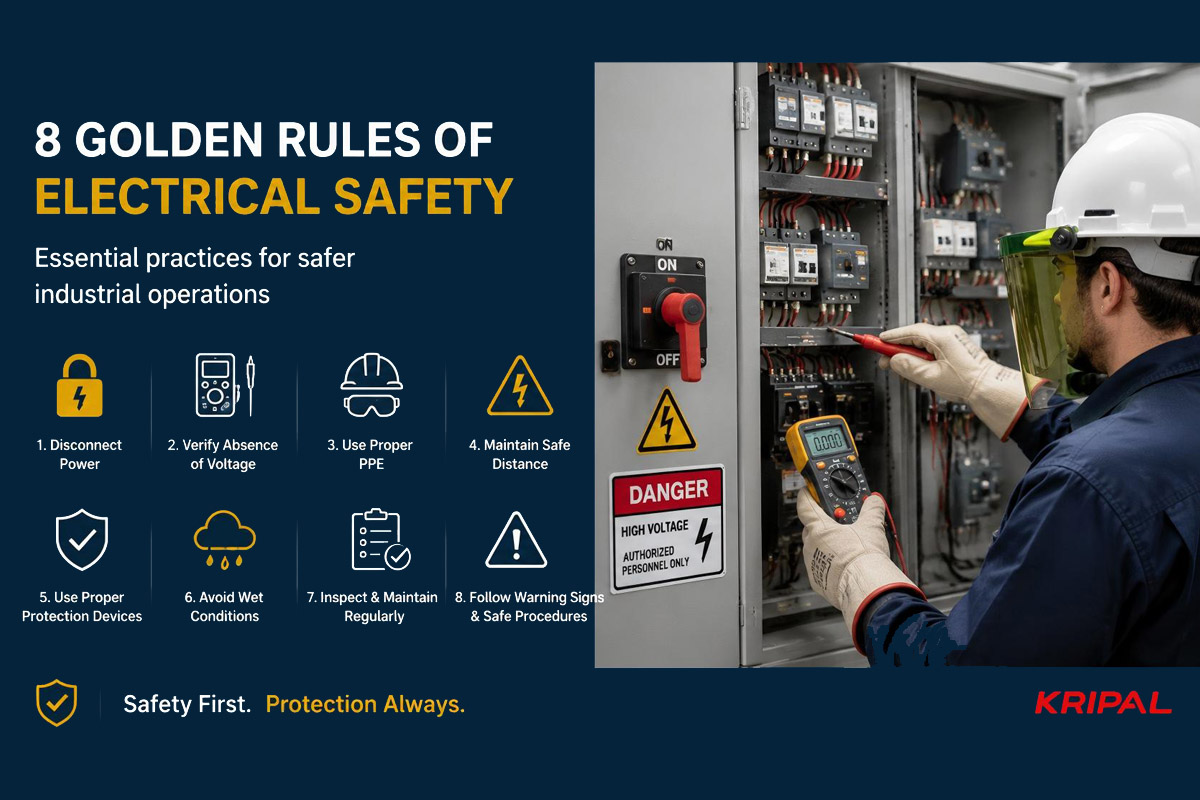
- Always disconnect all energy sources, implement full LOTO procedures, and verify zero voltage before starting work.
- Select voltage-rated, standard-compliant personal protective equipment (PPE) matched to arc flash incident energy.
- Maintain standardized safe working clearances, with extra margin for humid/wet outdoor environments.
- Conduct periodic inspection and functional testing of circuit protection devices to avoid arc faults and equipment burnout in factories, solar, wind and battery storage assets.
Always Disconnect Power Before Starting Work
During electrical maintenance, inspection, and installation activities, disconnecting the power supply is the foundational safety measure. Energized work drastically raises risks of electric shock, short circuits, and arc flash incidents. Workers must fully isolate all energy sources before commencing any task — this is especially critical for renewable energy equipment with independent DC power sources.
Disconnecting Power Is the Most Basic Safety Measure
Disconnecting power creates the primary isolation barrier during electrical work. Before maintenance, installation, or testing, fully isolate every energy circuit to eliminate contact with live components. Most electrical accidents stem from incomplete de-energization; forming a strict isolation habit greatly lowers injury and equipment failure risks.
Common Risks of Working on Energized Equipment
Working live can cause severe electric shock, arc flash thermal burns, permanent equipment failure, and facility fires. In medium/high voltage zones, injuries can occur without direct conductor contact — electrical arcs can bridge air gaps and trigger explosive arc flash events. Understanding these hazards reinforces adherence to formal isolation workflows.
How to Properly Perform a Standard LOTO Shutdown Procedure
A compliant Lockout-Tagout (LOTO) process goes far beyond switching off a circuit breaker. Follow the full mandatory steps per NFPA 70E:
- Identify all independent energy sources: AC mains, PV DC strings, battery energy storage, UPS backup power and auxiliary transformers.
- Physically disconnect and isolate each circuit separately.
- Lock every isolation point with personal safety locks; multi-person jobs require multiple individual lock sets.
- Post ISO 7010 standard hazard warning tags at all isolation devices.
- Discharge stored hazardous energy: bleed capacitor residual charge, release PV string DC voltage, and short battery storage terminals safely.
- Notify all shift operators and record full isolation details in the official equipment maintenance log to stop accidental re-energization.
Standardized LOTO eliminates unplanned energization and builds a compliant working environment.
Critical renewable energy reminder: Solar panels and lithium storage retain independent DC voltage even after AC inverters shut down. Isolating only the AC main supply cannot remove all electrical hazards.
Verify the Absence of Voltage Before Beginning Work
Even after completing LOTO isolation, work cannot start immediately. Capacitors, PV modules, battery packs and backup power systems hold residual stored energy that poses hidden risks. Workers must use Category III / Category IV rated voltage testers certified to IEC 61010 to confirm all conductors and components are fully de-energized.
Mandatory 3-step voltage testing procedure:
- Test a confirmed live reference point to validate tester functionality.
- Measure all isolated circuit conductors to check for residual voltage.
- Retest the live reference point again to confirm the tester has not failed mid-operation.
Only begin work once zero voltage is fully verified. This eliminates accidents caused by incorrect assumptions about fully dead circuits.
Use Appropriate Personal Protective Equipment
Personal protective equipment forms a secondary safety layer for electrical workers and is a core component of compliant safety management systems. Select PPE matching the site voltage class and calculated arc flash incident energy to minimize injury severity if faults occur.
Common Types of Electrical Protective Equipment
Insulated safety gear blocks direct current contact and mitigates arc flash harm during short-circuit events. Standard equipment includes dielectric insulated gloves, insulating safety footwear, impact-resistant safety helmets, face shields, arc-rated PPE suits, and insulating rubber mats (IEC 61111). All insulating PPE must undergo dielectric testing every 6 months; discard any items with cracks, punctures, hardening or surface ageing.
Protection Requirements for Different Voltage Levels
Different voltage bands demand tiered insulation and arc flash protection. Below is a standardized classification aligned with IEC 60038 and NFPA 70E, with clear renewable energy application notes:
| Voltage Level | Typical Voltage Range (IEC 60038) | Recommended Protective Equipment | Common Applications |
|---|---|---|---|
| Low Voltage | Up to 1,000 V AC / ≤1,500 V DC | Class 00–0 insulated gloves, safety glasses, insulated footwear, basic workwear | Residential wiring, commercial panels, PV DC arrays below 1500V |
| Medium Voltage | 1 kV to 35 kV AC | Class 1–2 insulated gloves, insulated boots, face shield, arc-rated clothing, insulated live-line tools | Industrial power distribution, wind turbine box transformers, factory switchgear |
| High Voltage | 35 kV to 230 kV AC | Class 3 insulated gloves, full arc flash suit, insulating helmet, insulated working platforms | Overhead transmission lines, utility primary substations |
| Extra High Voltage | Above 230 kV | Class 4 high voltage PPE, full arc flash barrier protection, remote operating equipment | Large grid transmission networks, central utility power plants |
Key standard rule: Before all medium/high voltage maintenance, complete an arc flash risk assessment to calculate arc flash boundary and incident energy, then select matching ARC-rated protective clothing (ARC4 / ARC8 / ARC12+).
Maintain a Safe Working Distance
Maintaining adequate clearance from energized equipment reduces electric shock and arc flash injury risks — this requirement is amplified in high voltage zones, where air insulation breakdown can create hazardous electrical discharge without physical contact.
Why Safe Distance Matters
Sufficient clearance limits exposure to dangerous electric fields. If personnel approach live equipment too closely, air insulation breaks down and arc flash incidents occur. Standardized minimum clearances also create space for emergency response during fault events.
Safety Clearance Standards
Clearance distances follow IEC 61936 and NFPA 70E, split into indoor enclosed switchgear and outdoor overhead line scenarios. Humid, foggy or rainy sites require a 50% increase to the minimum safe distance as moisture weakens air insulation.
| Voltage Level | Typical Voltage Range | Minimum Safe Clearance | Notes / Typical Applications |
|---|---|---|---|
| Low Voltage | Up to 1,000 V AC | 0.3 meters | Residential panels, light industrial control cabinets |
| Medium Voltage | 1 kV – 35 kV | 1 – 3 meters | Industrial distribution, wind farm box transformers |
| High Voltage | 35 kV – 230 kV | 3 – 5 meters | Transmission lines, utility distribution substations |
| Extra High Voltage | Above 230 kV | 5 meters or more | Long-distance high voltage transmission grids |
Facilities must install physical insulated barriers and marked restricted hazard zones to ensure all staff stay within safe operating boundaries.
Use Insulated Tools and Equipment Correctly
Insulated hand tools — insulated screwdrivers, pliers, insulating hot sticks — are mandatory for live-testing and low-energy maintenance. All tools must carry clear permanent voltage class ratings matching the working circuit. Inspect every tool before use for surface cracks, rubber aging, peeling insulation or physical damage. Never use compromised insulated tools on circuits above 50V AC/DC. Regular tool inspection eliminates insulation failure risks during operation.
Avoid Performing Electrical Work in Wet Conditions
Water and moisture drastically reduce the insulating capacity of equipment and human skin, exponentially raising electric shock hazards. Whenever possible, reschedule electrical tasks during dry weather. If work must proceed in damp, rainy or flooded environments, deploy multi-layer protective measures:
- Deploy IEC 61111 certified insulating rubber mats under all working positions.
- Install Type B residual current devices (RCDs) capable of detecting both AC and DC leakage, the mandatory protection for solar and battery hybrid systems per IEC 62446.
- Use fully waterproof enclosures and insulated temporary wiring. Cease all electrical work immediately if standing water accumulates within 1 meter of energized components.
Install Warning Signs
Clear hazard signage alerts staff and visitors to electrical danger zones. All labels must use ISO 7010 unified electrical hazard pictograms, including core markings: Danger High Voltage, Do Not Energize, Personnel Working On Circuit. Warning signs alone are insufficient for medium/high voltage areas; physical insulated barrier fencing must enclose restricted zones to block unauthorized access and accidental equipment operation.
Regularly Inspect and Maintain Electrical Equipment
Scheduled systematic maintenance identifies latent faults before they escalate into catastrophic failures, extending system service life and minimizing unplanned downtime. Build a formal recurring inspection schedule to eliminate most electrical safety incidents.
Regularly Inspect Wiring and Connection Points
Wiring terminals and cable joints are the most frequent fault locations. Long-term operation loosens terminal lugs and degrades cable insulation. Routine visual and torque inspections catch loose connections and cracked insulation early, preventing short circuits, overheating and fire risks.
Establish an Equipment Maintenance Plan
A formal structured maintenance plan improves equipment reliability and service lifespan. Core plan modules include periodic visual inspections, standardized performance testing, equipment cleaning, fault logging and component replacement tracking. Systematic early fault detection cuts safety incidents and production downtime.
Check Whether Protective Devices Are Operating Properly
Overcurrent and leakage protection hardware — circuit breakers, residual current devices (RCDs), fuses, DC arc fault circuit interrupters (AFCIs) — act as the last line of system safety. Mandatory periodic functional testing verifies these devices trip correctly under overload, short-circuit and DC arc fault conditions. Standardized testing cycles aligned with IEC maintenance norms:
- RCD residual current devices: Functional trip test every 3 months
- MCB, MCCB and PV DC circuit breakers: Full overload/short-circuit performance testing annually
- High voltage fuses, DC arc fault protection units: Monthly visual inspection, full performance testing every 12 months
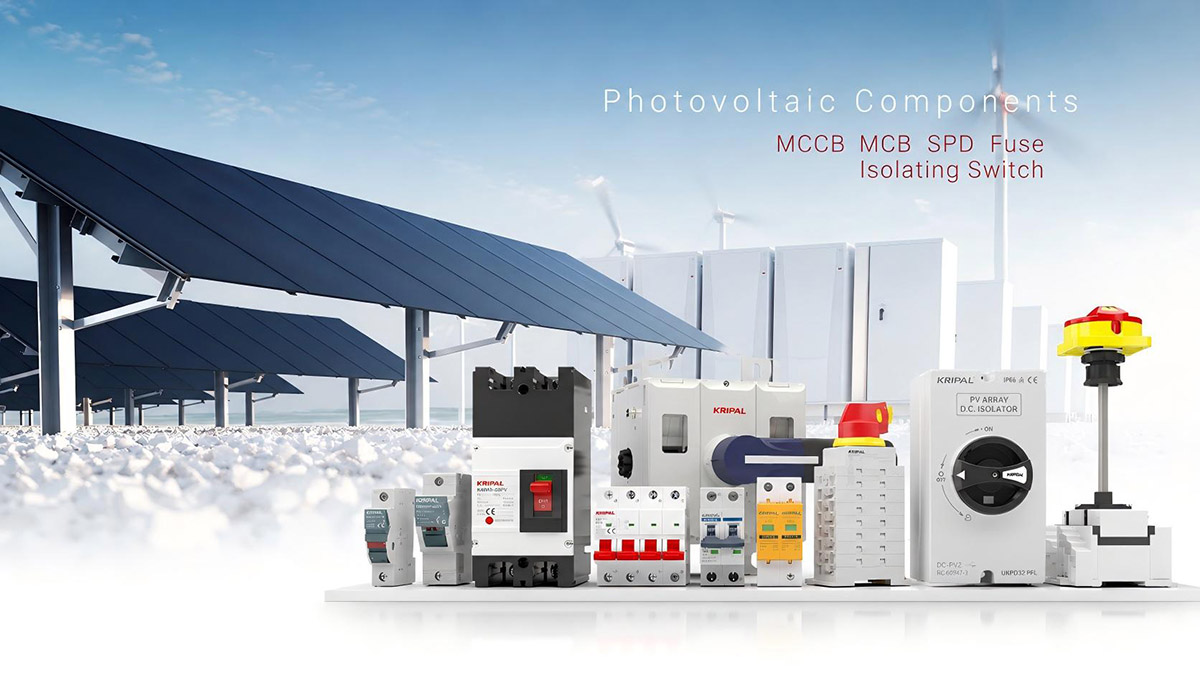
For industrial solar, wind and lithium battery storage systems, dedicated DC electrical protection devices (PV string fuses, DC isolators, DC arc fault interrupters) require separate inspection workflows. Unlike standard AC industrial equipment, PV arrays generate continuous DC current that creates hard-to-extinguish DC arcs; failed DC protection devices easily trigger facility fires.
Dedicated Section: Electrical Protection Devices for Industrial & Renewable Energy Systems
Traditional industrial AC protection hardware cannot fully mitigate unique DC hazards in solar, wind and battery storage assets, creating a critical safety gap without dedicated renewable protection devices.
Core Differences Between Industrial AC & Renewable DC Protection
- Conventional industrial power systems (factories, commercial plants): Rely on AC circuit breakers, Type A RCDs and AC-rated fuses to handle alternating current overload and leakage faults.
- Renewable energy hybrid AC/DC systems (PV plants, wind farms, battery storage): Require Type B universal RCDs, DC PV breakers, DC string fuses, arc fault circuit interrupters (AFCIs) and battery overcurrent protection compliant with IEC 62446 and IEC 62619.
Key Fault Risks Solved by Specialized Protection Devices
- DC arc flash fires in photovoltaic string circuits
- Reverse current charge damage between parallel energy storage battery packs
- Overload and short-circuit failures inside wind turbine box transformers
- Cross-circuit DC leakage that standard Type A RCDs fail to detect
All electrical protection devices deployed for industrial and renewable energy sites must pass IEC certification to meet global electrical safety compliance rules for factory, solar and storage project EPC contractors.
Conclusion
Electrical safety affects not only the performance of equipment but also the well-being of workers. By following these eight golden rules, organizations can reduce the risk of electric shock, fire, and equipment failures while creating a safer and more reliable working environment.
If you have any questions regarding electrical safety, you are welcome to visit our homepage for assistance. We can also help you find replacement components for damaged electrical devices.
FAQs
Q: Why should voltage be tested after the power has been disconnected?
Residual capacitive voltage, stored battery energy or independent backup power sources may remain active on isolated circuits. Multi-step voltage testing fully confirms the equipment is completely de-energized before maintenance begins.
Q: Are insulated gloves required during electrical work?
Class-rated insulated gloves are mandatory base PPE for all live testing and de-energized maintenance work above 50V AC/DC, per NFPA 70E and IEC 60903 standards.
Q: How much safety distance should be maintained?
Minimum clearance distances are defined by operating voltage and split for indoor/outdoor environments under IEC 61936. Humid conditions require a 50% clearance increase to offset reduced air insulation performance.
Q: Can electrical maintenance be performed in wet environments?
Work should be postponed until dry conditions whenever possible. If operations cannot be delayed, deploy insulating mats, Type B DC-compatible RCDs and fully waterproof equipment; stop work immediately if standing water accumulates near live components.
Q: How often should electrical equipment be inspected?
General low-voltage commercial equipment requires a full annual comprehensive inspection. Industrial PV, wind and battery storage protection devices follow tighter quarterly and yearly testing cycles as outlined in IEC 62446.
Related Resources
Explore Knowledge Center >

Need a matching KRIPAL product?
Share voltage, quantity and destination. An engineer will reply with options and lead time.