Search
Knowledge Center
BS 7671 18th Edition Explained for Electricians and Importers
BS 7671 18th Edition explained: amendments, RCD and AFDD rules, Type A RCBO selection, and what importers must check before supplying the UK market.
 July 15, 2026
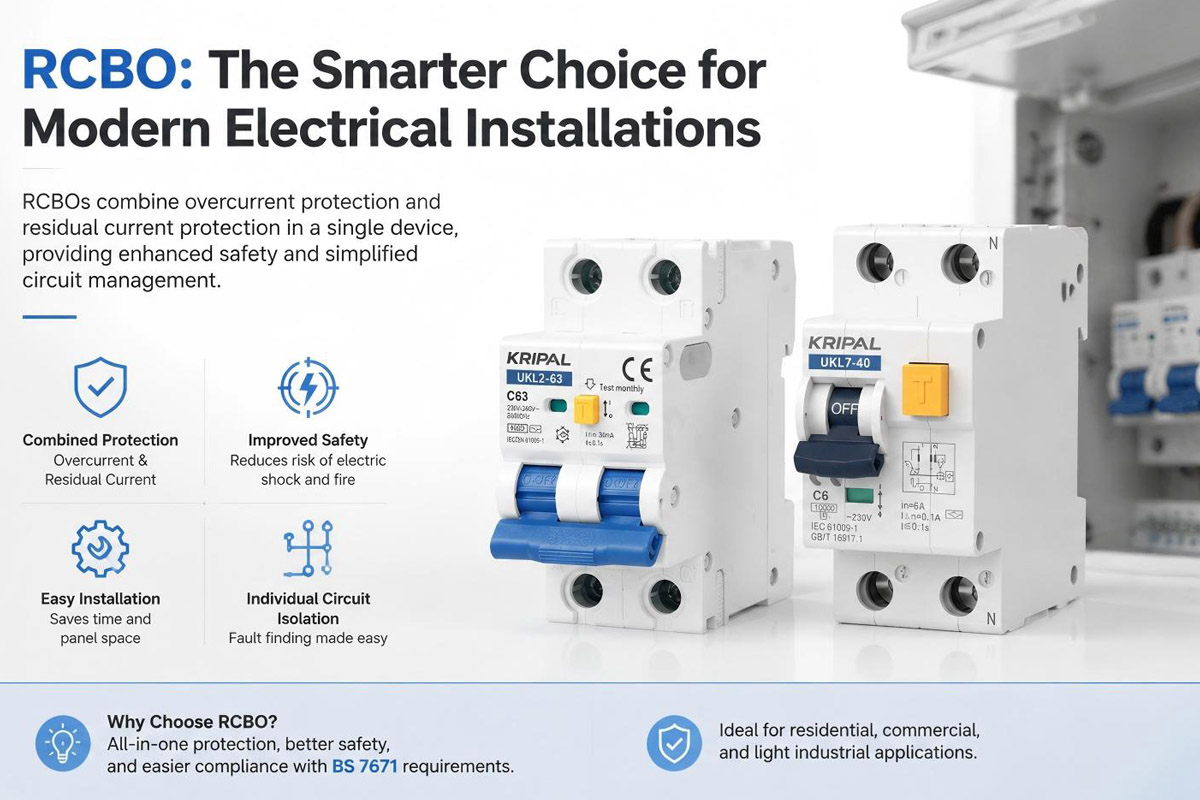
BS 7671, commonly known as the IET Wiring Regulations, is the recognized standard for electrical installations in the UK, covering the design, installation, inspection, and testing of electrical systems to ensure safety and reliability.
The 18th Edition of BS 7671, originally published as BS 7671:2018, introduced important changes affecting circuit protection, RCD selection, AFDD requirements, and modern electrical installations.
For electricians, BS 7671 provides guidance on safe installation practices. For manufacturers, importers, and distributors, it defines the technical requirements and product features expected in the UK market, particularly for products such as consumer units, RCBOs, and RCCBs.
This guide explains the key changes introduced by BS 7671 18th Edition and what they mean for electrical professionals and suppliers entering the UK market.
What BS 7671 Actually Is
BS 7671 is not a law by itself. It is a technical code of practice that provides recommendations and requirements for safe electrical installations. However, it has significant legal importance because electrical work in the UK must comply with relevant safety legislation, including the Electricity at Work Regulations and requirements under the Building Regulations.
In practice, electrical installations are commonly assessed against BS 7671. Compliance provides recognized evidence that an installation has been designed and installed according to accepted safety principles.
The standard is structured into several parts:
- Parts 1 and 2 define the scope, objectives, and fundamental principles.
- Parts 3 to 6 cover assessment of installation characteristics, protection for safety, selection and installation of equipment, and inspection and testing.
- Part 7 covers special installations and locations, such as bathrooms, swimming pools, medical locations, and electric vehicle charging installations.
- Part 8 addresses energy efficiency and prosumer electrical installations, including systems involving generation, storage, and energy management.
For electrical manufacturers and importers, understanding this structure is important because different product categories are affected by different sections of the regulations.
For example:
- Consumer units must support modern protection requirements.
- RCBOs must provide appropriate residual current protection.
- RCCBs must match the characteristics of the installation and connected loads.
The BS 7671 18th Edition Amendment Trail
The 18th Edition was introduced as BS 7671:2018 and became the foundation for current UK electrical installation practices. Since its publication, several amendments have been introduced.
Amendment 1:2020
This update included changes relating to electric vehicle charging installations and reflected the increasing adoption of EV technology.
Amendment 2:2022
Amendment 2 introduced several important changes affecting product selection, including:
- Updated requirements for protection against fire risks.
- Greater use of AFDDs in specific higher-risk installations.
- Updated requirements for residual current protection.
This amendment had a major impact on consumer unit design and RCBO selection because modern installations increasingly require more individual circuit protection.
Amendment 3:2024
Amendment 3 further updated BS 7671:2018 and introduced additional technical changes while maintaining the 18th Edition framework. It should be viewed as an update to the existing standard rather than a completely new edition.
For electricians and importers, the key point is simple: the latest requirements should always be checked before designing installations or selecting electrical products.
How BS 7671 Relates to IEC 60364
BS 7671 is based on the international IEC 60364 series of electrical installation standards, but it includes UK-specific requirements and national deviations. This relationship explains why many electrical products designed according to IEC standards can be used internationally, but additional checks are still required before entering the UK market.
For example, a manufacturer may produce an RCBO according to international requirements, but UK applications may require consideration of:
- RCD type selection
- UK product standards
- Consumer unit compatibility
- Installation practices under BS 7671
The important distinction is this: IEC 60364 provides the international foundation, while BS 7671 defines the specific requirements for UK electrical installations. For importers, relying only on general IEC compliance is not always sufficient. Products supplied into the UK market must match both their product standards and the expectations of BS 7671-based installation design.
What the 18th Edition Changed
The 18th Edition of BS 7671 introduced several important changes that directly influence how electrical installations are designed and how protective devices are selected in the UK.
For electricians, these updates have changed common installation practices and increased the focus on circuit protection, fault prevention, and system reliability. For manufacturers, importers, and distributors, they have also changed the types of electrical products required for the UK market.
The most significant changes relate to the wider application of Residual Current Device (RCD) protection, the introduction of requirements for Arc Fault Detection Devices (AFDDs) in specific higher-risk installations, updated requirements for electric vehicle charging protection, and the increasing adoption of modern consumer units and RCBO-based protection solutions.
RCD Protection for Socket Outlets and Type A Devices
One of the most significant changes introduced by the 18th Edition was the wider application of 30mA RCD protection for socket outlets. Under Regulation 411.3.3, socket outlets up to 32A generally require additional protection by a 30mA RCD, unless specific exceptions apply.
The purpose of this requirement is to reduce the risk of electric shock caused by damaged cables, portable equipment, or contact with live parts.
This change increased demand for modern consumer units using individual RCBO protection because RCBOs provide:
- Overcurrent protection
- Residual current protection
- Individual circuit isolation after a fault
Compared with traditional split-load consumer units, an all-RCBO configuration can prevent a fault on one circuit from disconnecting multiple unaffected circuits. For example, if a kitchen socket circuit develops an earth leakage fault, only that circuit will disconnect while lighting and other circuits remain operational.
For UK electrical product suppliers, this means RCBO compatibility has become one of the most important considerations when developing consumer unit ranges.
RCD Protection for Lighting Circuits
The 18th Edition also introduced additional RCD protection requirements for lighting circuits in domestic premises. Regulation 411.3.4 requires 30mA RCD protection for lighting circuits in domestic installations. The reason behind this requirement is related to safety. Lighting circuits are not only about preventing electric shock. A fault that causes lighting loss could create additional risks, particularly on stairs or emergency escape routes.
Modern consumer units therefore commonly use RCBO protection for lighting circuits, allowing:
- Individual circuit protection
- Reduced nuisance tripping
- Easier fault identification during testing
For installers, this means selecting the correct RCBO type and rating before installation is essential. For importers, it means supplying consumer units and protective devices that support modern UK installation practices.
Arc Fault Detection Devices (AFDD)
Arc faults are a potential cause of electrical fires because damaged cables, loose connections, or deteriorated insulation can create dangerous electrical arcing. The 18th Edition Amendment 2 introduced requirements relating to Arc Fault Detection Devices (AFDDs) under Regulation 421.1.7 for certain higher-risk premises.
These include examples such as:
- Higher-risk residential buildings
- Houses in multiple occupation (HMOs)
- Certain care facilities
AFDDs monitor electrical waveforms and detect abnormal arc fault characteristics. When a dangerous arc fault is identified, the device disconnects the circuit to reduce the risk of fire.
However, AFDDs are not required for every domestic socket circuit. Their application depends on the type of installation and risk assessment. For importers, AFDD availability is becoming increasingly important when supplying complete protection solutions for specialized UK projects.
Type A RCDs and Electric Vehicle Charging Requirements
Modern electrical installations increasingly include electronic equipment that can generate pulsating DC leakage currents, which may not be effectively detected by traditional Type AC RCDs.
As a result, BS 7671 has driven wider adoption of Type A RCD protection, which can detect both AC residual currents and pulsating DC residual currents, making it suitable for many modern domestic and commercial applications.
Electric vehicle (EV) charging installations require additional consideration because EV chargers may produce smooth DC fault currents that can affect conventional RCD operation.
Under Section 722 of BS 7671, protection against DC leakage currents can generally be achieved by using either a Type B RCD or a Type A RCD combined with an appropriate 6mA DC residual current detection device (RDC-DD), depending on the EV charging equipment and installation design.
For manufacturers, importers, and distributors, offering a range of RCD solutions, including Type AC, Type A, and Type B options, is increasingly important to meet the requirements of modern UK electrical installations.
What This Means for Electricians
For electricians, the practical impact of BS 7671 changes is mainly reflected in design decisions and product selection. The trend toward individual circuit protection has made all-RCBO consumer units increasingly popular in new installations and refurbishment projects.
An RCBO-based consumer unit provides several advantages:
- Faults are isolated to individual circuits
- Nuisance tripping is reduced
- Testing and fault finding become easier
- Future circuit modifications are simpler
A modern UK consumer unit typically needs to consider:
- Number of outgoing circuits
- RCBO module width
- Main switch rating
- RCD type selection
- Future expansion requirements
KRIPAL consumer units are designed around these market requirements, including configurations supporting single-module RCBO installation where space efficiency is important.
The Importance of Product Marking and Documentation
For electrical manufacturers, exporters, and importers supplying products into the UK market, BS 7671 creates clear expectations regarding product suitability, technical documentation, and compliance requirements.
However, it is important to understand that BS 7671 is an installation standard rather than a product certification standard, meaning electrical devices must also comply with their own relevant product standards before being considered suitable for UK applications. For example, RCBOs should comply with BS EN 61009-1, RCCBs with BS EN 61008-1, MCBs with BS EN 60898-1, and industrial circuit breakers may fall under BS EN 60947-2.
When selecting products for the UK market, importers and distributors should evaluate not only price and availability but also key factors such as applicable standards, test reports, technical documentation, rated voltage, rated current, breaking capacity, RCD type classification, and compatibility with UK consumer units.
A product with general international certification does not automatically guarantee suitability for BS 7671-based installations; successful market entry requires a combination of product compliance, installation compatibility, and complete technical support documentation.
For an importer, BS 7671 creates a set of practical product requirements that translate directly into what you can sell.
Selecting the Right Consumer Unit and RCBO for UK Installations
The move toward individual circuit protection has changed consumer unit design. Many modern UK installations now prefer all-RCBO consumer units because they provide better circuit separation and easier fault management.
When selecting a consumer unit, importers and installers should consider the following.
1. Consumer Unit Capacity
The enclosure should provide enough space for:
- Main switch
- RCBOs
- Surge protection devices (where required)
- Future circuit expansion
For example, a 14-way consumer unit with compact RCBOs can provide efficient space utilization for typical residential installations.
2. RCBO Type Selection
Different applications require different residual current protection characteristics. Common options include the following.
| RCBO Type | Typical Application |
|---|---|
| Type AC RCBO | Suitable only for circuits with traditional AC loads where pulsating DC components are not expected. |
| Type A RCBO | Increasingly common in modern residential installations because it can detect both AC and pulsating DC residual currents. |
| Type B protection | Used for applications where smooth DC leakage currents may occur, such as certain EV charging systems. |
Choosing the correct device type is essential because installing an unsuitable RCD type may affect the safety performance of the installation.
3. Module Width and Space Efficiency
Consumer unit space has become a key commercial consideration. Single-module RCBO designs allow more circuits to fit into compact consumer units, making them attractive for:
- New residential projects
- Refurbishment work
- Space-limited installations
KRIPAL’s consumer unit and RCBO ranges are designed to support modern UK installation requirements, including compact RCBO configurations and different RCD type options.
Common BS 7671 Questions and Misunderstandings
Is BS 7671 legally mandatory?
BS 7671 itself is not an Act of Parliament. However, it is the recognized standard used to demonstrate that electrical installations meet safety requirements. Electrical work that does not follow recognized safety standards may create compliance, insurance, and liability issues.
What is the difference between BS 7671 and IEC 60364?
IEC 60364 is the international standard series for low-voltage electrical installations. BS 7671 is the UK implementation with national requirements and modifications. A product designed for international markets may still require additional evaluation before being supplied for UK installations.
Are AFDDs required on every socket circuit?
No. AFDD requirements apply mainly to certain higher-risk premises. They are not automatically required for every domestic installation. The final requirement depends on the installation type and risk assessment.
Can Type AC RCBOs still be used in the UK?
Type AC devices are still available for specific applications. However, modern installations containing electronic equipment often require Type A protection because electronic loads may produce pulsating DC leakage currents. The correct RCD type depends on the characteristics of the circuit.
What testing is required before energizing a new installation?
Before a new electrical installation is energized, it must undergo inspection and testing to confirm that the system has been installed safely and operates correctly in accordance with BS 7671 requirements. The testing process normally includes continuity testing of protective conductors, insulation resistance testing, polarity verification, earth fault loop impedance testing, and RCD operation testing.
The results of these inspections and tests are recorded in the relevant Electrical Installation Certificate (EIC) and supporting documentation, providing a permanent record that the installation has been assessed and meets the required safety standards.
Does KRIPAL supply products suitable for BS 7671 installations?
KRIPAL supplies consumer units, RCBOs, and RCCBs designed for international electrical markets and suitable for applications where products are selected and installed according to BS 7671 requirements.
Our product ranges include consumer units supporting RCBO configurations, Type A and Type AC RCBO options, and complete technical documentation to assist distributors, contractors, and installers with product evaluation and selection.
For customers supplying the UK market, KRIPAL provides technical support, product information, and compliance documentation to help ensure the selected devices are appropriate for their intended installation applications.
Conclusion
BS 7671 18th Edition continues to play a central role in shaping the design, installation, and product selection requirements of electrical systems across the UK. For electricians, it influences decisions related to circuit protection, inspection, testing, and installation practices, while for manufacturers, importers, and distributors, it defines the technical features and documentation that UK customers increasingly expect.
As electrical installations continue to evolve with greater use of electronic equipment, renewable energy systems, and electric vehicle charging, the demand for reliable protection solutions such as Type A RCBOs, RCCBs, AFDD-compatible systems, and modern consumer units continues to grow.
For suppliers entering or expanding within the UK market, understanding BS 7671 requirements is not only essential for compliance but also for providing products that match real-world installation needs.
KRIPAL supports distributors, contractors, and electrical professionals with consumer units, RCBOs, and protection devices designed for global markets, together with technical information and documentation to help customers select suitable solutions for their applications. Contact our team for product support.
Related Resources
Explore Knowledge Center >
Need a matching KRIPAL product?
Share voltage, quantity and destination. An engineer will reply with options and lead time.