Search
Knowledge Center
How to Read an SPD Datasheet: Uc, Up, In, Imax and Iimp Explained
Understand SPD datasheet ratings including Uc, Up, In, Imax, and Iimp so you can match surge protection to the system and equipment.
 July 28, 2026
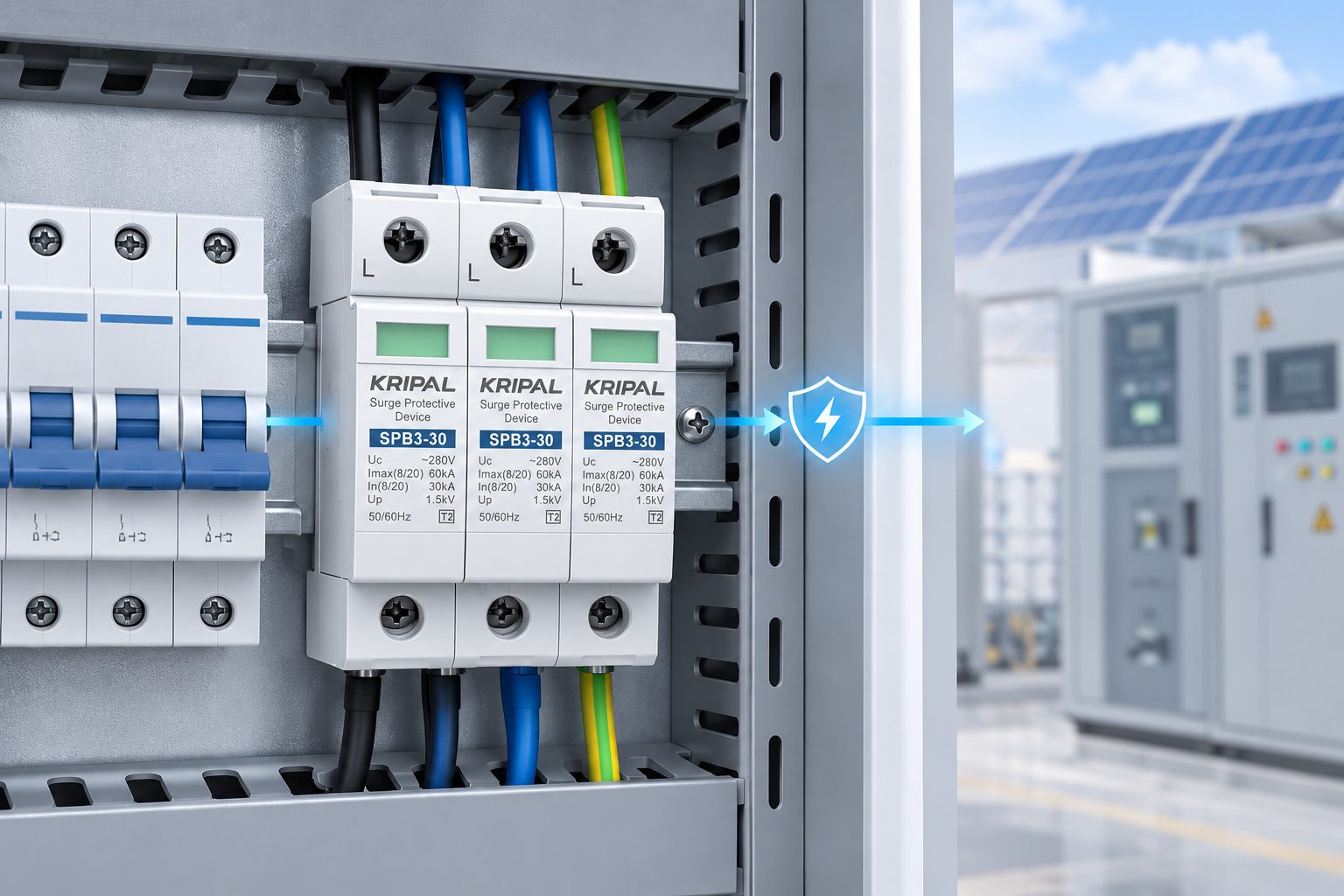
Choosing a surge protection device (SPD) is not simply a matter of selecting the highest current rating or the lowest voltage number. An SPD datasheet contains several key parameters that describe how the device operates, what surge conditions it can withstand, and how effectively it can protect connected equipment.
The most important values include Uc, Up, In, Imax, and Iimp. Understanding what each rating means makes it easier to select an SPD that matches the system voltage, earthing arrangement, equipment requirements, and surge exposure.
This guide explains these SPD ratings and provides a practical way to read an SPD datasheet without confusing one parameter with another.
| SPD Parameter | Meaning | Typical Application |
|---|---|---|
| Uc | Maximum continuous operating voltage | System voltage compatibility |
| Up | Voltage protection level | Equipment protection |
| In | Nominal discharge current | Type 2 surge-current capability |
| Imax | Maximum discharge current | Maximum Type 2 surge-current capability |
| Iimp | Impulse current | Type 1 lightning-current conditions |
Uc: Maximum Continuous Operating Voltage
Uc is the maximum continuous operating voltage of an SPD. It is the highest voltage that can be continuously applied to the SPD under its specified operating conditions without causing it to enter its intended surge-protection state.
Uc must be selected according to the actual electrical system rather than simply matching the nominal supply voltage. The system voltage, earthing arrangement, connection mode, and possible temporary overvoltages all need to be considered.
For a typical 230/400 V installation, an SPD may use a Uc value such as 275 V or higher, depending on the protection configuration and manufacturer’s specifications. The correct value should always be confirmed from the SPD datasheet.
The earthing system is particularly important because an SPD connected between line and earth can experience different voltage conditions from one connected between line and neutral. This is why Uc should be checked for the relevant protection mode instead of selecting an SPD based only on the phase-to-neutral voltage.
A Common Uc Selection Mistake
One common mistake is selecting an SPD with an unsuitable Uc for the actual system conditions. If Uc is too low for the installation, the SPD may experience excessive conduction during normal or temporary overvoltage conditions, which can shorten its service life.
When reading an SPD datasheet, check the Uc value for the actual connection mode and earthing arrangement used by the installation.
Up: Voltage Protection Level
Up is the voltage protection level of the SPD. It is a key parameter for determining how effectively an SPD limits transient overvoltage under specified test conditions.
Up should be compared with the rated impulse withstand voltage or applicable surge withstand level of the equipment being protected. As a general principle, the SPD’s Up should be sufficiently below the equipment’s withstand level, with an appropriate margin.
For example, if equipment has a specified impulse withstand level of 2.5 kV, an SPD with a sufficiently lower Up may provide an appropriate level of protection. The actual selection should always follow the equipment manufacturer’s specifications and the installation requirements.
It is important not to assume that Up is simply the exact voltage the equipment will see during every surge. The voltage at the equipment can also be affected by the connection conductors between the SPD and the protected load. Long conductors can introduce additional voltage due to their inductive effects during a fast transient.
This is why short, appropriately routed SPD connections are important. A well-selected SPD can still provide less effective protection if it is installed with unnecessarily long connecting conductors.
In vs Imax: Understanding SPD Discharge Current
In
Two important current ratings on a Type 2 SPD datasheet are In and Imax.
In, or nominal discharge current, is the specified discharge current associated with the standard 8/20 μs current waveform used for SPD testing. It is commonly used to compare the discharge-current capability of Type 2 SPDs.
Imax
Imax, or maximum discharge current, represents the maximum discharge current that the SPD is designed to withstand under the specified test conditions, also using the 8/20 μs waveform for Type 2 devices.
Imax is normally higher than In. For example, a Type 2 SPD might have an In of 20 kA and an Imax of 40 kA. However, these numbers should not be interpreted as simple guarantees that the device will fail at Imax or remain completely unaffected at In. They are standardized ratings used to describe the SPD’s surge-current capability under defined test conditions.
The appropriate In and Imax values depend on the expected surge exposure of the installation. Factors such as the building’s location, overhead lines, lightning exposure, and the position of the SPD within the electrical installation should be considered.
Iimp: The Type 1 SPD Rating
Type 1 SPDs are designed for installations where higher-energy lightning-current conditions need to be considered. Instead of using In as the primary discharge-current rating, Type 1 SPDs are characterized by Iimp, the impulse current associated with the 10/350 μs waveform.
The 10/350 μs waveform is used to represent the characteristics of a lightning current for Type 1 testing. Typical Iimp values may include 12.5 kA or 25 kA per pole, depending on the application and SPD design.
Iimp should not be directly compared with the In rating of a Type 2 SPD because they are based on different test waveforms and represent different surge conditions.
Uc vs Up vs In vs Imax: What’s the Difference?
These ratings answer different questions when selecting an SPD.
Uc asks: Can the SPD operate continuously on this electrical system?
Up asks: How effectively can the SPD limit transient overvoltage for the protected equipment?
In and Imax ask: How much surge current can the SPD withstand under its specified test conditions?
Iimp asks: What impulse-current capability does a Type 1 SPD have for higher-energy lightning-current conditions?
Keeping these functions separate is important. A high Imax does not automatically mean the SPD has the most suitable Up, and a low Up does not automatically mean the SPD is compatible with every electrical system. SPD selection requires all relevant parameters to be considered together.
How to Read an SPD Datasheet
A practical way to read an SPD datasheet is to follow the selection sequence below.
First
Identify the SPD type. Determine whether the device is Type 1, Type 2, Type 3, or a combined device, based on the requirements of the installation.
Next
Check Uc. Compare the specified Uc with the system voltage, earthing arrangement, and relevant connection mode.
Then
Check Up. Compare the voltage protection level with the rated impulse withstand voltage or applicable surge withstand requirement of the protected equipment.
After that
Check In, Imax, or Iimp. Select the appropriate current rating according to the SPD type and the expected surge or lightning exposure.
Finally
Check the installation requirements. Confirm the maximum upstream overcurrent protection, conductor requirements, status indication, remote signaling options, and other manufacturer-specific conditions.
Do not select an SPD simply by comparing one number. The correct device is the one whose complete set of ratings matches the electrical system, protection requirements, and installation conditions.
Choosing the Right SPD for Your Application
Once the system voltage, earthing arrangement, equipment withstand level, and expected surge exposure are known, the appropriate SPD can be selected from the manufacturer’s datasheet.
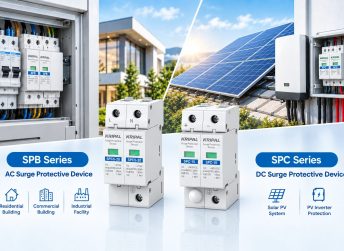
For AC distribution applications, the KRIPAL SPB series provides surge protection solutions designed for electrical distribution systems. For DC-side applications such as photovoltaic and battery systems, the KRIPAL SPC series is designed for DC surge protection.
When comparing models, check Uc, Up, In, Imax or Iimp, depending on the SPD type, together with the applicable installation and protection requirements. You can review KRIPAL’s SPD category and related circuit protection products for suitable applications.
FAQ
What is the difference between Uc and Up?
Uc is the maximum continuous operating voltage of the SPD, while Up is its voltage protection level under specified test conditions. Uc is related to the electrical system the SPD is connected to, whereas Up is primarily used to evaluate the level of transient voltage protection provided to connected equipment.
What clamping voltage do I need for my equipment?
Rather than choosing an SPD based on a generic clamping-voltage value, check the equipment manufacturer’s rated impulse withstand voltage or applicable surge withstand requirement. The SPD’s Up should be sufficiently below that level, while Uc and the other SPD ratings must also match the installation.
What does 20 kA mean on an SPD?
On a Type 2 SPD, 20 kA commonly refers to the nominal discharge current, In, under the specified 8/20 μs test waveform. It describes the SPD’s rated discharge-current capability and should be evaluated together with Imax and the requirements of the installation.
What is the difference between In and Imax?
In is the nominal discharge current rating, while Imax is the maximum discharge current rating under the specified test conditions. Both are important when evaluating the surge-current capability of a Type 2 SPD.
What is the difference between Iimp and In?
Iimp is associated with the 10/350 μs impulse-current test used for Type 1 SPDs, while In is the nominal discharge current associated with the 8/20 μs waveform commonly used for Type 2 SPDs. Because the waveforms and test conditions differ, the two values should not be directly compared.
Can I use one SPD for both AC and DC circuits?
No. AC and DC SPDs are designed for their respective circuit characteristics and must have the appropriate voltage and protection ratings. Use an SPD specifically rated for the AC or DC system being protected, particularly for photovoltaic and battery applications.
Conclusion
Understanding Uc, Up, In, Imax, and Iimp makes SPD datasheets much easier to read. Uc must match the electrical system and connection conditions, Up must provide an appropriate protection level for the connected equipment, and the discharge-current ratings must match the expected surge environment and SPD type.
The best SPD is therefore not simply the one with the highest current rating or lowest Up. It is the device whose complete specifications are correctly matched to the system, equipment, and installation conditions.
Related Resources
Explore Knowledge Center >
Need a matching KRIPAL product?
Share voltage, quantity and destination. An engineer will reply with options and lead time.