Search
Knowledge Center
Which Gas Used In ACB?
Learn which gas used in ACB systems for insulation & arc extinction. Compare air, SF6, CO2, and eco-friendly gases for air circuit breakers.
 May 10, 2026
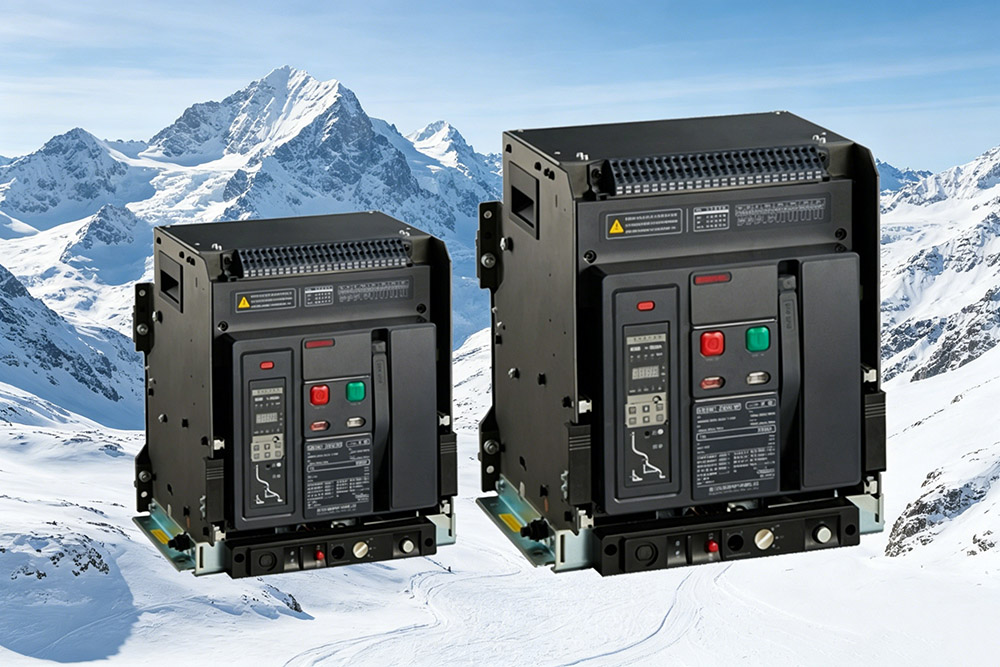
Air circuit breakers are widely used devices in modern power systems that protect circuits from overload and short-circuit conditions. In ACBs, gases act as insulation media and also help extinguish arcs.
Choosing the right type of gas can improve the performance, safety, and environmental friendliness of an ACB. This article will introduce the types of gases used in ACBs and their characteristics.
Key takeaways
- ACB gases serve as insulation and arc-extinguishing media, which ensures the circuit operates safely under overload or short-circuit conditions.
- Common gases include air, carbon dioxide, sulfur hexafluoride, and environmentally friendly mixed gases.
- The ideal gas should have high insulation and arc-extinguishing capabilities while maintaining safety, environmental friendliness, and cost-effectiveness.
Why gases are used in ACBs?
In air circuit breakers, gases act as media that provide insulation and extinguish arcs, which directly affects the safety and breaking capacity of the device.
Insulation function
When a circuit experiences overload or a short-circuit, the breaker must cut off the current within milliseconds. The gas acts as an insulation medium, and because it has high dielectric strength, it can quickly form a reliable insulation barrier after the separation of the contacts.
This prevents flashover, short circuits, or breakdowns inside the breaker. Compared with ordinary air, specialized insulation gases restore insulation faster, which prevents the circuit from conducting again after breaking and protects both the device and operators.
Arc-extinguishing function
When breaking high currents, an arc with a temperature of thousands of degrees may appear between the contacts. If the arc is not extinguished quickly, it can damage the contacts, burn insulation components, and even cause explosions or fires.
Sulfur hexafluoride, among other gases, can rapidly absorb free electrons from the arc and carry away large amounts of heat, which cools and disperses the arc in a very short time, preventing damage to critical components.
Types of gases used in ACBs
Air circuit breakers can use several types of gases as insulation and arc-extinguishing media, and each type has its characteristics and suitable applications:
Air
Air is the most common and lowest-cost gas medium. It is easy to obtain, safe to operate, and environmentally friendly. However, its insulation and arc-extinguishing capabilities are limited, so it is mainly used in low-voltage or small-scale breakers. At high currents or voltages, air circuit breakers may need to be larger to provide sufficient insulation.
Carbon dioxide
Carbon dioxide has higher insulation performance than ordinary air and can absorb some energy during arc extinguishing, which helps extend the service life of the breaker.
It is non-toxic, non-corrosive, and environmentally friendly. It is suitable for medium and low voltage breakers but cannot match sulfur hexafluoride in high-voltage arc-extinguishing performance, so its application is limited.
Sulfur hexafluoride
Sulfur hexafluoride is the most commonly used medium in high-voltage breakers. It provides strong insulation and rapid arc-extinguishing, which protects the breaker and connected equipment.
It is inert, stable, and non-flammable, but it is a greenhouse gas, so leakage can affect the environment, and its handling and maintenance require careful control. In high-voltage applications, sulfur hexafluoride provides the most reliable performance.
Other environmentally friendly gases
With stricter environmental regulations, more ACBs are using environmentally friendly gases, such as mixtures of sulfur hexafluoride and nitrogen, or new low-emission gases.
These gases provide insulation and arc-extinguishing performance while reducing greenhouse gas emissions. They are suitable for medium and high-voltage breakers and represent a trend for future development.
Advantages of using gases in ACB systems
Using gases as insulation and arc-extinguishing media in air circuit breakers offers multiple advantages:
Excellent insulation
Gases can isolate conductive parts effectively, preventing arc breakdown even at high voltage. Sulfur hexafluoride and mixed gases can achieve higher insulation in a smaller space, which allows for more compact and flexible designs.
Rapid arc-extinguishing for safety
When a breaker interrupts high currents, arcs generate high temperature and strong currents. The gas quickly cools and disperses the arc, reducing damage to components and enhancing operational safety.
Improved reliability and service life
Because gases control arcs and insulation failures effectively, the breaker remains stable under frequent operation or extreme conditions. This reduces failure rates, extends equipment life, and lowers maintenance costs.
Environmental and economic benefits
Modern ACBs increasingly use environmentally friendly or low-emission mixed gases, which balance performance and environmental protection. Compared with traditional oil-immersed breakers, gas-insulated breakers are cleaner, have lower operating costs, and meet sustainable development requirements.
Adaptable to different applications
Different gases can be selected according to application needs to achieve optimal performance in low, medium, or high voltage breakers, allowing ACBs to provide reliable protection in industrial, commercial, and residential power systems.
Characteristics gases should have
Gases used in ACB systems must provide insulation and arc-extinguishing functions and also meet the following requirements:
Safety
The gas must ensure the safety of both equipment and operators. It should have stable insulation properties and remain stable under high voltage or temperature, and it should not decompose or ignite easily. The gas should be non-toxic and harmless in case of leakage or accidental operation.
Environmental friendliness
Modern power systems emphasize environmental protection. Gases should minimize greenhouse gas emissions and avoid damaging the ozone layer. For example, although sulfur hexafluoride performs well, it is a potent greenhouse gas, so new environmentally friendly gases or low-emission alternatives are increasingly used.
Cost-effectiveness
The cost and maintenance of the gas are also important factors. An ideal gas should be affordable while maintaining performance and easy to store and maintain. High arc-extinguishing and insulation efficiency helps reduce device wear and failure, which saves operating costs.
Conclusion
In air circuit breakers, gases perform insulation and arc-extinguishing functions while influencing the safety, reliability, and environmental impact of the equipment. Choosing a suitable gas requires balancing safety, environmental impact, and cost to ensure the system operates efficiently, reliably, and sustainably.
Kripal offers different types of air circuit breakers. Visit the homepage to explore options.
FAQs
Q1 Why are gases used in ACB?
Gases in ACBs provide insulation and extinguish arcs, ensuring that circuits are safely disconnected during overload or short-circuit conditions while protecting equipment and operators.
Q2 Which gases are commonly used in ACB?
Common gases include air, carbon dioxide, sulfur hexafluoride, and environmentally friendly mixed gases. Each gas is suitable for different voltage levels and applications.
Q3 Why is sulfur hexafluoride widely used in high-voltage breakers?
Sulfur hexafluoride provides strong insulation and rapid arc-extinguishing, ensuring the safety and reliability of high-voltage breakers, but leakage must be prevented to protect the environment.
Q4 What are the advantages of environmentally friendly gases in ACB?
Environmentally friendly or mixed gases balance insulation performance and environmental protection, reduce greenhouse gas emissions, and maintain breaker efficiency, representing the trend for future development.
Q5 What factors should be considered when choosing ACB gases?
Factors include safety, insulation and arc-extinguishing performance, environmental impact, and cost. The gas should be selected to best meet system requirements.
Related Resources
Explore Knowledge Center >
Need a matching KRIPAL product?
Share voltage, quantity and destination. An engineer will reply with options and lead time.