Search
Knowledge Center
What Are the Different Types of Air Circuit Breakers
Learn all types of air circuit breakers: fixed, draw-out, manual, motorized & intelligent ACB, pros cons and key selection tips
 May 08, 2026
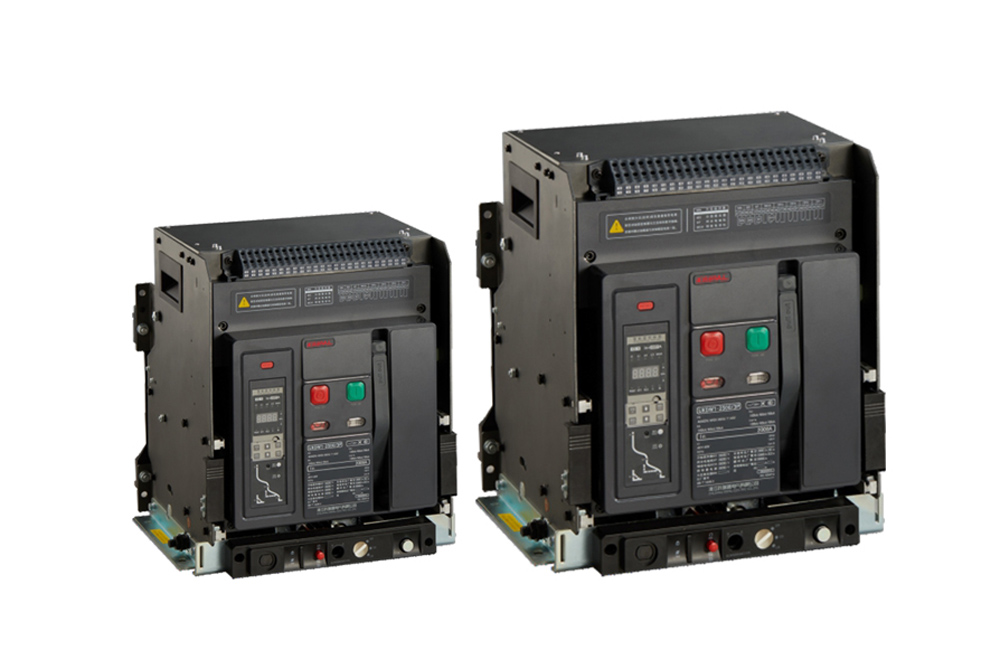
Air circuit breakers are indispensable protective devices in modern power systems, designed to interrupt abnormal currents to protect equipment and personnel.
As applications and technology have developed, the types of air circuit breakers have become more diverse, ranging from traditional fixed types to intelligent motorized types, each with unique characteristics and suitable environments.This article will introduce seven typical types of air circuit breakers and provide guidance for selection, helping readers quickly grasp the core knowledge.
Key takeaways
- Air circuit breakers protect power systems by interrupting overload or short-circuit currents, ensuring the safety of equipment and personnel.
- Common types include fixed, draw-out, manual, motorized, three-pole, intelligent, and high breaking capacity types, each with different applications and characteristics.
- Selection should take into account installation method, load type, control mode, and short-circuit capacity to ensure safe and efficient operation.
What Is an Air Circuit Breaker?
An air circuit breaker is a power protection device that rapidly interrupts a circuit during overload or short-circuit conditions to prevent equipment damage and fire hazards. It uses air as the arc extinguishing medium and is widely used in low-voltage distribution systems and industrial distribution cabinets.
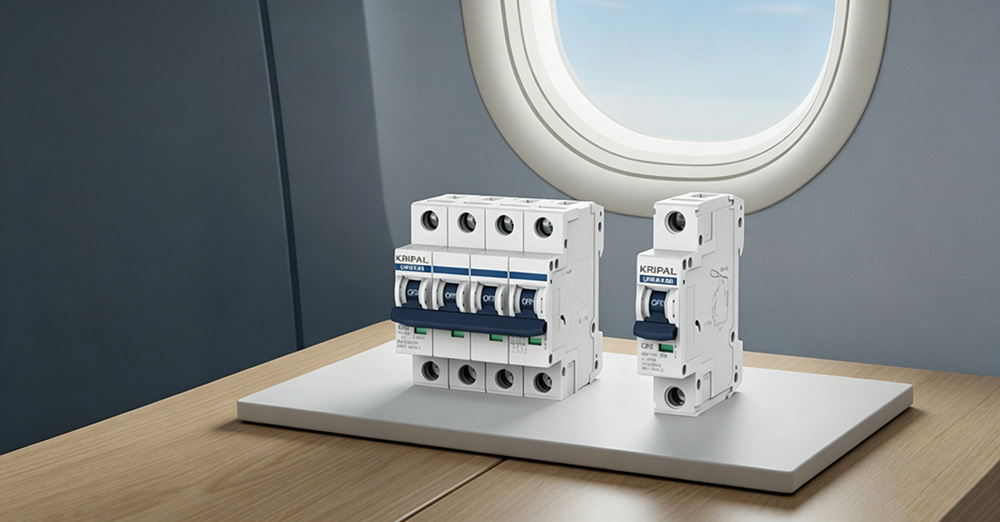
Fixed Type Air Circuit Breaker
A fixed type air circuit breaker is a type of breaker installed in a distribution cabinet that is fixed in place and cannot be moved. Its primary function is to quickly disconnect the circuit during overload, short circuit, or other abnormal currents to protect electrical equipment and personnel.
Because of its simple structure, it usually consists of an arc extinguishing chamber, contact system, operating mechanism, and casing, and it is directly fixed to the busbar or distribution frame.
Advantages
- Compact structure and easy installation, which allows it to fit standard distribution cabinets.
- High reliability due to stable fixed connections and minimal mechanical wear.
- Simple maintenance that requires only routine inspections to ensure safe operation.
- Lower cost compared to draw-out or intelligent types.
Disadvantages
- Maintenance is less convenient because it must be fully disconnected before removal.
- Limited functionality as it generally provides only basic power interruption without remote control or intelligent monitoring.
Applications
- Main or branch protection in low-voltage distribution systems, suitable for small and medium-sized factories, commercial buildings, and residential distribution cabinets.
- Suitable for locations where operation frequency is low and maintenance requirements are simple.
Draw-out Type Air Circuit Breaker
A draw-out type air circuit breaker is a movable breaker that can be extracted from a distribution cabinet. It is designed so that the breaker can be easily inserted or removed while powered or unpowered, which facilitates maintenance, servicing, and replacement.
It usually consists of the breaker body, draw-out mechanism, connection rails, and operating handle and can achieve three positions: fixed, maintenance, and test run.
Strength
- Easy maintenance and replacement, as the breaker can be removed without disassembling the entire system.
- Safe operation due to mechanical interlocks that prevent incorrect operation or removal while powered.
- High flexibility, suitable for multi-module systems that require quick replacement or upgrades.
- Can be combined with motorized operation or intelligent protection modules for automated management.
Drawback
- More complex structure and larger size, requiring more cabinet space than fixed types.
- Higher cost due to the mechanical draw-out mechanism.
Applications
- Large industrial plants, commercial complexes, and data centers that require high reliability and maintainability.
- Systems with strict downtime requirements that need rapid replacement or maintenance.
- Medium and low-voltage distribution cabinets with multiple modules and circuits, allowing easy expansion and system upgrades.
Manual Air Circuit Breaker
A manual air circuit breaker is operated by a person using a handle or button to close or open the circuit. The operator directly controls the contact points to provide overload, short-circuit protection, and power interruption. It has a simple structure and is suitable for smaller loads or locations with infrequent operation.
Positive aspects
- Simple operation that allows the breaker to open or close without additional power or control systems.
- Low cost due to simple construction and low maintenance requirements.
- High reliability with stable mechanical structure and low failure rate.
- Easy to learn and use, suitable for basic distribution environments.
Weaknesses
- Cannot be controlled remotely or automatically, which limits monitoring or intelligent management.
- Operation depends on human intervention, which may cause delays or compromise safety if done incorrectly.
- Limited applicability and not suitable for large industrial or high-frequency operation scenarios.
Applications
- Small factories, server rooms, or residential distribution systems with low load and simple operation.
- Temporary circuits, auxiliary circuits, or backup power lines that require manual control.
- Locations with low automation requirements where cost and maintenance simplicity are priorities.
Motorized Air Circuit Breaker
A motorized air circuit breaker uses an electric mechanism or motor to open or close the circuit. Unlike manual breakers, it can be controlled remotely and integrated with automated systems for intelligent power management. The breaker body is usually combined with a motorized operating device, control circuit, and auxiliary protection modules.
Advantages
- Remote and automatic control through a control system for centralized monitoring and management.
- Convenient operation without manual intervention, suitable for high-frequency or automated scenarios.
- Supports intelligent functions, including overload, short-circuit, ground fault protection, and remote alarms.
- Improves safety by reducing risks associated with manual operation, particularly in high-current environments.
Shortcomings
- Higher cost due to the electric operating mechanism.
- Complex structure that requires periodic inspection of the motor and control circuits.
- Dependent on power supply, and failure of the control system may affect operation.
Applications
- Industrial automation lines, data centers, and intelligent distribution systems that require remote operation and centralized monitoring.
- Circuits that experience frequent operation or need rapid response.
- Can be integrated with intelligent protection devices for comprehensive power system management.
Intelligent Air Circuit Breaker
An intelligent air circuit breaker is a breaker with integrated electronic protection and communication functions built on a traditional air circuit breaker.
It provides overload, short-circuit, and ground fault protection while monitoring current, voltage, and power in real time. It can connect to monitoring systems or control units to enable remote control, data collection, and fault analysis.
Key features
- Real-time monitoring allows constant observation of circuit status and performance, improving system visibility.
- Supports remote control and automation for intelligent operational strategies.
- Multiple protection functions including overload, short-circuit, ground fault, segmented protection, and alarms.
- Records historical events to support fault prediction and maintenance optimization.
Disadvantages
- Higher cost due to electronic modules and communication interfaces.
- Dependent on network and power supply, and failures may affect operation.
- Complex structure requires professional installation, setup, and maintenance.
Applications
- Intelligent buildings, data centers, and industrial automation lines that require comprehensive monitoring and management.
- Critical loads that need remote control and real-time alarms.
- Can be integrated with energy management systems or building automation systems for intelligent power management.
How to Select the Right Air Circuit Breaker?
Load Type and Rated Current
Choose the breaker rating according to the current carried by the circuit to avoid unwanted tripping during normal operation. For inductive loads such as motors and transformers, account for high inrush currents during startup to prevent misoperation.
Breaking Capacity
Ensure that the breaker’s rated breaking capacity exceeds the maximum short-circuit current the circuit may encounter, which guarantees electrical safety by allowing the breaker to disconnect the circuit quickly and safely during faults.
Installation Method and Space
Select the installation type based on the distribution cabinet and usage requirements. Fixed types suit small cabinets, while draw-out types are better for frequent maintenance or modular designs. Cabinet space and operational convenience must also be considered.
Operation Method
Manual breakers are simple and low cost, suitable for small circuits or low-frequency operation. Motorized or intelligent breakers suit circuits that require remote control, integration with automation systems, or critical load protection.
Additional Functional Requirements
Determine whether electronic protection, data monitoring, remote alarms, or intelligent management is needed. For harsh environments such as high temperature, humidity, or dust, select breakers with appropriate environmental resistance.
Cost and Maintenance
With limited budgets, fixed or manual breakers may be preferred. If high reliability and maintainability are required, draw-out or intelligent breakers are recommended, as they reduce long-term maintenance costs and downtime risk.
Conclusion
Air circuit breakers provide protection for power systems, and each type has distinct characteristics in structure, operation, and functionality. Understanding their advantages, disadvantages, and selection principles can help users choose the most suitable breaker to achieve safe, efficient, and reliable power management.
Kripal offers various types of air circuit breakers, allowing you to select the one that suits your needs. Visit the homepage to explore options.
FAQs
Q1 What is the difference between an air circuit breaker and a fuse?
Air circuit breakers are reusable and can quickly disconnect overload or short-circuit currents, while fuses operate once and must be replaced after blowing.
Q2 How should I choose between a fixed and a draw-out air circuit breaker?
Fixed types are compact and low cost, suitable for small distribution cabinets. Draw-out types are easier to maintain and replace, suitable for larger or modular systems.
Q3 Why should a high breaking capacity air circuit breaker be selected?
High breaking capacity breakers can withstand large short-circuit currents, making them suitable for high-current or industrial heavy-load environments to protect the circuit.
Q4 What are the advantages of intelligent air circuit breakers?
They provide real-time monitoring, remote operation, and data analysis, offering multiple protection functions and fault warnings suitable for modern industrial and intelligent buildings.
Q5 What is the difference between manual and motorized air circuit breakers?
Manual breakers rely on human operation and are suitable for small or low-frequency circuits, while motorized breakers can be operated remotely, suitable for automation and high-frequency circuits.
Q6 What factors are most important when selecting an air circuit breaker?
Consider load current, breaking capacity, installation method, operation type, and additional features such as intelligent protection and monitoring.
Related Resources
Explore Knowledge Center >
Need a matching KRIPAL product?
Share voltage, quantity and destination. An engineer will reply with options and lead time.