Search
Knowledge Center
How to Choose the Right Contactor for Your Motor
Select the right motor contactor using AC-3 ratings, IEC utilization categories, NEMA comparisons, and derating factors for altitude and temperature.
 June 19, 2026
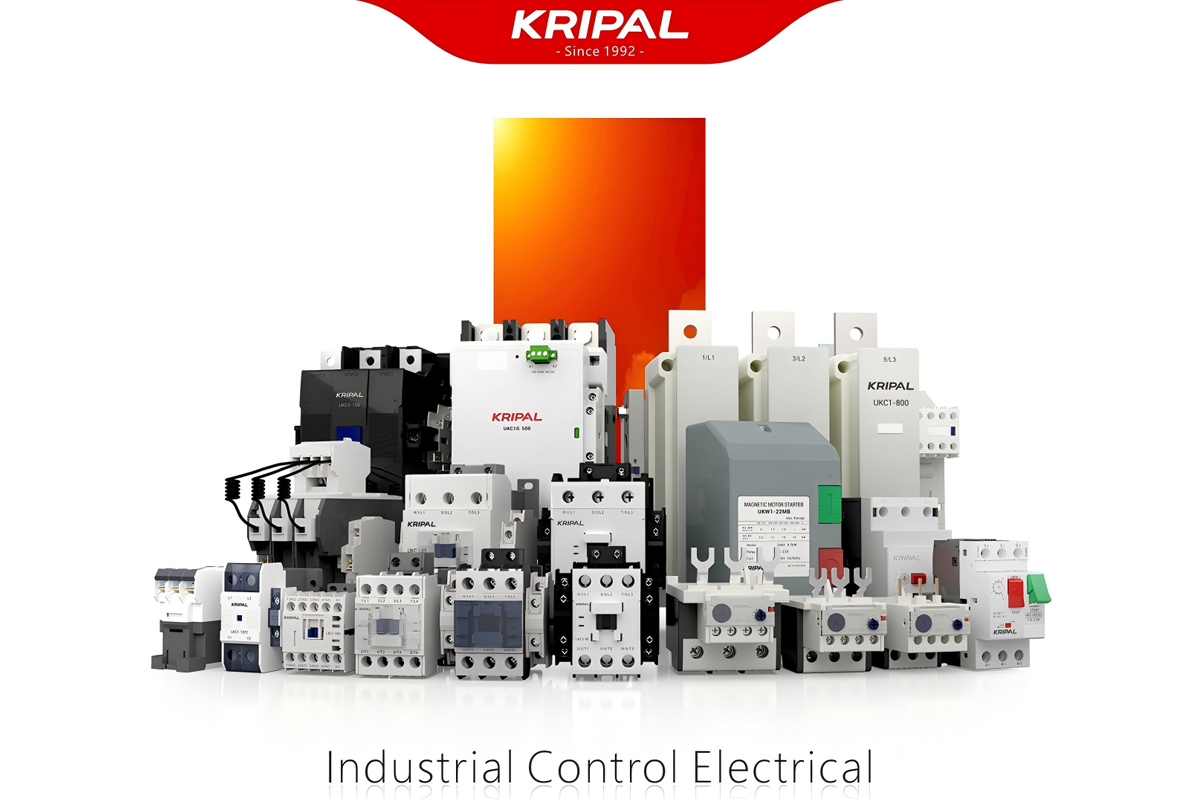
A 32A AC-1 rated contactor may fail prematurely when used for a 7.5kW motor because AC-1 ratings are not designed for motor starting and breaking duties. The fault is not the contactor, it is the selection logic. Motor loads demand a different utilization category than resistive loads, and the sizing calculation starts with the motor nameplate, not the thermal current rating on the contactor datasheet.
Understanding IEC 60947-4-1 Utilization Categories
The IEC 60947-4-1 standard defines utilization categories that describe the electrical stress a contactor handles during switching. Each category specifies the make current, break current, and power factor the contactor must withstand during its rated electrical life. Selecting the wrong category for the load type is the most common cause of premature contactor failure in industrial installations.
The category is printed on every IEC contactor nameplate. For example, a contactor marked “Ith = 50A, AC-3 = 22kW at 400V” tells you the thermal current is 50A continuous and the three-phase motor rating is 22kW at 400V when used under AC-3 conditions.
Overview of AC Contactor Utilization Categories
The IEC classifies AC contactors into different utilization categories based on load characteristics, switching conditions, and operating frequency. Selecting the correct category ensures reliable operation, prevents equipment failure, and maximizes the contactor’s electrical lifespan. Below are the key characteristics of AC-1, AC-3, and AC-4:
AC-1 – Non-Inductive or Slightly Inductive Loads
AC-1 covers resistive loads, heating elements, incandescent lighting, and distribution circuits with a power factor above 0.95. The contactor makes and breaks the rated current at unity power factor. AC-1 loads generally have little or no significant starting inrush compared with motor loads. A contactor used for AC-1 loads can carry its full thermal current rating continuously.
AC-3 – Squirrel-Cage Motor Starting and Stopping
AC-3 is the standard category for direct-on-line motor starting. The contactor makes at six times the rated motor current to handle locked-rotor inrush, and breaks at the rated motor current at 0.35 power factor as the motor runs under load. The AC-3 rating is always lower than the AC-1 rating for the same contactor. A contactor with a 50A thermal rating may only handle 11kW motor loads under AC-3 conditions.
AC-4 – Motor Inching and Plugging
AC-4 covers the toughest motor control duty. The contactor makes and breaks at six times the rated motor current at every operation. This is the condition during inching, jogging, and plug reversing where the motor is repeatedly energized against the rotating field. AC-4 rated contactors use contact materials designed for high arc erosion resistance. The electrical life at AC-4 is typically one-tenth of the AC-3 life for the same contactor.
Motor kW to Contactor Sizing Table
The table below provides a direct lookup for matching standard squirrel-cage induction motors to Kripal contactors at 400V three-phase. Values assume AC-3 duty and direct-on-line starting. For star-delta starting, the main contactor can be sized one step lower.
400V, Three-Phase, AC-3 Duty Motor Power to Contactor Selection
| Motor Rating | Full Load Current | AC-3 Rated Current | Recommended Kripal Series | Contactor Model |
|---|---|---|---|---|
| 0.37 kW | 1.1 A | 9 A | UKC1 | UKC1-09 |
| 1.1 kW | 2.8 A | 9 A | UKC1 | UKC1-09 |
| 2.2 kW | 5.2 A | 9 A | UKC1 | UKC1-09 |
| 4.0 kW | 8.5 A | 12 A | UKC1 | UKC1-12 |
| 5.5 kW | 11.5 A | 18 A | UKC1 / UKC2 | UKC1-18 |
| 7.5 kW | 15.2 A | 18 A | UKC2 | UKC2-18 |
| 11 kW | 22 A | 25 A | UKC2 | UKC2-25 |
| 15 kW | 29 A | 32 A | UKC2 | UKC2-32 |
| 18.5 kW | 36 A | 40 A | UKC2 / UKC5 | UKC2-40 / UKC5-40 |
| 22 kW | 42 A | 50 A | UKC2 / UKC5 | UKC2-50 / UKC5-50 |
| 30 kW | 57 A | 65 A | UKC5 | UKC5-65 |
| 37 kW | 69 A | 80 A | UKC5 | UKC5-80 |
| 45 kW | 84 A | 95 A | UKC5 | UKC5-95 |
| 55 kW | 102 A | 115 A | UKC5 | UKC5-115 |
| 75 kW | 138 A | 150 A | UKC5 | UKC5-150 |
| 90 kW | 165 A | 185 A | UKC5 | UKC5-185 |
| 110 kW | 200 A | 225 A | UKC5 | UKC5-225 |
| 132 kW | 240 A | 265 A | UKC5 | UKC5-265 |
| 160 kW | 290 A | 330 A | UKC5 | UKC5-330 |
| 200 kW | 360 A | 400 A | UKC5 | UKC5-400 |
| 250 kW | 440 A | 500 A | UKC5 | UKC5-500 |
| 315 kW | 555 A | 630 A | UKC5 | UKC5-630 |
| 400 kW | 700 A | 800 A | UKC5 | UKC5-800 |
Note: Full load currents are approximate values for 4-pole, 1500 RPM, 400V, 50 Hz squirrel-cage motors. Verify motor nameplate current before final selection.
Comparing NEMA and IEC Contactor Sizing
Size Designations and Selection Philosophy
NEMA Sizing (NEMA ICS 2)
This standard, primarily used in North America, follows a fixed size table ranging from Size 00 through Size 9. Each NEMA size covers a broad horsepower range and includes a large safety margin. For example, a NEMA Size 1 contactor handles 7.5 HP at 460V (roughly 5.5 kW). The IEC equivalent for the same motor load would be an 18A AC-3 rated contactor.
IEC Sizing (IEC 60947-4-1)
This standard selects the contactor based on the specific utilization category and actual motor load. There is less built-in margin compared to the NEMA system. However, an IEC contactor that is correctly selected for the application provides equal reliability in a significantly smaller physical package.
NEMA Size vs. IEC Contactor Comparison (460V / 400V)
| NEMA Size | Motor HP at 460V | Motor kW at 400V | IEC AC-3 Rating | Equivalent Kripal Model |
|---|---|---|---|---|
| 00 | 2 HP | 1.5 kW | 9 A | UKC1-09 |
| 0 | 3 HP | 2.2 kW | 9 A | UKC1-09 |
| 1 | 7.5 HP | 5.5 kW | 18 A | UKC1-18 / UKC2-18 |
| 2 | 15 HP | 11 kW | 25 A | UKC2-25 |
| 3 | 30 HP | 22 kW | 50 A | UKC2-50 / UKC5-50 |
| 4 | 50 HP | 37 kW | 80 A | UKC5-80 |
| 5 | 100 HP | 75 kW | 150 A | UKC5-150 |
| 6 | 200 HP | 150 kW | 330 A | UKC5-330 |
Application Note: Panel builders transitioning from NEMA to IEC designs can directly substitute components using the table above. The UKC5 series covers the NEMA Size 0 through Size 6 range within a single product family, offering the advantage of common accessories and standardized mounting dimensions.
Additional Sizing Factors
Altitude Derating
- Contactors installed above 2000 meters require derating. The reduced air density at altitude lowers both the insulation withstand voltage and the heat dissipation capacity.
- Derating Rule: Above 2000m altitude, contactor ratings may require correction according to manufacturer specifications.
- Example: A 100A contactor at sea level becomes an 85A contactor at 3500 meters.
Ambient Temperature Adjustment
- The standard contactor rating assumes an ambient temperature of 40°C inside the enclosure. If the panel’s internal temperature exceeds 40°C—usually due to poor ventilation or multiple heat sources in one cabinet—you must derate the contactor.
- Derating Rule: For every 5°C above 40°C, reduce the rated current by roughly 5%.
- Best Practice: Use a ventilation fan or relocate the contactor to a cooler section of the panel before the required derating exceeds 20%.
- Figure: Thermal image of a control panel showing hot spots around contactors and a motor protection circuit breaker, illustrating the importance of proper ventilation and spacing.
Switching Frequency and Electrical Life
The contactor’s electrical life, typically one million operations at AC-3, assumes a switching frequency of 600 operations per hour or fewer. Applications with frequent starting, such as conveyor positioning or lift door operation, will significantly accelerate contact wear.
Design Recommendation: High-frequency switching applications require checking the manufacturer’s electrical life curves and selecting a suitable contactor rating.
Explore the Kripal Contactor Range
View the complete Kripal contactor range with detailed motor power ratings and utilization category data for every model in the UKC1, UKC2, and UKC5 series.
Need Help with Sizing? Contact Kripal for technical support and expert guidance on contactor sizing for non-standard applications.
Browse contactors and relays or request application support below.
Frequently Asked Questions
Q: What happens if I undersize a contactor for the motor load?
An undersized contactor will experience rapid contact erosion. The contacts overheat due to the excess current, the arc extinguishing system cannot quench the arc effectively at current levels beyond its design limit, and contact welding occurs within tens of thousands of operations instead of the rated one million. Once the contacts weld, the motor runs continuously and cannot be stopped by the control circuit, creating a safety hazard.
Q: Can I use the thermal current rating for motor sizing?
No. The Ith rating is the continuous current the contactor can carry without exceeding temperature rise limits. It applies to AC-1 duty with no inrush current. Motor starting generates six times the rated current for a brief period that the contactor must make and break. The AC-3 rating already accounts for this and is always lower than the thermal rating. Always use the AC-3 rated operational current for motor sizing.
Q: Does star-delta starting allow a smaller contactor?
Yes. In a star-delta starter, three contactors share the motor current. The main and delta contactors each carry 58 percent of the line current, and the star contactor carries 33 percent. This allows using contactors rated at roughly 60 percent of the direct-on-line AC-3 rating. However, the total panel cost is higher due to the additional contactor, timer, and wiring. The UKC2 contactors are commonly used in star-delta configurations for motors from 11kW to 75kW.
Q: What is the difference between AC-3 and AC-3e on some contactor datasheets?
Some manufacturers use AC-3e as an enhanced motor duty rating indicating improved electrical endurance compared with standard AC-3. A contactor rated at one million operations under AC-3 may carry a two million operation rating under AC-3e. The contactor uses enhanced contact materials, usually silver-nickel or silver-tin-oxide alloys, that reduce arc erosion per operation. The UKC5 contactors carry AC-3e ratings for applications requiring long service intervals in hard-to-access locations.
Related Resources
Explore Knowledge Center >
Need a matching KRIPAL product?
Share voltage, quantity and destination. An engineer will reply with options and lead time.