Search
Knowledge Center
Normally Open and Normally Closed Contacts in Contactors: Complete Guide
Understand Normally Open and Normally Closed contacts in contactors. Learn IEC terminal markings, main vs auxiliary contacts, and selection tips.
 June 25, 2026
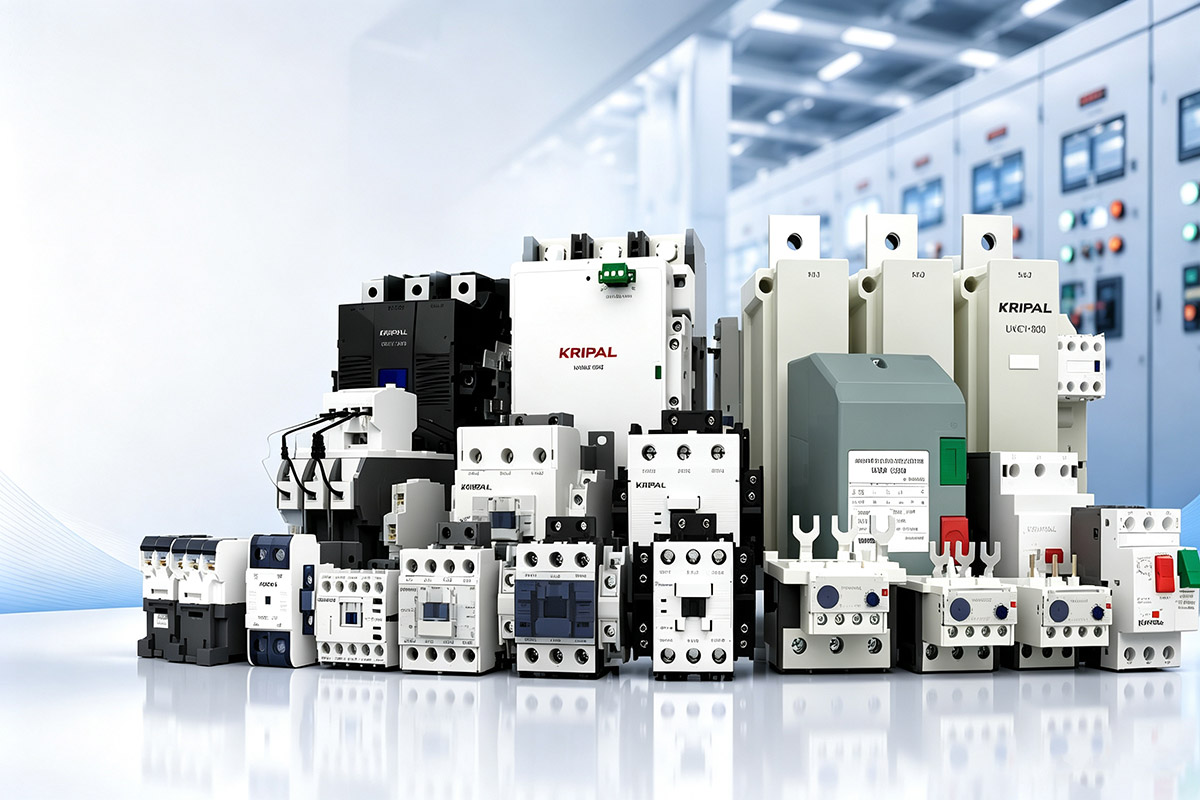
Contactors are widely used in motor control systems, industrial automation, HVAC equipment, and electrical control panels to switch electrical loads. Inside a contactor, different types of contacts perform different functions depending on the control requirements. The two most common contact configurations are Normally Open (NO) contacts and Normally Closed (NC) contacts. These terms describe the condition of electrical contacts when the contactor coil is de-energized.
A contactor usually consists of main power contacts and auxiliary contacts. The main contacts are typically Normally Open (NO). When the contactor coil receives control voltage, the electromagnetic mechanism closes the main contacts and allows power to flow to the connected load. Auxiliary contacts are available in both Normally Open (NO) and Normally Closed (NC) configurations. They are commonly used for control logic, electrical interlocking, status feedback, and safety-related circuits.
Understanding the difference between NO and NC contacts is essential for designing reliable motor control circuits, industrial control panels, and automation systems.
What Are Normally Open (NO) Contacts in a Contactor?
A Normally Open (NO) contact is open when the contactor coil is de-energized. When the coil receives the correct control voltage, the electromagnetic force moves the internal mechanism and closes the contact.
The operating principle is:
In standard industrial contactors, the main power contacts are normally open. This design ensures that motors, pumps, compressors, HVAC equipment, and other electrical loads remain disconnected until a control signal activates the contactor.
NO auxiliary contacts are also widely used in control circuits for:
- Contactor status feedback
- Holding (seal-in) circuits
- PLC input signals
- Control sequence functions
For example, a common auxiliary NO contact uses the terminal designation:
13-14 → Normally Open auxiliary contact
What Are Normally Closed (NC) Contacts in a Contactor?
A Normally Closed (NC) contact remains closed when the contactor coil is de-energized. When the contactor coil is energized, the contact opens.
The operating principle is:
In industrial applications, NC contacts are mainly used as auxiliary contacts rather than main power contacts. They are commonly applied in:
- Electrical interlocking circuits
- Motor reversing control systems
- Safety-related control circuits
- Fault indication circuits
A typical NC auxiliary contact uses the terminal designation:
21-22 → Normally Closed auxiliary contact
It is important to understand that an NC contact does not automatically mean the device is a safety component. Safety performance depends on the complete system design, including safety relays, monitoring functions, and protective measures.
Main Contacts vs Auxiliary Contacts in a Contactor
Understanding the difference between main contacts and auxiliary contacts helps engineers select the correct contactor configuration.
For example, a motor starter may use:
- Main contacts → supply power to the motor
- Auxiliary NO contact → maintain the start command after releasing the push button
- Auxiliary NC contact → prevent another contactor from energizing at the same time
| Contact Type | Function | Typical Application |
|---|---|---|
| Main Power Contacts | Switch the main load current | Motors, compressors, heating equipment |
| Auxiliary NO Contacts | Provide a control signal when the contactor operates | Feedback, holding circuits, PLC signals |
| Auxiliary NC Contacts | Interrupt or control auxiliary circuits | Interlocking, alarms, safety circuits |
NO and NC Contact Comparison in Contactors
Understanding the difference between Normally Open (NO) and Normally Closed (NC) contacts helps engineers select the correct contact configuration for motor control and automation systems.
Note: IEC terminal markings are commonly used for auxiliary contacts in industrial control systems. Always check the contactor datasheet or product markings before wiring, as terminal designations may vary between manufacturers.
| Feature | Normally Open (NO) Contact | Normally Closed (NC) Contact |
|---|---|---|
| Coil OFF state | Contact remains open | Contact remains closed |
| Coil ON state | Contact closes | Contact opens |
| Main application | Power switching and control signals | Interlocking, alarms, and control logic |
| Typical use | Motor control, feedback circuits, PLC signals | Safety circuits, reversing circuits, fault indication |
| IEC auxiliary terminal marking | 13-14 (NO auxiliary contact) | 21-22 (NC auxiliary contact) |
Are NC Contacts Used in Safety Applications?
Safety systems are designed so that machinery moves to a safe condition when a control failure occurs. In many industrial machines, the safe condition is stopping the motor and removing power from hazardous moving parts. A typical emergency stop circuit uses a Normally Closed (NC) control contact. The emergency stop button remains closed during normal operation, allowing the contactor coil circuit to remain energized.
When the emergency stop button is pressed, the control circuit opens. The contactor coil loses power, causing the main contacts to open and disconnect power from the motor. This design allows the system to stop safely when a control circuit interruption occurs. However, the safety function does not come from using an NC contact alone. Safety performance depends on the complete system design, including safety relays, monitoring functions, and mechanical protection measures.
How to Select the Right Contact Configuration?
The correct contact configuration depends on the control requirements of the electrical system. For standard motor switching applications, contactors with normally open main contacts are the preferred choice because the load remains disconnected until the control circuit intentionally activates the contactor. NO auxiliary contacts are selected when a control signal or feedback signal is required after contactor operation.
NC auxiliary contacts are selected when the circuit needs to open during contactor operation, such as:
Engineers should always consider the complete electrical design, operating requirements, and safety functions when selecting contact configurations.
Frequently Asked Questions
Q: Can I convert an NO contact into an NC contact by rewiring?
No. The contact arrangement is determined by the internal mechanical structure. Changing terminal connections cannot change a normally open contact into a normally closed contact.
Q: Why are NC contacts less common in contactors?
For most industrial control systems, the main load must remain disconnected until a control signal is received. Therefore, normally open contacts are more commonly used for power switching.
Q: Does an NC auxiliary contact consume coil power continuously?
No. An NC auxiliary contact itself does not consume power. Coil power consumption depends on whether the contactor coil needs to remain energized during operation.
Q: How can I identify NO and NC contacts on a contactor?
To identify Normally Open (NO) and Normally Closed (NC) contacts on a contactor, check the contact markings shown on the device label or technical datasheet. According to common IEC terminal designations, 13-14 terminals indicate a Normally Open (NO) auxiliary contact, while 21-22 terminals indicate a Normally Closed (NC) auxiliary contact. Always refer to the manufacturer’s documentation to confirm the contact configuration before wiring.
Select the Right Contactor for Reliable Control Systems
Choosing the correct contact configuration is an important part of electrical panel design. KRIPAL provides a complete range of contactors, auxiliary contact blocks, and motor control components for industrial automation, HVAC systems, and electrical distribution applications. With reliable switching performance and flexible auxiliary contact options, KRIPAL solutions help engineers build safe and efficient control systems.
Related Resources
Explore Knowledge Center >


Need a matching KRIPAL product?
Share voltage, quantity and destination. An engineer will reply with options and lead time.