Search
Knowledge Center
How Do Isolating Switches Compare to Main Switches?
Compare isolating switches and main switches for low-voltage electrical systems. Learn their key functions, safety roles, and typical applications in power distribution.
 May 13, 2026
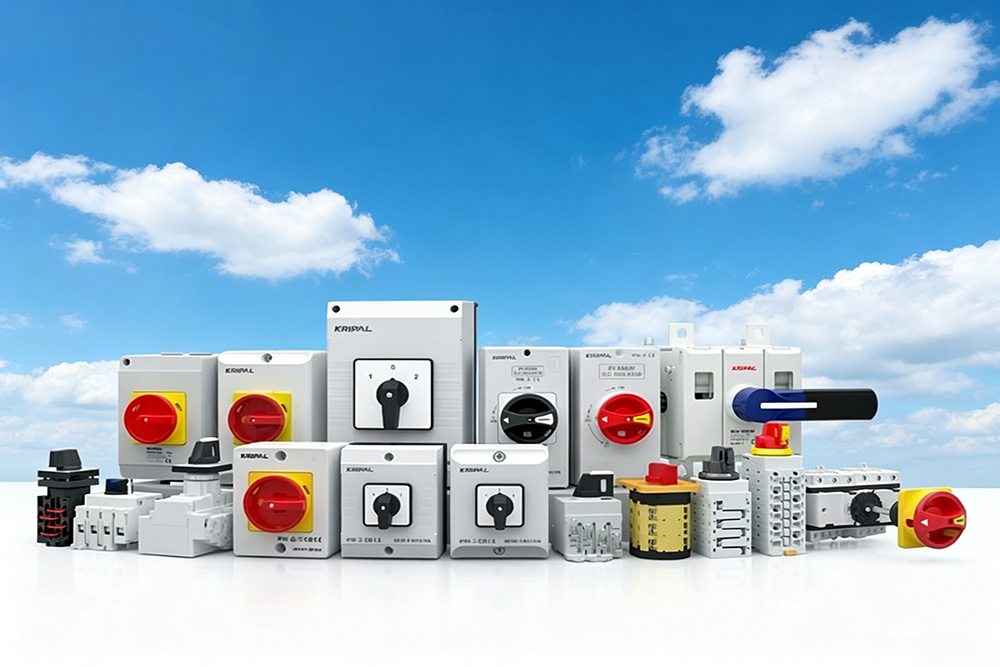
In an electrical system, switches not only control the connection of circuits but also affect user safety and the lifespan of equipment. Isolating switches and main switches are the most common types, but their functions, applications, and safety characteristics differ.
This article compares their definitions, mechanisms, costs, functions, safety, and installation methods to help you understand which type of switch suits your needs.
Key Takeaways
- There are clear differences between the two in terms of arc extinguishing mechanisms, cost, installation methods, and application scenarios.
- Safety depends on the intended use, with isolating switches focusing on operational safety and main switches focusing on circuit protection.
- When selecting a switch, the choice should be based on practical needs and the environment, rather than simply aiming for function or price.
What is an Isolating Switch?
An isolating switch is a type of switch used to disconnect a circuit, primarily serving to separate the power supply from equipment. It focuses on ensuring operational safety and preventing accidental electric shock or unintended energization of devices.
What is a Main Switch?
A main switch controls the entire circuit and is generally equipped with overload and short circuit protection. It is designed to handle the normal operating current of the circuit and maintain the stable operation of the system.
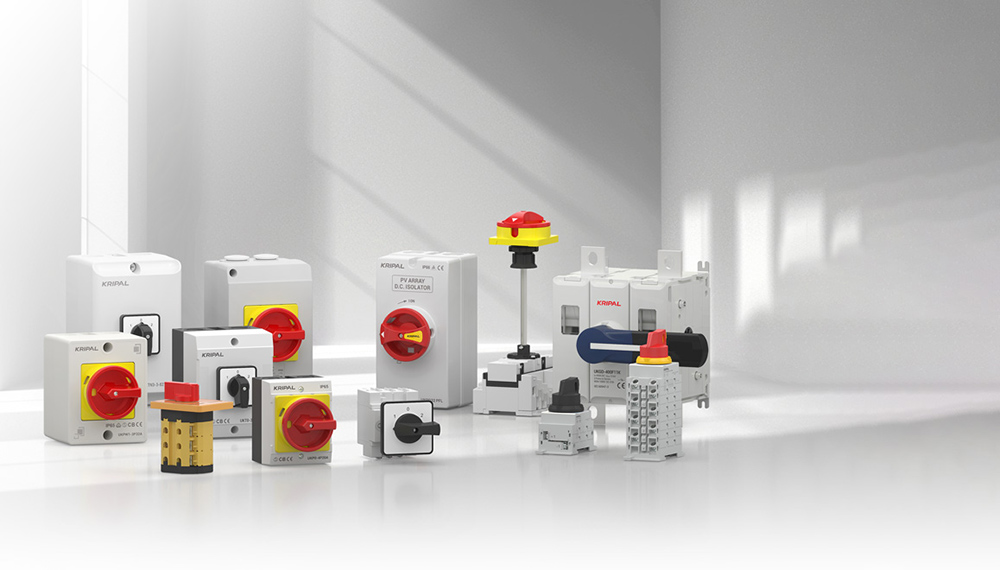
How Do Their Arc Extinguishing Mechanisms Differ?
Isolating switches are mainly used to disconnect circuits for maintenance or service and usually operate under no-load or low-load conditions. Therefore, they are not equipped with dedicated arc extinguishing devices.
If an arc occurs when the switch is opened, its energy is low and the duration is short, which has minimal impact on equipment and operator safety. Isolating switches prioritize operational safety over managing arcs under high current conditions.
Main switches must handle the normal current of a circuit as well as potential short circuit currents, so they require effective arc extinguishing mechanisms. These typically use arc chambers, magnetic blowout, or other devices to quickly eliminate arcs, protecting the switch contacts and maintaining stable circuit operation.
This design allows the switch to safely disconnect the circuit under high load or abnormal conditions without causing equipment damage or fire risk.
Are Their Manufacturing Costs Very Different?
The structure of isolating switches is relatively simple, and the choice of materials and manufacturing process does not have high requirements, making the cost lower.
Since they do not need additional protection devices or high-performance arc extinguishing mechanisms, they are suitable for ordinary low-voltage or auxiliary circuits. The low cost and simple design make isolating switches very practical in many maintenance and service scenarios.
The manufacturing cost of main switches is significantly higher. They must handle larger currents and provide short circuit protection, overload protection, and reliable arc extinguishing mechanisms, which increases design complexity and material costs.
To ensure safety and durability, main switches often use higher-quality contact materials and precise manufacturing processes, which is why their price is higher than that of isolating switches.
How Do Their Functions Differ?
The main function of an isolating switch is to separate the circuit from the power supply to allow maintenance or service. It ensures that operators do not receive electric shocks during maintenance and serves as a supporting safety device.
Isolating switches do not bear the primary responsibility for protecting the circuit and focus more on human safety and convenience during maintenance.
The main switch serves as the primary control device for the entire circuit, controlling the flow of electricity while also providing circuit protection. It can automatically disconnect the power supply if the circuit experiences an overload or short circuit, protecting equipment and wiring.
The main switch directly affects the stability of the system and is an integral part of the electrical system.
How Do Their Safety Features Differ?
Isolating switches emphasize operator safety, effectively preventing accidental electric shocks during maintenance. However, they usually cannot handle overloads or short circuits, so their ability to protect the circuit itself is limited. Other protective devices are often required to ensure circuit safety.
Main switches focus more on circuit and system safety. They can disconnect the power supply and automatically cut off the current if the circuit experiences abnormal conditions, protecting equipment and wiring. Their safety design covers both operational safety and circuit protection, allowing the system to operate stably under various loads and abnormal conditions.
Are Installation Methods Different?
The installation of isolating switches is flexible and usually near the equipment or circuit terminals to allow easy operation and maintenance. Installation must ensure sufficient safety distance so operators are not exposed to current hazards during maintenance. Their simple installation also facilitates ongoing inspection and maintenance.
Main switches are usually installed at the power entry point or inside distribution cabinets to control the entire circuit in one location. The installation location must meet the rated current and safety requirements while allowing convenient operation and effective protection of equipment.
Main switches are installed in fixed, standardized positions to maintain the safety and stability of the electrical system.
Comprehensive Comparison
| Feature | Isolating Switch | Main Switch |
| Function | Disconnects circuit for maintenance | Controls entire circuit and protects it |
| Arc Extinguishing | Usually none, low-energy arcs | Equipped with arc chamber or magnetic blowout |
| Load Capacity | Low | High |
| Cost | Low | High |
| Safety Focus | Operator safety | Circuit and system protection |
| Installation | Flexible, near equipment | Fixed, near power entry or distribution panel |
| Maintenance | Simple | Requires regular inspection of protection mechanisms |
| Application | Auxiliary circuits, maintenance | Main power control, full circuit protection |
Conclusion: Choosing the Right One Matters
Isolating switches and main switches have different focuses, with the former emphasizing operational safety and ease of maintenance and the latter emphasizing circuit protection and system stability.
Neither switch is better in all cases, and the selection should be based on the specific use scenario and needs. Understanding the differences allows for safe, efficient, and reliable control of electrical systems.
Kripal offers many types of switches with high quality and performance, and visitors are welcome to consult the homepage for selection guidance.
FAQs
Q1 Can an isolating switch be used as a main switch?
No. Isolating switches are mainly used to disconnect circuits for maintenance and usually cannot handle high current. They do not have overload or short circuit protection and cannot replace a main switch.
Q2 Can a main switch replace an isolating switch?
In theory, it can disconnect the circuit, but operating a main switch may not be flexible and is less convenient for maintenance. For safety and convenience, using an isolating switch during service is still recommended.
Q3 Are there requirements for the installation positions of isolating and main switches?
Isolating switches should be installed near the equipment or circuit terminals for easy operation and maintenance. Main switches are usually installed at the power entry or inside distribution cabinets to centrally control the circuit.
Q4 What should be considered most when choosing a switch?
Selection should be based on the practical use scenario, load conditions, safety requirements, and maintenance convenience rather than simply cost or function.
Q5 Are there differences in maintenance difficulty?
Isolating switches have a simple structure and are easy to maintain. Main switches have a more complex structure and require regular inspection of overload and arc extinguishing mechanisms, so maintenance is more demanding.
Related Resources
Explore Knowledge Center >
Need a matching KRIPAL product?
Share voltage, quantity and destination. An engineer will reply with options and lead time.