Search
Knowledge Center
Common applications for DC MCCB
Explore common DC MCCB applications in solar PV, energy storage, EV charging, data centers, and rail transit. Learn how to protect DC systems.
 April 16, 2026
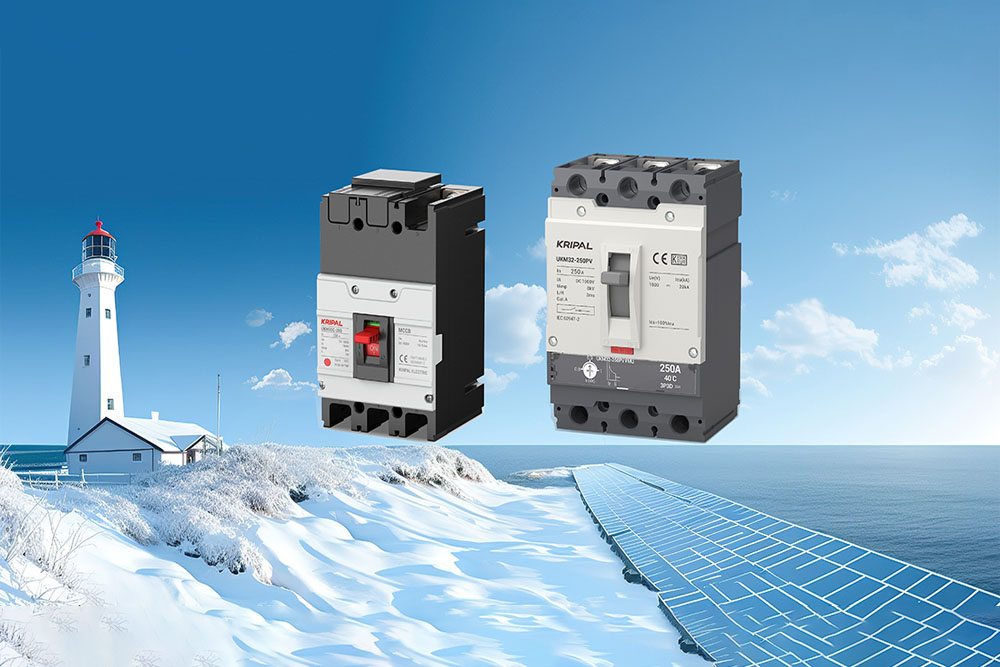
With the rapid development of solar power, energy storage, and electric vehicles, more systems are beginning to adopt direct current power supply. As these DC systems continue to expand, electrical protection becomes increasingly significant. DC MCCB, which refers to molded case circuit breakers designed for DC systems, is widely used under this trend. So where exactly is it applied? This article will briefly introduce the common applications of DC MCCB.
Key takeaways
- DC MCCB is widely used in modern DC systems such as solar, energy storage, EV charging, and industrial applications, where it provides reliable circuit protection
- It helps prevent overloads, short circuits, and arc-related risks, while also enabling safe isolation for maintenance and system operation
- As DC technologies continue to expand, the application scope of DC MCCB is growing across emerging fields such as microgrids, HVDC, and smart energy systems
Solar PV systems
DC side protection requirements
In solar power systems, solar panels generate direct current, which is collected through strings and then delivered to the inverter. During this process, the DC side operates at high voltage for long periods, and when a fault occurs, continuous arcs may be generated, which can lead to serious safety risks. Therefore, reliable protection devices must be installed on the DC side. DC MCCB can quickly disconnect the circuit when overload or short circuit conditions occur, which helps prevent equipment damage and fire hazards. At the same time, it also provides electrical isolation, which makes system maintenance and inspection easier.
String protection and combiner box applications
In practical applications, DC MCCB is usually installed in combiner boxes or DC distribution sections of solar arrays, where it provides centralized protection for multiple strings.
- At the string level, it is used for overcurrent protection of individual or multiple PV strings, which prevents a fault in one circuit from affecting the entire system
- In the combiner box, it acts as the main protection switch, which manages multiple input circuits
- On the system side, it provides front end protection for the inverter, which improves overall system reliability
Through proper configuration of DC MCCB, the stability of solar systems can be significantly improved while reducing risks caused by faults.
Energy storage systems
Battery system protection
In energy storage systems, battery packs operate in DC form and have high energy density. When overcurrent or short circuit faults occur, serious safety issues may arise, including overheating or even thermal runaway.
DC MCCB can quickly disconnect the circuit under abnormal conditions, which provides reliable overload and short circuit protection for battery systems and helps ensure safe operation.
Role in charge and discharge circuits
During battery charging and discharging, current changes frequently, which requires high stability from protection devices.
- In charging circuits, it prevents abnormal charging conditions from damaging the battery
- In discharging circuits, it protects load side equipment
- At connection points, it enables safe isolation for maintenance and inspection
With proper use of DC MCCB, the reliability and service life of energy storage systems can be improved.
Electric vehicles and charging infrastructure
DC fast charging systems
In DC fast charging systems for electric vehicles, high voltage and large current transmission are involved, which creates higher demands for protection devices. When short circuits or equipment faults occur, charging efficiency may be affected and safety risks may arise.
DC MCCB is widely used on the DC side and output side of charging equipment, where it disconnects the circuit under abnormal conditions and prevents equipment damage. It also suppresses DC arcs, which improves system safety and stability.
Battery protection and isolation
In electric vehicles, the traction battery is the core component, and its safety is a major concern.
- It provides overload and short circuit protection, which reduces electrical stress on the battery
- It allows fast disconnection under emergency conditions, which improves vehicle safety
- It supports safe isolation during maintenance
As high voltage platforms such as 800V systems become more common, higher requirements are placed on the breaking capacity and reliability of DC MCCB, which increases its application in electric vehicles.
Data centers and telecom power systems
DC power supply architecture
Modern data centers and telecom systems are increasingly adopting DC power supply architectures such as 48V or higher voltage levels, which improves energy efficiency and reduces conversion losses. This approach simplifies the power system and enhances operational stability.
DC MCCB is typically installed in DC distribution units, where it provides protection for branch circuits and ensures safe and orderly power distribution.
Uninterruptible power supply assurance
Data centers and communication systems require continuous power supply, since any interruption may result in data loss or service disruption.
- It isolates faulty circuits quickly when a failure occurs, which prevents the issue from spreading
- It protects servers and power modules
- It works together with UPS and battery systems to maintain high reliability
By using DC MCCB, system reliability and maintainability can be improved while maintaining safety.
Rail transit and industrial DC systems
Metro and railway power supply systems
In rail transit systems, DC power is widely used in traction power networks such as metro and light rail systems. These systems operate under high voltage and large current conditions, which requires fast response and high breaking capacity from protection devices.
DC MCCB is used in substations, distribution cabinets, and line protection, where it disconnects power quickly during faults and helps prevent fault expansion while protecting equipment and personnel.
DC applications in industrial automation
As industrial automation develops, more equipment adopts DC power supply, including robots, servo systems, and automated production lines. These systems require stable and safe power supply.
- It provides overcurrent and short circuit protection for critical equipment
- It improves system stability and reduces downtime risks
- It supports safe power isolation during maintenance
In addition, in emerging industrial scenarios such as DC microgrids and intelligent manufacturing systems, the use of DC MCCB continues to expand.
Comparison of DC MCCB Applications Across Key Sectors
| Application Sector | Typical System Voltage | Key Protection Focus | Critical Feature Requirement |
| Solar PV (String/Inverter) | 1000V – 1500V DC | Reverse current & Arc protection | High voltage insulation & Heat dissipation |
| Energy Storage (BESS) | 750V – 1500V DC | Ultra-high short-circuit current | High breaking capacity ($I_{cu}$) & Bi-directional protection |
| EV Fast Charging | 400V – 1000V DC | Frequent switching & Overload | Rapid tripping & High endurance (long cycle life) |
| Data Centers (UPS) | 48V / 380V – 400V DC | System uptime & Branch isolation | Precision tripping to ensure selective coordination |
| Rail Transit (Traction) | 750V – 3000V DC | High power surges & Vibrations | Shock resistance & Superior arc extinguishing |
What other systems will MCCB be used in as technology develops?
As new energy, electrification, and intelligent technologies continue to evolve, DC systems are expanding rapidly, and the application of MCCB is also increasing.
- DC microgrids are used for protection and control between distributed energy sources
- HVDC systems operate at higher voltage levels and require advanced protection
- Marine and aviation electrical systems demand high reliability and compact design
- Smart buildings and DC distribution systems improve energy efficiency and support green power supply
It can be expected that as the world moves toward low carbon and electrification, MCCB will be used in more advanced and complex systems.
Conclusion: Many systems rely on MCCB
With the rapid development of solar energy, energy storage, electric vehicles, and various DC systems, MCCB has become widely used in electrical protection. As DC applications continue to grow, the range of MCCB applications will expand further, and its presence in modern electrical systems will continue to increase.
KRIPAL provides a wide range of MCCB products, and you are welcome to explore them on our homepage.
FAQs
Q: What is a DC MCCB?
A DC MCCB is a molded case circuit breaker designed for direct current systems, which provides overload protection, short circuit protection, and electrical isolation.
Q: Can an AC MCCB be used in DC systems?
No, AC MCCBs are not designed to handle DC arcs. Using them in DC systems can lead to safety risks. DC MCCBs are designed with arc extinguishing structures suitable for DC.
Q: Where are DC MCCBs commonly used?
They are widely used in solar PV systems, energy storage systems, EV charging stations, data centers, and industrial DC applications.
Q: How to choose the right DC MCCB?
Rated voltage, rated current, breaking capacity, number of poles, and application environment should all be considered when selecting a DC MCCB.
Q: Why is DC protection more challenging than AC?
Because DC current does not pass through zero naturally, arc extinction becomes more difficult, which requires specially designed breakers such as DC MCCBs.