Search
Knowledge Center
ELR vs ELCB: Differences, Working Principles and Selection Guide for Industrial Power Systems
Discover the differences between ELR and ELCB. Learn how earth leakage relays work, their applications, and how to choose the right protection for your system.
 June 09, 2026
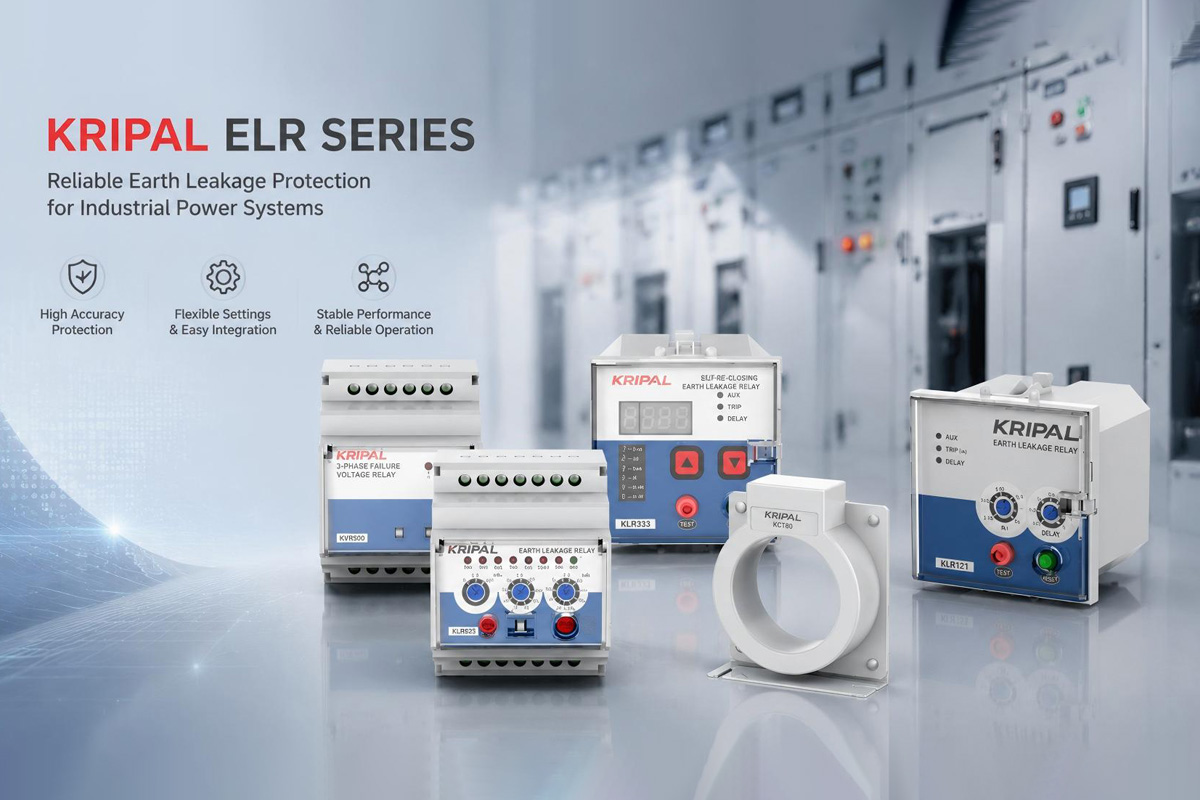
Earth leakage protection devices play an important role in modern electrical systems by detecting leakage currents and helping reduce the risk of electric shock, equipment damage, and electrical fires. ELR (Earth Leakage Relay) and ELCB (Earth Leakage Circuit Breaker) are two terms commonly used when discussing earth leakage protection.
Although both relate to earth leakage protection, their structures, operating principles, and typical applications are different. It is important to understand these differences when selecting the right protection solution for residential, commercial, and industrial electrical systems.
Key Takeaways
- ELR is a monitoring and protection relay that detects earth leakage current and sends a trip signal to an external switching device.
- ELCB is a historical term for earth leakage protection devices. In modern IEC-based systems, similar functions are commonly provided by RCCB or RCBO depending on the protection requirements.
- ELRs are widely used in industrial distribution systems because they provide adjustable settings, selective coordination, and flexible system integration.
- The correct selection depends on system voltage, protection requirements, installation environment, and coordination needs.
What Is an ELR?
An ELR (Earth Leakage Relay) is a protection monitoring device designed to detect and monitor earth leakage currents in electrical systems. It typically operates together with a Zero Sequence Current Transformer (ZCT), which measures the vector sum of current flowing through all phase and neutral conductors. Under normal operating conditions, the residual current detected by the ZCT is close to zero. When an insulation fault occurs and current leaks to earth, the resulting current imbalance is detected by the ZCT.
When the leakage current exceeds the preset operating threshold, the ELR sends a trip signal or control output to an external switching device, such as an MCCB, ACB, or contactor, which then disconnects the faulty circuit.
ELRs are widely used in industrial distribution systems because they provide adjustable leakage current settings, time delays, alarm functions, and communication capabilities. These features enable selective coordination, reduce nuisance tripping, and support integration with industrial protection and monitoring systems.
What Is an ELCB?
An ELCB (Earth Leakage Circuit Breaker) is a historical term used to describe devices designed for earth leakage protection. Early ELCBs included voltage-operated types, which detected earth potential rise, and current-operated types, which operated by detecting leakage current. With the development of international electrical standards, the term ELCB is less commonly used as a formal product classification.
Modern residual current protection devices are generally classified as RCDs (Residual Current Devices), including RCCBs (Residual Current Circuit Breakers) and RCBOs (Residual Current Circuit Breakers with Overcurrent Protection), depending on their protection functions. Unlike an ELR, which detects earth leakage current and sends a trip signal to an external switching device, RCCBs and RCBOs integrate residual current detection and automatic circuit disconnection within a single device. These integrated protection devices are widely used in residential, commercial, and small-scale electrical installations where compact design and direct circuit protection are required.
Main Differences Between ELR and ELCB
Structural Differences
An ELR mainly consists of a leakage detection unit, relay control module, and external current sensing device such as a ZCT. It monitors leakage current and provides a trip output signal but does not interrupt the circuit by itself. Modern integrated leakage protection devices combine leakage detection and circuit interruption functions within one device, allowing automatic disconnection without an external relay and breaker combination.
Operating Principle Differences
An ELR continuously monitors leakage current through a ZCT. When the detected leakage current exceeds the preset threshold, the relay activates an output signal to operate an external breaker or switching device. Integrated leakage protection devices detect residual current and automatically disconnect the circuit within the specified operating time according to their rated characteristics.
Tripping Control Differences
The main difference is the method of circuit interruption. ELRs provide indirect protection because they require an external switching device, while integrated leakage protection devices provide direct tripping through their built-in mechanism.
Installation Differences
ELRs are mainly used in industrial switchboards, MCC panels, and large power distribution systems where adjustable leakage monitoring settings and coordination between multiple protection devices are required. Integrated leakage protection devices are commonly used in residential, commercial, and final circuit applications where simple installation and direct protection are preferred.
Application Differences
ELRs are mainly used in industrial power distribution systems where flexible leakage monitoring settings, selective coordination, and integration with other protection devices are required. They are commonly applied in motor control centers (MCCs), generator systems, data centers, large commercial facilities, and complex electrical networks that require reliable earth leakage monitoring and coordinated protection. Integrated leakage protection devices, such as RCCBs and RCBOs, are generally more suitable for residential buildings, offices, retail facilities, and small commercial installations where simple wiring, compact design, and direct leakage protection are preferred.
ELR vs ELCB Comparison Table
| Comparison Item | ELR | ELCB |
|---|---|---|
| Full Name | Earth Leakage Relay | Earth Leakage Circuit Breaker |
| Function | Leakage monitoring and control | Leakage detection and circuit protection |
| Built in Circuit Breaking Function | No | Yes |
| Requires External Circuit Breaker | Yes | No |
| Typical Application | Industrial power distribution systems | Residential and commercial buildings |
| Flexibility | High | Moderate |
| Expansion Capability | Extensive | Limited |
Advantages and Limitations of ELR and Integrated Leakage Protection Devices
ELR
Advantages
ELRs are widely used in industrial power distribution systems because they provide flexible leakage monitoring settings, selective coordination, and strong system integration capabilities. Their main advantages include:
- Adjustable leakage monitoring settings: Users can configure leakage current sensitivity levels and operating time delays according to specific system requirements. This flexibility helps improve protection coordination and reduce unnecessary interruptions.
- Suitable for large power distribution systems: ELRs can operate together with external switching devices such as MCCBs, ACBs, and contactors, allowing selective coordination and multi-level protection in complex electrical networks.
- Remote monitoring and alarm capability: Many modern ELRs support communication functions that enable connection with industrial automation systems for remote monitoring, fault indication, event recording, and alarm management.
- Flexible system integration: ELR solutions can be integrated with various protection devices and energy management systems, making them suitable for industrial facilities that require advanced monitoring and customized protection strategies.
- Reduced nuisance tripping: Because ELRs allow adjustment of leakage current sensitivity and time delay settings, unwanted trips caused by transient leakage currents or temporary disturbances can be minimized.
Limitations
Although ELRs provide excellent flexibility for industrial applications, they also have some limitations:
- Cannot interrupt the circuit independently: An ELR only detects earth leakage current and sends a trip signal. It requires an external switching device, such as an MCCB, ACB, or contactor, to disconnect the faulty circuit.
- More complex installation and wiring: Compared with integrated leakage protection devices, ELR systems typically require additional components, including a Zero Sequence Current Transformer (ZCT), control wiring, and an external switching device.
- Higher system complexity: The overall system design may involve additional components and commissioning procedures because protection parameters, coordination settings, and communication functions need to be configured according to application requirements.
- Greater commissioning requirements: Incorrect sensitivity or time delay settings may result in nuisance tripping or insufficient protection. Professional configuration and testing are recommended for industrial installations.
- Larger installation space: Since ELR systems require external sensing and switching components, they generally require more space inside switchboards and distribution panels compared with compact integrated protection devices.
Integrated Leakage Protection Devices (RCCB / RCBO)
Advantages
Modern integrated leakage protection devices, such as RCCBs and RCBOs, are widely used in residential, commercial, and small distribution systems because they combine leakage detection and automatic circuit interruption in a compact solution.
- Integrated leakage protection: RCCBs and RCBOs combine residual current detection and circuit disconnection within a single device, simplifying installation and reducing the need for additional protection components.
- Fast and reliable operation: When the residual current exceeds the rated operating value, these devices disconnect the circuit within their specified operating time to help reduce the risk of electric shock and electrical fire.
- Easy installation: Their integrated design simplifies wiring and installation procedures, making them suitable for applications where compact and straightforward protection solutions are required.
- Lower maintenance requirements: Because fewer external components are required, RCCBs and RCBOs generally provide simpler maintenance and easier replacement compared with relay-based protection systems.
- Suitable for residential and commercial applications: RCCBs and RCBOs are commonly used in homes, offices, retail facilities, and small commercial installations where direct leakage protection and simple operation are important.
Limitations
Although integrated leakage protection devices are widely used, they have certain limitations in more demanding electrical systems:
- Limited system flexibility: Compared with ELR-based solutions, RCCBs and RCBOs generally provide fewer options for adjustable leakage current settings, time delays, and protection coordination.
- Limited expansion capability: Integrated devices are mainly designed for individual circuits and basic protection applications, making them less suitable for large electrical networks requiring centralized monitoring and multi-level coordination.
- Less suitable for complex industrial systems: Large industrial installations often require selective coordination between multiple protection devices, which may be difficult to achieve using standard integrated leakage protection devices.
- Limited monitoring capability: Traditional RCCBs and RCBOs generally do not provide the same level of remote monitoring, communication, and fault recording functions available in advanced ELR systems.
Should You Choose ELR or Integrated Leakage Protection Devices?
Residential and Commercial Applications
For residential buildings and small commercial facilities, integrated leakage protection devices such as RCCBs and RCBOs are generally preferred. These devices combine residual current detection and automatic circuit interruption in a compact solution, making them suitable for applications where simple installation, space efficiency, and direct protection are important.
Industrial Equipment and Large Distribution Systems
For industrial equipment and large power distribution networks, ELR solutions are often more suitable. By working together with external switching devices such as MCCBs, ACBs, or contactors, ELRs provide adjustable protection parameters, selective coordination, remote monitoring, and flexible integration with industrial control systems.
Selection Based on Protection Requirements
The most suitable solution depends on the electrical system design, protection requirements, and application environment. ELRs are recommended for applications requiring adjustable leakage monitoring settings, coordination between multiple protective devices, and advanced monitoring functions. Integrated leakage protection devices such as RCCBs and RCBOs are better suited for applications requiring simple installation, compact design, and direct circuit protection.
Conclusion
ELR and modern leakage protection devices serve different purposes in electrical safety systems. ELRs are designed for industrial applications where flexible monitoring, selective coordination, adjustable leakage monitoring settings, and system integration are required. Modern leakage protection devices such as RCCBs and RCBOs are commonly used in applications where compact design and integrated protection are preferred.
Selecting the right leakage protection solution based on application requirements can improve electrical safety, system reliability, and maintenance efficiency. KRIPAL provides reliable earth leakage protection solutions, including Earth Leakage Relays and related protection devices, designed for industrial power distribution systems, commercial facilities, and various electrical safety applications.
With professional expertise in electrical protection technology, KRIPAL supports customers with dependable products and customized solutions to meet different system protection requirements. Contact us today to learn more.
FAQs
Q: Can an ELR replace an RCCB or RCBO?
No. An ELR cannot directly replace an RCCB or RCBO. An ELR is designed to detect earth leakage current and send a trip signal to an external switching device, such as an MCCB, ACB, or contactor, which then disconnects the faulty circuit. RCCBs and RCBOs integrate residual current detection and circuit interruption within a single device.
Q: Must an ELR be used with an MCCB?
No. An ELR does not have to be used specifically with an MCCB. It can operate together with different external switching devices, such as MCCBs, ACBs, or contactors, depending on the system design, voltage level, and protection requirements.
Q: What is the difference between an ELCB and an RCCB?
ELCB is a historical term used for earth leakage protection devices, while RCCB is a modern IEC-classified residual current protection device. Traditional ELCBs included voltage-operated and current-operated types, whereas RCCBs detect residual current and automatically disconnect the circuit when a leakage fault occurs. Today, RCCBs and RCBOs are more commonly used in modern electrical installations.
Q: Where are Earth Leakage Relays commonly installed?
Earth Leakage Relays are commonly installed in industrial switchboards, motor control centers (MCCs), generator systems, data centers, large commercial facilities, and complex electrical distribution networks. They are particularly suitable for applications requiring adjustable leakage monitoring settings, selective coordination, remote monitoring, and integration with industrial control systems.
Q: Does an ELR provide short circuit protection?
No. An ELR only provides earth leakage detection and trip control signals. It does not provide overcurrent or short circuit protection. Separate protective devices, such as MCCBs, ACBs, or fuses, are required to protect electrical systems against overloads and short circuits.
Q: Can ELRs reduce nuisance tripping?
Yes. ELRs can help reduce unwanted tripping by allowing users to adjust leakage current sensitivity and time delay settings according to system conditions. Proper configuration helps prevent unnecessary interruptions caused by temporary leakage currents or transient disturbances while maintaining effective protection.
Q: How often should a leakage protection device be tested?
Manual testing is generally recommended every three to six months to verify proper operation.
Q: Can ELR and RCCB or RCBO be used together in the same electrical system?
Yes. An ELR can provide adjustable earth leakage monitoring, alarm functions, and coordination with industrial protection systems, while RCCBs or RCBOs may provide additional residual current protection for specific circuits.
Related Resources
Explore Knowledge Center >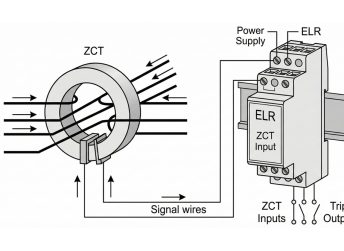
Need a matching KRIPAL product?
Share voltage, quantity and destination. An engineer will reply with options and lead time.