Search
Knowledge Center
DC Isolator Switch Installation for Solar PV: Wiring, Placement and Safety Guide
Master DC isolator switch installation for solar PV systems. Learn practices for placement, polarity wiring, arc prevention, and IEC 60364-7-712 compliance.
 July 13, 2026
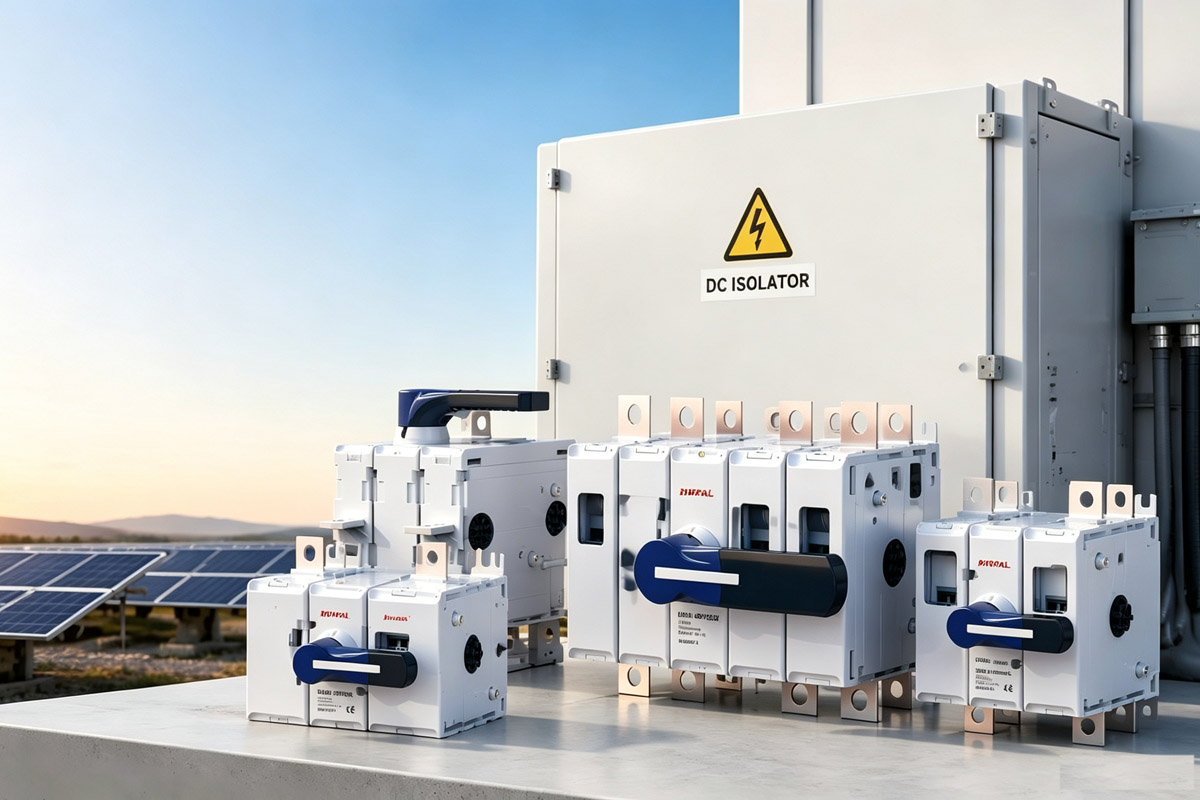
A DC isolator switch is a key safety component in solar photovoltaic (PV) systems. It provides a manual disconnection point that allows installers and maintenance personnel to safely isolate DC power from PV modules, inverters, or battery storage systems.
Unlike AC circuits, DC photovoltaic systems can sustain electrical arcs during switching because DC current does not naturally cross zero. Therefore, selecting and installing a dedicated DC-rated isolator is essential for preventing equipment damage and improving system safety. Proper installation requires careful consideration of isolator placement, polarity wiring, voltage and current ratings, environmental conditions, and compliance with standards such as IEC 60364-7-712 and IEC 60947-3.
This guide explains the key principles of DC isolator switch installation for solar PV systems, including installation locations, wiring practices, arc protection, and common mistakes to avoid.
Where to Install a DC Isolator Switch in Solar PV Systems
The installation location of a DC isolator depends on the PV system architecture, inverter design, battery configuration, and local electrical regulations. There is no single installation position suitable for every solar project, but DC isolation is commonly required at several important points.
PV Array Side Isolation (Between PV Array and Inverter)
The most common application is installing a DC isolator between the photovoltaic array and the inverter DC input. This arrangement allows technicians to disconnect the PV power source before performing maintenance, testing, or inverter replacement. By isolating the solar array, the inverter and downstream equipment can be safely accessed without exposing personnel to live PV voltage.
In residential and commercial string inverter systems, the DC isolator is typically installed close to the inverter or at an accessible position defined by installation requirements. For larger solar installations with multiple PV strings, isolation may be provided through DC combiner boxes or distributed isolation solutions. The final configuration depends on the system design, number of strings, inverter arrangement, and maintenance requirements.
Battery Storage System Isolation
In solar systems combined with battery energy storage, additional DC isolation may be required between the battery system and connected equipment. Battery circuits have different electrical characteristics compared with PV string circuits. Although battery voltages may be lower in some applications, continuous current levels can be significantly higher. Therefore, battery isolators must be selected according to the actual system voltage, current requirements, short-circuit conditions, and manufacturer specifications.
Large energy storage systems may require DC isolators capable of handling several hundred amperes, while residential battery systems typically use lower current ratings depending on system capacity.
Isolation in Large Commercial and Utility-Scale PV Systems
Large photovoltaic plants often include multiple isolation points to improve maintenance safety and fault management. Dividing a PV installation into smaller isolated sections allows technicians to work on specific areas without shutting down the entire system. It also reduces the amount of energized equipment present during maintenance operations. The isolation arrangement should always be designed according to applicable electrical standards and the requirements of the PV system manufacturer.
DC Isolator Switch Wiring and Polarity Requirements
Understanding the correct wiring arrangement of a DC isolator switch is essential for safe solar PV system installation. The DC isolator is installed in the DC circuit between the photovoltaic array and the inverter, allowing the PV power source to be safely disconnected during maintenance, testing, or emergency situations.
In a typical solar PV system, the positive and negative conductors from the PV array are connected through the DC isolator before reaching the inverter DC input. The isolator must maintain correct polarity throughout the circuit, ensuring that the positive conductor remains connected to the positive terminal and the negative conductor remains connected to the negative terminal.
A simplified DC isolator wiring arrangement is shown below:
Positive Line (+)
Negative Line (-)
For multi-string or large-scale photovoltaic systems, the wiring configuration may be different. Multiple PV strings may be connected through DC combiner boxes before reaching the inverter, and additional isolation points may be installed depending on system design requirements.
When selecting and wiring a DC isolator switch, installers should ensure that the device matches the system voltage, current requirements, and pole configuration. The isolator must also be suitable for photovoltaic DC switching applications, with appropriate arc protection performance according to standards such as IEC 60947-3.
Before energizing the system, always verify cable polarity, terminal connections, and DC voltage using suitable testing equipment. Correct wiring not only ensures reliable operation of the PV system but also reduces the risk of equipment damage caused by polarity errors or unsafe switching conditions.
Why DC Arc Protection Matters in Solar PV Systems
One of the biggest challenges in photovoltaic electrical systems is safely switching DC power. Unlike AC current, which naturally reaches zero during every cycle and helps extinguish electrical arcs, DC current has no natural zero-crossing point.
When a switch opens under DC load, the separation of electrical contacts can create an arc that continues to burn. In high-voltage PV systems, this arc can generate extreme temperatures that may damage contacts, melt internal components, degrade insulation, and create potential fire hazards.
For this reason, solar PV applications require isolator switches specifically designed for DC operation rather than standard AC isolation devices.
IEC 60947-3 and DC-PV2 Requirements
A suitable PV DC isolator should be designed and tested according to IEC 60947-3 requirements and have an appropriate DC-PV2 utilization category rating.
The DC-PV2 category defines switching performance requirements for photovoltaic applications under DC load conditions. It ensures that the switch has been tested under specific PV operating conditions, including the ability to safely interrupt DC current at the rated voltage.
High-quality DC isolators achieve reliable arc control through design features such as:
- Dedicated DC arc extinguishing chambers
- Increased creepage and clearance distances
- Contact structures designed for photovoltaic switching conditions
Selecting a switch without proper DC switching capability can result in severe damage during the first loaded operation.
Matching the Isolator to the PV System Rating
The DC isolator must be selected according to the actual PV system requirements, including:
- Maximum DC system voltage
- Maximum continuous current
- Number of poles required
- Installation environment
- Applicable electrical standards
The isolator voltage rating must always be equal to or higher than the maximum PV system voltage. For example, a 1500V DC photovoltaic system requires equipment specifically rated for 1500V DC operation.
Common DC Isolator Installation Mistakes
Although DC isolator switches are relatively simple devices, incorrect installation can significantly reduce system safety and reliability.
Using AC Isolators in DC Solar Applications
One of the most dangerous mistakes is replacing a dedicated PV DC isolator with an AC isolator.
Although AC isolator switches and DC switches may appear similar and may have comparable voltage or current markings, their internal arc suppression designs are different. AC switches rely on current zero-crossing to help extinguish arcs, while DC switches require dedicated arc-control technology.
Always select a DC-rated isolator designed for photovoltaic applications.
Incorrect Cable Selection and Termination
PV cables connected to DC isolators must be correctly sized according to the actual installation conditions.
Cable selection should consider factors such as:
- Short-circuit current
- Ambient temperature
- Installation method
- Continuous operating conditions
- Local electrical regulations
Undersized cables or poor terminal connections can create additional resistance, causing overheating at the isolator terminals.
Installing Isolators in Excessive Heat or Poor Locations
DC isolators installed outdoors are exposed to temperature changes, sunlight, and environmental conditions.
Direct exposure to intense solar radiation can increase internal temperature and reduce product service life. Installers should consider:
- Providing suitable ventilation
- Avoiding unnecessary direct sunlight exposure
- Using appropriate outdoor-rated enclosures
The installation environment should always remain within the manufacturer’s specified operating conditions.
Selecting the Wrong Voltage or Current Rating
A DC isolator must be selected based on the actual electrical parameters of the PV system. The rated voltage must cover the maximum open-circuit voltage of the PV array, while the current rating must meet the expected operating requirements. Choosing a switch only according to current rating while ignoring voltage capability can create serious safety risks.
How to Select the Right DC Isolator Switch for Solar PV
Choosing the correct DC isolator is essential for reliable PV system operation. The selection process should consider the complete electrical design, including system voltage, current requirements, installation location, and applicable standards.
For modern solar PV applications, the isolator should provide:
- Suitable DC voltage and current ratings
- Compliance with IEC 60947-3 requirements
- DC-PV2 utilization category suitability
- Reliable arc suppression capability
- Appropriate protection against environmental conditions
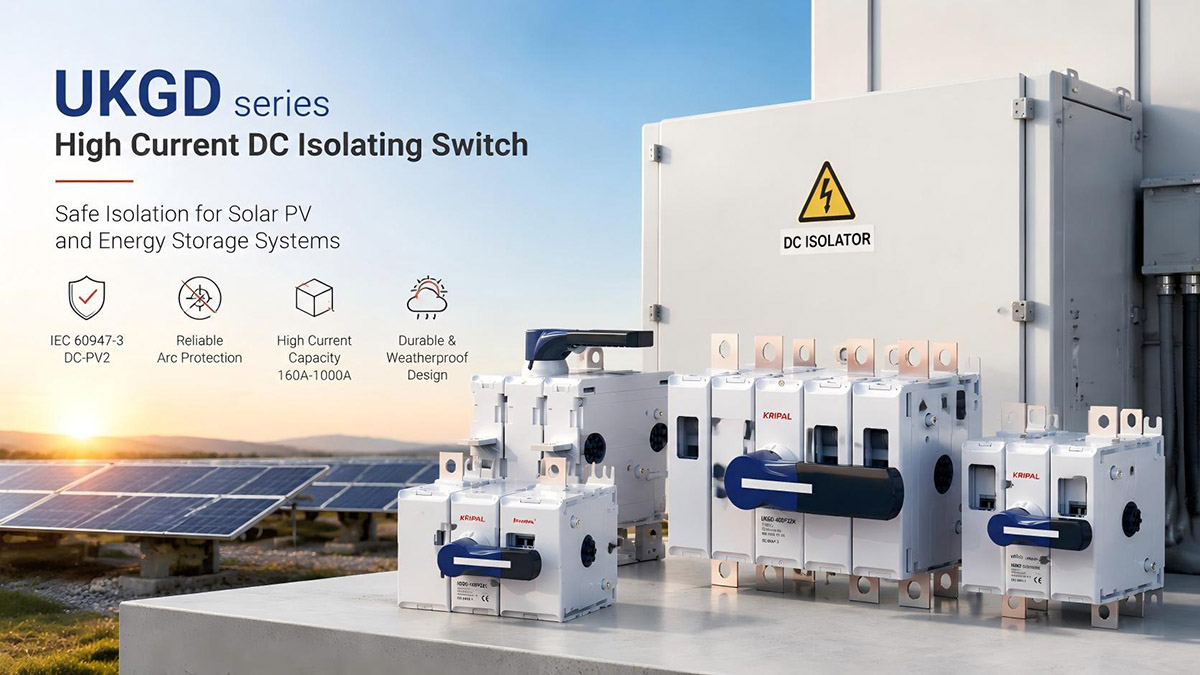
For photovoltaic installations requiring dependable DC switching performance, the KRIPAL UKGD Series DC Isolator Switch is designed for solar PV applications, providing reliable isolation capability for residential, commercial, and energy storage systems.
Frequently Asked Questions
What is a DC isolator switch used for in solar PV systems?
A DC isolator switch provides a manual disconnection point between PV components such as solar panels, inverters, and battery systems. It allows safe maintenance, testing, and emergency shutdown.
Where should a DC isolator be installed in a solar system?
The installation location depends on the PV system design. Common locations include between the PV array and inverter, and between battery storage systems and connected equipment.
Can an AC isolator be used for a solar DC circuit?
No. AC isolators are not designed to interrupt DC arcs. Solar PV systems require dedicated DC-rated isolators with appropriate arc extinguishing capability.
What does DC-PV2 mean in IEC 60947-3?
DC-PV2 is a photovoltaic DC utilization category defined in IEC 60947-3. It indicates that the switch has been tested for specific DC switching conditions used in PV applications.
Conclusion
A properly installed DC isolator switch plays an important role in ensuring the safety, reliability, and long-term performance of solar photovoltaic systems. Selecting a dedicated DC-rated isolator with the correct voltage, current capacity, and arc protection capability helps prevent switching failures and improves overall system safety.
As PV systems continue to increase in voltage and complexity, correct installation practices become increasingly important. By following appropriate wiring methods, complying with standards such as IEC 60947-3 and IEC 60364-7-712, and choosing reliable DC isolation equipment, installers can ensure safer operation for residential, commercial, and energy storage applications.
The KRIPAL UKGD Series High Current DC Isolating Switch is designed for demanding solar PV and energy storage applications, providing reliable DC switching performance, effective arc control, and high-current isolation capability for modern photovoltaic systems. Browse the PV DC isolator range or contact our technical team for project support.
Related Resources
Explore Knowledge Center >
Need a matching KRIPAL product?
Share voltage, quantity and destination. An engineer will reply with options and lead time.