Search
Knowledge Center
Do You Know What an Earth Leakage Circuit Breaker Is?
Learn what an Earth Leakage Circuit Breaker (ELCB) is, how it works, the differences between ELCB, RCCB, RCBO, and MCB, and how to choose the right protection.
 June 10, 2026
Key Takeaways
- ELCBs detect earth leakage faults and disconnect circuits to improve electrical safety.
- Modern leakage protection devices mainly use residual current detection technology.
- RCCBs and RCDs are widely used alternatives to traditional voltage-operated ELCBs.
- Proper selection of rated current, residual current sensitivity, and device type ensures reliable protection.
- Regular testing and maintenance help maintain stable operation.
What Is an Earth Leakage Circuit Breaker?
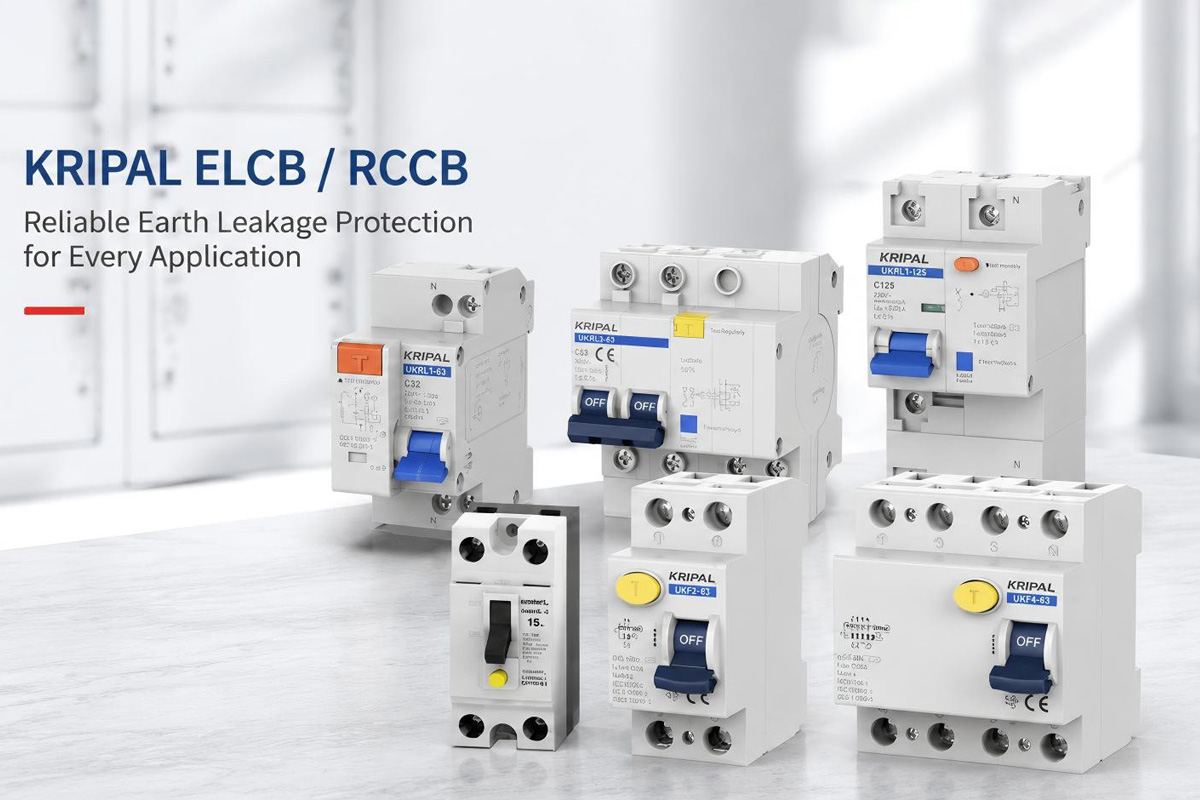
An Earth Leakage Circuit Breaker (ELCB) is a safety device designed to detect leakage currents caused by insulation failures, damaged equipment, or unintended current paths to earth. When leakage current exceeds the preset operating value, the ELCB trips and disconnects the power supply, helping protect people from electric shock and reducing the risk of electrical fires.
In modern electrical systems, current-operated ELCBs, commonly known as RCCBs or RCDs, have replaced most traditional voltage-operated ELCBs due to their improved sensitivity, reliability, and compatibility with modern electrical installations.
What Types of ELCBs Are Available?
Voltage Operated ELCB
A voltage-operated ELCB is an older type of earth leakage protection device that detects abnormal voltage differences between the equipment earth connection and ground. When the voltage between earth and ground exceeds a preset value, the device disconnects the circuit.
However, its operation depends heavily on the grounding system condition. Poor grounding quality may affect its protection performance. Due to these limitations, voltage-operated ELCBs have gradually been replaced by modern residual current protection devices in most new electrical installations.
Current Operated ELCB (RCCB/RCD)
A current-operated ELCB detects leakage faults by measuring the imbalance between the current flowing through the live conductors and the current returning through the neutral conductor. This measurement is performed through a residual current transformer inside the device.
When current leakage to earth occurs, an imbalance is detected. Once the residual current reaches the rated operating value, the device trips and disconnects the circuit.
Compared with traditional voltage-operated ELCBs, current-operated devices provide:
- Higher sensitivity
- Faster response
- Better protection performance
- Wider application compatibility
Modern leakage protection systems mainly use RCCBs, RCDs, and RCBOs based on residual current detection technology.
How Does an ELCB Work?
An ELCB continuously monitors electrical circuits for abnormal leakage conditions. When insulation deterioration, equipment damage, or wiring faults cause current to flow unintentionally to earth, the device detects the residual current. If the leakage current exceeds the rated operating threshold, the internal tripping mechanism disconnects the power supply.
For example:
- A 30mA RCCB is commonly used for personal protection in residential applications.
- Higher residual current ratings may be selected for industrial equipment or fire protection applications.
Differences Between ELCB, RCCB, RCBO and MCB
| Comparison Item | ELCB | RCCB | RCBO | MCB |
|---|---|---|---|---|
| Full Name | Earth Leakage Circuit Breaker | Residual Current Circuit Breaker | Residual Current Circuit Breaker with Overcurrent Protection | Miniature Circuit Breaker |
| Main Function | Leakage Protection | Leakage Protection | Leakage and Overload / Short Circuit Protection | Overload and Short Circuit Protection |
| Detection Target | Leakage Current | Leakage Current | Leakage Current and Overcurrent | Overcurrent |
| Electric Shock Protection | Yes | Yes | Yes | No |
| Short Circuit Protection | No | No | Yes | Yes |
| Overload Protection | No | No | Yes | Yes |
| Primary Application | Personal Safety Protection | Personal Safety Protection | Branch Circuit Protection | Circuit Protection |
| Interchangeable | Cannot Replace an MCB Alone | Cannot Replace an MCB Alone | Cannot Replace an RCCB or MCB | Cannot Replace an ELCB |
What Are the Main Applications of ELCBs?
Residential Electrical Systems
Residential buildings are one of the most common applications for ELCBs and residual current protection devices. In household electrical systems, leakage faults may occur due to damaged insulation, aging appliances, wiring problems, or accidental contact between live parts and earth. By continuously monitoring residual current, an ELCB can quickly disconnect the circuit when abnormal leakage is detected. In many residential installations, 30mA RCCBs are commonly used for personal protection, especially for socket circuits, bathrooms, kitchens, and outdoor electrical equipment where the risk of electric shock is higher.
Commercial Building Power Distribution
Commercial facilities such as offices, hotels, shopping centers, and public buildings usually contain complex electrical distribution networks with a large number of connected loads. ELCBs are commonly installed in distribution boards to provide additional protection against insulation failures and leakage faults. When a leakage condition occurs, the device can disconnect the affected circuit quickly, helping reduce safety risks and prevent potential electrical fires.
Industrial Equipment Protection
Industrial environments often involve heavy electrical loads, motors, automation systems, and control equipment that operate continuously under demanding conditions. Over time, insulation aging, mechanical damage, moisture, and environmental factors may increase the possibility of leakage currents. ELCBs and RCCBs provide additional protection by detecting abnormal current leakage and disconnecting faulty circuits before they create greater safety hazards.
Wet and High-Risk Environments
Electrical installations in wet or high-risk environments require enhanced leakage protection because moisture can significantly increase the possibility of current leakage and electric shock. ELCBs are widely applied in areas such as bathrooms, swimming pools, construction sites, agricultural facilities, and outdoor electrical systems. In these applications, highly sensitive residual current protection devices are often selected to provide faster disconnection and improve personnel safety.
How to Choose the Right ELCB?
Rated Current Selection
The rated current determines the maximum continuous current that the ELCB can safely carry under normal operating conditions. It should be selected according to the expected load current of the electrical circuit to ensure stable operation and avoid unnecessary tripping caused by overload conditions.
Leakage Operating Current Selection
The leakage operating current determines the sensitivity level of the ELCB and directly affects its protection performance. For personal protection applications, a 30mA residual current rating is commonly used. Higher residual current ratings, such as 100mA or 300mA, are generally selected for equipment protection or fire protection applications.
RCCB Type Selection
Different electrical equipment may produce different types of leakage currents. Type AC RCCBs are suitable for basic AC residual current protection. Type A RCCBs are designed for circuits containing modern electronic equipment. For applications involving smooth DC leakage components (e.g., solar PV systems, EV charging), Type B RCCBs are required.
Pole Selection
ELCBs are available in two-pole, three-pole, and four-pole versions. Two-pole devices are commonly used in single-phase electrical systems. Three-pole and four-pole devices are typically selected for three-phase systems to provide complete circuit isolation and ensure reliable protection.
Environmental Considerations
The installation environment can significantly affect the long-term performance and reliability of an ELCB. Conditions such as moisture, dust, high temperature, and corrosive substances may influence the operating performance. For industrial or harsh environments, ELCBs with suitable protection ratings and environmental resistance should be selected to improve durability.
Common ELCB Faults and Troubleshooting Methods
Frequent Tripping
Frequent tripping usually indicates that a leakage fault exists within the electrical system. Possible causes include insulation damage, wiring errors, moisture problems, or faulty electrical equipment. When repeated tripping occurs, connected loads should be checked individually to identify the source of leakage. The fault should be corrected before resetting the ELCB.
Failure to Reset
If an ELCB cannot be reset after tripping, it may indicate a continuous leakage fault, incorrect wiring, or an internal mechanical problem. The electrical circuit and connected equipment should be inspected to determine the cause of the fault. If the device still cannot operate correctly, replacement may be required.
Failure to Trip
If the device does not trip during testing, the internal protection mechanism may have failed. Regular testing using the built-in test button is recommended. These devices are commonly designed according to IEC 61008, IEC 61009, and related electrical safety standards.
Conclusion
An Earth Leakage Circuit Breaker is an essential electrical protection device that detects leakage faults and disconnects circuits under abnormal conditions. Although traditional voltage-operated ELCBs have been gradually replaced, modern RCCBs and RCDs based on residual current detection technology continue to provide reliable protection in residential, commercial, and industrial applications.By selecting the correct rated current, residual current sensitivity, RCCB type, and pole configuration, users can improve electrical safety and system reliability.
KRIPAL provides reliable Earth Leakage Circuit Breakers, RCCBs, and residual current protection solutions designed for various electrical applications. If you need assistance with your electrical safety system, please contact us today.
FAQs
Q: What is the main purpose of an ELCB?
An ELCB detects earth leakage faults and automatically disconnects electrical circuits to improve safety.
Q: Can an ELCB prevent electric shock?
An ELCB can significantly reduce the risk of electric shock, but it cannot eliminate all electrical hazards.
Q: Can an ELCB replace an MCB?
No. ELCBs provide leakage protection, while MCBs provide overload and short-circuit protection.
Q: How often should an ELCB be tested?
The test button should generally be operated regularly according to manufacturer recommendations and local regulations.
Q: Is an RCCB the same as an ELCB?
Modern RCCBs perform the main function of current-operated ELCBs and are widely used in current electrical installations.
Related Resources
Explore Knowledge Center >
Need a matching KRIPAL product?
Share voltage, quantity and destination. An engineer will reply with options and lead time.