Search
Knowledge Center
The 125% Rule in Electrical Load
Master the 125% electrical load rule for circuit breaker sizing: calculation, applications, pros & limitations per IEC & NEC standards.
 May 07, 2026
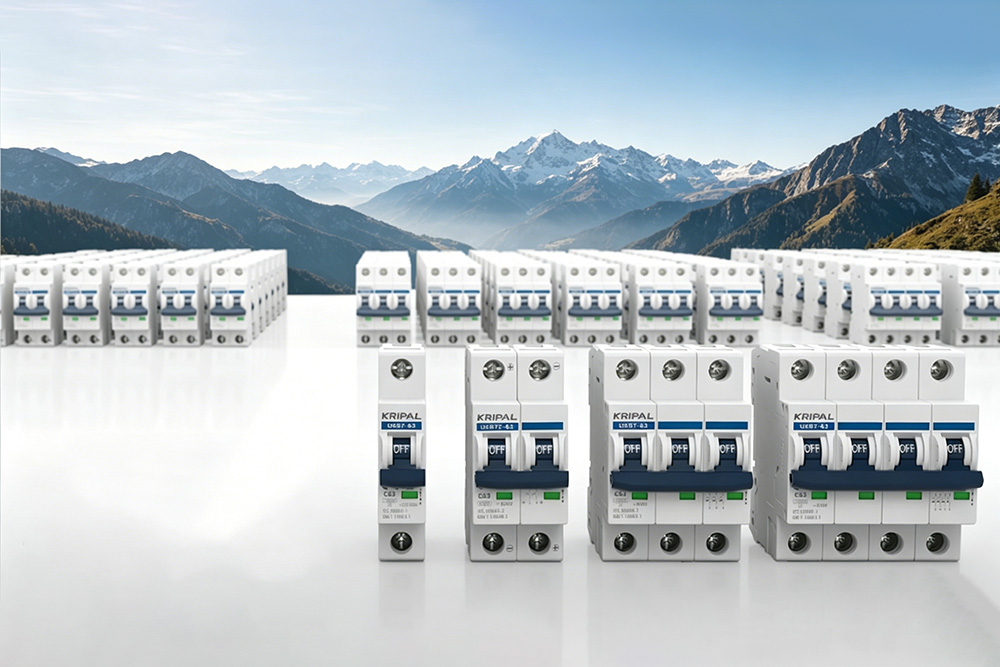
In electrical design and installation, safety and reliability must be the first considerations. The 125% rule is a commonly used design guideline that ensures electrical equipment operates stably under rated load while leaving a margin for potential overloads.
Understanding this rule helps accurately calculate load, guides circuit breaker selection, and supports system protection, making it a concept every electrical engineer should understand when designing and maintaining systems.
Key takeaways
- The essence of the 125% rule: It is used to provide a safety margin for potential overloads in electrical load design.
- Application scope: It mainly involves motor loads, circuit breaker selection, and system protection.
- Simple calculation: Rated current multiplied by 1.25 is used to determine the capacity of circuit breakers or cables.
- Design significance: It enhances system safety, prevents overload and equipment damage, and ensures stable operation.
What is the 125% rule?
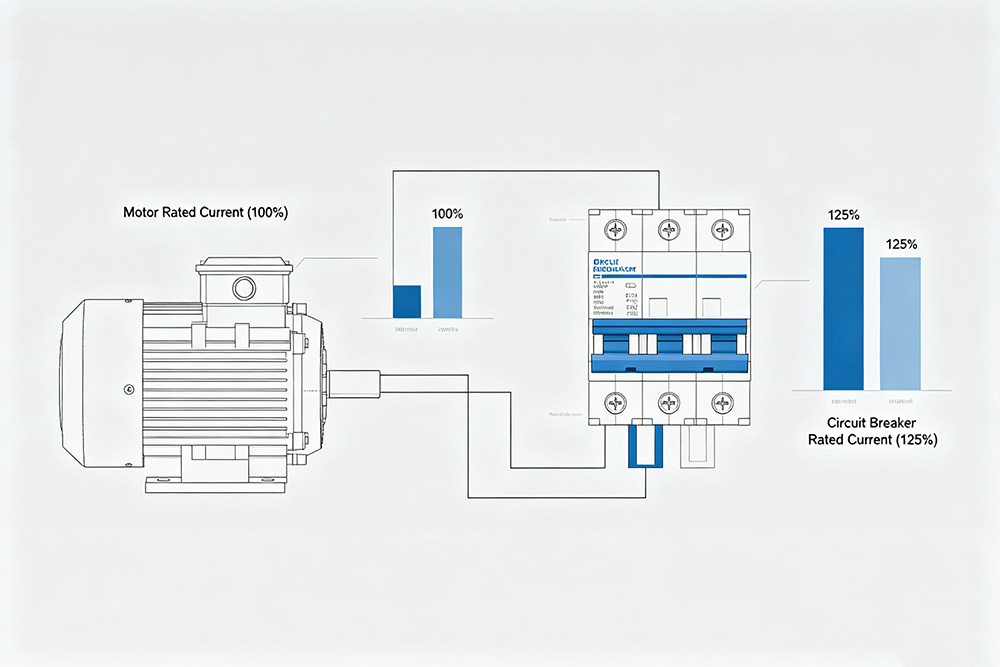
The 125% rule is an electrical design guideline mainly used for selecting circuit breakers for motors and related loads. Its core principle is that the rated current of the circuit breaker should be 125% of the rated operating current of the motor or device to provide sufficient margin during startup or occasional overloads, protecting the equipment and wiring. In simple terms, it adds 25% extra capacity on top of the device’s rated load, making the system more reliable.
How is the 125% rule calculated?
- Determine the rated current of the equipment: First, identify the rated operating current of the motor or load, usually indicated on the equipment nameplate.
- Apply the 125% factor: Multiply the rated current by 1.25 to obtain the suggested rated current for the circuit breaker or protective device.
How is the 125% rule applied in practice?
Motor startup protection
In industrial production and commercial buildings, motors often experience surge currents several times higher than their rated current during startup, which can cause circuit breakers to trip or equipment damage.
Applying the 125% rule allows the rated current of the circuit breaker to exceed the motor’s rated current by 25%, maintaining normal operation during startup or short-term overloads. This not only ensures continuous operation but also reduces production interruptions caused by tripping, supporting efficiency and system stability.
Circuit breaker selection
Circuit breakers are critical for protecting electrical equipment, and their selection directly affects system safety. Using the 125% rule, engineers multiply the rated load current by 1.25 to determine the appropriate breaker capacity.
This approach protects equipment from overload while avoiding frequent tripping during normal startup or minor load fluctuations, extending the lifespan of both equipment and breakers and improving overall system reliability.
Cable and wiring design
Electrical system design must consider occasional overloads when determining cable and wiring capacity. By applying the 125% rule, designers provide extra capacity to ensure that short-term overloads do not cause overheating or insulation damage.
This increases the safety margin of the electrical system, reduces maintenance costs and failure rates, and supports long-term stable operation.
Engineering standards and safety compliance
The 125% rule is recommended by various electrical design standards, including IEC and NEC. Following this rule helps design systems that meet safety requirements, reduces the risk of accidents, and simplifies approval and inspection. Applying the rule allows engineers to optimize equipment configuration while maintaining a balance between safety and system reliability.
What are the advantages of the 125% rule?
Enhances system safety
The rule provides extra safety margin for equipment and wiring, ensuring operation remains stable during startup surges or short-term overloads. This design reduces the risk of equipment damage and fire hazards, maintaining safe operation in industrial, commercial, or residential settings.
Extends equipment lifespan
Providing 25% extra capacity for circuit breakers and cables prevents equipment from operating at the limit for extended periods. This reduces thermal stress and mechanical wear, extends the lifespan of motors, breakers, and related components, and lowers maintenance and replacement costs.
Improves system reliability and stability
Load fluctuations and startup currents are common issues in practice. The 125% rule ensures that equipment and protective devices can handle these variations, reducing nuisance tripping and downtime, stabilizing system operation, and supporting uninterrupted production.
Simplifies design and selection
The rule offers a clear calculation method, allowing engineers to choose circuit breakers, cables, and protective devices in a straightforward and standardized way. Complex extra calculations are not required, saving design time and reducing errors.
Compliance with industry standards
The 125% rule is recommended in international and regional electrical standards, including IEC and NEC. Following it helps create systems that comply with regulations, simplifies approval and inspection, and supports maintenance while meeting compliance requirements.
What are the limitations of the 125% rule?
Not suitable for all load types
The rule mainly applies to inductive loads such as motors or equipment requiring short-term startup. It may not be fully applicable for constant loads or sensitive electronic devices, as their overload characteristics differ, and using the rule alone could result in overprotection or under protection.
Cannot replace detailed engineering analysis
Although it provides a quick method for sizing, the 125% rule does not replace thorough load calculations and system analysis. Factors like current fluctuations, ambient temperature, cable length, and installation method can affect actual load requirements and need professional calculation.
May increase system costs
Following the rule may require selecting higher-rated breakers and cables, slightly raising material costs. In projects with tight budgets or large-scale systems, this extra capacity may impact overall cost and must be balanced against safety requirements.
Does not guarantee complete overload protection
The rule provides a practical safety margin but cannot prevent all overload or abnormal conditions. Extreme or prolonged overloads can still damage equipment, so additional protective devices such as thermal relays or overcurrent protectors are necessary.
How does the 125% rule affect circuit breaker selection?
Determining the rated current of breakers
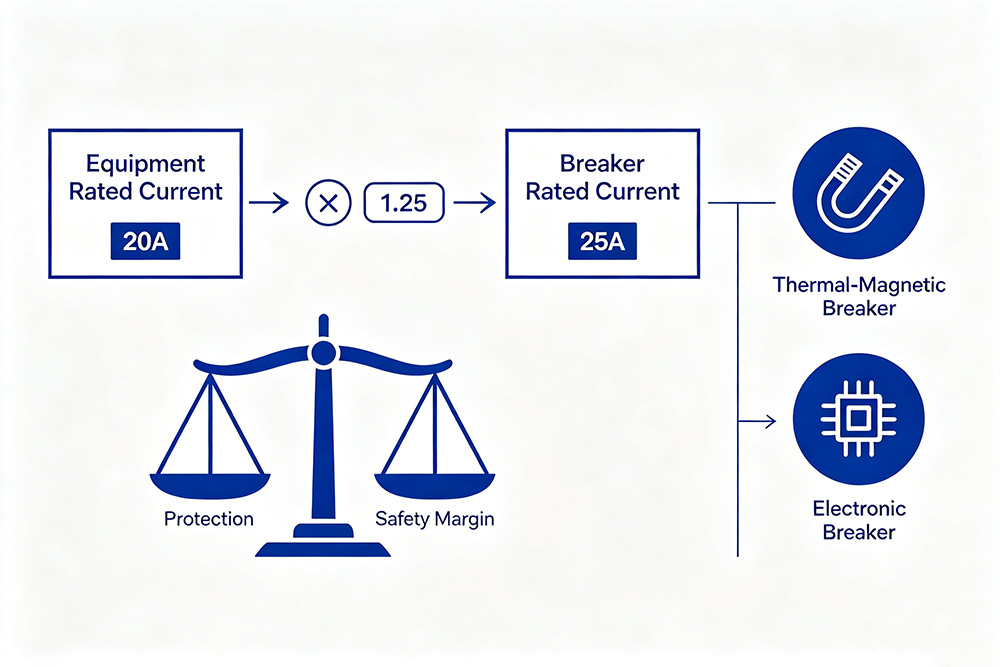
The rule is directly used to calculate the rated current of a breaker. Engineers multiply the rated operating current of the equipment by 1.25 to select a breaker capable of handling startup or short-term overload.
For example, a motor with a rated current of 20A requires a breaker rated approximately 25A according to the 125% rule, preventing tripping during normal startup or minor overloads.
Balancing protection and safety margin
Breakers must protect equipment without causing frequent trips due to overprotection. The 125% rule provides a suitable safety margin so breakers respond to actual overloads while avoiding tripping from startup surges or minor current variations, maintaining system stability and safety.
Guiding breaker type and characteristics selection
Different breaker types, such as thermal-magnetic or electronic, respond differently to overload and short-circuit currents. The rule helps engineers select the appropriate type and define operating characteristics like short delay or long delay to ensure protection without affecting normal operation.
Conclusion
The 125% rule is a widely used guideline in electrical design that provides a 25% margin for loads and breakers. It ensures reliable operation during startup or short-term overloads and enhances system safety and stability.
While the rule has some limitations, it effectively guides breaker selection, cable sizing, and overall system design when applied appropriately and serves as a practical method in electrical engineering practice.
Kripal specializes in selling various types of circuit breakers. If you have further questions, you are welcome to visit our homepage for consultation.
FAQs
Q1 Why use the 125% rule instead of using the rated current directly?
The 125% rule provides an extra safety margin for motors or loads, preventing breakers from tripping during startup surges or short-term overloads and enhancing system safety and reliability.
Q2 Is the 125% rule applicable to all electrical equipment?
It mainly applies to inductive loads such as motors and equipment requiring short-term startup, and may not be fully suitable for constant loads or sensitive electronic devices, which require consideration of load characteristics and engineering analysis.
Q3 How is the rated current of a circuit breaker calculated?
The calculation is: Breaker rated current = Equipment rated current × 1.25. For example, a motor rated at 20A requires a breaker rated at 25A.
Q4 Does using the 125% rule increase system costs?
It may slightly increase material costs due to selecting higher-rated breakers and cables, but it reduces trips, equipment damage, and maintenance costs, making the system more economical and reliable in the long term.
Q5 Can the 125% rule completely prevent overload?
No. It provides a practical safety margin, but extreme or prolonged overloads can still damage equipment, so additional protective devices such as thermal relays or overcurrent protectors are required.
Related Resources
Explore Knowledge Center >


Need a matching KRIPAL product?
Share voltage, quantity and destination. An engineer will reply with options and lead time.