Search
Knowledge Center
How to Maintain Industrial Plugs and Sockets: Inspection, Cleaning and Replacement Guide
Learn how to inspect, clean, test, and replace industrial plugs and sockets, with maintenance schedules for indoor, outdoor, and washdown sites.
 July 23, 2026
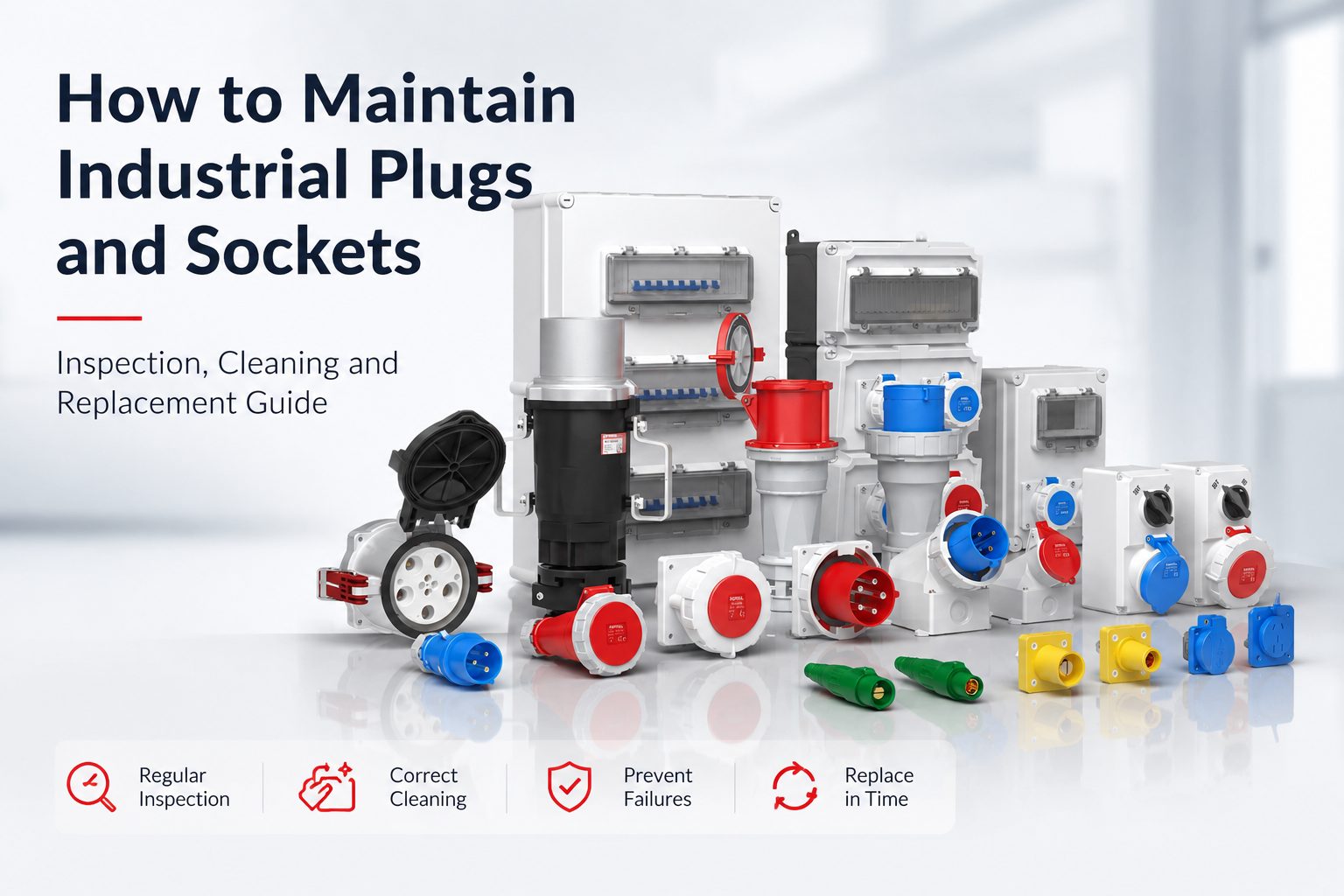
An industrial plug and socket connection carries full load current through a small contact surface, and that makes it one of the highest-risk components on a site. Every loose connection, corroded contact, or carbon-tracked insulator is a fire waiting for the right moment. The good news is that a simple inspection routine catches almost all of these before they fail. We make the UKS, UKS2, and UKS3 series of CEE industrial connectors at KRIPAL, and this guide covers what to inspect, how often, and when to stop repairing and replace the connector.
Why Industrial Connectors Fail
Industrial connectors generally fail for four primary reasons. Fortunately, all of them show visible warning signs before becoming dangerous if you know exactly what to look for.
Connecting or Disconnecting Under Load
Pulling a loaded plug creates a severe electrical arc that vaporizes the contact material. Every single event leaves incremental damage on the contact pin.
Moisture and Dust Ingress
When water and dirt breach the protective housing, they form a dangerous conductive path right across the internal insulator.
Physical and Mechanical Damage
Connectors often suffer severe physical abuse from cables being forcefully pulled, run over by heavy equipment, or crushed on the job site.
Loose Terminations
Cable strands inside the connector housing can loosen over repeated thermal cycling. This creates a high-resistance point that rapidly heats up under load.
The common factor behind many industrial connector failures is heat. Problems such as loose terminations, corrosion, and contact wear can increase electrical resistance, causing localized heating under load. Over time, this heat accelerates further damage and may eventually lead to connector failure. For this reason, thermal inspection can be a valuable part of preventive maintenance. Detecting a connector that is noticeably warmer than surrounding connections is often an early warning sign of a developing electrical problem.
The Failure Sequence
The sequence is always the same, just at different speeds. Corrosion or arcing raises the contact resistance. Higher resistance means more heat at the contact. The heat accelerates oxidation, which raises the resistance further. Eventually the temperature exceeds the insulator rating, the plastic carbonizes, and the connector either fails open or starts a fire. The inspection routine is designed to interrupt this sequence at the resistance stage, before the heat stage.
Moisture: The Invisible Killer
Moisture is the failure cause that gets overlooked, because a connector can look fine and still be wet inside. Water enters through a cracked gland, a housing gap, or simply from condensation when a warm connector cools overnight. The moisture forms a conductive film across the insulator, leakage current starts to flow, and the tracking process begins. This is why outdoor connectors need a verified IP rating and why the seals are part of the inspection, not an afterthought.
How IP Ratings Affect Industrial Connector Maintenance
Industrial connectors are often used in environments where dust, water, oil, and other contaminants are present. The IP rating of a connector determines how well it protects the internal contacts and insulation system from these external conditions. Choosing the correct protection level is not only important for installation safety, but also directly affects maintenance requirements and service life.
A connector with an IP44 rating provides protection against solid objects larger than 1 mm and water splashes from all directions, making it suitable for many indoor industrial applications and covered outdoor locations. However, it is not designed for frequent exposure to heavy rain, washdown cleaning, or environments where dust and moisture levels are high.
For more demanding applications, higher protection ratings such as IP67 provide additional security against dust ingress and temporary water immersion. Connectors used on construction sites, in food processing facilities, in outdoor power distribution, and in marine environments often require a higher IP rating because moisture contamination is one of the leading causes of insulation failure and contact corrosion.
It is important to remember that the IP rating only applies when the connector is correctly assembled and maintained. A damaged housing, cracked seal, loose cable gland, or incorrect cable size can reduce the actual protection level significantly. During routine inspections, check the condition of seals, locking mechanisms, and cable entries to ensure the connector continues to maintain its designed protection.
Selecting the correct IP-rated connector for the application reduces maintenance frequency, prevents premature failure, and improves the overall reliability of the electrical system.
How to Extend the Service Life of Industrial Plugs
The service life of an industrial plug depends not only on the quality of the connector itself but also on how it is installed, operated, and maintained. Simple maintenance practices can significantly reduce failures and prevent unnecessary replacement costs.
The first step is to avoid connecting or disconnecting plugs while they are carrying electrical loads. Plugging or unplugging under load creates electrical arcing, which damages contact surfaces and gradually increases contact resistance. Always disconnect power before removing an industrial connector whenever the application allows.
Proper cable management is another important factor in extending connector life. Industrial plugs should never be supported by the cable alone. Excessive pulling, bending, or twisting can damage the cable gland, loosen internal terminals, and weaken the strain relief system. Ensure cables have sufficient support and are protected from mechanical damage.
Regular cleaning also helps maintain reliable connections. Remove dust, moisture, and contamination from the connector surface using suitable cleaning methods. Avoid aggressive abrasives or unsuitable chemicals that may damage contact plating, insulation materials, or sealing components.
Environmental conditions should also be considered when selecting and using connectors. A standard connector installed in a harsh outdoor or washdown environment may fail prematurely, while a properly selected IP67 connector can provide much longer service life under demanding conditions.
Finally, replace damaged connectors rather than attempting temporary repairs. Cracked housings, carbon-tracked insulation, damaged seals, and severely worn contacts can compromise electrical safety even if the connector appears to function normally.
Following correct operating practices, maintaining suitable protection levels, and carrying out regular inspections are the most effective ways to maximize the service life of industrial plugs and sockets.
The Inspection Schedule
The inspection frequency depends on the environment, and the schedule below is a practical starting point. A clean indoor workshop can run on annual inspections. A construction site or food plant with washdown needs monthly checks. A marine environment, where salt attacks everything, needs weekly visual checks. Inspection intervals should always follow local regulations, site safety procedures, and manufacturer recommendations.
| Environment | Visual Check | Contact & Torque Check | Full Test |
|---|---|---|---|
| Clean indoor workshop | Annual | Annual | Every 2 years |
| Normal industrial floor | Every 6 months | Annual | Every 2 years |
| Construction site, outdoors | Monthly | Every 6 months | Annual |
| Food plant, washdown | Monthly | Every 3 months | Annual |
| Marine, coastal | Weekly | Monthly | Every 6 months |
The visual check takes seconds and catches the obvious: cracked housings, discolored contacts, burned pins, and loose cable glands. The contact and torque check needs the connector opened and the terminals checked. The full test measures insulation resistance and contact resistance with test equipment.
What a Visual Check Catches
The visual check is the highest-value inspection because it costs nothing and catches most problems. Look at the housing for cracks, especially at the cable entry and around the locking ring. Look at the pins for discoloration, pitting, or a burnt appearance. Look at the insulator face for carbon tracking, which shows as dark lines between the pins. Look at the cable gland for damage and confirm the cable is not pulling on the terminals. Look at the strain relief and confirm the connector is not being held by the cable.
Recording the Inspection
An inspection that is not recorded is an inspection that did not happen. Keep a simple log per connector: the location, the date, what was found, and what was done. The log shows the degradation trend over time, which is more useful than a single reading. A connector whose contact resistance is climbing across inspections is telling you it needs replacement before it fails, and the log is the evidence.
Cleaning: What to Use and What to Avoid
Cleaning a connector is simple, but the wrong method does more damage than no cleaning at all.
Use
Use a clean, dry, lint-free cloth to remove dust and moisture from the contacts and insulator. For stubborn contamination, use an electrical contact cleaner that is plastic-safe and leaves no residue. Use a fine abrasive only on severely pitted contacts, and only if the contact material is thick enough to survive it. Never use sandpaper on a connector you intend to keep, because it removes the plating and exposes the base metal to oxidation.
Avoid
Do not apply general-purpose lubricants unless specifically approved by the connector manufacturer. A lubricant traps dust and creates the exact conductive path you are trying to prevent. The contact surface should be clean metal, nothing else. Never use water or solvent on the insulator unless the connector is fully disassembled and dried, because trapped moisture inside the housing becomes the failure.
The Contact Resistance Check
The only way to know if a connection is healthy is to measure it. A digital low-resistance ohmmeter (DLRO) measures contact resistance across the closed connection, and the value should be in the milliohm range. A reading that doubles from the baseline, or that exceeds the manufacturer’s limit, means the contact is degrading and the connector should be replaced.
You do not need a DLRO for routine work; a visual check catches the obvious. But for critical connections, the measurement is the evidence that the connector is actually healthy, and it is the standard practice in industries where a failed connection stops a process.
The Cable Entry and Strain Relief
The cable entry is where most mechanical failures start. A gland that is not tightened properly lets the cable move inside the connector, and every movement flexes the conductors at the termination point. Over time the strands fatigue and break, usually invisibly inside the insulation. Check the gland tightness and the cable movement at every inspection, and confirm the connector is supported so the cable weight is not hanging from the terminals.
When to Replace Instead of Repair
There is a line between a connector that can be cleaned and one that has to be replaced. The rule is simple: if the insulator is carbon-tracked, replace it. Carbon tracking is permanent damage; the material has already degraded and it will fail again. If the contacts are pitted beyond a light polish, replace it, because the contact surface area is reduced and the current density is already too high. If the housing is cracked, replace it, because the crack lets in moisture and the mechanical lock is compromised.
Never repair a connector that has shown arc damage on the insulator. The carbon path is conductive, and no amount of cleaning removes it. This is the most common mistake in field maintenance: a technician cleans the visible marks and puts the connector back in service, and the failure repeats, usually with more damage the second time.
The Cost of Keeping a Bad Connector
The economics are not close. A 32A CEE connector costs a few dollars. The equipment it connects costs thousands. A site shutdown costs tens of thousands. Replacing a suspect connector is the cheapest insurance on the electrical installation, and it is the decision the inspection routine is designed to force.
The Replacement Decision Table
When in doubt, use the table. Replace the connector if the insulator is carbon-tracked, if the pins are pitted beyond a light polish, if the housing is cracked, if the cable gland no longer seals, or if the contact resistance has doubled from baseline. Clean and return to service only if the damage is surface-level, meaning light discoloration and a functioning seal. Everything else is a replacement, and the cost of the connector is never the reason to keep it in service.
Replacement Checklist
- Carbon-tracked insulator
- Pins pitted beyond a light polish
- Cracked housing
- Cable gland no longer seals
- Contact resistance doubled from baseline
FAQ
How often should industrial plugs be inspected?
At least annually in a clean environment, monthly on construction sites, and weekly in marine or washdown environments. The schedule depends on the duty, not the calendar.
Can a carbon-tracked connector be repaired?
No. Carbon tracking is permanent damage to the insulator. The connector must be replaced, because the conductive path will fail again and cleaning does not remove it.
What causes a plug to overheat?
High contact resistance, from corrosion, arcing, or a loose termination. The resistance generates heat under load, and the heat accelerates further damage. A warm plug is the first warning sign.
Should I lubricate the contacts of an industrial plug?
Generally, no. Do not apply lubricants unless they are specifically approved by the connector manufacturer, as unsuitable products may attract contamination or affect electrical performance.
How do I know if a connector needs replacement?
Replace it if the insulator is carbon-tracked, the pins are pitted beyond light polishing, the housing is cracked, or the contact resistance reading has doubled from baseline. When in doubt, replace it.
What is the difference between the UKS series connectors?
UKS is the standard IP44 connector, UKS2 adds an angled body with better strain relief, and UKS3 is the IP67 heavy-duty line with a bayonet locking ring for high-vibration and washdown environments.
Conclusion
Industrial connectors fail from arcing, moisture, mechanical damage, and loose terminations, and many electrical failures develop into overheating problems before causing serious damage. A visual inspection routine catches the obvious, a contact resistance measurement catches the subtle, and replacement is the answer whenever the insulator is carbon-tracked or the contacts are pitted. The UKS3 IP67 series is the right choice for outdoor and washdown duty, while the UKS and UKS2 series cover indoor and covered use. Browse the UKS connector range or contact our engineering team for help matching the connector grade to your environment.
Related Resources
Explore Knowledge Center >

Need a matching KRIPAL product?
Share voltage, quantity and destination. An engineer will reply with options and lead time.