Search
Knowledge Center
What is the difference between 80% and 100% breakers?
Learn the difference between 80% & 100% rated circuit breakers, continuous load rules, pros cons & correct breaker selection for commercial & residential circuits from KRIPAL.
 May 06, 2026
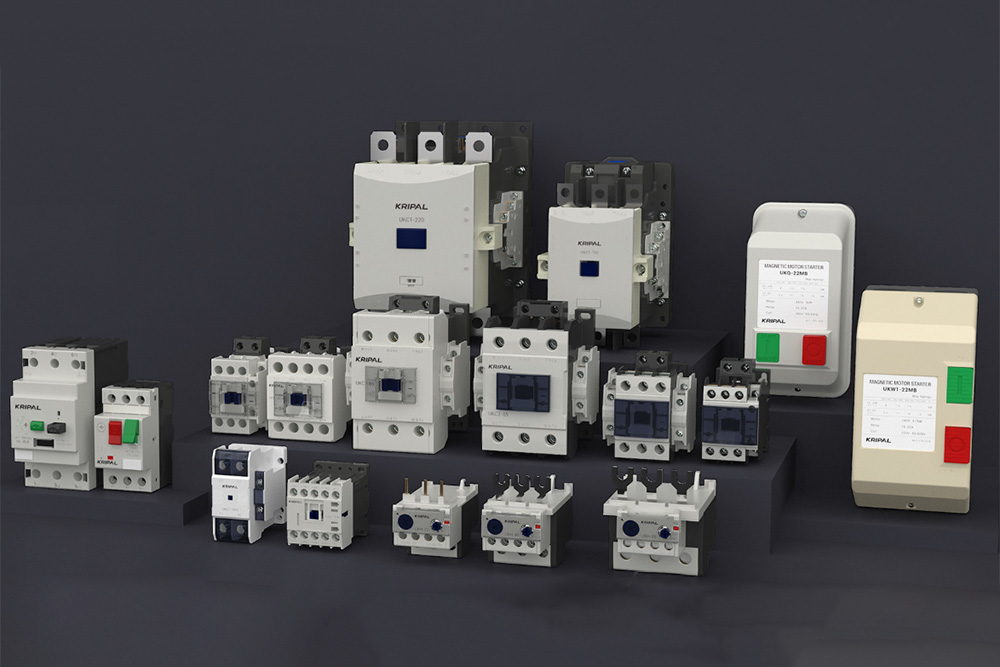
In electrical systems, breakers not only protect circuits but also affect the stable operation of devices. The difference between 80% breakers and 100% breakers is mainly reflected in their ability to carry continuous loads.
Understanding the difference helps to select the appropriate breaker for household and industrial circuits, prevent overloads, reduce the risk of failure, and ensure long-term stable operation.
Key takeaways
- 100% breakers can carry their rated current continuously and are suitable for circuits where the load is close to the rated value.
- 80% breakers can carry only 80 percent of their rated current under continuous load and are used for loads that run for long periods to provide additional safety margin.
- When selecting a breaker, the type of load, the size of the current, and electrical code requirements should be considered.
- Matching breakers correctly reduces the risk of overload and improves circuit stability and device lifespan.
What is a breaker?
A breaker is an electrical device used to protect circuits. When a circuit experiences overload or short circuit, the breaker automatically cuts off the current to prevent damage to the wiring and devices and to protect people.
Breakers are widely used in residential, industrial, and commercial power systems and form an essential part of circuit protection and management.
What do 80% and 100% mean?
In breaker specifications, 80% and 100% indicate the proportion of rated current that a breaker can carry under continuous load.
- 100% breakers can carry their rated current continuously without tripping. For example, a 20 amp 100% breaker can safely carry 20 amps.
- 80% breakers can carry only 80 percent of their rated current under continuous load. For example, a 20 amp 80% breaker can carry only 16 amps continuously.
This proportion is commonly used to provide a safety margin in circuit design, preventing overheating, reduced lifespan, or nuisance tripping when a breaker operates at full load for a long time.
What are the advantages and disadvantages of these two types of breakers?
100% breakers
Advantages
- They can carry their rated current continuously and are suitable for circuits with loads close to the rated value.
- They provide higher circuit utilization, reducing overload trips due to insufficient capacity.
Disadvantages
- Continuous full-load operation may cause the breaker to overheat, which can affect its long-term lifespan.
- The safety margin is smaller for circuits with continuous high loads.
80% breakers
Advantages
- They provide an additional safety margin, reducing overheating and nuisance trips under continuous load.
- They are more suitable for loads that run continuously for long periods such as air conditioners, motors, or lighting circuits.
Disadvantages
- Available current is reduced, requiring a breaker with a higher rated value to meet the load.
- They may increase cost and take up more space.
80% vs 100% breakers
Continuous load capacity
An 80% breaker can carry only 80 percent of its rated current under continuous load, which means that if the circuit runs for a long time, the breaker will not overheat or trip when the current is near the rated value. In contrast, a 100% breaker can carry its rated current and is suitable for short-term or non-continuous loads, but continuous full load may cause heating issues.
Applications
80% breakers are suitable for loads that run for long periods, such as air conditioners, motors, or lighting circuits. 100% breakers are more suitable for loads close to the rated value but that do not run for long periods, such as short-term high-load devices or non-continuous circuits.
Safety margin
Using an 80% breaker provides an additional safety margin, reducing overheating and nuisance trips, and extends the life of both the breaker and the circuit. In contrast, 100% breakers have a smaller safety margin, and continuous full-load operation may increase the risk of failure or reduce lifespan.
Circuit utilization
100% breakers have higher current utilization and make full use of rated capacity, saving cost and installation space. To provide safety, an 80% breaker leaves 20 percent of its rated current unused, which reduces available current and may require selecting a breaker with a higher rated value to meet load requirements.
Lifespan and cost
An 80% breaker generates less heat and operates under lower load stress, which usually results in a longer lifespan, but it may require a higher rated model, increasing installation cost. 100% breakers have lower installation costs, but continuous full-load operation may affect lifespan, requiring regular inspection and maintenance.
| Feature | 80% Breaker | 100% Breaker |
| Continuous Load Capacity | Can carry only 80 percent of rated current under continuous load | Can carry full rated current continuously |
| Typical Applications | Long-running loads such as air conditioners, motors, or lighting circuits | Short-term or intermittent loads, or circuits with loads close to rated current |
| Safety Margin | Provides extra safety margin, reduces overheating and nuisance trips | Lower safety margin; continuous full-load operation may increase heating and risk |
| Circuit Utilization | Lower due to reserved 20 percent margin; may require a higher rated breaker for the same load | Higher; fully utilizes rated current, saving cost and space |
| Device and Breaker Lifespan | Generates less heat, lower stress, longer lifespan | Continuous full load may shorten lifespan; requires periodic inspection |
| Cost Consideration | May need a higher rated breaker, slightly higher cost | Lower installation cost, suitable for non-continuous or intermittent loads |
When to use 80% breakers
80% breakers are mainly used for circuits with continuous loads and are suitable for devices or lines that require long-term stable operation. They provide additional safety and extend the life of the circuit. The following situations are commonly considered:
Long-duration loads
If devices in the circuit run continuously for long periods, usually defined as over three hours, such as air conditioners, industrial motors, lighting circuits, or servers, using an 80% breaker prevents overheating and tripping caused by long-term full load and ensures stable operation.
Circuits requiring additional safety margin
In designs where safety is a concern, 80% breakers provide a margin that reduces the chance of tripping due to minor load fluctuations or temporary overloads, preventing unexpected circuit interruptions.
Loads close to rated current
When circuit loads approach or reach 80 percent of the breaker’s rated current, using an 80% breaker ensures the breaker does not operate at full load continuously, reducing heat accumulation and increasing overall circuit reliability.
Extending device and breaker life
Continuous full-load operation accelerates aging of both breakers and connected devices. Limiting continuous load to 80 percent of rated current reduces thermal stress on electrical components and prolongs the life of breakers and connected devices.
When to use 100% breakers
100% breakers are suitable for non-continuous or short-term high-load circuits and can improve circuit utilization and cost efficiency in certain situations. The following scenarios are commonly considered:
Short-term or intermittent loads
If devices run for short periods or the load varies intermittently, such as household appliances, short-term mechanical equipment, or office devices, a 100% breaker can fully use its rated current without wasting capacity due to the 80 percent limit.
Loads below rated value and non-continuous
When circuit loads are usually below the breaker’s rated current and not continuous, a 100% breaker reduces capacity waste and improves utilization.
Cost and space savings
Compared with 80% breakers, which may require a higher rated value to meet the same load, a 100% breaker can use its rated value directly, saving purchase cost and installation space.
Non-critical circuits
For circuits that are not critical or can tolerate occasional tripping, 100% breakers provide flexibility and reduce unnecessary safety margin while remaining economical.
Selecting based on actual conditions
Choosing the appropriate breaker depends on load type and operation duration. 80% breakers are suitable for continuous loads and provide a safety margin to reduce overheating and nuisance trips.
100% breakers are suitable for non-continuous or short-term high-load circuits and improve utilization and cost efficiency. Understanding the differences helps maintain circuit safety, extend device life, and improve operation efficiency.
Kripal offers both types of breakers. Selection should be based on your specific situation. You are welcome to visit my homepage to make a purchase.
FAQs
Q1 What are 80% breakers and 100% breakers?
80% breakers can carry only 80 percent of their rated current under continuous load and are suitable for long-running loads. 100% breakers can carry their rated current continuously and are suitable for non-continuous or short-term high-load circuits.
Q2 Why do electrical codes recommend using 80% breakers for continuous loads?
It provides a safety margin, reduces overheating and nuisance trips, and ensures long-term stable operation of circuits and devices.
Q3 Can I use a 100% breaker on any circuit?
It is not recommended for continuous load circuits, as it may increase overheating and reduce device lifespan. 100% breakers are suitable only for short-term or intermittent loads.
Q4 Do 80% breakers waste current?
They limit continuous load current, but this is intended to improve safety and extend device lifespan. If higher load is required, a higher-rated 80% breaker can be chosen.
Q5 How do I select the right breaker?
Consider load type, operation duration, device criticality, and electrical codes. Continuous loads should use 80% breakers, while non-continuous or short-term high loads can use 100% breakers.
Related Resources
Explore Knowledge Center >

Need a matching KRIPAL product?
Share voltage, quantity and destination. An engineer will reply with options and lead time.