Search
Knowledge Center
What Causes an RCD to Trip? 10 Common Reasons and How to Fix It
Discover why your RCD keeps tripping. Learn 10 common causes, including faulty appliances and wiring, plus expert troubleshooting tips from KRIPAL.
 June 15, 2026
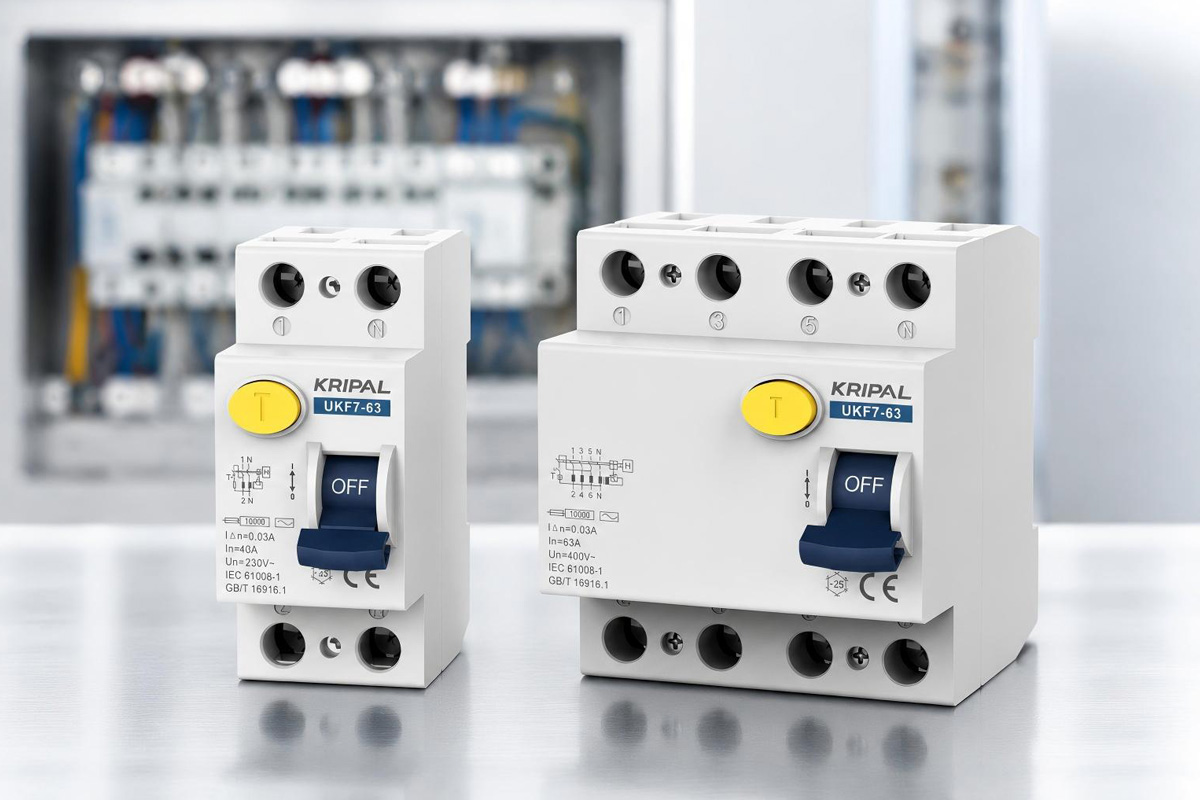
Key Takeaways
- An RCD trips when it detects residual (earth leakage) current between live and neutral.
- Common causes include faulty appliances, moisture, damaged wiring, and combined small leakage currents.
- An RCD does not normally trip due to overload—that role belongs to MCBs or RCBOs.
- Repeated trips should be investigated; do not keep resetting without finding the fault.
What Happens When an RCD Trips?
Under normal operating conditions, the current flowing into a circuit through the live conductor should return through the neutral conductor with little or no difference.
If part of the current flows to earth through:
- Damaged insulation
- Faulty appliances
- Moisture
- Exposed conductors
- Accidental contact with a person
the RCD detects this imbalance and disconnects the power supply. This protection mechanism helps reduce the risk of electric shock and electrical fires. However, if an RCD keeps tripping repeatedly, the cause should be investigated rather than simply resetting the device.
Common Causes of RCD Tripping
1Faulty Electrical Appliances
One of the most common reasons for an RCD trip is a faulty electrical appliance.
Equipment such as:
- Washing machines
- Refrigerators
- Ovens
- Heaters
- Kettles
may develop insulation damage, internal component failures, or moisture problems over time. These faults can allow current to leak to earth, causing the RCD to operate. A practical troubleshooting method is to disconnect appliances from the affected circuit and reconnect them one at a time. If the RCD trips again after connecting a specific appliance, that equipment may require inspection or replacement.
2Moisture or Water Ingress
Water and electricity create a serious safety risk. Moisture entering electrical equipment can create unwanted leakage paths that trigger an RCD.
Common locations where moisture-related faults occur include:
- Outdoor sockets
- Bathrooms
- Kitchens
- Garages
- Garden equipment
Rain, condensation, damaged seals, and wet extension leads can all contribute to earth leakage problems. Outdoor electrical installations are especially vulnerable because they are exposed to changing weather conditions.
3Damaged Wiring
Aging or damaged wiring is another common cause of RCD tripping.
Electrical cables may deteriorate due to:
- Overheating
- Physical damage
- Pests
- Aging insulation
- Incorrect installation
When insulation breaks down, current may escape from the conductor to earth, causing the RCD to disconnect the circuit.
Warning signs of wiring problems may include:
- Burning smells
- Flickering lights
- Buzzing sounds
- Discolored sockets
- Frequent electrical trips
Any suspected wiring fault should be inspected by a qualified electrician.
4Overloaded Circuits
An RCD is designed to detect leakage current, not overload current. Overload protection is normally provided by devices such as MCBs or the overcurrent protection function within an RCBO. However, overloaded circuits can place additional stress on electrical components. Over time, excessive heat may damage insulation or connections, increasing the possibility of leakage faults and nuisance RCD tripping.
High-power appliances such as:
- Portable heaters
- Air conditioners
- Electric kettles
- Microwaves
- Washing machines
should be used according to the circuit rating.
5Faulty Heating Elements
Heating elements inside appliances are particularly likely to develop leakage faults.
Common examples include:
- Ovens
- Dishwashers
- Washing machines
- Water heaters
As heating elements age, their insulation resistance may decrease. When the element heats up, current leakage to earth may increase and cause the RCD to trip. In many cases, the RCD trips shortly after the appliance starts heating.
6Outdoor Electrical Problems
Outdoor electrical equipment is exposed to rain, humidity, dirt, and temperature changes, making it more likely to develop leakage faults.
Common outdoor causes include:
- Damaged extension cables
- Wet outdoor sockets
- Faulty garden lighting
- Pond pumps
- Power tools exposed to moisture
Even a small amount of water inside an electrical connection can create enough leakage current to activate an RCD.
7Neutral-to-Earth Faults
A neutral-to-earth fault occurs when the neutral conductor unintentionally makes contact with the earth conductor downstream of the RCD. This can create an unwanted current path and result in residual current being detected by the RCD.
These faults can be difficult to locate because they may occur inside:
- Fixed wiring systems
- Junction boxes
- Electrical equipment
- Damaged cables
Professional testing equipment is often required to identify the exact fault location.
8Aging Electrical Installations
Older electrical systems may become more likely to experience repeated RCD trips due to component aging.
Over time:
- Insulation resistance can decrease
- Connections may loosen
- Electrical accessories may deteriorate
Buildings with older installations may require electrical inspections, repairs, or upgrades to maintain reliable protection.
9Faulty RCD Unit
Although RCDs are designed for long-term operation, the device itself can occasionally become faulty.
Possible causes include:
- Mechanical wear
- Internal component failure
- Sensitivity issues
- Environmental damage
Regular testing using the built-in test button helps confirm that the RCD is operating correctly. If an RCD trips without an identifiable fault, the device itself may require professional testing or replacement.
10Multiple Small Leakage Currents
Modern electrical equipment can produce small amounts of normal leakage current during operation.
Devices such as:
- Computers
- LED lighting
- Surge protectors
- Variable-speed appliances
- Smart home equipment
- Solar inverters
may each contribute small leakage currents.
Individually, these currents are usually harmless. However, when many devices operate together, the combined leakage may approach the RCD operating threshold and cause nuisance tripping.
Why Does the Power Keep Cutting Out Suddenly?
If the power suddenly switches off and the RCD has operated, the system is likely detecting an electrical safety issue.
Common situations include:
- Immediately after plugging in an appliance
- During wet weather
- When a specific device starts operating
- Randomly at different times
Identifying when the RCD trips can provide useful clues when locating the source of the problem.
How to Find the Cause of an RCD Trip
A basic troubleshooting process can help identify possible causes safely.
Step 1: Disconnect Appliances
Unplug appliances connected to the affected circuit.
Step 2: Reset the RCD
Switch the RCD back on.
If it remains on, reconnect appliances one by one.
If it trips immediately, the problem may be related to fixed wiring or the circuit itself.
Step 3: Check for Moisture or Damage
Inspect visible electrical equipment for:
- Water ingress
- Damaged cables
- Overheating marks
- Cracked insulation
- Damaged plugs or sockets
Pay particular attention to:
- Outdoor sockets
- Kitchen appliances
- Bathroom circuits
- Recently used electrical equipment
Step 4: Contact a Qualified Electrician
Professional inspection is recommended if:
- The fault cannot be identified
- The RCD will not reset
- Burning smells are present
- Wiring appears damaged
- Tripping becomes more frequent
Can You Prevent RCD Tripping?
Although not all RCD trips can be prevented, regular maintenance can reduce unnecessary interruptions and improve electrical safety.
Recommended practices include:
- Testing RCD operation regularly
- Replacing damaged appliances
- Keeping outdoor equipment dry
- Avoiding unnecessary circuit overload
- Inspecting aging electrical installations
- Arranging periodic electrical safety checks
For applications requiring both residual current protection and overcurrent protection, an RCBO can provide combined protection in a single device, helping improve installation safety and space efficiency.
Conclusion
An RCD trip is usually a sign that the electrical protection system is responding correctly to leakage current or an electrical fault.
Common causes include faulty appliances, moisture, damaged wiring, aging installations, and excessive combined leakage currents. While some issues are easy to identify, repeated RCD tripping may indicate a more serious electrical problem that requires professional investigation.
Choosing reliable residual current protection devices, including RCDs and RCBOs, can help improve electrical safety and system reliability.
Explore KRIPAL’s range of RCD and RCBO protection devices for residential, commercial, and industrial electrical applications.
FAQ
Q: Why does my RCD keep tripping?
An RCD usually trips because it detects leakage current caused by faulty appliances, damaged wiring, moisture, or insulation problems. Frequent tripping should be investigated to identify the underlying fault.
Q: Why does my RCD trip immediately after resetting?
An RCD that trips immediately after reset usually indicates an active electrical fault, such as a faulty appliance, wiring issue, or water ingress. Disconnecting appliances may help locate simple causes.
Q: Can an overloaded circuit cause an RCD to trip?
An RCD does not normally trip due to overload because it protects against residual current, not excessive current. Overload protection is provided by devices such as MCBs or RCBOs.
Q: What is the difference between an RCD and an RCBO?
An RCD provides protection against earth leakage, while an RCBO combines residual current protection and overcurrent protection in one device for individual circuit protection.
Q: How can I stop my RCD from tripping?
Regular electrical maintenance, replacing faulty appliances, preventing moisture exposure, and checking aging wiring can help reduce unnecessary RCD tripping.
Related Resources
Explore Knowledge Center >
Need a matching KRIPAL product?
Share voltage, quantity and destination. An engineer will reply with options and lead time.