Search
Knowledge Center
What Is an RCBO? Working Principle, Wiring, Testing and How It Works
Learn what an RCBO (Residual Current Breaker with Overcurrent Protection) is, its working principle, wiring, testing, components, types, advantages and applications for circuit safety.
 April 26, 2026

Most homeowners don’t spend much time thinking about what’s behind their walls—until a circuit trips and the lights go out. For electrical distributors, wholesalers, and licensed contractors, however, what goes into the distribution board is a critical matter of safety, compliance, and system reliability.
As modern buildings crowd their circuits with smart appliances, LED lighting, and EV chargers, traditional circuit protection is no longer enough. Enter the RCBO.
But what exactly is an RCBO, how does it work, and how do you choose the right type for different installations? Let’s break it down.
What Is an RCBO?
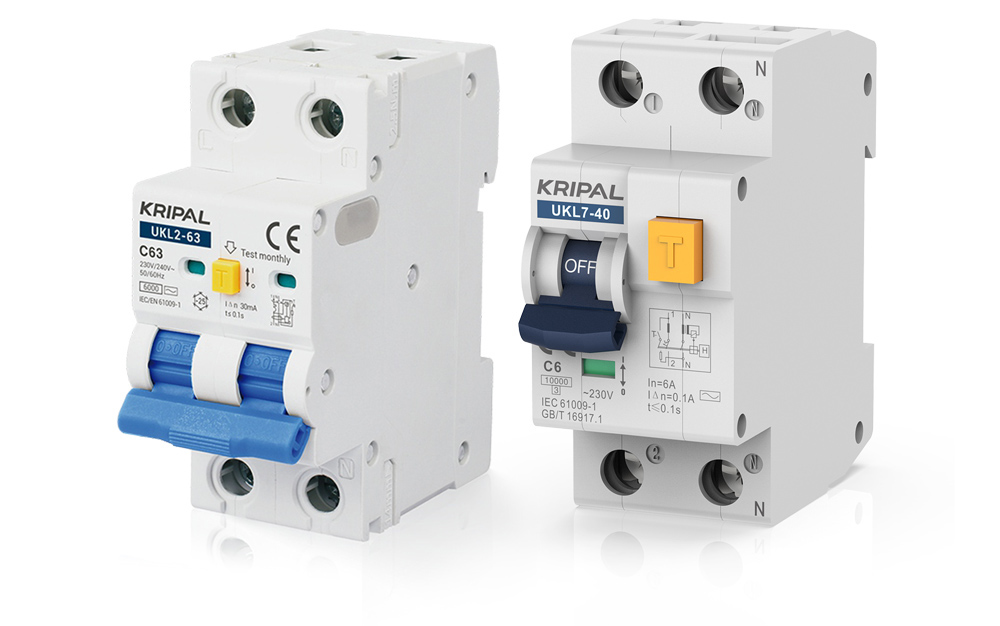
RCBO stands for Residual Current Breaker with Overcurrent Protection.
In traditional electrical panel designs, ensuring complete circuit safety required two separate devices: an MCB (Miniature Circuit Breaker) to protect wires from overloads, and an RCD/RCCB (Residual Current Device) to protect humans from fatal electric shocks.
An RCBO seamlessly combines both functions into a single, compact unit. It delivers all-in-one protection against three major electrical hazards:
- Earth Leakage: Prevents lethal shocks by cutting power the moment current leaks from the circuit (e.g., if someone touches a damaged wire or a faulty appliance shell).
- Overload: Protects cables from overheating when too many high-power appliances are running simultaneously on a single circuit.
- Short Circuits: Instantly isolates the circuit during a direct live-to-neutral fault to prevent electrical fires or catastrophic equipment damage.
Why Are RCBOs Used?
Individual Circuit Protection is becoming the Global Standard. In older electrical layouts, one single RCD often protected a whole bank of multiple circuits. If a single appliance developed a minor leakage fault, the entire building or floor went dark.
Modern wiring regulations increasingly mandate individual circuit protection via RCBOs. By dedicating one RCBO to each individual circuit (such as kitchen sockets, lighting zones, or dedicated appliance lines), only the faulty circuit trips. The rest of the building continues to run safely and uninterrupted, making troubleshooting much simpler for maintenance teams.
RCBO Working Principle
An RCBO acts as a constant safety monitor for electrical currents, executing two distinct protection mechanisms:
1. Residual Current Detection (Shock Protection)
The device continuously measures the current going out through the live wire and compares it to the current returning through the neutral wire. Under normal conditions, these two values must be perfectly identical.
If the returning current drops—even by a tiny fraction (typically 30mA)—it means electricity is escaping the intended path to the ground (earth leakage). The internal current transformer detects this imbalance, and the RCBO trips within milliseconds to eliminate shock hazards.
Example: If a washing machine develops internal insulation damage and current leaks to its metal shell, the RCBO instantly detects this live-to-neutral imbalance and cuts power before anyone touches it.
2. Overcurrent Detection (Overload & Short Circuit Protection)
The RCBO handles overcurrents exactly like a standard MCB using a dual-element mechanism:
- Thermal Protection: When a circuit is overloaded for an extended period, internal bimetallic strips bend due to heat build-up, safely tripping the breaker before cables melt.
- Magnetic Protection: During a direct short circuit, current surges rapidly. A magnetic coil instantly forces the contacts apart, extinguishing the dangerous arc within milliseconds.
Main Components of an RCBO
A standard RCBO typically includes:
| Component | Function |
| Current transformer | Detects imbalance between live and neutral lines to catch leakage faults. |
| Thermal trip unit | Utilizes bimetallic strips to protect cables against long-term overload. |
| Magnetic trip unit | Utilizes an electromagnetic coil to clear catastrophic short circuits instantly |
| Test button | Allows manual testing to verify the residual current mechanism is responsive. |
| Switching contacts | Mechanically disconnect the circuit during any of the three fault types. |
RCBO Wiring Basics
Proper wiring of an RCBO depends on the system configuration. Below are the two most common setups for residential and commercial installations:
Basic Single-Phase RCBO Wiring
A typical single-phase RCBO connection includes:
- Incoming live supply
- Incoming neutral supply
- Outgoing live to the load
- Outgoing neutral to the neutral bar or load
In single-phase systems, both the live and neutral conductors pass through the RCBO sensing mechanism. The device compares the incoming and outgoing current values to detect leakage faults.
Single-phase RCBOs are commonly used in residential consumer units for lighting, socket outlets, and appliance circuits.
Basic Double-Pole RCBO Wiring
A double-pole RCBO disconnects both the live and neutral conductors during a fault.
A typical double-pole RCBO connection includes:
- Incoming live supply
- Incoming neutral supply
- Outgoing live to the load
- Outgoing neutral to the load
- Earth wire connected to the earth bar
Double-pole RCBOs are commonly used in outdoor installations, water heaters, temporary power systems, and wet-area applications.
⚠️ SAFETY WARNING & COMPLIANCE
Mains electricity is inherently dangerous. Working inside distribution boards poses strict risks of severe injury, electrocution, or electrical fire. The wiring principles described above are for educational and product sourcing evaluation purposes only. All electrical installations, upgrades, and testing must be carried out exclusively by a qualified, licensed electrician in strict accordance with local national wiring regulations (e.g., IEC 61009-1, BS 7671, or AS/NZS standards).
Types of RCBOs
RCBOs are primarily categorized by the specific types of leakage current waveforms they are designed to detect. Selecting the correct type is essential to ensure proper tripping and avoid nuisance shutdowns:
| RCBO Type | Detected Faults (Current Waveforms) | Typical Target Applications & Equipment | Technical Compatibility |
| Type AC | Standard sinusoidal AC leakage currents only. | Traditional lighting networks, basic electric heaters, and simple legacy socket circuits. | Suitable only for circuits without electronic controls or inverters. |
| Type A | Sinusoidal AC + Pulsating DC leakage currents. | Modern washing machines, dishwashers, LED lighting drivers, computers, and televisions. | Mandated in many regions for household equipment with electronic circuits. |
| Type B | AC + Pulsating DC + Smooth pure DC leakage + High-frequency signals. | Electric vehicle (EV) charging stations, Solar PV inverters, variable speed industrial motor drives, and 3-phase UPS systems. | Crucial for green energy installations where smooth DC faults can bypass standard breakers. |
How to Test an RCBO
The built-in test button (marked “T” or “TEST”) is designed to verify that the internal residual current protection mechanism operates correctly.
Testing Procedure
- Switch on the RCBO
- Press the test button
- The RCBO should trip immediately
- Reset the device after testing
The test button creates an artificial leakage current imbalance inside the device to confirm proper operation.
Recommended Testing Frequency
Electrical compliance standards and manufacturers recommend testing the device every three months to identify any aging or mechanically blocked components.
Advantages of RCBOs
- Combined Protection: RCBOs provide leakage and overcurrent protection in one device.
- Space Saving: Using a single device reduces the space required inside the distribution board.
- Improved Fault Isolation: Only the affected circuit trips, helping reduce unnecessary power interruptions.
- Better Safety: RCBOs help reduce the risk of electric shock and electrical fires.
- Simplified Installation: Combining multiple protection functions can simplify panel design and wiring.
Common Applications of RCBOs
RCBOs are the preferred choice for individual circuit protection across residential homes, offices, retail stores, schools, hospitals, data centers, and EV charging infrastructure.
Frequently Asked Questions (FAQs)
Q Can I use an RCBO to replace an MCB directly?
Yes, functionally. Since an RCBO includes all MCB features plus leakage protection, it is an upgrade. However, you must ensure the distribution board has enough space for the neutral tail connection.
Q Does an RCBO protect against overvoltage or surges?
Standard RCBOs only protect against overload, short circuits, and earth leakage. To protect sensitive equipment from lightning or grid voltage spikes, you need to install a separate Surge Protective Device (SPD).
Q Why are RCBOs more expensive than MCBs?
RCBOs contain dual-sensing mechanisms (a thermal-magnetic strip for overcurrent and a highly sensitive current transformer for leakage). You are paying for an all-in-one safety device that replaces two separate components.
High-Performance Circuit Protection by KRIPAL
As a professional manufacturer of low-voltage electrical components, KRIPAL Electric delivers a comprehensive, rigorously tested range of RCBO breakers engineered for global engineering and distribution demands.
International Standards Compliance: Fully certified to meet strict international standards (including IEC 61009-1), ensuring seamless regulatory approval and reliable field performance.
Industrial Manufacturing Excellence: Backed by robust quality control, batch manufacturing capabilities, and dedicated technical support to meet your exact OEM/ODM and project procurement specifications.
[Contact the KRIPAL Engineering Team today] to request formal product datasheets, international certification records, or technical project support.
Related Resources
Explore Knowledge Center >


Need a matching KRIPAL product?
Share voltage, quantity and destination. An engineer will reply with options and lead time.