Search
Knowledge Center
Understanding Short Circuits: Causes, Types, Effects, and Protection
Learn about short circuit causes, types, effects, and protection methods. Understand fault currents, dangers, and how to prevent electrical damage with proper solutions.
 June 01, 2026
Core Takeaways
Short circuits happen when electricity finds an unintended low-resistance path, causing a sudden surge of current. This can lead to overheating, equipment damage, or even fire hazards.
They are often caused by damaged insulation, faulty wiring, moisture, or component failure. Different types of short circuits exist depending on where the fault occurs, and their impact can range from minor device malfunction to serious electrical system failure.
What Is a Short Circuit?
A short circuit occurs when electrical current deviates from its intended path and flows through an unintended low-impedance connection between two points of different potential.
In a properly designed electrical system, current flows through a defined load (such as motors, appliances, or resistive devices). When a short circuit occurs, the load is bypassed, and the circuit resistance (more accurately, impedance) drops sharply.
According to Ohm’s Law:
When voltage remains constant and impedance decreases, current increases rapidly.
This sudden increase in current is known as fault current, which can cause immediate thermal and mechanical stress in conductors and equipment.
Why Short Circuits Happen
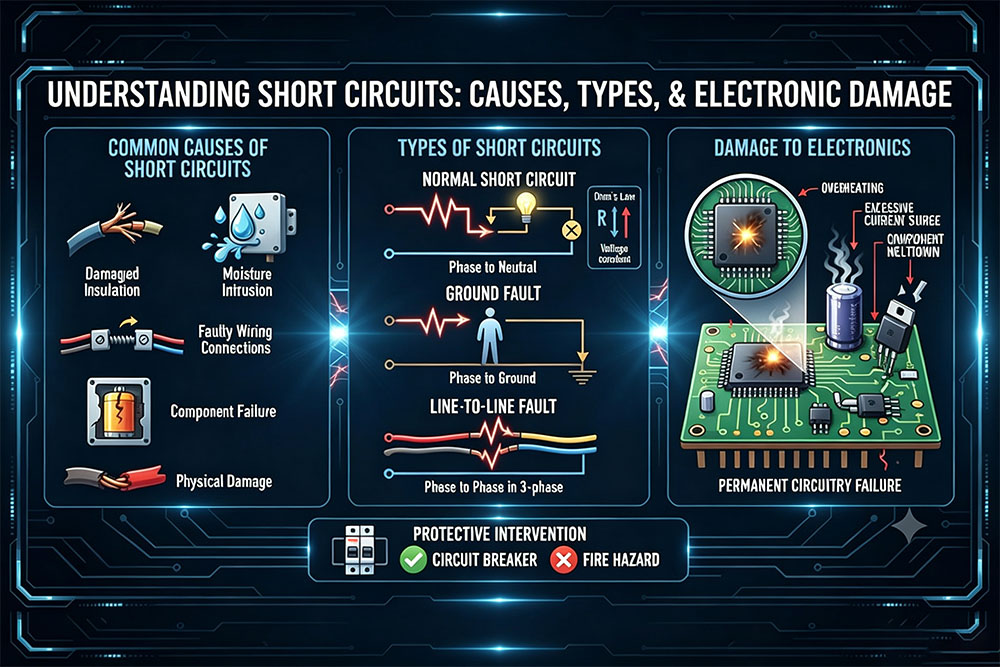
Short circuits typically occur due to insulation failure or wiring abnormalities. Common causes include:
- Damaged insulation
Worn, cracked, or pinched insulation may expose conductors, allowing unintended contact. - Moisture or water ingress
Water can create a conductive path between electrical points, especially in outdoor or high-humidity environments. - Loose or faulty connections
Poor connections may loosen over time and lead to conductor contact. - Thermal aging and component degradation
Long-term heat exposure can weaken insulation materials and internal components. - Mechanical damage
Physical impact, rodent damage, or improper installation may expose live conductors.
Types of Short Circuits
Short circuits are generally classified based on how and where they occur in an electrical system.
| Fault Type | Description |
| Normal Short Circuit | Occurs when a live (phase) wire directly touches a neutral wire. It is the most common type in residential systems and usually causes a rapid surge in current. |
| Ground Fault | Occurs when a live wire comes into contact with the grounding system or exposed metal parts. It is particularly dangerous because it can energize surfaces that are normally safe to touch. |
| Line-to-Line Fault | Occurs in multi-phase systems when two live conductors touch each other. It is more common in industrial or commercial power distribution environments. |
Each type creates a sudden imbalance in the system, and protective devices like circuit breakers are designed to detect and interrupt these faults quickly.
What Happens During a Short Circuit
When a short circuit occurs, electrical resistance drops dramatically. According to Ohm’s law, when resistance decreases while voltage remains constant, current increases sharply.
This sudden surge generates heat almost instantly. Wires may overheat, insulation may melt, and surrounding materials can become damaged. In severe cases, sparks or electrical arcs may form, increasing the risk of fire.
Protective devices such as fuses or circuit breakers are designed to respond by cutting off the current flow, preventing further damage.
Why Short Circuits Damage Electronics
Electrical and electronic devices are designed to operate within a defined voltage and current range. A short circuit disrupts this balance completely.
Sensitive components such as microcontrollers, transistors, and capacitors can be damaged within milliseconds due to excessive current and thermal stress.
Power supplies may enter protection mode or fail entirely under fault conditions. Even if a device continues to operate after a minor fault, internal degradation may shorten its service life.
Short Circuits and Electrical Protection Systems
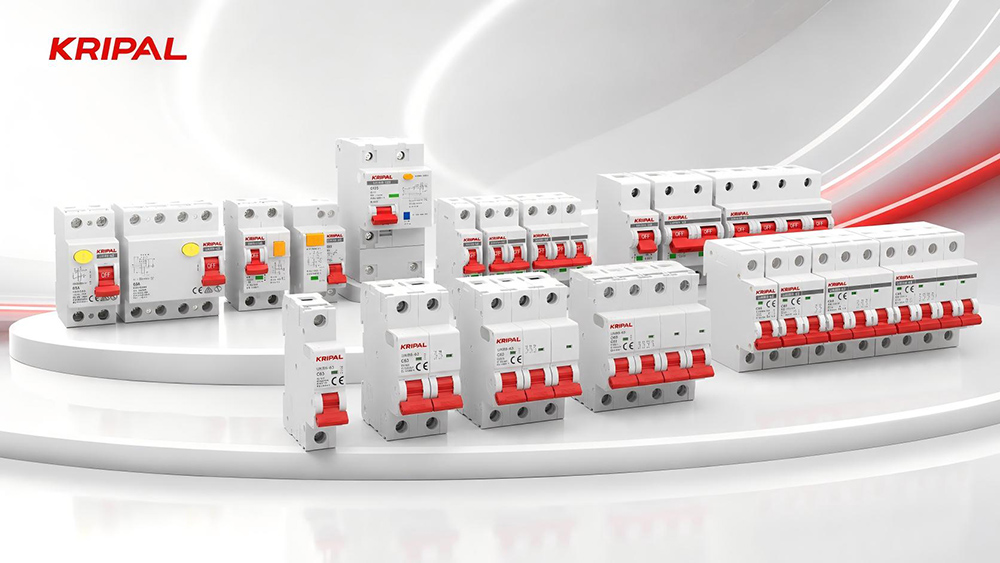
Modern electrical systems rely on protective devices to reduce the risks associated with short circuits.
Circuit breakers automatically disconnect power when they detect abnormal current levels. This prevents wires from overheating and reduces fire hazards.
Fuses operate in a similar way but are designed to melt and break the circuit when current exceeds safe levels.
In larger systems, switchboards play an important role in distributing electricity safely across different circuits. They help isolate faults and manage electrical loads efficiently, especially in commercial and industrial environments.
Prevention of Short Circuits
| Prevention Method | Description |
| Proper installation, maintenance, and monitoring | Short circuit prevention relies on correct installation practices, regular maintenance, and continuous system monitoring to detect issues early. |
| High-quality insulation materials | Using good insulation helps prevent conductor exposure and reduces the risk of unintended contact between wires. |
| Regular inspection of wiring systems | Routine inspections can identify wear, damage, or aging components before they lead to failure. |
| Protection from moisture | Keeping electrical systems dry is essential, especially in outdoor or high-humidity environments, to avoid insulation breakdown. |
| Correct circuit design | Proper load distribution and correct selection of protective devices help reduce electrical stress and prevent faults. |
| Professional installation | Ensures wiring standards are followed correctly and minimizes the risk of human error during setup. |
Conclusion
Short circuits are unexpected electrical faults that occur when current bypasses its intended path and flows through a low-resistance route.
Although they may seem sudden, they usually develop from underlying issues such as damaged insulation, moisture exposure, loose wiring, or aging components. Depending on where they occur, short circuits can affect anything from a single device to an entire electrical system.
With correct installation, regular inspection, and proper electrical design, the likelihood of short circuits can be greatly reduced, helping ensure safer and more reliable electrical operation over time.
We help you stay protected from short circuits with reliable circuit protection solutions. Explore our range and keep your electrical systems safe and running smoothly. If you need support, I’m here to help anytime.
FAQs
Q1 What is the most common cause of a short circuit?
Damaged insulation and faulty wiring are among the most common causes, allowing live conductors to touch each other directly.
Q2 Can a short circuit damage all electronics in a home?
It depends on the severity and protection systems in place. Circuit breakers usually isolate the fault quickly, but sensitive devices connected to the affected circuit may still be damaged.
Q3 Is a short circuit dangerous?
Yes. Short circuits can cause overheating, electrical fires, and equipment failure if not interrupted quickly.
Q4 What is the difference between a short circuit and an overload?
A short circuit happens when electricity bypasses the intended path. An overload occurs when too many devices draw power from a circuit beyond its capacity.
Q5 Can short circuits be prevented completely?
They cannot be eliminated entirely, but proper installation, maintenance, and protective devices can significantly reduce the risk.
Related Resources
Explore Knowledge Center >
Need a matching KRIPAL product?
Share voltage, quantity and destination. An engineer will reply with options and lead time.