Search
Knowledge Center
How to Install an ACB?
Learn how to install an ACB safely with our step-by-step guide. Covers preparation, electrical connections, testing, and maintenance tips.
 May 11, 2026
Air circuit breakers are devices in power systems that provide protection and control by cutting off overloads, short circuits, and other abnormal currents, which helps maintain the safety of electrical systems.
This article explains how to properly install an ACB, covering preparation before installation, installation steps, testing and adjustments, common problems, and maintenance, so that readers can carry out the installation safely and efficiently.
Key takeaways
- Proper preparation before installation includes safety measures, tool preparation, selection checks, and environmental requirements.
- Following the installation steps carefully ensures that each stage, from disconnecting power and securing the mounting to electrical connections and mechanical adjustments, is completed without error.
- Testing and adjustments after installation confirm the function and protection of the ACB, verifying that the device operates reliably.
Preparation before installation
Before installing an air circuit breaker, thorough preparation helps protect workers and ensures the device functions correctly.
Safety measures and precautions
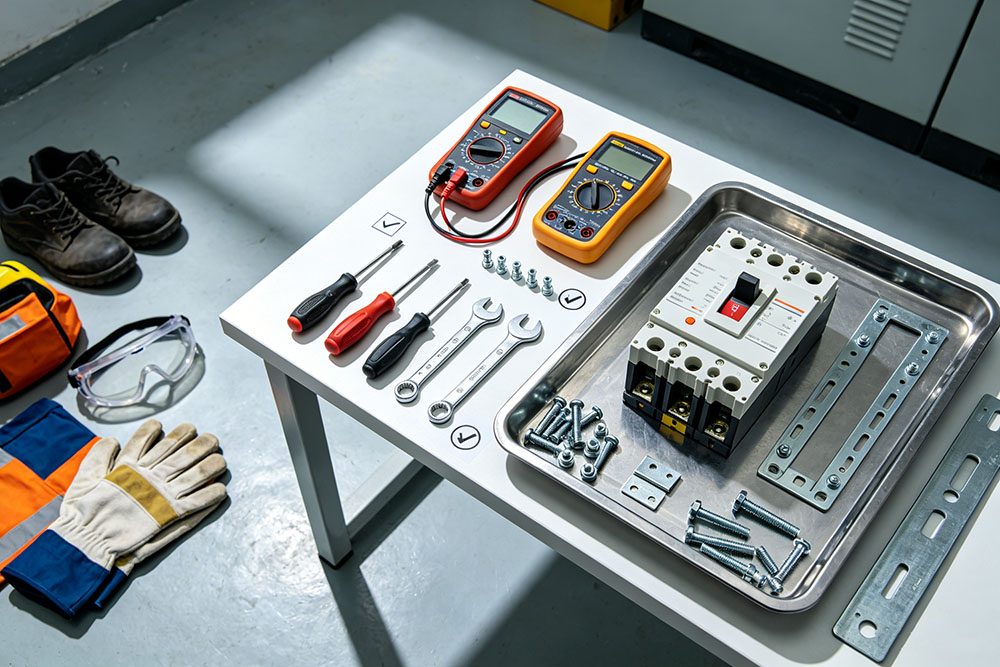
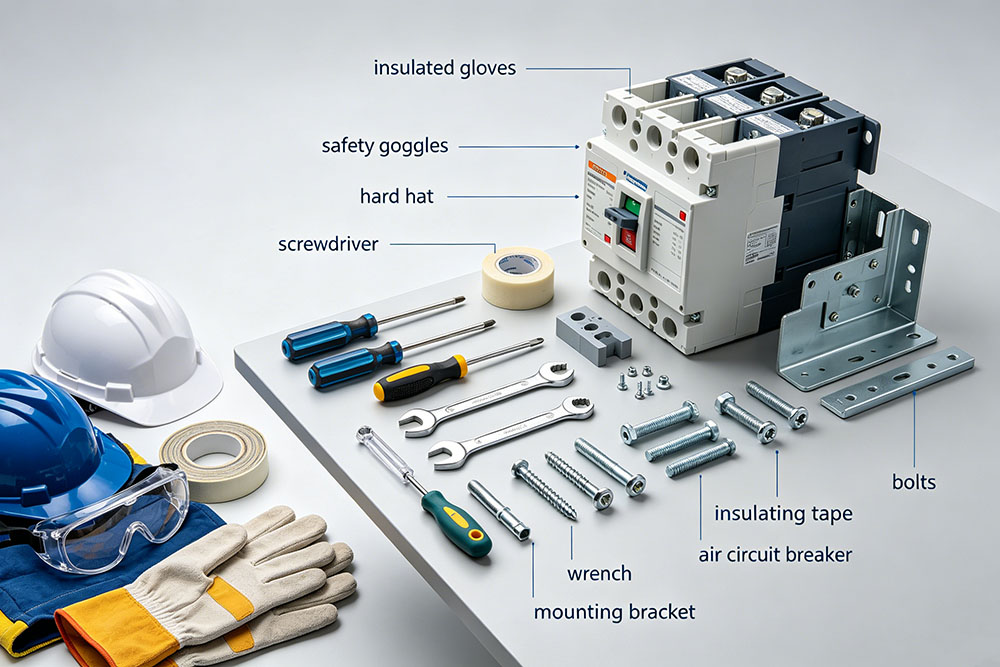
Before starting installation, make sure all power is disconnected to avoid electrical hazards, and wear insulating gloves, goggles, and protective shoes. The installation area should be clean, and warning signs should be placed to prevent unauthorized access.
Installers should follow national electrical installation standards and manufacturer instructions to guarantee safe operation.
Tools and auxiliary materials
Installing an ACB requires the proper tools and materials. Common tools include screwdrivers, wrenches, pliers, and voltage testers for securing and connecting electrical lines.
Auxiliary materials include insulating tape, terminal connectors, fasteners, and mounting brackets to facilitate installation. Testing devices such as multimeters and insulation testers can be used to check wiring and equipment before installation, ensuring electrical connections are safe.
Selection and inspection: rated current, breaking capacity, and installation dimensions
When choosing an ACB, select a rated current according to system load while allowing for a safety margin to handle fluctuations. The breaking capacity of the ACB should exceed the maximum short-circuit current that might occur in the system, ensuring it can interrupt abnormal currents effectively.
Check whether the device fits in the switchgear or panel, leaving enough space for installation. Additionally, select models with under-voltage, overload, and short-circuit protection to meet system requirements.
Power and environmental requirements
The power supply must meet the rated requirements of the ACB, with stable voltage and correct phase sequence. The installation area should be dry and well-ventilated, avoiding high temperatures, dust, or corrosive conditions. The device must be properly grounded to prevent leakage or electrical shocks, which safeguards both the electrical system and personnel.
ACB installation steps
Disconnecting power and site preparation
Before installing an ACB, disconnect the power and ensure all related circuits are completely de-energized to protect workers. Clean the installation area and maintain sufficient space for operations.
Place warning signs to keep unauthorized personnel away. Workers should wear insulating gloves and protective equipment and prepare all necessary tools and testing devices for the installation.
Mounting brackets and securing the ACB
Mounting brackets provide stability for the ACB. Install the brackets according to the device size and switchgear structure, then position the ACB on the brackets. Ensure the device is level and vertical to prevent uneven stress, and use bolts and fasteners to secure the ACB firmly for stable long-term operation.
Electrical connections
Electrical connections are a central part of installation. Connect the incoming and outgoing lines according to the wiring diagram, ensuring correct phase sequence and solid contact.
Check that terminals are tight and wire sizes meet specifications. Cover exposed parts with insulation tape or sleeves. After connections, use a multimeter or other instruments to verify circuit continuity and insulation, confirming proper operation.
Mechanical adjustments
After installation, adjust and check the mechanical operating mechanism. First, operate the breaker manually to ensure smooth movement without sticking, then perform electrical operation tests to confirm automatic functions work. Adjust any loose or friction-prone parts to ensure reliable performance in actual use.
Grounding and protective measures
Complete the grounding connections, making sure the ground wire is secure and meets standards to prevent electrical hazards. Verify that all protective measures are in place, including insulation, protective covers, and warning signs. Proper grounding and protection help the ACB and the entire electrical system operate safely under normal and abnormal conditions.
Testing and adjustments after installation
Function testing
After installing the ACB, perform function tests by manually opening and closing the breaker to verify smooth operation and correct indicator feedback. Function testing ensures the breaker can properly interrupt and close circuits, laying the foundation for protection testing.
Protection function verification
Once the basic function is verified, check protection features including overload, short-circuit, and under-voltage protection. Simulate or apply actual loads to confirm that the ACB will operate promptly in abnormal conditions, protecting the electrical system. Any irregularities should be corrected immediately to maintain reliable protection.
Temperature rise and insulation checks
Check temperature rise and insulation performance after installation. Run the device under load for a period and measure critical points to confirm temperature is within limits. Use an insulation tester to ensure no leakage between circuits and the device. These checks help detect potential faults early and prevent overheating or insulation failure.
Confirming reliable operation
After completing function tests, protection checks, and insulation inspections, confirm that the ACB operates reliably. Ensure smooth switching, proper protection function, and secure wiring and components. Only thoroughly tested ACBs should be put into service to provide stable and safe protection for the electrical system.
Common installation problems and solutions
Loose or poor electrical connections
Loose or poor connections can prevent proper operation, cause overheating, or create arcs. Ensure all terminals are firmly tightened using a torque wrench according to manufacturer instructions. Verify wire sizes meet specifications and recheck connections during maintenance to prevent potential hazards.
Sticking operating mechanism
A sticking mechanism can affect smooth operation and is often caused by dust or insufficient lubrication. Clean the mechanical parts and apply appropriate lubrication, making sure all levers and handles are secure. Adjust the mechanism if needed to ensure smooth manual and electrical operation.
Overheating or abnormal noise
Overheating or noise during operation is usually caused by loose connections, overload, or uneven installation. Disconnect the power, check wiring and load conditions, and monitor temperature with a thermometer. Adjust installation or improve ventilation if necessary. Inspect mechanical components for wear or looseness if noise persists.
Misoperation or failure to operate
Misoperation or failure to operate can compromise protection. Check wiring, confirm correct protection settings, and test overload, short-circuit, and under-voltage conditions. Inspect operating mechanisms, auxiliary contacts, and control circuits to ensure the system will cut off the circuit promptly in abnormal situations.
Maintenance and usage tips
Maintaining the ACB after installation can extend its service life.
Regular inspection and cleaning
Regularly inspect the terminals and mechanical mechanism, and clean the surface and interior to remove dust and debris. Clean equipment reduces the risk of faults and ensures reliable operation.
Regular testing of protection functions
Test overload, short-circuit, and under-voltage protections periodically using simulated loads or specialized instruments. Regular testing ensures that the ACB will operate properly during abnormal conditions, maintaining system safety.
Operation and fault record management
Maintain detailed records of each operation, test, or abnormal event, noting the time, operator, and situation. Proper record-keeping helps identify potential issues and provides reference for maintenance and adjustments.
Tips to extend ACB lifespan
In addition to inspections, avoid frequent switching that causes mechanical wear. Ensure good ventilation around the device to prevent overheating, and keep the load within rated limits. Proper usage and maintenance significantly extend the service life of the ACB and reduce faults.
Conclusion
Proper installation and adjustment of an air circuit breaker ensure the safety and stability of the electrical system. By preparing adequately, following installation steps, performing testing and adjustments, and conducting regular maintenance and troubleshooting, the ACB can provide reliable protection and long-term safe operation of the power system.
For any installation issues, contact Kripal. Our professional team can provide solutions.
FAQs
Q1 Do I need to disconnect power before installing an ACB?
Yes, disconnecting the power before installation prevents electrical hazards and damage to the device.
Q2 What are common problems during ACB installation?
Common problems include loose connections, sticking mechanisms, overheating or abnormal noise, and misoperation or failure to operate. These issues can be prevented through careful installation and adjustment.
Q3 How can I confirm that the ACB works properly after installation?
Perform function tests, protection verification, and checks of temperature rise and insulation to ensure smooth switching and reliable protection.
Q4 Does the ACB require regular maintenance?
Yes. Regular inspections, cleaning, testing of protection functions, and recording of operations and faults help extend the device lifespan and maintain safe operation.
Q5 How do I choose the appropriate ACB model?
Select the rated current based on system load, ensure breaking capacity exceeds the maximum short-circuit current, check that the device fits the panel, and consider required protection.
Related Resources
Explore Knowledge Center >

Need a matching KRIPAL product?
Share voltage, quantity and destination. An engineer will reply with options and lead time.