Search
Knowledge Center
DIN Rail Guide for Control Panels: Sizes, Types, Materials, and Mounting Rules
Complete guide to DIN rail sizes (TS35, TS15, TS32), materials, and installation rules for electrical control panels. Learn compatibility and mounting standards.
 August 11, 2026
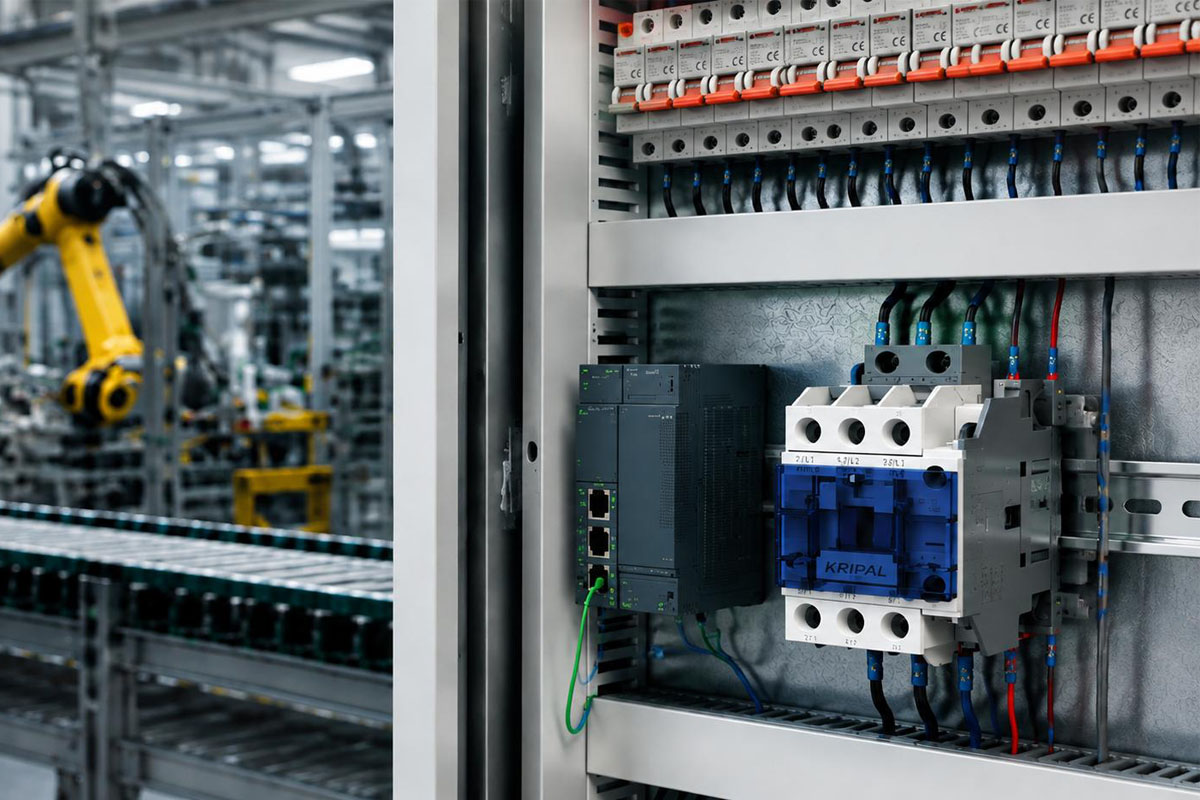
DIN rail is the mounting backbone of modern electrical control panels. This standardized metal rail allows circuit breakers, contactors, relays, terminal blocks, and other modular electrical devices to be installed quickly and securely. Although DIN rail looks like a simple metal strip, selecting the correct profile, material, and installation method directly affects the mechanical stability, wiring reliability, and long-term performance of a control cabinet.
For panel builders, choosing the right DIN rail is not only about matching the physical dimensions. The rail profile, environmental conditions, equipment weight, and grounding method all need to be considered before assembly. Based on IEC 60715 standards, DIN rails provide a universal mounting system used across industrial automation, power distribution, and control applications. KRIPAL develops a wide range of DIN-rail-mounted electrical components, including contactors, control devices, and protection products designed for modern industrial panels.
This guide explains common DIN rail sizes, materials, selection methods, and installation rules to help panel builders choose the right solution.
What Is DIN Rail?
DIN rail is a standardized metal mounting rail designed for installing electrical components inside control cabinets and distribution boards. The term “DIN” comes from the German Institute for Standardization (Deutsches Institut für Normung). Today, DIN rail dimensions are widely standardized internationally, with IEC 60715 defining common mounting rail profiles and dimensions.
The most common DIN rail profile is the 35 mm top-hat rail (TS35). It has a symmetrical “hat-shaped” cross-section that allows modular devices to clip onto the rail using spring clips or mounting mechanisms.
Typical DIN-rail-mounted devices include:
- Miniature circuit breakers (MCBs)
- Residual current devices (RCDs/RCCBs)
- Contactors
- Auxiliary contact blocks
- Industrial relays
- Terminal blocks
- Power supplies
- Control modules
The standardized profile is what makes modular panel building possible. Instead of individually drilling mounting holes for every component, engineers can install and rearrange devices quickly on a common rail system.
In industrial control panels, DIN rail-mounted contactors and auxiliary contact blocks are commonly used for motor control, switching, and automation applications. KRIPAL provides DIN rail-compatible solutions, including UKC series contactors and AU series auxiliary contact blocks for these applications.
Common DIN Rail Sizes and Types
Although several DIN rail profiles exist, TS35 has become the dominant choice for modern electrical panels.
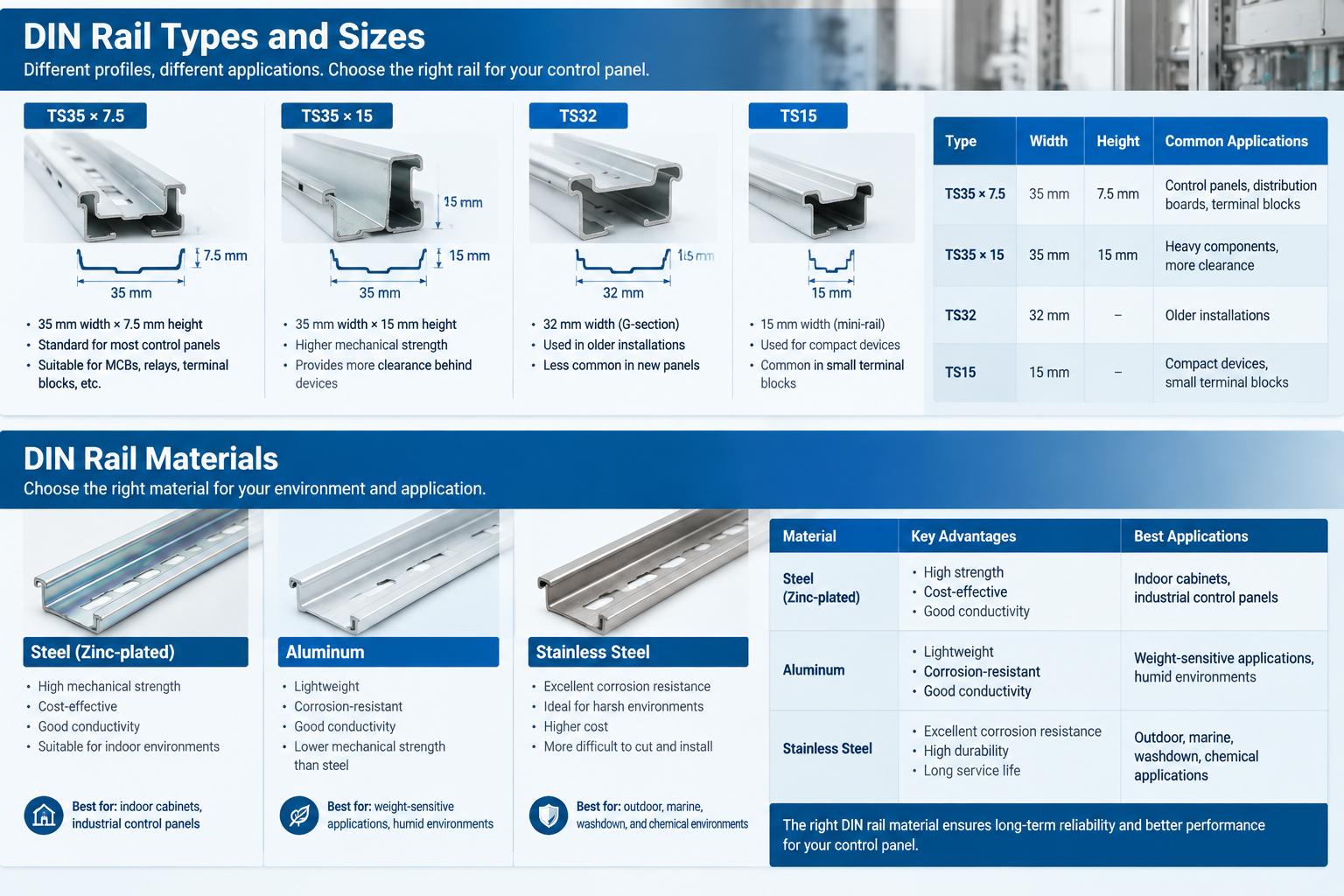
TS35 DIN Rail (35 mm Top Hat Rail)
TS35 is the most widely used DIN rail profile in industrial and commercial applications. The rail width is 35 mm, while the height is commonly available in two versions:
| DIN Rail Type | Dimensions | Typical Applications |
|---|---|---|
| TS35×7.5 | 35 mm width × 7.5 mm height | Standard control panels, distribution boards, terminal blocks, modular protection devices |
| TS35×15 | 35 mm width × 15 mm height | Heavier components requiring higher mechanical strength or additional installation clearance |
TS35×7.5
TS35×7.5 is the standard choice for most control panels. It is commonly used with MCBs, RCCBs, contactors, relays, and terminal blocks. Because most modular electrical devices are designed around this profile, it is the default choice for general-purpose panel building.
TS35×15
TS35×15 provides a deeper rail profile with increased mechanical strength and additional clearance behind mounted devices. It can be suitable for larger control components, heavier devices, and applications requiring improved mechanical support. However, compatibility should always be checked with the device datasheet because not every DIN rail-mounted product supports both rail heights.
Other DIN Rail Profiles
Besides TS35, several other DIN rail types are still found in specific applications.
TS32 DIN Rail
TS32 is a 32 mm G-section style rail mainly used in older electrical installations. It is less common in new industrial panels because most modern modular equipment is designed for TS35 systems.
TS15 Mini DIN Rail
TS15 is a compact 15 mm rail used for smaller components where cabinet space is limited. Typical applications include compact terminal blocks, small control modules, and space-saving electrical assemblies. For new panel designs, TS35 is normally preferred unless the equipment manufacturer specifies another rail type.
DIN Rail Materials: Steel, Aluminum, and Stainless Steel
DIN rails are available in different materials, and the correct choice depends on the installation environment, mechanical requirements, and grounding design. The three most common materials are zinc-plated steel, aluminum, and stainless steel. Each material has different advantages and limitations.
Steel DIN Rail: The Standard Choice
Zinc-plated steel DIN rail is the most common choice for industrial control panels and electrical cabinets due to its excellent mechanical strength, reliable load-bearing capability, cost-effective design, and wide compatibility with modular electrical components.
The zinc or nickel plating provides additional corrosion resistance, making it suitable for normal indoor environments where protection and durability are required. However, standard plated steel DIN rails are not recommended for harsh outdoor applications involving continuous moisture, salt exposure, or chemical corrosion, as these conditions may accelerate corrosion over time.
For typical installations such as factory control cabinets, machine control panels, and distribution boards, steel DIN rail remains the preferred solution because it provides a practical balance between strength, performance, and cost.
Aluminum DIN Rail: Lightweight Option
Aluminum DIN rail provides advantages where weight reduction and corrosion resistance are important. Compared with steel, aluminum rails are lighter, naturally corrosion-resistant, and easier to handle during installation.
However, aluminum has lower mechanical strength than steel, which should be considered when mounting heavier electrical components.
In addition, bare aluminum can develop an oxide layer on its surface. If the DIN rail is intended to provide protective bonding, the rail material, surface treatment, and installation method should be verified according to the applicable electrical requirements.
Stainless Steel DIN Rail: For Harsh Environments
Stainless steel DIN rail is commonly selected for demanding applications where corrosion resistance and long-term durability are critical. It is widely used in outdoor control cabinets, marine environments, food processing equipment, washdown areas, and chemical processing facilities where standard steel rails may not provide sufficient protection.
Stainless steel offers excellent resistance against corrosion and harsh environmental conditions, helping extend the service life of the complete control panel. However, compared with zinc-plated steel, stainless steel DIN rail has a higher material cost and may require more effort during cutting and installation.
For applications exposed to moisture, salt, chemicals, or frequent cleaning processes, choosing a corrosion-resistant DIN rail can provide better reliability and reduce maintenance requirements over the long term.
How to Choose the Right DIN Rail
Choosing the correct DIN rail requires considering more than just the rail width. The main factors include:
1. Check Device Compatibility
The first step is confirming the required rail profile from the equipment datasheet. Most modern modular devices use TS35×7.5 or TS35×15. However, some specialized components may require TS15 or other profiles. A rail that does not match the device mounting clip may result in poor mechanical retention.
2. Consider Equipment Weight
For standard modular devices, TS35×7.5 is normally sufficient. For heavier components such as large contactors, power distribution devices, and industrial control modules, a deeper TS35×15 profile or additional mechanical support may be more suitable.
3. Select Material According to Environment
| Application Environment | Recommended DIN Rail Material |
|---|---|
| Indoor electrical cabinet | Zinc-plated steel |
| General industrial control panel | Steel DIN rail |
| Lightweight equipment applications | Aluminum |
| Outdoor or corrosive environments | Stainless steel |
4. Consider Grounding Requirements
Some metal DIN rails can be used as a protective bonding conductor when specifically designed and installed for this purpose. However, many modern control panels use a dedicated PE terminal bar or grounding conductor instead of relying on the DIN rail alone. Always follow local electrical regulations, panel standards, and component manufacturer instructions when designing the grounding system.
DIN Rail Mounting Rules for Reliable Installation
Correct DIN rail installation is essential for maintaining mechanical stability and preventing device movement over time.
1. Ensure Proper Earth Bonding When Required
If the DIN rail is used as part of the protective bonding system, it must be properly connected to the panel earth using an appropriate conductor. Do not rely only on mounting screws unless the installation method specifically allows it. A secure bonding connection ensures that fault currents can safely return through the intended protective path.
2. Remove Cutting Burrs
DIN rail is often cut during control panel assembly to match the required installation length. After cutting, sharp edges and burrs should always be removed using a file, deburring tool, or dedicated DIN rail cutter.
A rough cut edge can damage spring clips, make component installation more difficult, and create safety hazards during assembly. Although deburring is a simple preparation step, it helps improve installation quality, protects mounted devices, and ensures a cleaner final panel assembly.
3. Use Appropriate Fixing Spacing
The fixing distance of a DIN rail depends on several factors, including the rail type, rail thickness, mounted device weight, and the manufacturer’s installation recommendations. For panels containing heavier equipment, closer fixing points may be required to prevent rail deformation or excessive movement under load.
Panel builders should always follow the DIN rail manufacturer’s recommended mounting distance, especially when installing larger contactors, power devices, or heavy terminal assemblies, where mechanical stability is more critical.
4. Install End Stops
DIN rail allows mounted devices to slide horizontally along the rail, so end stops are commonly installed at both ends of a component group to maintain proper positioning.
They help prevent unwanted movement caused by vibration, thermal expansion, and mechanical shock, which is particularly important in industrial environments where equipment operates continuously. By securing devices in place, end stops help reduce stress on wiring connections and improve the long-term reliability of the control panel.
KRIPAL DIN Rail Mounted Solutions for Control Panels
DIN rail systems provide the foundation for modern modular control panels, allowing electrical components to be installed efficiently while maintaining flexibility for wiring, maintenance, and future expansion.
In industrial control cabinets, DIN rail-mounted components are widely used for motor control, circuit switching, signal control, and electrical protection. Selecting compatible devices and a suitable mounting system helps panel builders achieve reliable, space-efficient, and maintainable installations.
KRIPAL offers a range of DIN-rail-mounted electrical components designed for industrial applications, including AC contactors, auxiliary contact blocks, control components for industrial automation and electrical control systems, and protection devices.
KRIPAL DIN rail compatible solutions include:
- AC Contactors: Designed for reliable switching and control of motors, HVAC systems, and industrial equipment in control panels.
- Auxiliary Contact Blocks: Provide flexible expansion of control circuits and allow additional switching functions for contactor applications.
- Control Components: Support automation and electrical control systems where compact and reliable installation is required.
- Protection Devices: Help improve the safety and reliability of electrical distribution and control panels.
These DIN rail-mounted products are designed for easy integration into modern control cabinets where space efficiency, installation flexibility, and long-term reliability are important considerations. For panel builders, choosing the right combination of DIN rail components and electrical devices ensures a stable mounting system, efficient wiring layout, and easier maintenance throughout the equipment lifecycle.
Explore KRIPAL DIN rail-mounted electrical solutions for industrial control panels and discover components designed to meet the needs of modern automation and power distribution applications.
Frequently Asked Questions About DIN Rail
The most common DIN rail size is TS35, a 35 mm top-hat rail defined by IEC 60715 dimensions. TS35×7.5 is the standard choice for most industrial control panels and modular electrical devices.
The main difference is the rail height. TS35×7.5 has a 7.5 mm profile height and is used for most standard applications. TS35×15 has a deeper 15 mm profile that provides additional mechanical strength and clearance behind mounted devices. The correct choice depends on equipment compatibility.
Standard zinc-plated steel DIN rail is generally intended for indoor applications. For outdoor, marine, or corrosive environments, stainless steel DIN rail is usually a more suitable choice because it provides better corrosion resistance.
Many modular contactors are designed for DIN rail installation, but compatibility should always be checked with the manufacturer’s datasheet.
In many cases, yes. Modern consumer units commonly use TS35 DIN rail internally, allowing modular devices such as MCBs and RCBOs to clip onto the rail.
Only when the DIN rail is designed and used as part of the protective bonding system. Many control panels use separate PE terminals instead. The grounding method should always follow the applicable electrical standard and equipment requirements.
No. Although TS35 is widely used, not every DIN rail-mounted device fits every rail type. Always check the manufacturer’s datasheet before assembly.
The Rail That Supports Modern Control Panels
DIN rail may appear to be a simple mounting component, but the correct rail selection directly affects the reliability of the entire control panel. For most industrial applications, TS35 steel DIN rail remains the standard solution. However, choosing the right profile, material, and installation method ensures better mechanical stability and long-term performance.
From modular protection devices to contactors and control components, a reliable DIN rail system provides the foundation for efficient panel building. Explore KRIPAL DIN-rail-mounted electrical solutions for industrial control panels or contact our engineering team for application support.
Need Custom Industrial DIN Rail Components or Technical Support for Your Panels?
Related Resources
Explore Knowledge Center >
Need a matching KRIPAL product?
Share voltage, quantity and destination. An engineer will reply with options and lead time.