Search
Knowledge Center
How to Choose the Right Enclosure Rating for Outdoor Isolator Switches
Choose the right IP rating and enclosure material for outdoor isolator switches. Compare IP65, IP66 and IP67, polycarbonate vs metal, and coastal protection.
 July 02, 2026
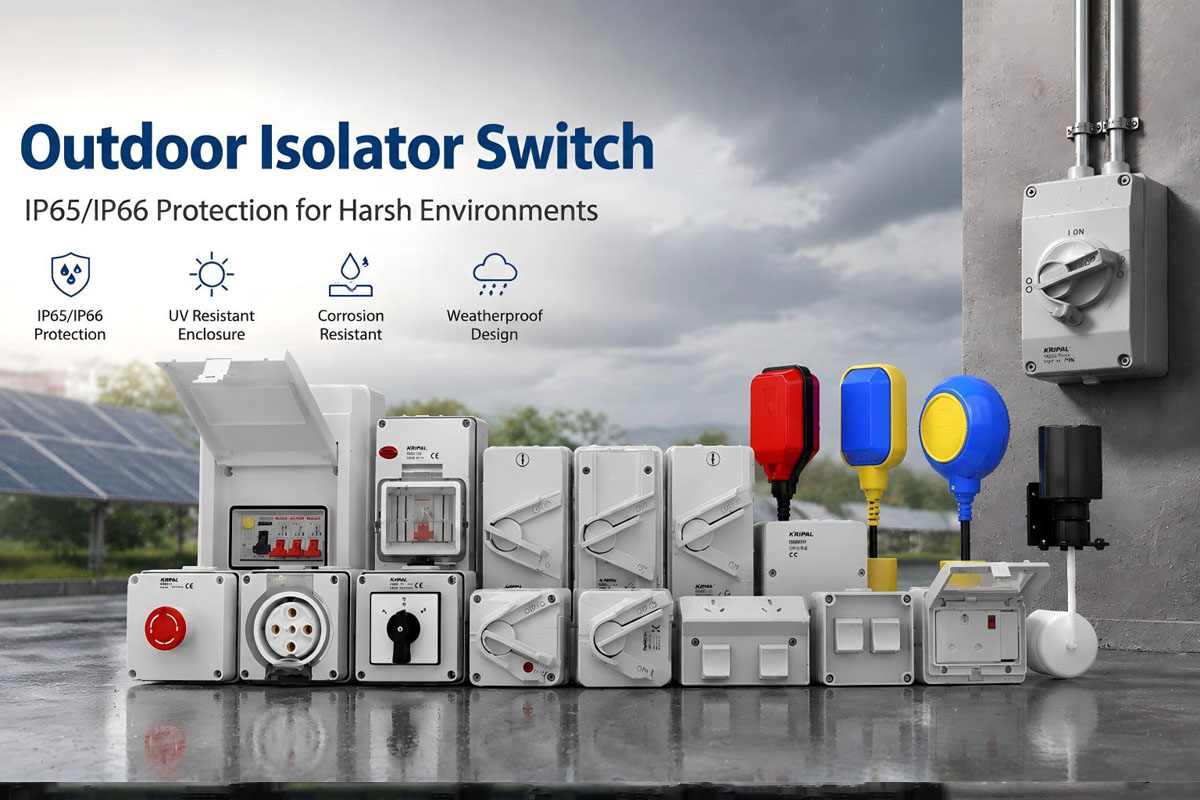
An outdoor isolator switch lives in the weather. Rain, dust, ultraviolet radiation, salt spray, and temperature swings all work against it. The wrong enclosure rating means water ingress, corroded contacts, and a switch that fails when someone needs it to isolate a circuit safely. Choosing the correct IP and material rating is not about picking the highest number on the datasheet. It is about matching the enclosure to the specific environmental stresses at the installation site.
Decoding IP Ratings for Outdoor Installations
The IP rating on an isolator enclosure describes two protection levels using two digits. The first digit covers solid particle ingress, and the second digit covers liquid ingress.
IP65
Practical Outdoor Minimum
For most fully exposed outdoor isolator switch installations, IP65 is considered a practical minimum requirement. The “6” means the enclosure is dust tight. No dust can enter under a vacuum test, meaning wind blown sand and construction site grit stay out of the contact chamber. The “5” means the enclosure withstands water jets from any direction. A pressure washer or driving rain from a storm will not force water past the gaskets.
IP66
Marine and Washdown
IP66 adds protection against powerful water jets, such as those produced by fire hoses or ship deck washing systems. This rating is typically specified for marine and dockside installations.
IP67
Temporary Immersion
IP67 may be considered where temporary water immersion is possible, although it should not replace proper flood protection measures.
| IP Rating | Solid Protection | Liquid Protection | Suitable Location |
|---|---|---|---|
| IP65 | Dust tight | Low-pressure water jets | Outdoor wall mount, rain exposure |
| IP66 | Dust tight | High-pressure water jets | Marine, washdown areas |
| IP67 | Dust tight | Temporary immersion | Flood prone areas |
| IP54 | Dust protected | Splashing water | Covered outdoor, under eaves |
KRIPAL builds this protection level into its enclosed range, including the UKF5 weatherproof isolating switch with IP66 protection.
Material Selection: Polycarbonate versus Metal
Polycarbonate is widely used for outdoor enclosures because it is lightweight, non conductive, and naturally resistant to corrosion. It does not rust, does not need painting, and does not create a galvanic cell with the copper busbars inside.
However, polycarbonate degrades under ultraviolet light unless properly stabilized. Unstabilized polycarbonate turns yellow and becomes brittle after a few years of direct sun exposure. High-quality UV stabilized polycarbonate can significantly extend outdoor service life under normal operating conditions.
The color of the enclosure also matters for thermal performance. Light grey or white enclosures reflect more solar radiation and run cooler than dark grey or black enclosures. Light-colored enclosures generally absorb less solar radiation and can reduce internal temperature rise compared with darker colors.
At extremely elevated temperatures, polycarbonate softens. For installations in direct sunlight in desert climates where surface temperatures can exceed 80 degrees Celsius, a metal enclosure with a ventilated sun shield is usually the better choice.
Image: Outdoor installation showing an isolator switch mounted on a pole with a sun shield canopy, conduit entries sealed with IP rated cable glands.
Combating Specialized Environmental Threats
Coastal Environments and Salt Spray
Salt spray accelerates corrosion by depositing conductive salt crystals on insulator surfaces and attacking metal components. For coastal installations exposed to salt spray, higher corrosion resistance and sealed enclosures should be considered and choose 316L stainless steel hardware for all external fasteners, hinges, and mounting brackets. Standard 304 stainless steel fasteners will develop surface rust within a year of coastal exposure.
Sealing Cable Entries
All cable entries must use IP rated cable glands with neoprene or silicone compression seals. Unsealed conduit entries are the most common point of water ingress in outdoor isolator installations, often causing more failures than enclosure lid gaskets.
Condensation Management
A sealed enclosure traps moisture that enters during installation or condenses from humid air when the temperature drops overnight. Quality enclosures include a factory installed breather drain that allows pressure equalization and lets liquid water drain out without letting water spray in. The breather drain uses a membrane that passes air and water vapor but blocks liquid water droplets. Never seal the breather drain with silicone or tape, as doing so guarantees internal condensation buildup.
Image: Close up of a breather drain on the underside of an enclosure, showing the sintered membrane and protective shroud.
Outdoor Enclosure Selection Checklist
Before finalizing your isolator switch specification, run through this quick evaluation to ensure complete environmental protection:
- Assess the mounting location: Is it sheltered under an eave (IP65 acceptable) or fully exposed on a pole (IP66 recommended)?
- Verify UV stabilization: Ensure the polycarbonate material specifies a co extruded UV protective layer for long term sun exposure.
- Evaluate coastal proximity: If installing within five kilometers of the ocean, mandate 316L stainless steel hardware to prevent rapid corrosion.
- Check condensation drainage: Confirm the enclosure design features an unsealed, breathable membrane drain at the lowest point.
- Match your cable glands: Ensure the cable entries match or exceed the IP rating of the enclosure itself to prevent weak points in the seal.
Frequently Asked Questions
Q1: Is IP65 enough for an outdoor isolator switch?
Yes. IP65 is suitable for most outdoor installations exposed to rain and dust. For harsh environments with heavy washing or coastal exposure, IP66 is recommended.
Q2: What IP rating is recommended for solar isolator switches?
Outdoor solar isolators are typically specified with IP65 or higher depending on installation conditions. See the PV DC isolator range for photovoltaic applications.
Q3: Does IP66 protect against condensation?
No. IP66 prevents external water ingress but condensation management requires proper enclosure design and drainage.
Protect Your Electrical Assets in Any Weather
Selecting the right enclosure is the most cost effective way to prevent premature isolator failure. By matching the IP rating and materials to your specific site conditions, you guarantee that your critical safety switches remain operational year after year, no matter what the environment throws at them.
Explore the full range of KRIPAL outdoor isolator switches, featuring UV stabilized enclosures and robust IP66 protection designed for the harshest environments. Contact our engineering team to find the perfect configuration for your next outdoor installation.
Related Resources
Explore Knowledge Center >
Need a matching KRIPAL product?
Share voltage, quantity and destination. An engineer will reply with options and lead time.