Search
Knowledge Center
How to Understand Link Fuses?
Learn the fundamentals of link fuses. This guide covers working principles, fuse types, application scenarios, and expert selection methods for electrical safety.
 June 07, 2026
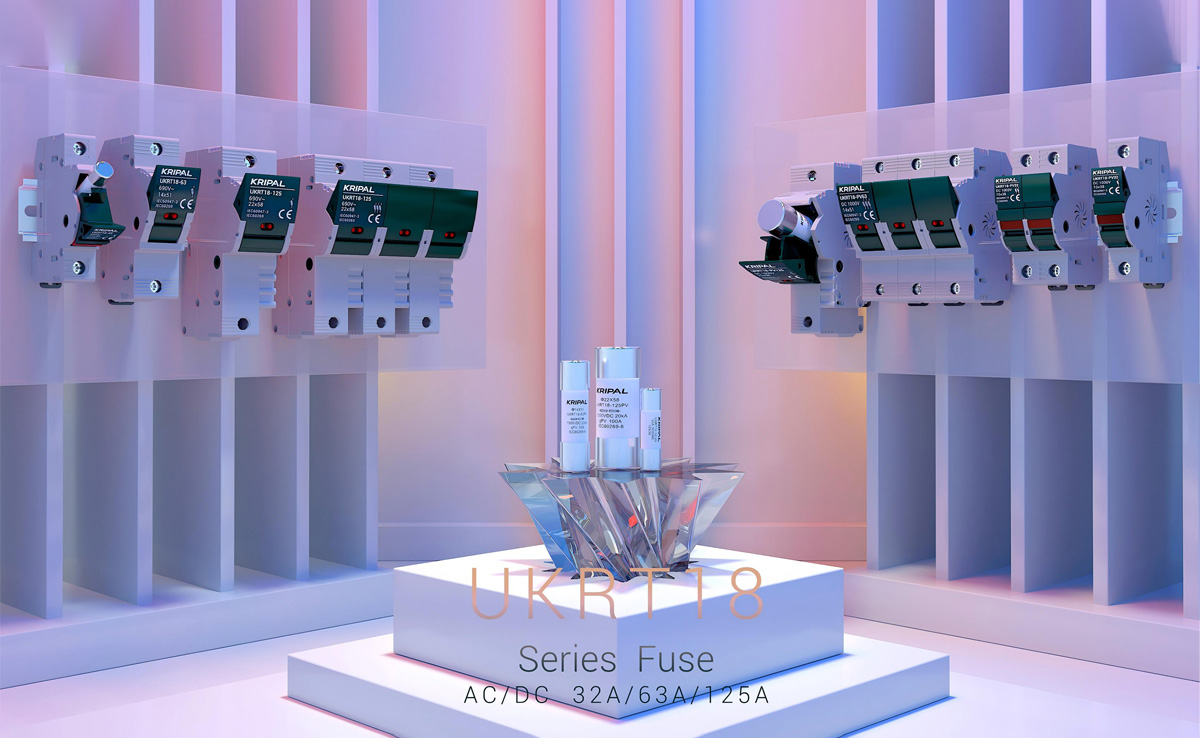
A link fuse is a critical safety device designed to protect circuits from overcurrent. When the circuit current exceeds a set limit, the fuse element melts, interrupting the flow and preventing damage to equipment and wiring. This article explains the fundamental principles, types, and professional selection methods of link fuses.
- Link fuses provide essential protection against overcurrent and short circuits.
- Their core principle involves using a fuse element that melts upon reaching a specific thermal threshold.
- Proper selection based on voltage, current, and environmental conditions is vital for system safety.
What is a Link Fuse?
A link fuse is a replaceable protection component widely installed in industrial power distribution systems. Compared to other protective devices, link fuses are cost-effective, highly reliable, and easy to maintain.
What is the Basic Principle of a Link Fuse?
A link fuse provides protection through the thermal effect of its fuse element. When the current exceeds the rated value, the fuse element heats up rapidly, and when it reaches its melting point, it breaks, cutting off the circuit. The melting time is closely related to the current magnitude, with higher currents causing faster melting. This characteristic protects electrical equipment from short circuits and prolonged overcurrent conditions.
Types of Link Fuses
Link fuses come in several types, each designed to provide protection in different electrical environments. Understanding their types helps in selecting the right fuse for specific applications.
Fast-Acting Fuses
Fast-acting fuses respond quickly to overcurrent conditions, melting almost immediately when the current exceeds the rated value. They are ideal for protecting sensitive electronic devices or circuits with low tolerance for overcurrent. Fast-acting fuses prevent minor surges from damaging components but may blow during temporary inrush currents.
Time-Delay Fuses
Time-delay fuses, also called slow-blow fuses, allow temporary current surges without melting immediately. This makes them suitable for circuits with motors or transformers that experience short startup surges. Time-delay fuses provide reliable protection while avoiding nuisance fuse blowing during normal transient events.
High-Interrupting Capacity Fuses
These fuses are designed to safely interrupt very high fault currents without causing damage or creating safety hazards. They are commonly used in industrial power distribution systems where short-circuit currents can be extremely high. Their robust construction ensures the fuse can withstand extreme conditions.
Semiconductor Fuses
Semiconductor fuses are specially designed to protect semiconductors such as diodes, thyristors, and transistors. They have very fast response times and very low energy let-through, which prevents expensive semiconductor components from being damaged during faults.
| Type | Response Speed | Application Example | Special Feature |
|---|---|---|---|
| Fast-Acting Fuse | Immediate | Sensitive electronics | Protects against small surges |
| Time-Delay Fuse | Delayed | Motors, transformers | Withstands temporary surges |
| High-Interrupting Capacity | Medium-Fast | Industrial power distribution | Handles extremely high fault currents |
| Semiconductor Fuse | Very Fast | Semiconductors and electronic circuits | Minimal energy let-through |
What are the Application Scenarios?
Link fuses are widely used in various industries and electrical systems because of their reliable overcurrent protection.
Power Distribution Systems
In distribution cabinets, transformers, and low-voltage distribution lines, link fuses quickly cut off fault currents when a short circuit or overload occurs, preventing the fault from spreading. Because they operate reliably without external power, they are widely used in industrial plants, commercial buildings, and public infrastructure, providing basic safety protection for the entire electrical network.
Industrial Machinery
Industrial equipment often requires continuous operation. Motor startup, electrical faults, or abnormal loads can cause excessive current. Link fuses melt quickly during such abnormal conditions, preventing motor winding damage, control system failure, and equipment downtime, which helps improve production line stability and safety.
New Energy and Storage Systems
In solar power systems, battery storage, and electric vehicle charging equipment, link fuses serve as a safety barrier. When abnormal currents or equipment failures occur, the fuses disconnect the faulty circuit promptly, reducing equipment damage and maintaining the reliability of the energy system.
Electrical Control Cabinets
Control cabinets often contain relays, contactors, PLCs, and other control components. Since control circuits can be complex, a short circuit may affect the entire system. Installing link fuses isolates the fault area, reduces maintenance costs, and enhances the safety level of the control system.
How to Choose According to Current and Voltage
Choosing the right link fuse ensures safe equipment operation and prevents misoperation or ineffective protection.
Choosing Based on Rated Current
Rated current is the most important parameter when selecting a fuse. The fuse rating should be slightly higher than the normal operating current of the equipment to avoid unwanted blowing during normal operation. For example, if a device has a continuous operating current of 20A, a fuse rated around 25A can be chosen. Startup currents and momentary surge currents should also be considered.
Choosing Based on Rated Voltage
The fuse rating must be equal to or higher than the system voltage. When the fuse melts, an arc forms, and if the voltage rating is insufficient, the arc may not extinguish properly, leading to protection failure. For a 380V system, a fuse with a voltage rating not less than 380V should be selected to ensure safe circuit interruption.
Choosing Based on Breaking Capacity
Breaking capacity refers to the maximum fault current a fuse can safely interrupt. If the system may experience high short-circuit currents, a fuse with a higher breaking capacity should be chosen. In industrial distribution systems and large equipment, considering short-circuit capacity ensures electrical safety.
Choosing Based on Application Environment
Different environments impose different requirements on fuse performance. High temperatures may accelerate fuse aging, moisture may affect contact quality, and equipment exposed to vibrations requires fuses with higher mechanical strength. Fuse selection should take into account operating temperature, humidity, protection level, and installation conditions.
Analysis of Fuse Blowing Causes
Link fuse blowing is usually caused by the following factors:
- Circuit overload: the device operates at a current higher than the fuse rating for a long time.
- Short-circuit faults: insulation damage or direct contact between conductors causes a sudden surge of current.
- Equipment failure: motors, transformers, or electronic components malfunction, generating abnormal current.
- Improper selection: the fuse rated current is too low to support normal operation.
- Environmental factors: high temperature, humidity, or prolonged aging reduces fuse performance.
- Frequent startup surges: repeated high inrush currents during device startup fatigue the fuse element.
Conclusion on Improving Electrical Safety Awareness
Although link fuses have a simple structure, they provide effective circuit protection. Understanding their operating principle, applications, and proper selection helps improve equipment safety and reduces electrical failure risks. Properly configuring fuses protects both personnel and equipment assets.
Kripal offers a wide range of link fuses. Visit the homepage for consultation.
FAQs
A: Link fuses are generally used in industrial and distribution systems, have higher capacity, and are easier to replace and maintain.
A: No. A blown fuse must be replaced with a new one of the same specification.
A: You can visually check if the fuse element is broken or use a multimeter to test continuity.
A: No. A fuse rated too high may fail to protect equipment during a fault.
A: Yes. Regularly checking contact conditions, aging, and installation firmness helps improve system safety.
Related Resources
Explore Knowledge Center >
Need a matching KRIPAL product?
Share voltage, quantity and destination. An engineer will reply with options and lead time.