Search
Knowledge Center
Fuse vs Circuit Breaker: A 2026 Comprehensive Selection Guide for Industrial Applications
Compare fuse vs circuit breaker for industrial applications. Learn key differences, selection criteria, and how to choose the right protection device.
 May 29, 2026
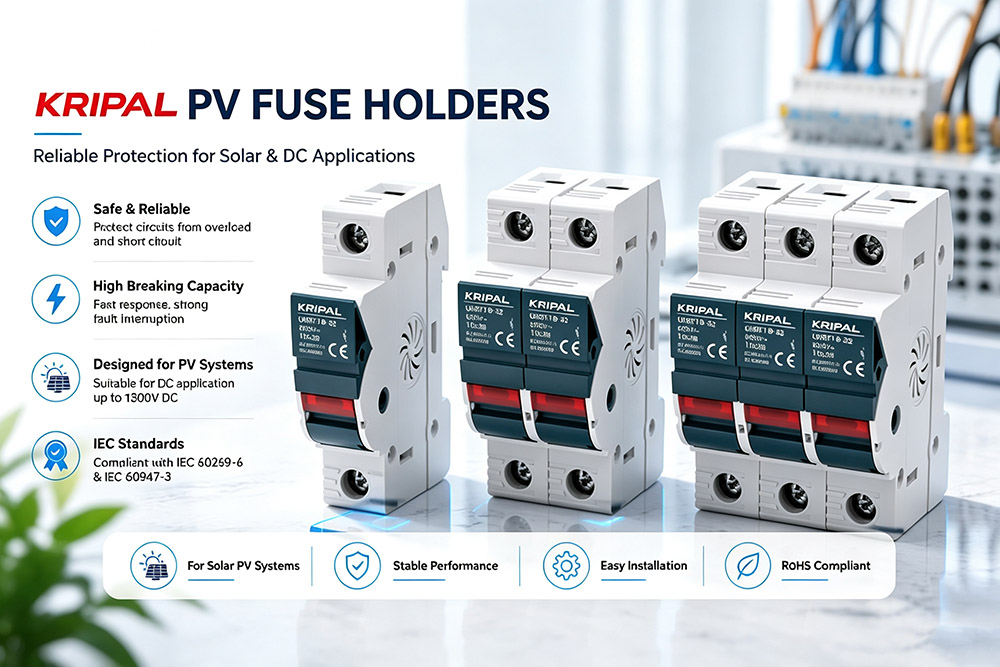
Electrical systems rely on protective devices to prevent damage caused by overloads, short circuits, and other electrical faults. Among the most common protection devices are fuses and circuit breakers. Both serve the same general purpose of interrupting electrical current when unsafe conditions occur, but they operate in different ways and are suited to different applications.
Whether you are designing an industrial electrical system, upgrading a distribution board, or learning about electrical protection, understanding the differences between these technologies is critical for informed decision-making.
Key Takeaways
- Both fuses and circuit breakers protect electrical circuits from overloads and short circuits.
- A fuse contains a metal element that melts when excessive current flows through it.
- A circuit breaker uses a mechanical switching mechanism that trips during fault conditions.
- Certain current-limiting fuses can interrupt high fault currents faster than most circuit breakers.
- Circuit breakers can be reset and reused after a fault is cleared.
- Residential, commercial, and industrial installations often use circuit breakers due to their convenience and flexibility.
- Fuses remain popular in specific applications that require fast fault interruption and cost-effective protection.
What Is a Fuse?
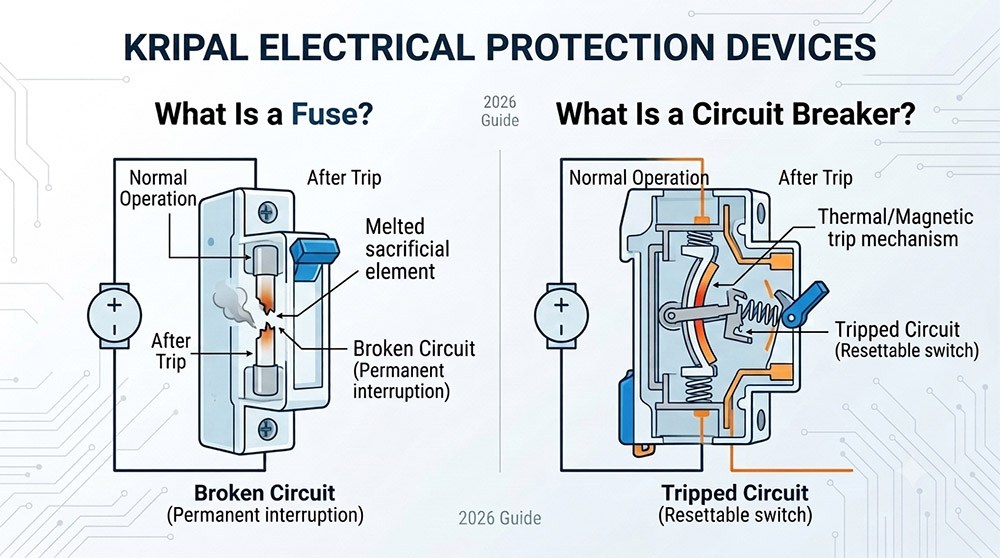
A fuse is one of the oldest and simplest forms of electrical protection. It consists of a metal wire or strip enclosed within a protective housing. Under normal operating conditions, electrical current passes through the fuse element without issue.
When the current exceeds the fuse’s rated value, the element heats up and melts, breaking the circuit and stopping the flow of electricity. This action prevents excessive heat buildup, equipment damage, and potential fire hazards. Once a fuse operates, it cannot be reused.
Common Applications of Fuses
Fuses are commonly used in:
- Electronic devices
- Automotive electrical systems
- Battery protection circuits
- Industrial motor protection
- Power distribution systems
- Renewable energy installations
Their simple design, reliability, and fast response make them suitable for many specialized applications.
What Is a Circuit Breaker?
A circuit breaker is an automatic electrical switch designed to interrupt current flow when abnormal conditions occur. Unlike a fuse, a circuit breaker does not rely on a sacrificial element. Instead, it uses thermal, magnetic, or electronic trip mechanisms to detect faults.
When an overload or short circuit is detected, the breaker trips and separates its contacts, disconnecting the electrical supply. After the fault has been identified and corrected, the breaker can usually be reset manually or automatically.
This reusable nature has made circuit breakers the preferred choice for many modern electrical installations.
Common Applications of Circuit Breakers
Circuit breakers are widely used in:
- Residential electrical panels
- Commercial buildings
- Industrial facilities
- Power distribution networks
- Data centers
- Renewable energy systems
Their ability to be reset quickly reduces maintenance time and improves operational convenience.
How Do Fuses and Circuit Breakers Work?
Although both devices interrupt current during fault conditions, their operating principles are different.
Fuse Operation
A fuse works through the heating effect of electric current. As current increases beyond the designed limit, the fuse element generates excessive heat. Once the temperature reaches the melting point of the element, it melts and permanently opens the circuit.
This process is simple, reliable, and often extremely fast.
Circuit Breaker Operation
A circuit breaker monitors current flow using thermal, magnetic, or electronic sensing methods.
- Thermal protection responds to prolonged overloads.
- Magnetic protection reacts quickly to short circuits.
- Electronic protection provides advanced monitoring and adjustable settings.
When a fault is detected, the breaker trips a mechanical mechanism that separates the contacts and interrupts current flow.
Fuse vs Circuit Breaker: Key Differences
The following comparison highlights the main distinctions between the two protection devices.
| Feature | Fuse | Circuit Breaker |
| Operating Method | Melting element | Mechanical switching mechanism |
| Reusability | Must be replaced after operation | Can be reset and reused |
| Initial Cost | Generally lower | Generally higher |
| Maintenance | Requires replacement | Minimal maintenance |
| Response Speed | Very fast | Fast, depending on design |
| Convenience | Lower | Higher |
| Fault Indication | Limited | Often provides visible trip indication |
| Adjustability | Fixed rating | Many models offer adjustable settings |
| Installation Complexity | Simple | More complex |
| Typical Applications | Electronics, specialized protection | Buildings, industrial systems |
Key Electrical Protection Parameters
To properly evaluate fuses and circuit breakers in industrial systems, engineers consider the following key parameters:
- Icu (Ultimate breaking capacity) – the maximum short-circuit current a device can safely interrupt
- Ics (Service breaking capacity) – the operational breaking capability under repeated fault conditions
- I²t (Let-through energy) – the thermal energy allowed to pass during fault clearing, affecting downstream equipment protection
- Selectivity (Coordination) – ensures only the faulty circuit is isolated while maintaining system continuity
These parameters are critical in system design and are often more important than the device type itself.
Advantages of Fuses
Fuses continue to be used extensively because they offer several benefits.
Fast Fault Protection
Current-limiting fuses can interrupt fault currents extremely quickly in specific high fault conditions., helping protect sensitive equipment.
Simple Design
The construction of a fuse is straightforward, making it highly reliable with few moving parts.
Lower Cost
In many cases, fuses have a lower upfront cost compared to circuit breakers.
High Interrupting Capacity
Certain industrial fuses can safely interrupt very large fault currents without causing additional damage.
Advantages of Circuit Breakers
Circuit breakers have become the standard choice for modern installations due to their versatility.
Reusable Operation
After a fault is resolved, the breaker can usually be reset instead of replaced.
Easier Maintenance
There is no need to stock replacement devices for routine fault events.
Better User Convenience
A tripped breaker can often be restored within seconds.
Advanced Protection Features
Many modern circuit breakers include:
- Adjustable trip settings
- Remote monitoring
- Ground fault protection
- Arc fault protection
- Communication capabilities
These features provide greater flexibility and control in complex electrical systems.
When Should You Choose a Fuse?
A fuse may be a suitable option when:
| Consideration | Description |
| Cost is a major consideration | Fuses are often preferred due to their lower upfront cost compared to circuit breakers. |
| Fast fault clearing is required | Fuses can interrupt high fault currents very quickly, providing rapid protection. |
| The circuit protects sensitive electronic components | Fast and reliable disconnection helps prevent damage to sensitive equipment. |
| Space is limited | Fuses are compact and require less installation space than many breaker systems. |
| The application experiences infrequent fault conditions | Fuses are suitable where faults are rare and replacement is acceptable after operation. |
Industrial motor circuits, battery systems, and semiconductor protection often benefit from fuse technology.
When Should You Choose a Circuit Breaker?
A circuit breaker may be a better option when:
| Consideration | Description |
| Frequent resetting may be required | Circuit breakers are preferred because they can be reset after tripping without replacement. |
| Downtime must be minimized | Reusable operation helps restore power quickly and reduce system downtime. |
| Maintenance access is limited | Breakers reduce the need for frequent physical replacement, making them more practical in hard-to-access locations. |
| Adjustable protection settings are needed | Many circuit breakers allow customization of trip settings to suit different load conditions. |
| System monitoring is important | Advanced breakers can integrate with monitoring systems for better diagnostics and control. |
Residential distribution boards, commercial buildings, and industrial power systems commonly rely on circuit breakers for these reasons.
Engineering Selection Logic
In industrial electrical systems, protection devices are selected based on engineering requirements rather than cost or convenience alone:
- Load type (motor, capacitor bank, distribution system)
- Prospective short-circuit current level
- Coordination with upstream and downstream devices
- Required breaking capacity (Icu rating)
- System selectivity and continuity requirements
This ensures that the protection system matches real fault conditions and maintains operational reliability.
Are Fuses Becoming Obsolete?
Despite the popularity of circuit breakers, fuses are far from obsolete. Both technologies continue to serve important roles in modern electrical systems.
Circuit breakers dominate many residential and commercial installations because of their convenience and reusability. However, fuses remain highly effective in applications where rapid fault interruption, simplicity, and high current-limiting performance are required.
In many industrial systems, fuses and circuit breakers are used together to achieve multiple layers of protection.
Conclusion
Fuses and circuit breakers share the same goal of protecting electrical circuits from damage caused by overloads and short circuits. The difference lies in how they achieve that protection.
Fuses provide fast, reliable, and cost-effective protection through a melting element that must be replaced after operation. Circuit breakers use mechanical and electronic trip mechanisms that allow them to be reset and reused, making them more convenient for many modern installations.
Come and explore Kripal with me for dependable electrical protection solutions. I am happy to assist you anytime.
Frequently Asked Questions
Q1 Which is safer, a fuse or a circuit breaker?
Both are safe when properly selected based on fault levels, coordination, and IEC standards (IEC 60269 / IEC 60947-2). Safety depends on system design, not device type.
Q2 Why do circuit breakers cost more than fuses?
Circuit breakers contain mechanical components, trip units, and often advanced protection features, making them more complex and expensive to manufacture.
Q3 Can a fuse replace a circuit breaker?
In some applications, a fuse can provide circuit protection. However, the replacement must be evaluated carefully to ensure compliance with electrical standards and system requirements.
Q4 Do fuses react faster than circuit breakers?
Many fuse designs respond very quickly to high fault currents and can limit fault energy effectively. Actual performance depends on the fuse type and breaker design.
Q5 How often should circuit breakers be replaced?
Circuit breakers can last for many years when operating under normal conditions. Regular inspection and testing help ensure continued reliability.
Q6 Why do industrial systems sometimes use both fuses and circuit breakers?
Using both devices can provide layered protection. Fuses may offer rapid current limitation, while circuit breakers provide convenient switching, isolation, and reset capabilities.
Q7 Can a blown fuse be repaired?
No. Once a fuse element melts, the fuse must be replaced with a new one of the correct rating.
Q8 What causes a circuit breaker to trip repeatedly?
Repeated tripping may indicate overload conditions, short circuits, ground faults, damaged equipment, or wiring issues that require investigation.
Related Resources
Explore Knowledge Center >
Need a matching KRIPAL product?
Share voltage, quantity and destination. An engineer will reply with options and lead time.