Search
Knowledge Center
What Is a Magnetic Starter
Discover what is a magnetic starter, its components like contactors and overload relays, how it operates, and its benefits for motor control.
 December 12, 2025
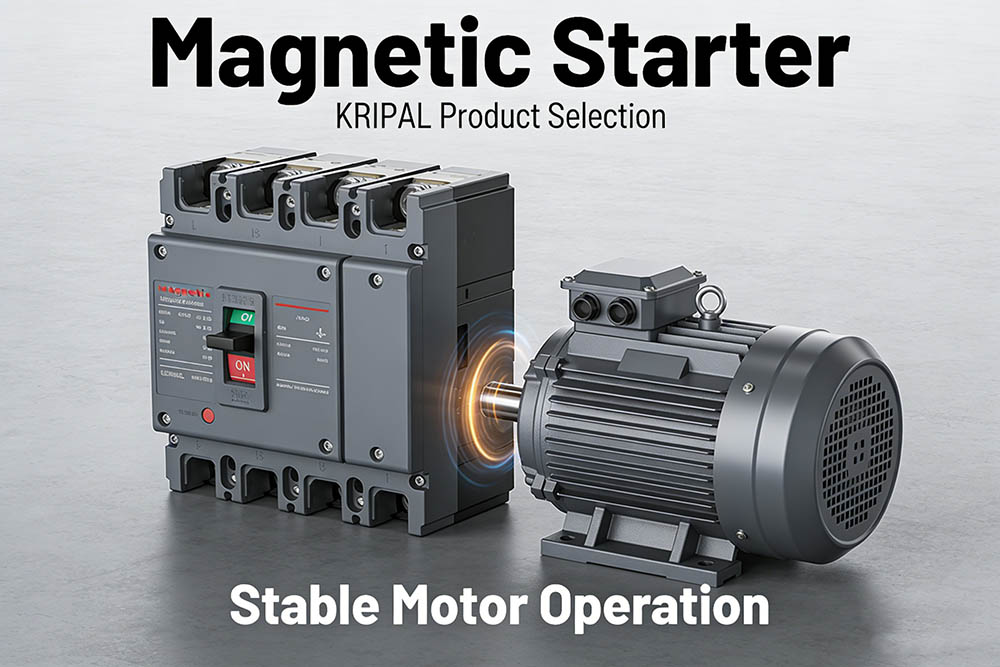
Industrial electrical systems rely heavily on electric motors, making safe starting and stopping a critical requirement. A magnetic starter enables remote start/stop and provides undervoltage and overload protection, widely used in production lines, air conditioning and water pumps.
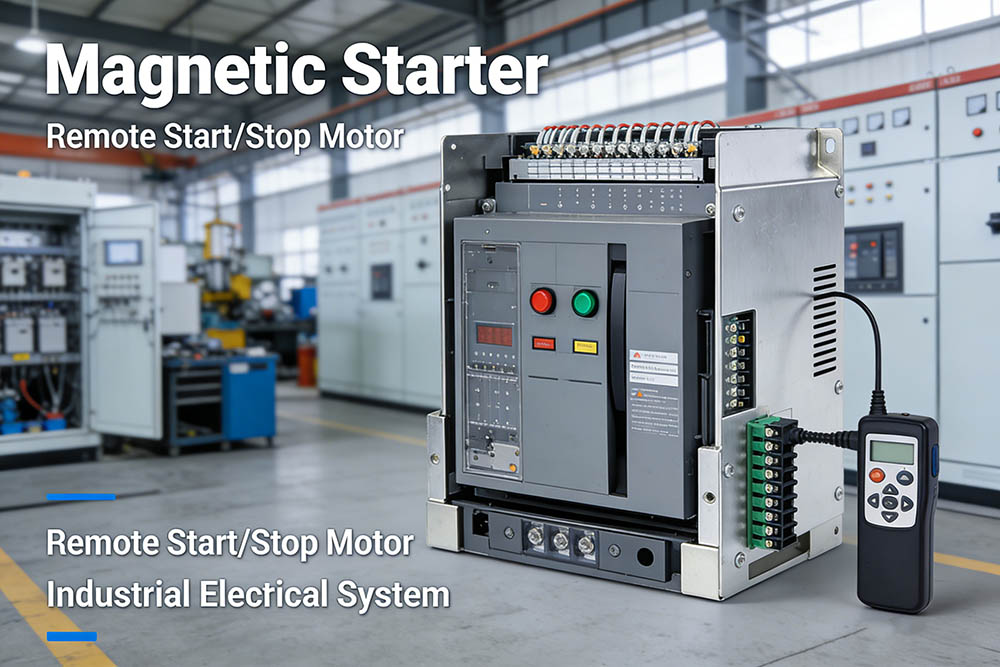
So what exactly is a magnetic starter, what components does it include, and how does it function in real applications? This article explains the basic principles of magnetic starters and presents a structured overview of how they operate and where they are used.
Key Takeaways
- A magnetic starter is an electrical control device that is used to start and stop electric motors.
- It is typically composed of a contactor and an overload protection device, which together provide both control and protection functions.
- Remote control of motors can be achieved through a magnetic starter, which improves operational safety and convenience.
- When abnormal conditions such as undervoltage or overload occur, the circuit is disconnected automatically in order to protect the motor from damage.
What Is a Magnetic Starter?
A magnetic starter is an electrical control device that is used to control the starting and stopping of an electric motor. It is mainly composed of an AC contactor and a thermal overload relay, while the switching of the motor circuit is achieved through electromagnetic operation.
Compared with manual switching methods, a magnetic starter allows remote control and disconnects the power supply automatically when abnormal conditions such as overload or undervoltage occur
How Does a Magnetic Starter Work?
When the start button is pressed, the control circuit energizes the contactor coil, generating a magnetic field that pulls in the contacts and closes the main circuit, allowing power to flow to the motor. An auxiliary contact forms a self holding circuit so the motor continues running after the start button is released. When the stop button is pressed or a fault occurs, the coil is deenergized, the contacts open, and the motor stops. If an overload happens, the thermal overload relay interrupts the control circuit, causing the contactor to release and protecting the motor from damage.
What Components Make Up a Magnetic Starter?
AC Contactor
The AC contactor is the core component of a magnetic starter and is responsible for connecting and disconnecting the motor power circuit. It consists of an electromagnetic coil, an iron core, main contacts and auxiliary contacts. When the coil is energized, the contactor engages and the motor receives power. When the coil is deenergized, the contactor releases and the motor stops.
Thermal Overload Relay
The thermal overload relay provides protection against motor overload. When sustained overcurrent occurs due to excessive load or mechanical failure, the bimetal element inside the relay heats up and operates, which interrupts the control circuit and causes the contactor to release, preventing motor damage due to overheating.
Start and Stop Push Buttons
The start and stop push buttons are control components that allow manual operation of the magnetic starter. The start button is normally open, while the stop button is normally closed, and together they control the energizing of the contactor coil.
Auxiliary Contacts
Auxiliary contacts are typically installed on the contactor and are used to form the self holding circuit or to provide status signals. Although they do not carry motor current, they play an active role in control logic.
Enclosure and Terminals
Magnetic starters are usually installed inside protective enclosures or control panels, which provide insulation and physical protection. Terminals are used to connect the power supply, motor and control wiring, ensuring reliable and safe electrical connections.
| Component | Function |
| AC Contactor | Connects and disconnects the motor power circuit through electromagnetic operation. |
| Thermal Overload Relay | Protects the motor by interrupting the circuit during sustained overload conditions. |
| Start and Stop Push Buttons | Control the energizing and deenergizing of the contactor coil. |
| Auxiliary Contacts | Form the self holding circuit and provide control signals. |
| Enclosure and Terminals | Provide protection and ensure safe electrical connections. |
Why Is a Magnetic Starter Used?
Improved Operational Safety
Since motor starting current is several times higher than rated current, direct manual switching may cause contact damage and arc hazards. A magnetic starter uses low current control circuits to switch high current motor circuits, which significantly improves operational safety.
Overload Protection Capability
During operation, motors may experience overcurrent due to excessive load, mechanical jamming or voltage irregularities. The thermal overload relay within a magnetic starter disconnects the power supply when sustained overload occurs, which helps extend motor service life.
Undervoltage Protection Function
When a power failure or voltage drop occurs, the magnetic starter releases automatically and stops the motor. After power is restored, the motor does not restart automatically, which helps avoid unexpected equipment movement.
Remote and Automatic Control
Magnetic starters can be combined with push buttons, sensors or PLC systems to achieve remote or automatic control, which supports modern industrial automation requirements.
System Reliability
Compared with simple switching methods, magnetic starters are designed for frequent starting and stopping operations and are suitable for long term use in industrial environments.
What are the advantages of magnetic starters compared to other starters?
Direct Switching Methods
Direct switching using knife switches or basic switches may involve high inrush current and arc risks. Magnetic starters use control circuits to manage high current loads, which improves operational safety and allows frequent operation.
Manual Starters
Magnetic starters are equipped with overload and undervoltage protection, while basic manual starters usually lack these protective functions. When abnormal conditions occur, magnetic starters disconnect power automatically, which reduces equipment damage.
Soft Starter Solutions
Soft starters are designed to reduce starting current and mechanical shock, although their structure is more complex and cost is higher. Magnetic starters offer a simpler structure and easier maintenance, which makes them suitable for applications where starting impact limits are not strict.
Frequency Converter Systems
Frequency converters provide speed control and energy saving functions, although they require more complex parameter configuration and maintenance. Magnetic starters are easier to install and operate, which makes them suitable for fixed speed motor applications in traditional industrial systems.
Wide Application Range
Magnetic starters can be applied to motors of various power ratings and types, while standardized components allow convenient replacement and expansion.
| Comparison | Magnetic Starter Advantage |
| Direct Switching | Safer control of high current loads and suitable for frequent operation. |
| Manual Starters | Provides overload and undervoltage protection with automatic power disconnection. |
| Soft Starters | Simpler structure, lower cost and easier maintenance. |
| Frequency Converters | Easier installation and operation for fixed speed applications. |
| Application Range | Suitable for various motor types with standardized components for easy replacement. |
How to Select a Suitable Motor Starter?
Selection Based on Motor Power and Current
First, the rated power, voltage and current of the motor should be confirmed. The rated capacity of the starter should be equal to or greater than the motor rated current, while the starting current multiple should also be considered. Magnetic starters or direct starting methods can be selected for low power motors, while magnetic starters, soft starters or frequency converters are suitable for medium and high power motors.
Requirement for Speed Regulation
When the motor operates at a fixed speed, a magnetic starter is sufficient. If speed regulation, energy saving operation or precise control is required, a frequency converter should be selected.
Requirement for Reduced Starting Impact
During startup, motors generate current and mechanical impact. Magnetic starters can be used when there are no strict limits on these effects. When smooth startup is required, soft starters or frequency converters are more suitable.
Protection Function Requirements
Magnetic starters provide overload and undervoltage protection. When additional protection such as phase loss protection, overvoltage protection, short circuit protection or monitoring functions is required, integrated starters or frequency converters can be selected.
Control Method Requirements
For local push button control, a magnetic starter is sufficient. For remote or automatic control, a magnetic starter can be combined with a PLC. When monitoring or networking functions are required, intelligent starters or frequency control systems may be considered.
Cost and Maintenance Considerations
Magnetic starters have a simple structure, lower cost and convenient maintenance. Soft starters involve higher costs and are suitable for impact reduction applications. Frequency converters provide advanced functions, although they involve higher costs and stricter installation conditions.
How to Install a Magnetic Starter?
Preparation Before Installation
Before installation, confirm that the starter rated voltage and current match the motor, check the power supply voltage, prepare installation tools and ensure that the environment is dry, ventilated and free from flammable or explosive gases.
Mounting the Starter
Install the starter inside a control cabinet or electrical enclosure and secure it with screws or a mounting rail. Adequate space should be reserved for heat dissipation, while high temperature equipment should be avoided.
Main Circuit Wiring
The main circuit connects the power supply to the motor. Three phase power lines are connected to the upper terminals of the contactor, while motor lines are connected to the lower terminals. Wiring must be tightened properly. Single phase motors should be connected according to the corresponding terminal layout.
Control Circuit Wiring
The control circuit operates the contactor coil. The start button and stop button are connected in series, while the auxiliary contact is connected in parallel with the start button to form the self holding circuit. The normally closed contact of the thermal relay is connected in series for overload protection, and the wiring should be verified according to the electrical diagram.
Setting the Thermal Relay Current
Based on the motor rated current shown on the nameplate, the thermal relay setting should be adjusted to approximately 1.0 to 1.1 times the rated current.
Power On Testing
After checking all wiring connections, use a multimeter to verify that no short circuits or wiring errors exist. Energize the system and test start and stop functions. If the motor rotates in the opposite direction, any two phase wires can be exchanged.
Installation Notes
Proper grounding should be provided, terminal connections should be tightened to avoid overheating, control voltage should match the contactor coil voltage, and contact wear should be inspected periodically.
Conclusion
In practical applications, selecting and installing magnetic starters correctly helps maintain stable motor operation. Although their functionality is not as advanced as that of soft starters or frequency converters, magnetic starters continue to be widely used due to their simple structure, moderate cost and ease of maintenance.
As electrical control systems continue to evolve, magnetic starters remain a fundamental component that can be combined with automation and intelligent control solutions. KRIPAL offers a wide range of magnetic starters that can address various application requirements. Browse our product portfolio to select a solution tailored to your requirements.
FAQs
Q: What is the difference between a magnetic starter and a contactor
A: A contactor is the main switching component that connects and disconnects the motor power circuit. A magnetic starter is an integrated assembly that combines a contactor with overload protection and control components.
Q: Can a magnetic starter be used to start high power motors
A: Yes, provided that the starter rated current and capacity match the motor requirements. When limits on starting current or mechanical stress apply, soft starters or frequency converters may be considered.
Q: Is a thermal overload relay required in a magnetic starter
A: In most applications, a thermal overload relay is recommended because it disconnects power during overload conditions and protects the motor from damage.
Q: Can the control voltage be different from the main circuit voltage
A: Yes. The control circuit voltage may be 24 V, 110 V or 220 V, while the main circuit voltage is commonly 380 V for three phase systems, which improves operational safety.
Q: What may cause immediate tripping after motor startup
A: Common causes include an incorrectly set thermal relay, excessive motor load, wiring errors or motor faults, which should be checked individually.
Q: Can a magnetic starter be used for remote control
A: Yes. By connecting push buttons, relays or PLC systems, magnetic starters can be used for remote start and stop control in industrial automation systems.
Related Resources
Explore Knowledge Center >

Need a matching KRIPAL product?
Share voltage, quantity and destination. An engineer will reply with options and lead time.