Search
Knowledge Center
What Is an Isolator Switch? Common Types of Isolator Switches
Discover the definition and key types of isolator switches, including three-phase, four-pole, 40A, and MCB-type isolators. Learn how they ensure safety during maintenance and differ from circuit breakers.
 January 04, 2026
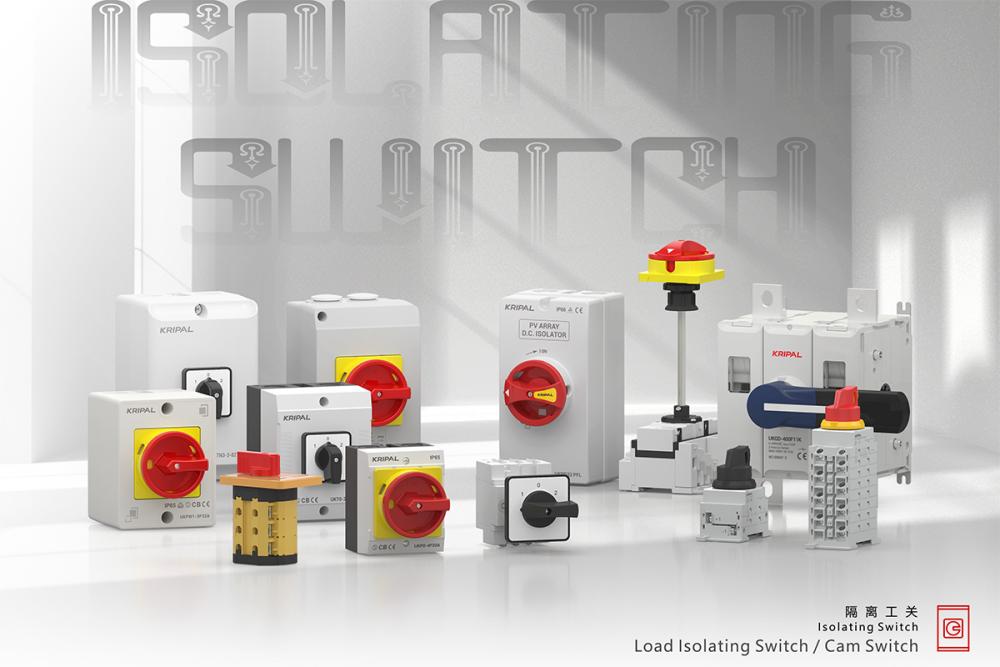
Many people have manually switched off a device to disconnect power before servicing an electrical circuit. In doing so, they have already used an isolator switch, even if they were not aware of its technical name. Today’s market offers many types of isolator switches. Common examples include three phase isolators, four pole isolator switches, forty ampere isolators, and MCB type isolator switches. Because of this variety, users often struggle to understand their differences and correct applications.
This article explains what an isolator switch is, how it works, and where it is used. It also compares isolator switches with circuit breakers and explains why KRIPAL isolator switches are widely trusted for their reliability and flexibility.
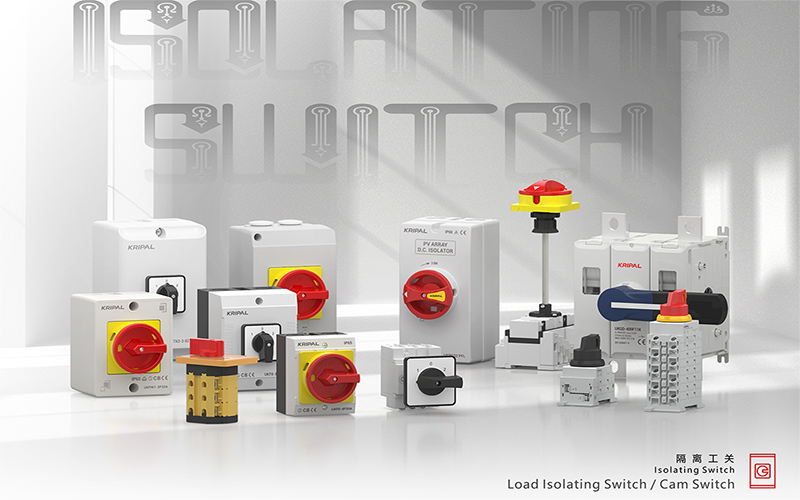
Definition of an Isolator Switch
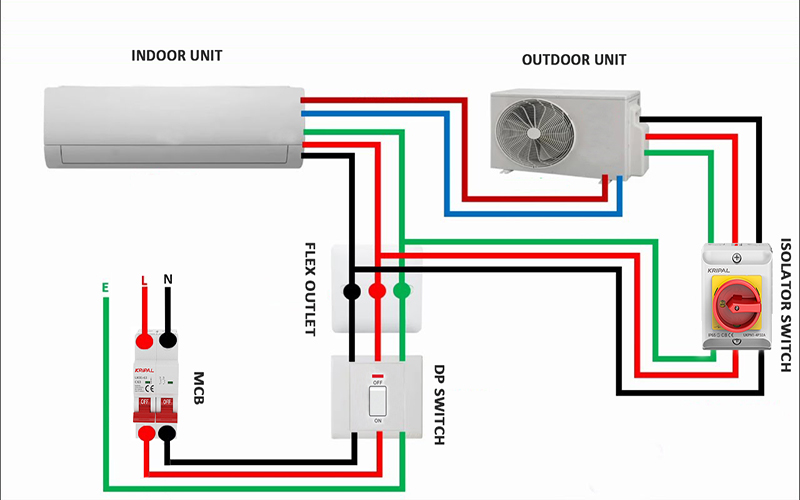
An isolator switch is a manually operated electrical switching device. Its purpose is to completely disconnect an electrical circuit from its power supply. When operated, the isolator switch creates a visible physical separation between live parts. This ensures that the isolated circuit remains fully de-energized, even if other parts of the system are still energized or experiencing faults. This characteristic makes isolator switches essential in several situations.
Equipment maintenance
Before servicing motors, distribution boards, or industrial equipment, electricians must disconnect the power supply. The isolator switch eliminates the risk of electric shock during maintenance.
Emergency shutdown
When mechanical obstruction or electrical malfunction occurs on a production line, power must be disconnected immediately. A three phase isolator switch allows rapid disconnection of the entire circuit.
System sectional isolation
In large building power distribution systems, faults often affect only part of the network. Isolator switches allow the faulty section to be isolated without interrupting other operating circuits.
Differences Between Isolator Switches and Circuit Breakers
An isolator switch is a critical safety device designed to create a visible physical disconnection for maintenance or inspection. Unlike circuit breakers, it does not provide automatic overload or short-circuit protection and must be operated manually.
Its primary advantage is the visible disconnection point, which allows personnel to visually confirm that the circuit is fully isolated. In contrast, the contacts of a circuit breaker are enclosed within the device housing, making visual confirmation of contact separation impossible.
| Feature | Isolator Switch | Circuit Breaker |
| Primary function | Safe power isolation for maintenance | Automatic disconnection during overload or short circuit |
| Operating method | Manual operation only | Automatic tripping with manual reset |
| Visible isolation | Yes | No |
| Typical application | Maintenance isolation and system separation | Routine circuit and equipment protection |
Common Types of Isolator Switches
Isolator switches are available in various configurations depending on rated current, number of poles, and installation conditions. The following are the most commonly used types in engineering applications.
Three-Phase Isolator Switch
Designed specifically for three-phase AC systems (such as 380V industrial power networks), this type disconnects all three phase conductors (L1, L2, L3) simultaneously. It is widely used in motor control panels, compressors, HVAC systems, and other industrial equipment.
For example, when servicing a conveyor drive motor, a three-phase isolator allows the entire power supply to be safely disconnected at once.
Four-Pole Isolator Switch
This type adds neutral (N) disconnection to the three-phase configuration, resulting in four poles in total.
It is suitable for applications where neutral isolation is required, such as hospitals, data centers, and commercial kitchens, where electrical safety standards are extremely strict. Disconnecting the neutral helps prevent residual voltage risks caused by a live neutral conductor.
UKPN5 Rotary Isolating Switch 4Pole 100A IP65 Switch Disconnector Waterproof AC Isolator
40 Amp Isolator Switch
With a rated current of 40A, this is a mainstream specification for medium-power applications. It is commonly used for small industrial motors, commercial ovens, and generator connection points.
KRIPAL 40A isolator switches are manufactured with high-quality materials, support frequent operation, and offer long-term reliability.
UKTN3 Rotary Changeover Switch 40A/63A/100A 3 Position IP65 Cam Switch
MCB-Type Isolator Switch
MCB-type isolator switches share the same form factor as standard miniature circuit breakers and can be mounted directly on a DIN rail. However, internally they only provide isolation and do not include overload or short-circuit protection.
Combining a compact design with a clear OFF indication, they are ideal for residential distribution boards and small commercial panels, serving as main or branch isolators.
https://www.kripal.net/circuit-protection-devices/main-isolator-switch/
Isolator Switch vs. MCB: Which One Do You Need?
When designing a control panel or distribution board, the choice between an Isolator Switch and an MCB (Miniature Circuit Breaker) depends on whether you prioritize operational protection or maintenance safety. Since an MCB is fundamentally a type of circuit breaker, it follows the same core logic: protection vs. isolation.
Key Functional Differences
- Isolator Switch (Safety Focused): Provides isolation only with no built-in protection. It is engineered for applications requiring a guaranteed, visible physical disconnection to protect personnel during maintenance.
- MCB (Protection Focused): Combines manual switching with automatic overcurrent protection. It is the standard choice for protecting residential and commercial distribution boards from overloads and short circuits.
Practical Application
- In residential final circuits, MCBs are often used for both protection and basic switching. However, in industrial or high-safety environments, safety regulations often mandate a dual-device setup:
- Upstream: A dedicated Isolator Switch is installed to provide a visible, lockable disconnection point.
- Downstream: The MCB is installed to handle the specific protection of the circuit components.
Pro Tip: MCB vs. MCB-Type Isolator
A common mistake in procurement is confusing a standard MCB with an MCB-type isolator.
- The Look: They are housed in nearly identical modular casings designed for DIN rail mounting.
- The Reality: An MCB-type isolator contains no internal tripping mechanism. It is used purely for isolation where modular space is limited but protection is already handled elsewhere.
Always check the technical symbols on the front of the device before installation to ensure your circuit has the protection it requires.
Why Choose KRIPAL Isolator Switches?
Among numerous brands, KRIPAL isolator switches have earned the trust of global customers through innovative design and strict quality control. Their products excel in safety, flexibility, and durability.
Key Advantages
Multi-Pole Configurations
Available in 2P, 3P, 4P, 5P, and even 6P versions, suitable for single-phase, three-phase, and special control circuits. Optional auxiliary contacts (such as 1NC + 1NO) are available for PLC integration or remote monitoring.
Multiple Enclosure Options
Standard plastic enclosures (UKP / UKPN / UKPW series) for general environments, and robust metal enclosures (UKPA aluminum housing) for industrial sites requiring impact resistance and fire protection.
Wide Range of Applications
From 40A isolator switches for commercial kitchens to 4-pole isolators for critical loads in data centers, KRIPAL offers tailored solutions to ensure efficient and safe project implementation.
Conclusion
An isolator switch is far more than a simple “on/off” device—it is the first line of defense in electrical safety. Proper selection and use not only protect human life, but also reduce downtime and improve overall system reliability.
From three-phase isolator switches in industrial facilities to MCB-type isolators in residential distribution boards, KRIPAL remains committed to safeguarding every flow of electricity with high-quality, highly compatible solutions.
Related Resources
Explore Knowledge Center >

Need a matching KRIPAL product?
Share voltage, quantity and destination. An engineer will reply with options and lead time.