Search
Knowledge Center
What Are Cam Lock Connectors? A 200A/400A Guide for Power Distribution
Compare 200A and 400A cam lock connectors, cable sizes, CEE connectors, color codes, buying checks, and safety rules for temporary power.
 July 21, 2026
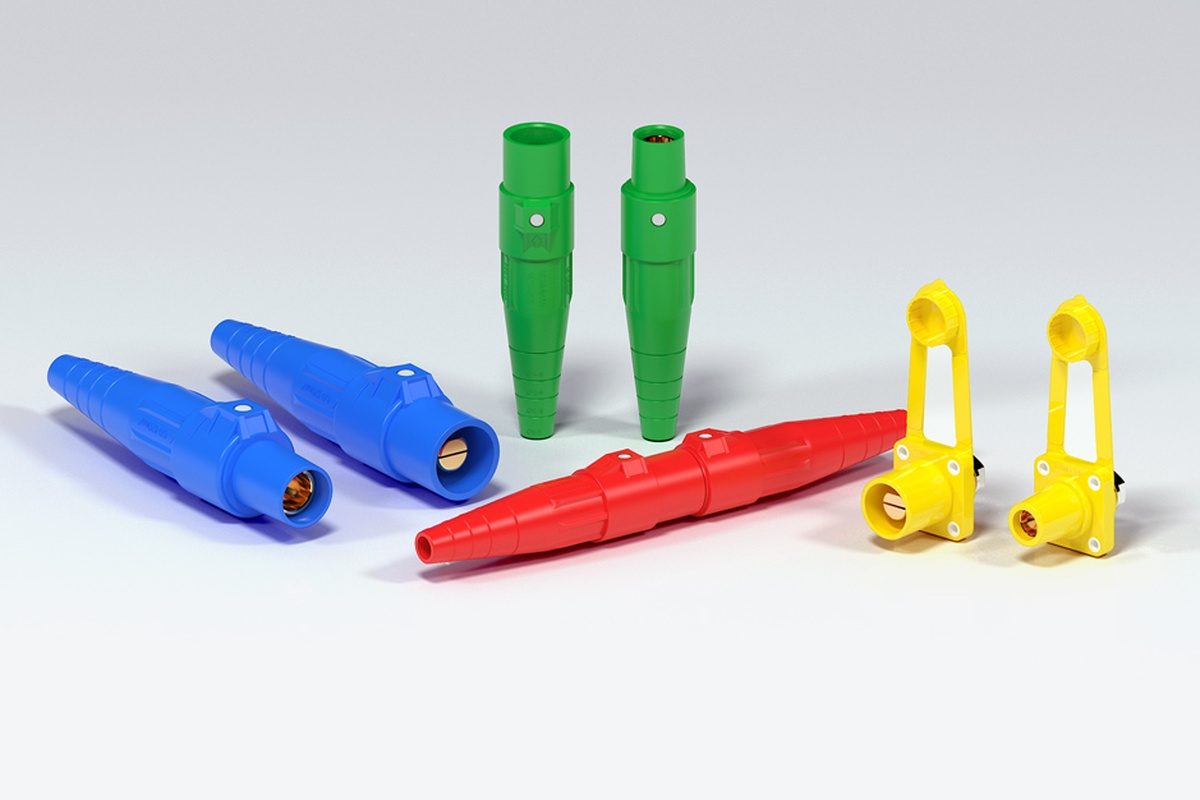
A cam lock connector is a single-pole, high-current electrical connector used to build temporary power distribution systems, most often for generators, events, data centers, and construction sites. You connect them by pushing the male plug into the female receptacle and twisting the collar, which locks the connection and carries current from 200A up to 400A and beyond.
We manufacture cam lock plugs and receptacles at KRIPAL in 200A and 400A ratings, and this guide covers how they work, where they belong, and what to check before you buy.
What a Cam Lock Connector Actually Is
A cam lock is not a multi-pin plug like a CEE connector. It is a single-pole device, which means every phase and the neutral and earth get their own separate connector. A three-phase 400A feed therefore uses five individual cam locks, each color-coded to identify its function: black, red, and blue for the three phases, white for neutral, and green for earth. The connectors are interchangeable between brands within the same series, which is a deliberate design feature of the cam lock system.
The name comes from the locking mechanism. Inside the female receptacle, a cam ring rotates when you twist the collar, clamping down on the male contact and holding it firmly. The connection is both mechanical and electrical: the cam provides the grip, and the large surface area of the contact provides the current path. A properly locked cam lock will not vibrate loose, which is why it has been the standard for temporary power for decades.
The Twist-and-Lock Connection
The locking action is what gives cam locks their reliability at high current. When the collar is twisted, a cam ring inside the receptacle rotates and clamps down on the male contact with high force, pressing it firmly against the socket contact surface. The mechanical grip does two jobs: it holds the connector together against cable tension and vibration, and it creates the large, low-resistance contact area that the current needs. A half-twisted cam lock has neither, which is why the locking action is checked every time a connection is made.
Color Coding
The color coding is the safety system. Every technician in the industry knows that red is L1, black is L2, blue is L3, white is neutral, and green is earth. The colors are molded into the housings, not painted on, so they do not wear off. If you see a cam lock panel with the wrong colors, stop and check the wiring before anything is energized.
Black · L2
Blue · L3
White · Neutral
Green · Earth
Cam Lock vs. CEE Connectors: Which One for Which Job?
This is the question we get most often, and the answer is that the two systems solve different problems. A CEE connector (IEC 60309) is a multi-pin, weatherproof connector rated up to 125A, used for permanent and semi-permanent industrial installations. A cam lock is a single-pole, high-current connector used for temporary power where the load exceeds what a CEE connector can carry, or where the system has to be built and torn down repeatedly.
| Factor | Cam Lock | CEE (IEC 60309) |
|---|---|---|
| Poles | Single-pole, one per conductor | Multi-pin, up to 5P |
| Current rating | 200A to 400A+ | 16A to 125A |
| Typical use | Generators, events, data centers, load banks | Industrial machines, site distribution |
| Weatherproofing | Requires panel or cover | IP44/IP67 built in |
| Connection | Twist-to-lock cam | Plug and socket |
| Cable size | 2/0 to 4/0 AWG | 10 to 25 mm² |
If the load is under 125A and the installation is semi-permanent, use CEE. If the load is above 125A, or the system is built and struck for every event, cam locks are the standard answer. Data centers and broadcast trucks use cam locks because they need to reconfigure power feeds quickly. Generator rental companies use cam locks because a 500kVA generator has to connect to different distribution panels on different job sites.
Series Interchangeability
The cam lock system is designed so that connectors from different manufacturers in the same series mate and lock correctly. This interchangeability is a deliberate feature, because a temporary power system is often built from mixed inventory on the job site. The practical rule is to confirm the series before mixing brands, because a connector from a different series may have slightly different dimensions and a poor lock, and a poor lock at 400A is a real hazard.
Where Cam Locks Are the Industry Standard
The three places cam locks dominate are events and entertainment, data centers, and generator and load bank rental. In each case, the requirement is the same: high current, frequent connection and disconnection, and the ability to reconfigure the system on the fly. A broadcast production truck pulls 400A from a generator every day, and the feed is built and struck every time. A load bank test facility reconfigures its 1000A test feeds between different units. These applications are why the cam lock standard has survived for over half a century.
200A vs. 400A Ratings and Cable Sizes
The current rating of a cam lock is determined by the contact size and the cable it is rated to accept. A 200A cam lock typically accepts cable from 1/0 to 2/0 AWG, and a 400A unit accepts 2/0 to 4/0 AWG. The connector must match the cable size, not just the current rating, because the terminal is sized for a specific conductor cross-section. A 400A connector tightened onto a 2/0 cable is a weak point even though the current fits, because the terminal bore is larger than the conductor.
Matching the Connector to the Cable
When you size a cam lock system, work from the cable first. Determine the conductor size the load requires at the distance and voltage drop allowed, then select the connector that matches that cable size. The datasheet for each cam lock lists the acceptable cable range, and the terminal is designed for that range. If the cable is at the top of the range, use the correct terminal adapter or lug rather than forcing undersized strands into an oversized bore.
Reading the Rating Label
The rating label on a cam lock lists the current rating, voltage rating, and series. The current rating is the continuous carrying capacity of the contact and terminal combination, not a surge rating. The voltage rating matters for the insulation and the application; a 600V-rated unit covers the common 400V and 480V systems, but confirm it against the system voltage before use. The series marking tells you which other connectors it mates with, which is the first thing to check when adding to an existing inventory.
We offer both 200A and 400A cam locks in the KRIPAL range, with the terminal bore matched to the standard US cable sizes used in temporary power. The 200A units accept 1/0 to 2/0 AWG, and the 400A units accept 2/0 to 4/0 AWG, which covers the common feeds for portable generators and event distribution.
What to Check Before You Buy
Cam locks often look identical across brands, and the critical differences rarely show up in standard product photos. Always verify these four specifications before ordering:
Contact Material
Quality cam locks use copper or copper-alloy contacts with oxidation-resistant plating. Poorly plated or bare contacts develop high resistance over time, leading to dangerous heat buildup at high currents, such as 400A. Always ask for the exact contact material specification, not just the current rating.
Molded Color Coding
Ensure the housing colors are molded directly into the material, not simply painted on. Painted colors wear off under heavy field use, creating the exact safety and phase-matching hazards the color system is meant to prevent.
Cable Terminal Type
Choose the termination method that matches your crew’s installation capabilities:
- Set-Screw: Ideal for temporary or portable systems because they are field-serviceable without specialized tools.
- Crimp/Compression: Delivers a superior, lower-resistance connection for permanent setups, but requires a dedicated crimping tool and die.
Series Compatibility
While built to established industry standards, you must confirm that the specific series matches your existing inventory. Mismatched series components might look dimensionally close but will fail to lock together safely and securely.
Safety Rules for Cam Lock Systems
Cam locks carry massive amounts of current, making strict safety protocols absolutely essential.
- Never Connect or Disconnect Under Load: These connections are not designed to break live loads. Pulling a live 400A cam lock will cause severe arcing, destroy the contacts, and potentially injure the operator. Always remove power from the circuit entirely before making or breaking any connection.
- Use the Complete Set of Connectors: A standard three-phase system requires all five connectors securely in place, including the critical earth ground. Never skip the earth connection simply to save time or a cable run.
- Keep Components Clean and Dry: Dirt and moisture on the contact surfaces create electrical resistance and promote dangerous arcing. When breaking down the system, immediately cap all receptacles and store the plugs in a clean and dry container.
- Lock the Connection Completely: The physical twist action must fully engage the internal cam. A partially locked connector might look secure from a distance, but it delivers poor contact pressure and will quickly overheat under a heavy electrical load.
Frequently Asked Questions
Are cam locks interchangeable between brands?
Within the same series, yes. The cam lock system is designed so that connectors from different manufacturers in the same series mate and lock correctly. Confirm the series before mixing brands.
Can I use a cam lock for permanent installation?
You can, but it is not the right tool. Cam locks are designed for temporary power where the connection is made and broken regularly. For a permanent installation, use a properly engineered fixed connection or a panel-mounted connector.
What is the difference between 200A and 400A cam locks?
The current rating, contact size, and cable range. A 200A unit accepts 1/0 to 2/0 AWG cable, and a 400A unit accepts 2/0 to 4/0 AWG. The terminal bore must match the conductor.
Do cam locks need a panel or enclosure?
In a permanent installation, yes, the connectors are mounted in a panel. In a portable system, the connectors are used in free form with cable, and the receptacles are capped when not in use. Always protect the connection from weather and mechanical damage.
What cable size fits a 400A cam lock?
A 400A cam lock accepts 2/0 to 4/0 AWG cable, depending on the model and terminal type. Check the datasheet for the exact range, and match the terminal to the conductor.
How do I know if a cam lock is fully locked?
A fully locked cam lock requires a deliberate twist of the collar and gives a positive feel when the cam engages. Pull on the cable after locking; the connector should not separate. If it slides off, the cam is not engaged.
Conclusion
Cam locks are the workhorses of high-current temporary power, from generator feeds to event distribution to data center reconfiguration. They are single-pole, color-coded, and built to be connected and disconnected hundreds of times. The two decisions that matter are the current rating and the cable size, and they must match. We supply 200A and 400A cam lock connectors in the KRIPAL range, and we can help you confirm the series and terminal type for your application. Explore more industrial plugs and sockets, or contact our engineering team with your load details and cable sizes.
Related Resources
Explore Knowledge Center >
Need a matching KRIPAL product?
Share voltage, quantity and destination. An engineer will reply with options and lead time.