Search
Knowledge Center
What Is MCB in an Inverter?
What is MCB in inverter? Learn its functions for overload & short circuit protection, plus how to choose the right DC/AC MCB for your system.
 March 29, 2026
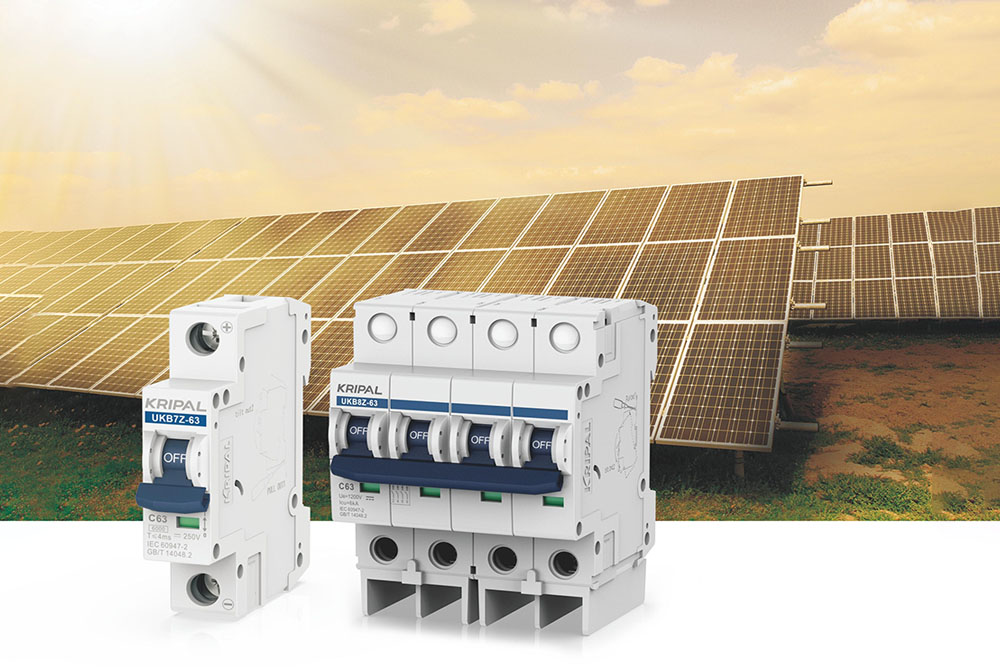
In modern power systems, inverters are devices that connect direct current and alternating current. During operation, electrical faults such as overload and short circuits may cause serious damage to equipment.
To ensure safe and stable system operation, various protective devices are introduced, among which the MCB, known as a miniature circuit breaker, is one of the most commonly used.
Key Takeaways
• MCB, known as a miniature circuit breaker, is used to protect inverters from overload and short circuit damage
• It can quickly disconnect the circuit when a fault occurs, which improves system safety
• MCB is usually installed on the input side or output side of the inverter, which depends on system design
• Selecting the correct MCB rating helps ensure stable inverter operation
What Is MCB?
MCB is an automatic switching device used for circuit protection, which disconnects the power supply when abnormal currents such as overload or short circuit occur, so that equipment damage or fire can be prevented.
Compared with traditional fuses, MCB can be reused after operation, which makes it more convenient and widely used in modern electrical systems.
What Are the Functions of MCB in an Inverter System?
Overload Protection
During inverter operation, when the load exceeds its rated capacity, the current continues to increase. The MCB disconnects the circuit after detecting overload current, which prevents internal components from overheating and helps extend the service life of the equipment.
Short Circuit Protection
When a short circuit occurs in the system, the current rises sharply within a very short time, which may cause serious damage to equipment and wiring. The MCB disconnects the circuit quickly, which reduces the risk of electrical fire and equipment damage.
Isolation and Maintenance Protection
The MCB can also be used as a manual switch, although it mainly functions during faults. When maintenance or inspection is required, the circuit can be isolated by switching off the MCB, which improves safety for personnel and makes maintenance more convenient.
Improving Overall System Safety
When MCBs are installed on the input side or output side of the inverter, a multi level protection system can be formed. When abnormal conditions occur, the MCB responds in time, which reduces the impact range of faults and improves system stability and reliability.
Where Is MCB Installed in an Inverter?
DC Side Installation
In photovoltaic or energy storage systems, the MCB is usually installed at the DC input of the inverter, which is between the solar panels and the inverter. This allows the circuit to be disconnected when overcurrent or short circuit occurs on the DC side, which protects the inverter from high voltage DC risks.
AC Side Installation
The MCB is also commonly installed at the AC output of the inverter, which is between the inverter and the grid or load. When overload or short circuit occurs on the output side, the MCB disconnects the circuit quickly, which protects downstream equipment and grid operation.
Distribution or Combiner Boxes
In practical applications, MCBs are usually installed inside distribution boxes or combiner boxes rather than directly inside the inverter. This approach makes wiring and management more convenient and also simplifies maintenance and troubleshooting.
Close to Power Source or Load
To achieve more effective protection, the MCB is generally installed as close as possible to the power source or critical equipment, so that current can be interrupted quickly when a fault occurs, which reduces the affected area.
How to Choose the Right MCB?
Rated Current
When selecting an MCB, the rated current of the inverter and circuit should be considered. If the rating is too low, nuisance tripping may occur during normal operation, while if it is too high, proper protection may not be provided during faults. A suitable margin should be included based on load and inverter characteristics.
Voltage Type
Inverter systems include both DC side and AC side circuits, which require different types of MCBs. DC circuits require MCBs designed for DC applications, while AC circuits require AC rated MCBs, since arc extinguishing characteristics are different.
Breaking Capacity
Breaking capacity refers to the maximum fault current that the MCB can safely interrupt. If the system has a high potential short circuit current, an MCB with higher breaking capacity should be selected, so that it can operate safely under fault conditions.
Tripping Curve
Different loads require different tripping characteristics, including B, C, and D curves. General household or lighting loads are usually suitable for B or C curves, while equipment with high inrush current may require D curve. The appropriate curve should be selected according to actual load conditions to avoid unwanted tripping.
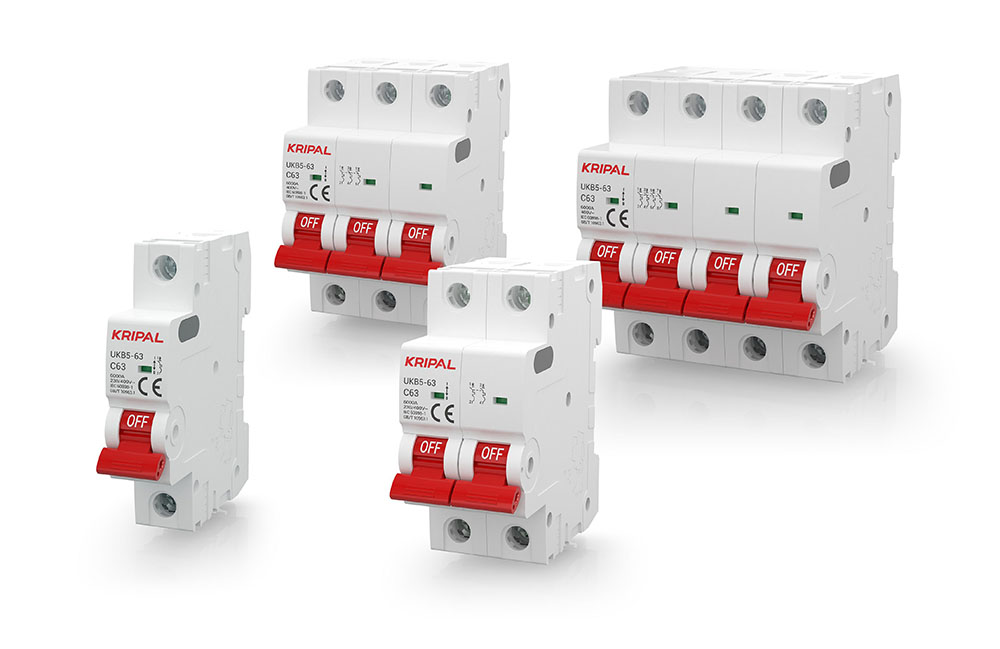
Comparison: KRIPAL UKB5 (AC) vs UKB7Z (DC) Series
| Feature | KRIPAL UKB5 Series (AC) | KRIPAL UKB7Z Series (DC) |
| Application | AC Output / Grid Connection | Solar PV / Battery DC Input |
| Rated Voltage (Ue) | 230V / 400V AC | Up to 1000V DC |
| Breaking Capacity (Icn) | 6kA / 10kA | 6kA (Professional DC Grade) |
| Certifications | CE, SEMKO | CE Certified |
| Arc Quenching | Natural Zero-Crossing | Permanent Magnet Forced Arc Quenching |
| Tripping Curves | B, C, D | Special DC Curves |
| Service Life | 20,000 Operations | High-Reliability for PV Environments |
What Are the Differences Between MCB and Other Protection Devices?
MCB and MCCB
MCB is used for low current and small capacity circuit protection, which is common in residential and small systems, while MCCB is suitable for higher current and industrial applications. MCCB offers higher breaking capacity and adjustable protection settings, although it is larger and more expensive.
MCB and RCD
MCB provides protection against overload and short circuit, while RCD is designed to detect leakage current. When electric shock or leakage occurs, the RCD disconnects the circuit. These two devices serve different purposes and are usually used together.
MCB and RCBO
RCBO combines the functions of MCB and RCD, which means it provides both overcurrent and leakage protection. It saves installation space compared with separate devices, although it has a higher cost and is used in applications with higher safety requirements.
Conclusion
MCB provides protection in inverter systems, as it prevents damage caused by overload and short circuit while improving system safety and reliability. When proper selection and installation are combined with other protection devices, a more complete protection system can be achieved, which supports long term stable operation of the inverter.
KRIPAL provides a wide range of high quality MCB products, and you are welcome to visit the homepage for more information
FAQs
Q Does an inverter always require an MCB?
In most cases, it is used. MCB provides basic protection against overload and short circuit, which supports safe system operation. Specific requirements depend on local regulations and manufacturer guidelines.
Q Should MCB be installed on the DC side or AC side?
It can be installed on both sides, and many systems include MCBs on both DC input and AC output, which provides more comprehensive protection depending on system design.
Q Why does MCB trip frequently?
Common causes include excessive load, short circuit, high inrush current, or incorrect MCB selection such as low rating or unsuitable tripping curve. Each cause should be checked rather than simply increasing the rating.
Q Can a higher rated MCB be used instead?
It is not recommended. An oversized MCB may fail to disconnect the circuit during faults, which increases the risk of equipment damage and safety issues.
Q Can MCB replace a leakage protection device?
It cannot. MCB protects against overcurrent, while RCD detects leakage current. Both devices are required for complete protection.
Q Why do I need a DC MCB instead of a standard AC MCB?
AC MCBs rely on the current passing through “zero” to put out the arc. DC current stays at a constant high level. A standard AC breaker cannot extinguish a 1000V DC arc and may cause a fire. Always use a CE-certified DC MCB like the UKB7Z.
Q What does the SEMKO certification on the UKB5 series mean?
SEMKO is a globally recognized Swedish certification. Having CE and SEMKO on the UKB5 series proves that the product meets elite European safety standards for quality and performance.
Related Resources
Explore Knowledge Center >


Need a matching KRIPAL product?
Share voltage, quantity and destination. An engineer will reply with options and lead time.