Search
Knowledge Center
What Is the Difference Between IP66 vs. IP68?
What is the difference between IP66 vs IP68? Compare waterproof ratings: high-pressure jets vs. full immersion. Learn which dust-tight enclosure suits your industrial or solar project.
 May 16, 2026
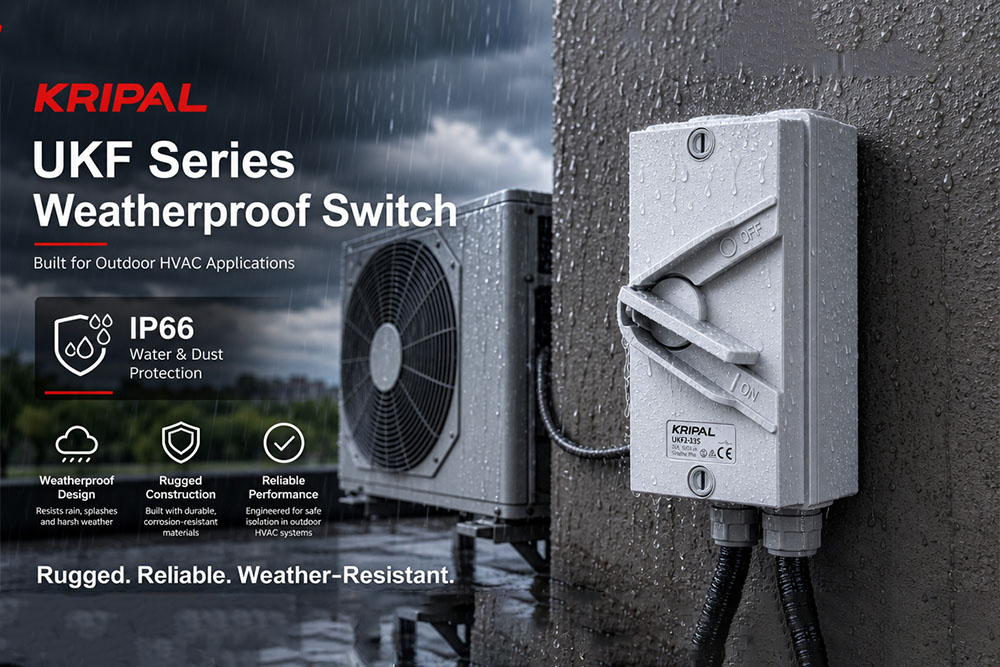
IP66 and IP68 are common protection ratings that are widely used in waterproof switches and sockets, industrial equipment, outdoor lighting, and renewable energy components (such as solar PV and EV charging solutions).
These ratings help prevent dust, moisture, and external contaminants from entering the equipment, which improves product safety, stability, and service life. Different ratings provide different levels of dustproof and waterproof performance, which makes them suitable for different working environments.
This article explains what an IP protection rating is and compares IP66 and IP68 in terms of waterproof capability, application environment, reliability, cost, and usage scenarios, so that you can choose a more suitable protection rating for your needs.
Key Takeaways
- Different Water Stresses: IP66 protects against high-pressure, dynamic water jets, while IP68 supports long-term static water immersion.
- Highest Dust Protection: Both IP66 and IP68 provide the highest level of solid ingress and dust protection (fully dust-tight).
- IP66 Applications: Ideal for most outdoor exposed and industrial washdown environments.
- IP68 Applications: Specifically engineered for underwater, flooding, or continuous submersion scenarios
- Non-Versatile Standard: Under IEC 60529, IP68 does not automatically cover IP66. For dual protection against both jets and immersion, a device must be rated as IP66/IP68.
What Is an IP Protection Rating?
IP protection rating, which stands for Ingress Protection Rating, is an international standard (defined by the International Electrotechnical Commission, IEC 60529) used to measure the ability of an electrical enclosure to resist the intrusion of solid foreign objects, dust, and liquids.
This standard is widely referenced across industrial switchgear, outdoor electrical devices, and heavy-duty waterproof switches and sockets.
What Do the Two Numbers Represent?
The two numbers following “IP” represent specific protection types:
- The First Number (1–6): Indicates the level of protection against solid foreign objects entering the equipment, as well as preventing human body parts (like fingers or hands) and tools from accessing hazardous parts.
- The Second Number (1–8): Indicates the waterproof capability against various forms of liquid entry, such as dripping, spraying, splashing, high-pressure jets, or immersion.
While both IP66 and IP68 share the highest first digit (6), their waterproof performance testing follows entirely different engineering requirements.
What Is the Difference in Waterproof Capability?
IP66 means the device enclosure can withstand powerful, high-pressure water jets and heavy dynamic spraying from any direction. This makes it highly reliable for heavy rain, extreme storms, and environments requiring rigorous high-pressure industrial washdowns.
However, IP66 products are not designed to withstand the continuous hydro-static pressure of underwater immersion.
IP68 offers specialized waterproof protection designed for water immersion. However, it is vital to note that a higher number does not automatically mean it covers lower levels.
According to the IEC 60529 standard, IP66 and IP68 test two entirely different conditions: IP66 focuses on resistance to high-pressure, dynamic water jets (strong splashing and washing), while IP68 focuses on long-term static water immersion at a specified depth and duration defined by the manufacturer.
Because they target different water stresses, an IP68 device might not pass an IP66 high-pressure jet test, and vice versa. For equipment exposed to both heavy washdowns and potential flooding, look for dual certifications, typically marked as IP66/IP68.
What Are the Differences in Application Environments?
IP66 Environments
IP66 is ideal for outdoor exposed environments and areas subject to large amounts of dust, sweeping water, or high-pressure cleaning.
It is widely utilized in construction sites, factory workshops, ports, outdoor lighting installations, and industrial weatherproof sockets. If your equipment needs to survive heavy storms or daily cleaning hoses, IP66 offers excellent field performance.
💡 Kripal Industrial Tip: For standard outdoor power distribution and factory washdown zones, IP66 is the gold standard. Explore our Kripal UKF Series Weatherproof Isolating Switches (IP66) and Outdoor Wall Switches and Sockets for robust, UV-resistant outdoor control.
IP68 Environments
IP68 is strictly required for environments where the equipment will be submerged or where water accumulation and localized flooding are expected. Examples include underground engineering, submersible pump systems, underwater lighting, marine/coastal infrastructure, and specialized industrial basins.
Comparison Table: IP66 vs. IP68
| Feature | IP66 | IP68 |
| Solid/Dust Protection | Complete protection against dust and solid objects (Dust-tight) | Complete protection against dust and solid objects (Dust-tight) |
| Waterproof Level | Resistant to high-pressure, powerful water jets | Resistant to continuous water immersion |
| Water Exposure Type | High-pressure water jets / Industrial washdown / Heavy storms | Continuous hydro-static pressure / Submersion |
| Immersion Capability | Not rated for immersion | Rated for submersion (Depth & duration specified by manufacturer) |
| Typical Applications | Outdoor lighting, industrial switchgear, solar PV combiners | Submersible pumps, marine devices, underground conduits |
| Reliability under Washdown | Excellent (Designed for dynamic water force) | Requires specific validation or dual IP66/IP68 rating |
| Maintenance | Easier routine inspection and component replacement | Stricter; requires careful sealing ring verification upon reassembly |
| Product Cost | More economical for standard outdoor setups | Higher due to precision sealing materials and testing |
| Best For | General outdoor and rugged industrial use | Harsh, flooded, or underwater environments |
Which Has Better Service Life and Reliability?
IP66 products provide exceptional reliability and long-term stability in standard industrial environments. For daily applications involving continuous airborne dust and heavy storms, this protection level keeps internal circuits completely isolated.
Since the dynamic lip seals are optimized for external impacts, the enclosure effectively maintains its shape and seal under severe environmental fatigue.
Because IP68 products utilize heavy-duty hermetic seals to resist continuous static water pressure, they provide unmatched reliability against localized flooding and deep submersion.
They dramatically eliminate the risk of moisture pooling inside the enclosure, preventing internal short circuits, contact corrosion, and premature component failure. If your priority is absolute continuous operation under water-logged conditions, IP68 is essential for maximizing system lifespan.
Which Is Simpler in Terms of Cost and Maintenance?
IP66 products usually feature a more straightforward structural enclosure, meaning their manufacturing and testing costs are lower than those of IP68 variants, making them highly cost-effective for competitive commercial markets.
For standard line-voltage outdoor gear, IP66 offers an optimized price-to-performance ratio. Furthermore, routine field maintenance and standard terminal replacements are incredibly simple and rarely compromise the overall ingress integrity.
Conversely, IP68 systems demand advanced sealing designs and premium materials (like silicone or viton gaskets), which naturally increases upfront production costs. Additionally, their field maintenance protocols are substantially more stringent.
Because their submersive water-tightness relies on flawless sealing alignment, even a microscopic scratch on a gasket or slightly incorrect screw torque during reassembly can defeat the seal. Consequently, IP68 enclosures require highly trained technicians and strict adherence to specific torque protocols whenever the unit is opened.
How Should You Choose Between IP66 and IP68?
Selecting the precise rating involves a balanced evaluation of your actual liquid threat, labor costs, and project budget. Choosing the correct enclosure maximizes equipment lifecycle while avoiding unnecessary upfront expenses.
Choose IP66 for Above-Ground Outdoor Environments
If your equipment is installed above ground and faces environmental factors like heavy rain, airborne dust, or direct high-pressure hose washing, IP66 is technically optimal.
- Common Examples: Outdoor solar PV combiners, electric vehicle (EV) charging spots, commercial outdoor lighting, and industrial power distribution boxes.
- The Benefit: IP66 delivers exceptional dynamic water protection while maintaining a highly economical cost-to-performance ratio.
Choose IP68 for Submersive or Flood-Prone Environments
If the equipment operates directly underwater or inside subterranean trenches prone to flash flooding, IP68 is mandatory.
- Common Examples: Submersible pump systems, marine/dockside switchgear, and underground cable conduits.
- The Benefit: Its heavy-duty hermetic sealing resists continuous hydro-static pressure.
- Note on Air Moisture: For above-ground, high-humidity climates with massive temperature swings, do not rely on IP68 alone; instead, utilize an IP66/67 enclosure equipped with a breather valve to prevent internal condensation pooling.
Choose Dual IP66/IP68 for Complex Industrial Conditions
For harsh setups where equipment is regularly blasted with high-pressure cleaning hoses during shifts and potentially submerged during heavy downpours or drainage backups, you must specify a dual-certified IP66/IP68 enclosure. This guarantees defense against both high-velocity kinetic water impacts and standing water pressure.
Conclusion
Both IP66 and IP68 deliver the maximum 6-level dust-tight protection, but they address entirely different water hazards. IP66 is engineered to deflect high-velocity, dynamic water jets, while IP68 is specialized to resist sustained, static underwater pressure.
Aligning your specific project challenges with the correct engineering standard ensures maximum electrical safety and optimized ROI.
Still unsure which rating fits your commercial switchgear or renewable energy project? Our engineering team at Kripal can customize the exact enclosure configuration for your target market.
👉 [View our full Kripal Waterproof Electrical Products Catalog] or [Contact Our Technical Experts Today] for a specialized quote!
FAQs
Q1 Is IP66 considered completely waterproof?
A: IP66 is highly waterproof against dynamic water forces, such as severe rainstorms, heavy sea sprays, or high-pressure industrial washdown hoses. However, it is not rated to withstand the continuous pressure of being submerged underwater.
Q2 Is IP68 always a better choice than IP66?
A: Not necessarily. IP68 is optimized for static immersion. If an application involves high-velocity blasting water rather than deep drowning, an IP66 enclosure (or a dual-rated IP66/IP68 unit) is technically more appropriate and significantly more cost-effective.
Q3 Do both ratings protect against heavy coastal salt spray?
A: Both feature a dust-tight “6” rating that blocks solid salt particulates. However, for harsh marine corrosion, you must also evaluate the enclosure’s material properties. Look for Kripal’s specialized UV-stabilized, V0 flame-retardant polymers to ensure long-term chemical durability.
Q4 Can IP68 enclosures remain underwater indefinitely?
A: Yes, within industrial parameters. However, the maximum operational depth (e.g., 1 meter vs. 5 meters) and the continuous duration are strictly bounded by the manufacturer’s specific engineering benchmarks. Always verify the factory data sheet before deployment.
Q5 Should outdoor switches and sockets use IP66 or IP68?
A: For standard outdoor wall installations exposed to rain and cleaning hoses, IP66 is the global industry standard and offers the best maintenance flexibility. IP68 is only recommended if the installation point is located in a low-lying basin where water regularly pools or floods.
Related Resources
Explore Knowledge Center >


Need a matching KRIPAL product?
Share voltage, quantity and destination. An engineer will reply with options and lead time.