Search
Knowledge Center
How to Waterproof an Outdoor Socket: A Practical Guide for Safer Outdoor Power
Learn how to waterproof outdoor sockets, IP rating differences & safe installation. Get IP66 outdoor socket maintenance tips to avoid corrosion & short circuits for garden & industrial use.
 May 20, 2026
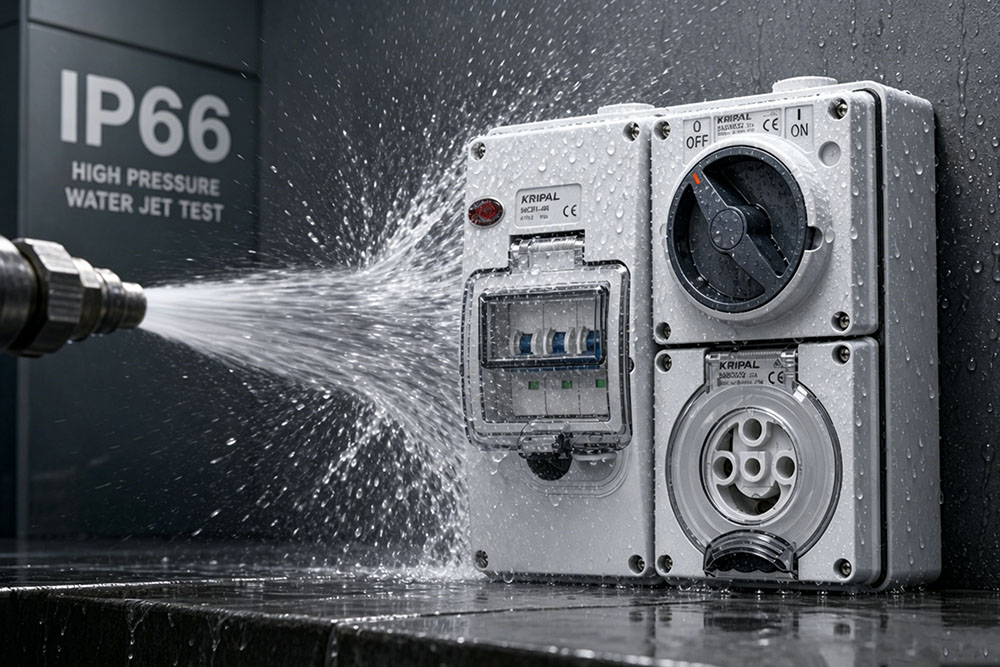
Outdoor electrical systems are constantly exposed to rain, dust, sunlight, and changing temperatures. Whether powering garden equipment, construction tools, outdoor lighting, or industrial machinery, protecting electrical connections from moisture is essential for both safety and reliability.
However, simply choosing an “outdoor socket” is not always enough. The waterproof rating, installation method, sealing design, and long-term maintenance all play important roles in preventing electrical failures.
This guide explains the common risks of water ingress, how outdoor sockets achieve waterproof protection, and why industrial IP66 socket systems are often preferred for demanding environments.
KRIPAL IP66 rated outdoor socket undergoing high-pressure water jet test to demonstrate waterproof performance.
Key Takeaways
- Water entering an electrical socket can cause leakage, short circuits, and equipment damage.
- Waterproof performance depends on both product design and correct installation.
- IP ratings help determine the level of environmental protection.
- Industrial locking sockets provide better sealing during operation.
- Regular inspection and maintenance help extend service life.
Why Is Waterproofing Important for Outdoor Sockets?
Outdoor electrical equipment operates in conditions that indoor products are not designed to handle. Rainwater, humidity, dust, irrigation systems, and cleaning operations can all affect electrical safety.
Without proper waterproof protection, outdoor sockets may experience:
Electric Leakage
Moisture reaching conductive parts can create leakage currents, increasing the risk of electric shock.
Short Circuit
Water can create unwanted conductive paths between electrical contacts, leading to short circuits, equipment shutdowns, or damaged components.
Corrosion and Oxidation
Long-term exposure to moisture may corrode metal contacts and wiring terminals, reducing connection reliability.
Fire and Equipment Failure
Electrical faults caused by water ingress can generate excessive heat, sparks, and, in severe situations, fire hazards.
Understanding IP Ratings
One of the easiest ways to evaluate an outdoor socket is by checking its IP (Ingress Protection) rating.
| IP Rating | Protection Level |
| IP44 | Protection against splashing water |
| IP55 | Protection against water jets and dust |
| IP66 | Protection against dust and high-pressure water jets |
| IP68 | Designed for continuous immersion under specified conditions |
It is important to understand that most waterproof outdoor sockets are not intended for underwater use. For installations exposed to heavy rain and washdown conditions, IP66 protection is commonly selected.
How Do Outdoor Sockets Achieve Waterproof Protection?
Outdoor sockets use several design features to reduce the amount of water and dust entering internal electrical components.
Waterproof Housing
A durable housing forms the first line of defense against the outdoor environment.
High-quality outdoor sockets are often manufactured from flame-retardant and UV-resistant materials that help resist impact, sunlight, and weather-related aging.
Sealing Gaskets
Rubber sealing rings are commonly installed around covers and cable entry points.
When properly compressed, these gaskets help prevent moisture from entering the socket enclosure.
Protective Covers
Protective covers shield socket openings from direct exposure to rain and dust when the outlet is not in use.
Many designs use spring-loaded or self-closing covers for additional convenience.
Weather-Resistant Materials
Outdoor environments expose products to sunlight, humidity, and temperature changes.
Materials such as modified polycarbonate and corrosion-resistant metals help improve long-term durability.
Cable Entry Sealing
Even if the socket housing is waterproof, poorly sealed cable entries can allow water to reach internal wiring.
Using suitable cable glands and waterproof connectors helps maintain the overall protection level.
Why Industrial IP66 Sockets Offer Better Protection
Ordinary weatherproof sockets often rely only on a protective cover and provide their highest protection level when closed.
Industrial waterproof socket systems are designed differently.
The KRIPAL 56SO outdoor socket series is developed for environments where rain, dust, vibration, and mechanical impact are common challenges.
Key design advantages include:
IP66 Protection During Operation
When correctly installed and connected with compatible industrial plugs, the locking assembly helps maintain IP66 protection against dust and high-pressure water jets.
Mechanical Locking System
The threaded locking ring helps prevent accidental unplugging and improves connection stability in demanding workplaces.
High-Strength Polycarbonate Housing
UV-stabilized flame-retardant polycarbonate provides excellent resistance to impact, sunlight exposure, and many industrial chemicals.
Modular Installation Design
The 56SO series can be combined with industrial back boxes, isolation switches, and protective devices to create flexible outdoor power distribution systems.
These features make industrial IP66 sockets suitable for factories, construction sites, marine facilities, food processing plants, and mining operations.
How to Properly Install Waterproof Outdoor Sockets
Even the best waterproof socket may fail if it is installed incorrectly.
Choose a Suitable Location
Whenever possible, install sockets under eaves, protective structures, or sheltered wall locations to reduce direct exposure to weather.
Avoid Standing Water
Do not install sockets in low areas where rainwater can accumulate.
Mounting the socket above ground level helps reduce the risk of water penetration.
Use Waterproof Junction Boxes
Waterproof junction boxes and cable glands help protect internal wiring connections and maintain sealing performance.
Ensure Proper Cable Sealing
Cable entry points should be tightly sealed to prevent moisture from tracking along the cable into the enclosure.
Verify Grounding
Correct grounding is essential for outdoor electrical safety and should always comply with local electrical regulations.
Common Installation Mistakes
Several common errors can reduce the waterproof performance of outdoor sockets.
- Installing the socket too close to the ground
- Using cable glands that do not match cable diameter
- Damaging sealing gaskets during installation
- Leaving cable entry points unsealed
- Ignoring regular maintenance inspections
Avoiding these mistakes helps improve both safety and product lifespan.
How to Improve Waterproof Performance
Additional protective measures can further improve outdoor electrical reliability.
Install Rain Shields
Rain covers reduce direct water exposure and help protect the socket housing.
Inspect Seals Regularly
Rubber gaskets and protective covers should be checked for wear, cracking, or deformation.
Avoid Electrical Overloading
Excessive heat generated by overload conditions can accelerate material aging and reduce sealing performance.
Use Waterproof Plugs and Connectors
A waterproof socket performs best when paired with compatible waterproof plugs and connectors that provide complete system protection.
Choosing the Right Waterproof Socket for Different Environments
| Application | Recommended Features |
| Gardens and Yards | Weather-resistant housing and protective cover |
| Balconies and Terraces | Good moisture resistance and UV protection |
| Construction Sites | Industrial-grade impact resistance and IP66 protection |
| Manufacturing Plants | Mechanical locking and corrosion resistance |
| Marine and Coastal Areas | UV stability and resistance to salt exposure |
| Outdoor Lighting Systems | Reliable sealing and long-term weather protection |
Maintenance Tips for Outdoor Sockets
Regular maintenance helps maintain waterproof performance throughout the product lifecycle.
Clean the Housing
Remove accumulated dirt, dust, and mud that may affect sealing surfaces.
Check for Aging
Inspect housings and rubber seals for cracks, deformation, or UV damage.
Replace Damaged Parts
Protective covers, sealing rings, and wiring terminals should be replaced if signs of wear appear.
Avoid Extreme Exposure
Although outdoor sockets are weather resistant, minimizing unnecessary water immersion and prolonged UV exposure can help extend service life.
Conclusion
Waterproofing an outdoor socket involves much more than adding a protective cover. Product design, IP rating, installation quality, and regular maintenance all contribute to long-term electrical safety.
For industrial environments where heavy rain, dust, vibration, and demanding operating conditions are common, IP66 socket systems provide a higher level of protection and reliability.
Industrial solutions such as the KRIPAL 56SO outdoor socket combine mechanical locking, durable housing materials, and modular installation options to help create safer and more dependable outdoor power distribution systems.
FAQs
Q Do outdoor sockets always need waterproof covers?
Protective covers help reduce direct exposure to rain and dust and are recommended for most outdoor installations.
Q Can indoor sockets be installed outdoors?
No. Indoor sockets are not designed to withstand moisture, UV exposure, or changing weather conditions.
Q How often should outdoor sockets be inspected?
For most installations, visual inspections every three to six months help identify early signs of wear or damage.
Q Can waterproof sockets be used underwater?
Most IP66 waterproof sockets are designed for heavy rain and high-pressure water jets. Continuous underwater use generally requires products with an IP68 rating.
Q Why do outdoor sockets become rusty or corroded?
Poor sealing, long-term moisture exposure, and harsh environmental conditions may lead to oxidation of metal components over time.
Related Resources
Explore Knowledge Center >

Need a matching KRIPAL product?
Share voltage, quantity and destination. An engineer will reply with options and lead time.