Search
Knowledge Center
How to choose a fuse holder?
Learn how to choose a fuse holder: compare types, current ratings, and mounting styles. Ensure circuit safety with the right selection.
 May 03, 2026
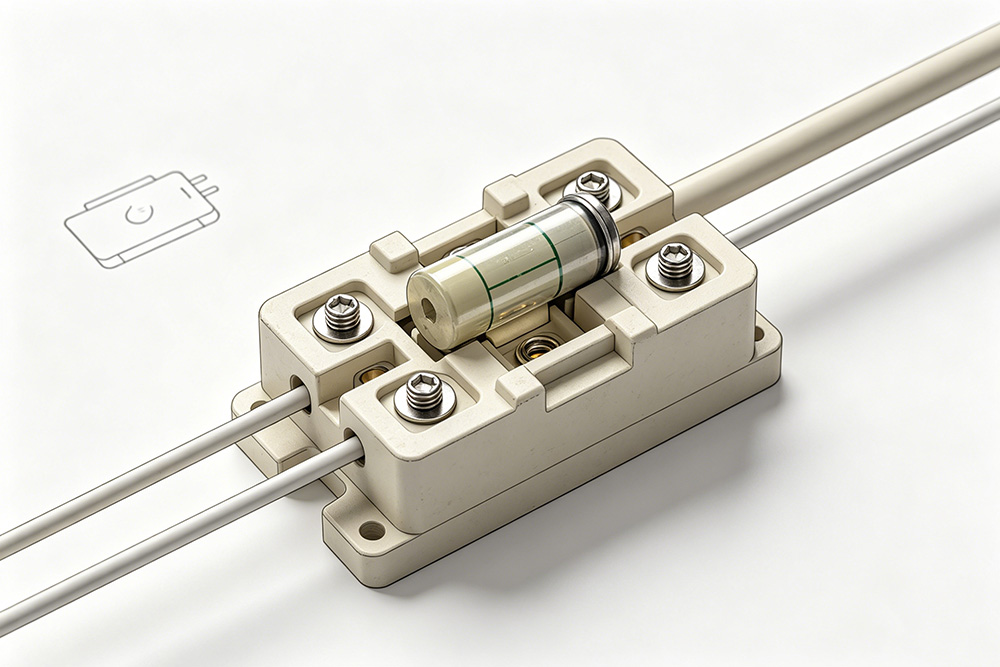
In circuit design and everyday electrical devices, fuses are used to protect circuits, while fuse holders provide secure mounting, connection, and reliable installation. Choosing the right fuse holder ensures stable operation of the circuit and improves maintenance efficiency and safety.
This article will guide you through fuse holder types, technical specifications, installation environments, and selection tips to help you easily find the most suitable product.
Key takeaways
- A fuse holder is a device that protects the circuit and holds the fuse in place.
- When selecting, pay attention to type, rated current and voltage, and the installation environment.
- Extra features such as indicator lights or water protection can improve usability.
- Avoid mismatched sizes or specifications that could cause common problems.
Why fuse holders matter?
Fuse holders are used not only to secure and connect fuses but also to ensure the circuit disconnects reliably during abnormal conditions, protecting devices and users.
A properly chosen fuse holder provides stable electrical connections, facilitates maintenance, and extends the service life of circuits and devices, making it a component that cannot be replaced in circuit design and everyday electrical use.
What are the basic types of fuse holders?
To select the right fuse holder, it is necessary to understand the available types.
Panel mount
Panel mount fuse holders are usually installed on the external control panel of equipment to allow operators easy access. They are commonly used in industrial devices, instruments, and distribution cabinets, allowing fuses to be checked or replaced without opening the device enclosure, which improves maintenance efficiency.
These fuse holders often have protective covers to prevent dust, moisture, and accidental contact, and some models include a fuse status indicator for visual confirmation.
Direct plug-in
Direct plug-in fuse holders use a spring contact design with a simple and compact structure, allowing the fuse to be quickly inserted or removed.
They are suitable for applications where fuses need to be frequently replaced or maintained and are commonly used in home appliances, portable devices, and small power adapters. Users can replace fuses without tools, making them convenient and widely used in consumer electronics.
PCB mount
PCB mount fuse holders are designed for printed circuit boards and are fixed by soldering to ensure stable and reliable circuit connections.
They are usually compact, which saves board space, and are widely applied in motherboards, mobile phones, routers, and set-top boxes. Depending on the installation method, they can be straight insertion or surface mount types to meet different production requirements.
Glass tube
Glass tube fuse holders are used for standard glass tube fuses and are suitable for slow-blow or general overcurrent protection. Their main advantage is the transparent tube, which allows easy visual inspection of the fuse without removal, facilitating fault diagnosis.
These fuse holders are cost-effective and easy to replace, making them the most classic and common type in electronic devices and household appliances, although they have relatively low resistance to mechanical impact.
Technical specifications to consider
When selecting a fuse holder, appearance and price alone are not sufficient, as technical parameters determine whether the product suits the application, operates safely, and is reliable. Consider the following parameters to select the most appropriate product.
Rated current and voltage
These electrical parameters define the maximum load that the fuse holder can safely handle. The rated current should exceed the normal operating current of the circuit and match the fuse used, with a suggested safety margin of 1.25 to 1.5 times.
The rated voltage must not be lower than the circuit’s highest operating voltage, otherwise insulation breakdown, arcing, or even fire could occur.
Size and package type
Size and package type directly affect installation convenience and space utilization and must match the actual environment and the fuse precisely.
The internal dimensions of the holder must correspond to the standard fuse specifications, and the installation location should determine whether a panel mount, direct plug-in, or surface mount type is used. Compact devices should use smaller products while leaving sufficient space for heat dissipation.
Material and temperature rating
Material performance affects service life and stability under harsh conditions. High-quality holders use heat-resistant flame-retardant plastics such as nylon 66, PBT, or PC, while internal contacts are made from brass, phosphor bronze, or tin-plated copper.
High-end products may have gold or silver plating to improve performance. Consumer products can use 85 degree Celsius rated holders, while industrial and automotive environments should select 105 degrees Celsius or higher.
Safety certification
Safety certification indicates product quality and reliability. Common international certifications include UL, CE, and VDE. Products sold in China should also comply with CCC standards. When purchasing, check that the certification marks and numbers are clearly displayed on the product or packaging.
Installation environment and application considerations
Installation environment
When choosing a fuse holder, it is important to consider the specific installation environment. In industrial control equipment, holders may need to withstand high temperatures, vibration, dust, or water to maintain stable and safe operation.
Home appliances focus more on compact design and ease of replacement, with lower environmental demands, while still ensuring basic safety performance.
Application scenario
Besides environmental factors, the actual application scenario should guide selection. Circuits that require frequent maintenance or inspection benefit from panel mount holders that allow easy observation and operation.
For devices with limited space or complex wiring, compact and flexible layout types should be chosen. Considering both environment and application helps ensure circuit safety, stable operation, and easier maintenance.
Additional features and special requirements
Fuse status indicator
Fuse holders with indicator lights provide a clear visual alert when a fuse blows, allowing rapid fault identification without removing the device or using a multimeter.
This reduces troubleshooting time significantly and is suitable for industrial control cabinets, medical equipment, or other situations where quick recovery is needed. Indicator lights usually use low-power, long-life LEDs.
Environmental protection
Holders with fire, water, or dust resistance are suitable for harsh environments or outdoor applications. Fire resistance is achieved with high flame-retardant plastics, while water and dust protection uses sealed structures with various IP ratings. These holders are widely used in outdoor lighting, new energy vehicles, and industrial automation equipment.
Multi-circuit design
Multi-circuit or combined holders integrate several protection channels in a single unit, which is suitable for complex circuits or multi-channel protection.
This design saves installation space, simplifies wiring, and allows centralized management and maintenance. Some models support modular expansion and are commonly used in servers, communication devices, and automotive electronics.
Common mistakes and selection tips
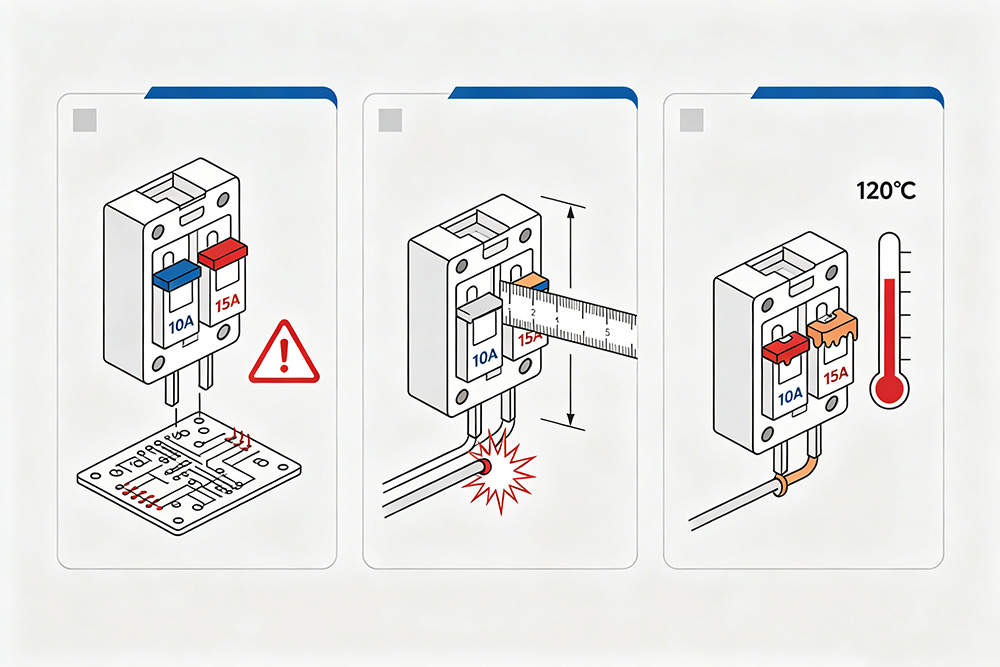
Risk of exchanging different current ratings
Replacing fuses with different rated currents can cause circuit protection failure. A lower rated current causes frequent blowing and interrupts normal operation, while a higher rated current may fail to disconnect the circuit in time, creating safety hazards.
Ignoring size leading to installation mismatch
Neglecting the dimensions and package specifications of a fuse holder can make installation difficult or lead to poor contact, affecting connection stability and increasing maintenance effort.
Material and temperature mismatch
Using holders with insufficient temperature resistance or materials not suitable for the operating environment can reduce lifespan and cause deformation or accidents. In high-temperature or special environments, select holders with heat-resistant, corrosion-resistant, or protective materials.
Conclusion
Choosing the right fuse holder affects circuit safety and device reliability. Understanding the different types, technical specifications, installation conditions, and additional features while avoiding common mistakes improves circuit protection and maintenance efficiency. Correct selection ensures stable operation and extends device service life.
Kripal offers a wide range of fuse holders, so you can find one that fits your needs. Visit the homepage to browse available options.
FAQs
A fuse protects the circuit, while a fuse holder secures and connects the fuse, ensuring reliable operation and convenient replacement.
Q2 How should I choose a fuse holder based on current?
Determine the required rated current of the circuit first, then select a holder that matches it, avoiding both under- and over-rating that could affect protection.
Q3 What is the difference between panel mount and PCB mount?
Panel mount holders are easy to view and replace and are commonly used on control panels. PCB mount holders are soldered to the board, saving space and providing stable connections.
Q4 What environmental factors should be considered for fuse holders?
Temperature, humidity, vibration, dust, and water resistance should be considered, and materials and protective features should match the actual operating conditions.
Q5 What is the advantage of a fuse holder with an indicator light?
When the fuse blows, the indicator light provides a visible warning, allowing quick fault detection and improving maintenance efficiency.
Related Resources
Explore Knowledge Center >
Need a matching KRIPAL product?
Share voltage, quantity and destination. An engineer will reply with options and lead time.