Search
 June 05, 2026
Core Highlights
Before going deeper into motor starters and their working principles, here are the main points to keep in mind:
- Motor starters help control high inrush current during motor startup.
- Different starting methods are used depending on motor size and load requirements.
- Starters also provide protection against overload and voltage issues.
- Common types include direct-on-line, star-delta, autotransformer, and soft starters.
- The choice of starting method affects efficiency, cost, and equipment lifespan.
Understanding Motor Starters
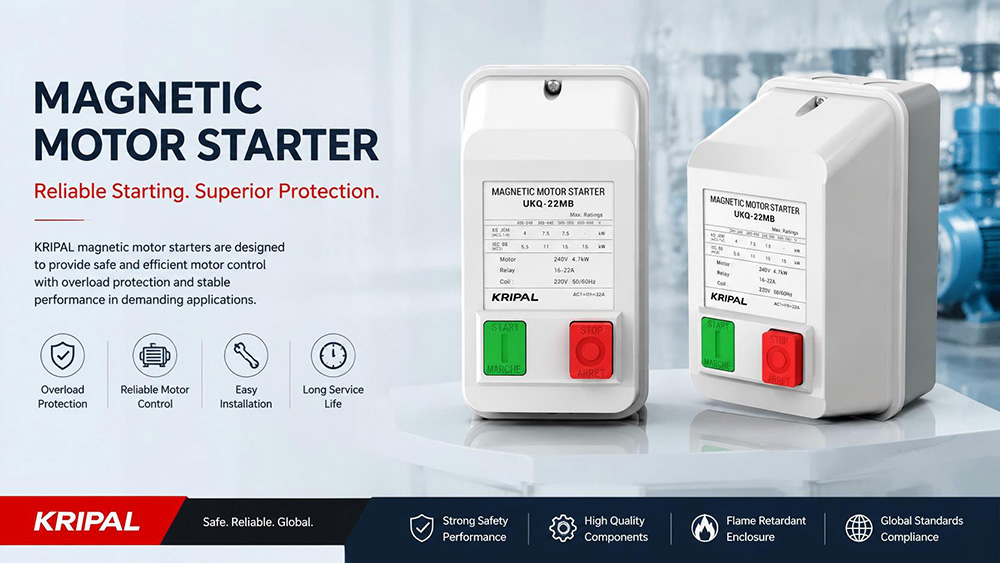
A motor starter is an electrical device that safely starts and stops an electric motor. It combines switching and protection functions to ensure that the motor operates within safe limits.
When a motor starts, it typically draws several times its rated current. Without proper control, this surge can damage windings or cause instability in the power supply. Motor starters reduce this impact by controlling voltage, current, or both during startup.
In most systems, motor starters also include overload protection, short-circuit protection, and sometimes phase failure detection.
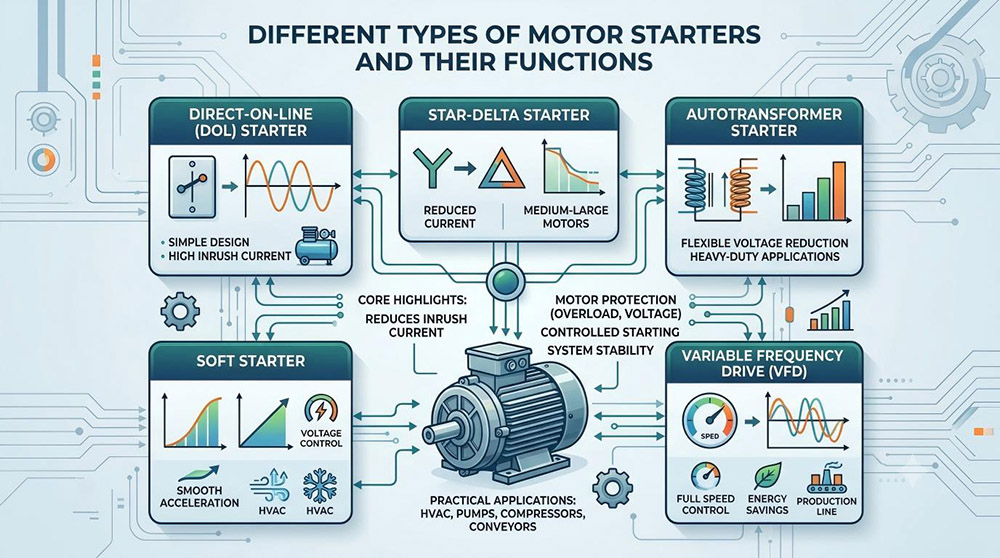
Direct-On-Line (DOL) Starter
The Direct-On-Line starter is one of the simplest and most widely used methods for small motors. In this method, full voltage is applied directly to the motor terminals. As a result, the motor reaches full speed quickly, but it also draws a very high starting current.
These starters rely heavily on robust internal components, particularly high-quality contactors, to handle the frequent electrical switching.
Key characteristics:
- Simple design and low cost
- High starting torque
- High inrush current
- Suitable for small motors with light starting loads
DOL starters are commonly used in applications such as small pumps, fans, and compressors where the electrical network can handle the initial current surge.
Star-Delta Starter
The star-delta starter is designed to reduce starting current by initially connecting the motor windings in a star configuration and then switching to delta once the motor reaches a certain speed. During the star connection phase, the voltage across each winding is reduced, which lowers the starting current significantly.
Key characteristics:
- Reduced starting current (about one-third of DOL)
- Lower starting torque compared to DOL
- More complex control circuit
- Suitable for medium to large motors
This method is commonly used in industrial pumps, conveyor systems, and compressors where gradual acceleration is preferred.
Autotransformer Starter
An autotransformer starter reduces the voltage supplied to the motor during startup using an autotransformer. Once the motor reaches a certain speed, full voltage is applied.
The voltage can be adjusted in steps, allowing better control over starting current and torque.
Key characteristics:
- Flexible voltage reduction options
- Good balance between torque and current control
- Higher cost and more complex structure
- Suitable for large motors with heavy loads
This type is often used in heavy-duty industrial applications such as crushers, large compressors, and mills.
Soft Starter
A soft starter uses solid-state devices to gradually increase the voltage supplied to the motor. Instead of sudden full voltage application, the motor accelerates smoothly.
This method reduces mechanical stress on both the motor and the driven equipment.
Key characteristics:
- Smooth and controlled acceleration
- Reduced mechanical wear and electrical stress
- Adjustable start and stop profiles
- No speed control after full start (unlike variable frequency drives)
Soft starters are commonly used in HVAC systems, pumps, and conveyors where smooth operation is required.
Variable Frequency Drive (VFD)
A Variable Frequency Drive controls motor speed by adjusting both voltage and frequency. Unlike traditional starters, it offers full control over motor speed during both start and operation.
Key characteristics:
- Full speed control capability
- Significant energy savings in variable load systems
- Smooth acceleration and deceleration
- Higher initial cost
VFDs are widely used in modern automation systems, especially in fans, pumps, and production lines where speed control improves efficiency.
Comparison of Motor Starting Methods
Different motor starting methods serve different purposes depending on system requirements.
| Starter Type | Key Characteristics |
|---|---|
| DOL (Direct-On-Line) Starters | Provide simplicity but draw high starting current. |
| Star-Delta Starters | Balance cost and current reduction during motor starting. |
| Autotransformer Starters | Offer better torque control, suitable for heavy loads. |
| Soft Starters | Reduce mechanical stress effectively during motor start-up. |
| VFDs (Variable Frequency Drives) | Provide the highest level of control, efficiency, and speed regulation. |
Selecting the right method depends on motor size, load type, electrical infrastructure, and operational needs.
Key Functions of Motor Starters
Beyond starting motors, these devices play several important roles:
| Function | Description |
|---|---|
| Current Limitation | Reduces inrush current during startup, preventing voltage drops in the electrical network. |
| Motor Protection | Uses overload relays and protection circuits to prevent overheating and electrical damage. |
| Operational Control | Provides safe start and stop functionality for motors in automated systems. |
| Equipment Protection | Reduces mechanical shock, helping extend the lifespan of connected equipment. |
Practical Applications
Motor starters are used in a wide range of industries:
- Water treatment plants using pumps and filtration systems
- Manufacturing lines with conveyors and robotic systems
- HVAC systems in commercial buildings
- Mining and heavy industry equipment
- Agricultural irrigation systems
Each application requires a different balance of cost, performance, and protection.
Conclusion
Motor starting methods are designed to address the challenges of high inrush current and mechanical stress during motor startup. Each type of motor starter offers a different level of control, efficiency, and complexity.
Understanding how these systems work helps in selecting the right solution for different industrial and commercial needs, ensuring smoother operation and improved equipment reliability. I’m here to help you explore reliable motor starters and smart starting solutions for every application. If you need any guidance or support, feel free to reach out anytime.
FAQ
1. What is the main purpose of a motor starter?
A motor starter controls the starting current and provides protection to the motor during startup and operation.
2. Which motor starter is most commonly used?
The Direct-On-Line (DOL) starter is the most common for small motors due to its simple design and low cost.
3. Why is star-delta starting used?
It is used to reduce starting current and minimize electrical stress on the power system.
4. What is the difference between a soft starter and a VFD?
A soft starter controls voltage during startup only, while a VFD controls both motor speed and frequency during operation.
5. Can motor starters improve energy efficiency?
Yes, especially advanced systems like soft starters and VFDs can reduce energy consumption in suitable applications.
6. Can motor starters protect the motor?
Yes, most motor starters include protection features such as overload protection, short-circuit protection, and phase failure protection to safeguard the motor.
7. Are motor starters used in residential applications?
Yes, although they are more common in industrial settings, motor starters can also be used in residential applications like water pumps and HVAC systems.
8. How do I choose the right motor starter?
The selection depends on motor size, load type, starting torque requirements, electrical supply conditions, and cost considerations.