Search
DC Surge Protection Device
KRIPAL Modular DC Surge Protective Devices
KRIPAL offers a diverse range of modular DC Surge Protective Devices (SPDs). The SPI, SPB, SPC, and SPD series are designed for applications requiring Class B,Class C and Class D lightning protection, respectively. They are utilized for equipotential bonding during lightning events and comply with international standards including EN 50539-11:2013, IEC 61643-1, and GB/T 18802.1.
Leveraging superior design capabilities, this series incorporates high-performance varistors that respond within nanoseconds, effectively suppressing the impact of lightning strikes on photovoltaic systems.
Get A Quote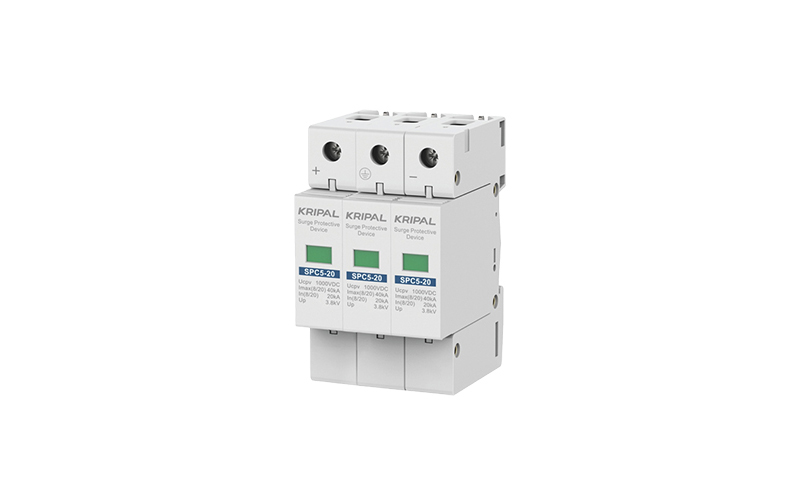
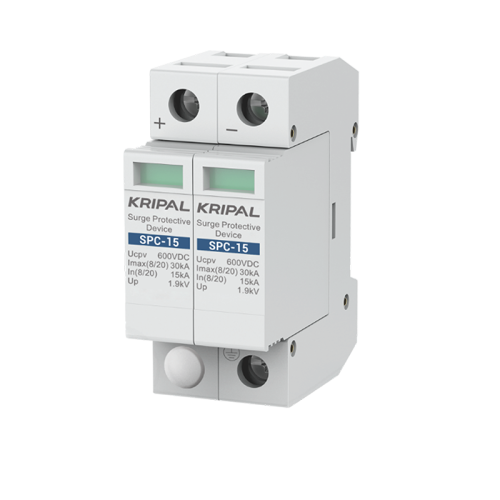

SPC-15 DC Surge Protector 2Pole 600V DC SPD 15kA~30kA Surge Arrester
The SPC-15 2p Surge Arrester provides equipotential bonding at the boundaries of LPZ1, LPZ2, and LPZ3 zones.
View DetailsKRIPAL Modular DC Surge Protective Devices
SPI Series (SPI-150, SPI-120, SPI-100, SPI-80, SPI-60)
Designed for Class B Lightning Protection, the SPI series provides equipotential bonding during lightning events.
Models SPI-150, SPI-120, and SPI-100 are typically installed at the boundaries between LPZ0A/LPZ0B and LPZ1 zones.
Models SPI-80 and SPI-60 are commonly installed in low-voltage main distribution cabinets where underground conduits enter the building.
SPB Series (SPB5-25, SPB3-25)
This series is engineered for Class B Lightning Protection, ensuring equipotential bonding. These devices are installed at the boundaries of LPZ0A, LPZ0B, and LPZ1 zones and are typically housed in the main low-voltage distribution cabinet for incoming underground lines.
SPC Series (SPC-20, SPC-15, SPC5-20, SPC5-15)
These products are suitable for Class C Lightning Protection and facilitate equipotential bonding. Installed at the boundaries of LPZ1, LPZ2, and LPZ3 zones, they are commonly used in:
- Floor distribution panels
- Computer centers
- Telecom rooms
- Elevator control rooms
- Variable Frequency Drive (VFD) control rooms
- Hospital operating rooms, ICUs, and areas with electronic medical equipment
- For dispersed villas, the SPC should be installed in the household distribution box.
Latest Blog Of DC Surge Protection Device
Explore Solution >SPD Series (SPD, SPD5)
This series is applicable for Class D Lightning Protection and is used for equipotential bonding. Installed at the boundaries of LPZ1, LPZ2, and LPZ3 zones, they are typically mounted in:
- Household distribution boxes
- Computer centers
- In front of information equipment, electronic devices, control equipment, or the nearest socket outlet boxes.
Frequently Asked Questions
Explore FAQ >Choosing the right KRIPAL DC SPD is critical for system safety.
Focus on these four key parameters tailored to our product range:
Maximum Continuous Operating Voltage (Uc):
This must be higher than the maximum DC voltage of your PV system (considering factors like cold-temperature voltage rise). KRIPAL offers a wide range of Uc values across our SPI, SPB, SPC, and SPD series to match various system voltages./
Voltage Protection Level (Up):
This indicates the residual voltage that reaches your equipment. A lower Up value means better protection. Ensure the Up of the KRIPAL SPD is lower than the impulse withstand voltage of your sensitive inverter and other equipment.
Nominal Discharge Current (In) and Maximum Discharge Current (Imax):
These represent the SPD's ability to divert surge currents. Higher values indicate greater durability against lightning strikes. Our Class B SPI series, for example, is engineered with very high In/Imax ratings for the main service entrance.
- Uc (Max. Continuous Operating Voltage):The maximum DC voltage at which the KRIPAL SPD can operate continuously and safely without degradation.
- Up (Voltage Protection Level): The maximum voltage that will be measured across the SPD's terminals when it is in operation. A low Up, as found in our SPC and SPD series, ensures delicate electronics are safe.
- In (Nominal Discharge Current): The peak value of a current wave (8/20 μs) that the KRIPAL SPD can withstand multiple times without damage. This tests its durability.
- Imax (Maximum Discharge Current): The peak value of a current wave (8/20 μs) that the SPD can withstand at least once. This represents the maximum surge handling capability.
Proper installation is key to ensuring optimal performance.
Please follow these guidelines for KRIPAL SPDs:- Correct Location: Install the SPD in the DC distribution box, as close as possible to the inverter input. This provides the most direct protection for your most valuable asset.
- Short and Thick Leads: The connecting wires to the SPD must be as short and thick as possible to minimize the additional impedance in the surge current path, which can lead to a higher let-through voltage.
- Reliable Grounding: The grounding conductor must be securely connected to the main earth terminal. The system's ground resistance must comply with local electrical codes to ensure surge currents can be dissipated safely into the earth.
- Upstream Overcurrent Protection: A KRIPAL DC SPD must be protected by a suitably rated DC fuse or circuit breaker to safely disconnect it in the rare event of a catastrophic failure.
KRIPAL DC SPDs are equipped with a clear visual indicator window (e.g., green for OK, red for fault) and, on some models, a remote alarm contact. Once the indicator shows a fault (e.g., turns red), it signifies that the internal components (like the varistor block) have degraded and the protective function is lost. You must replace the module immediately. Continuing to operate with a failed SPD leaves your entire PV system vulnerable to the next surge event.
The service life of a KRIPAL DC SPD is not defined by time alone, but by its exposure to surge events. Its lifespan depends on the number and intensity of surges it has diverted.
- Even without a fault indication, we recommend inspecting your SPD during routine system maintenanceand replacing it per the manufacturer's guidelines.
- After a direct lightning strike or a severe thunderstorm, a prompt inspection or replacement is highly advised, even if the indicator appears normal, as the cumulative damage may have reached its limit.
How can we assist you?
Tell us a bit more so we can route your request to the right expert.