Search
News
How to Choose a Contactor and Motor Starter?
Learn how to choose between a contactor and a motor starter. This guide covers key differences, selection based on motor current, voltage, and protection needs for reliable operation.
 December 06, 2025
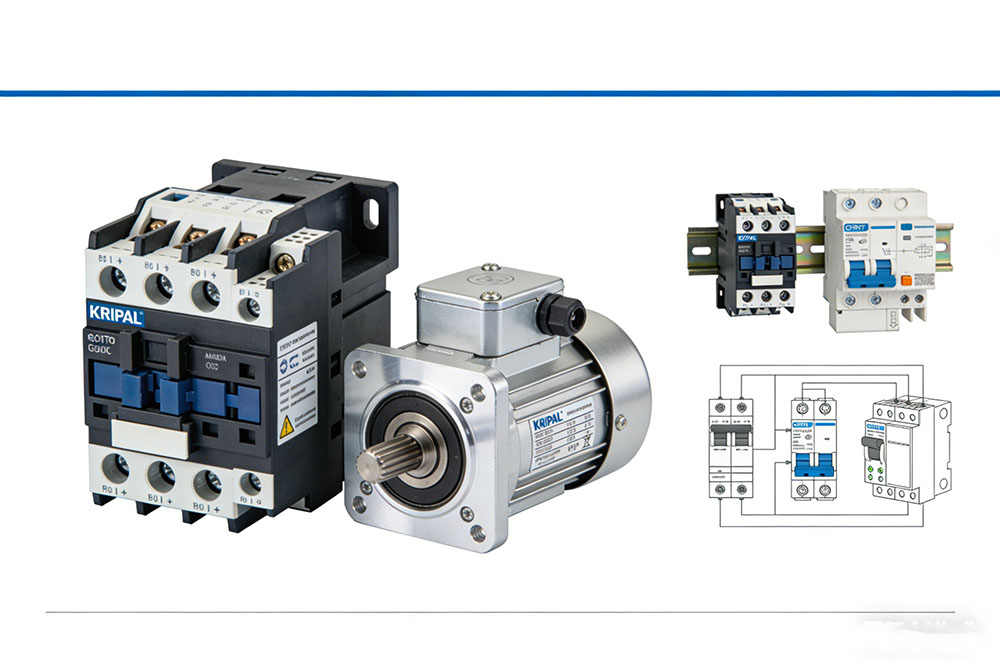
In industrial and commercial applications, selecting the right contactor and motor starter help ensure efficiency, safety, and long-lasting equipment performance. These two components are essential for reliable motor operation and understanding their different types, specifications, and applications is crucial for making the best choice.
This article explores how to choose the most suitable contactor and motor starter based on load requirements, operating conditions, and cost-effectiveness. Whether you are installing new equipment or replacing existing ones, this guide will provide the insights needed to make an informed decision.
Key Takeaway
- Contactor: Only handles switching on and off, no protection which is suitable for scenarios with independent protection and frequent start-stop operations.
- Motor starter: Contactor + thermal relay, with overload/phase loss protection, directly protecting the motor for greater safety.
- Selection core: Select based on the motor’s rated current, voltage matching, and for frequent start-stop operations, choose a high-durability model.
- Selection principle: If only switching is required, choose a contactor. If motor protection is needed, use a starter directly.
What is a Contactor?
A contactor is an electromagnetic switch used to control high power loads such as motors, pumps, fans, and heaters. It allows a small control signal to switch a larger current, enabling safe remote and automatic operation. Contactors are reliable and suitable for frequent switching, and are often used with protective devices in motor applications.
What is a Motor Starter?
A motor starter is a combined electrical device used for the direct starting and protection of electric motors. It integrates a contactor with a thermal relay or motor protection module, forming a complete motor control and protection unit.
The main role of a motor starter is not only to start the motor but also to monitor current in real-time. If issues such as overload, phase failure, or motor stalling occur, the motor starter can automatically disconnect the circuit to prevent motor damage. Unlike a simple contactor, a motor starter includes protection features, simplifying wiring and offering greater safety without the need for additional protective devices.
Motor starters are compact, feature-complete, and can start and stop motors with built-in protection settings. They are commonly used for equipment like fans, pumps, and conveyors, making them the most commonly used control device for small to medium motors in industrial settings.
What is the Core Difference Between Them?
Functional Difference
The main difference between a contactor and a motor starter lies in their functions, structure, and applications.
A contactor’s core function is to serve as an electromagnetic switch, handling the on and off control of the circuit without electrical protection features. It is typically used in systems where separate protection devices are already installed.
A motor starter is a complete control and protection device. It can start and stop the motor while also monitoring its condition, providing protection against overload, phase failure, and motor stalling.
Structural Difference
Structurally, a contactor is a standalone electrical component that includes an electromagnetic coil, main contacts, and auxiliary contacts.
A motor starter is an integrated device that combines a contactor with protection components such as thermal relays or motor protection modules.
Application Difference
In terms of application, contactors are used in systems that require switching functions only. Motor starters are designed for direct motor control, offering built in protection and simplified installation.
| Aspect | Contactor | Motor Starter |
| Function | Serves as an electromagnetic switch for on/off control without electrical protection features. Designed for systems with separate protection. | A complete control and protection device, capable of starting and stopping the motor while offering automatic protection from overload, phase failure, and motor stalling. |
| Structure | Standalone component with an electromagnetic coil, main contacts, and auxiliary contacts. | A combined device that includes a contactor along with protection elements like thermal relays or motor protection modules. |
| Applications | Used in systems that need only switching functions, without built-in protection. | Designed for direct motor control, providing both switching and protection functions, simplifying installation. |
Applications of Contactors and Motor Starters
Contactor Applications
Used in systems requiring frequent start/stop operations and remote control, such as machine tools, automated production lines, and conveyors. Used in variable frequency drives, soft starters, and PLC control systems as main circuit switching elements.
Controls large power loads like fans, pumps, compressors, and central air conditioning units.
Often used in complex control systems, typically in combination with protective devices like thermal relays and circuit breakers. Suitable for systems requiring multi-location control, interlocking, or automatic cycling.
Motor Starter Applications
Used for direct starting and stopping control of small to medium three-phase asynchronous motors. Suitable for equipment like fans, pumps, small conveyors, mixers, and air compressors. Ideal for applications where the control and protection features are integrated and simple wiring is preferred.
Provides protection against overload, phase failure, and motor stalling, preventing motor burnout. Commonly used in applications with simple operating conditions, where cost and installation simplicity are important.
How to Choose a Contactor?
Match to Motor Rated Current
The contactor’s rated current must be equal to or greater than the motor’s rated current. If the motor starts under heavy load or frequent on/off cycles (more than 3 times per minute), it is recommended to choose a larger size. For star-delta starting, use a contactor rated for 0.5-0.6 times the motor’s rated current for the main circuit, or 0.3-0.4 times for the star-point contactor.
Control Coil Voltage
The control voltage of the coil must match the control voltage of the panel (common values are AC 220V, AC 380V, DC 24V). Never confuse voltages, as this can damage the coil or prevent it from functioning. Some multi-voltage models can be used flexibly.
Duty Cycle and Start/Stop Frequency
For common squirrel-cage asynchronous motors, choose an AC-3 duty contactor. For resistive loads, use AC-1, and for wound rotor motors, select AC-2. In high-frequency start/stop scenarios (such as assembly lines), choose a high-durability contactor to avoid contact wear.
Main Circuit Voltage and Poles
Use a three-pole contactor for 380V three-phase motors and a two-pole contactor for 220V single-phase motors. If controlling a neutral line, choose a four-pole contactor. For multiple loads, consider a multi-pole contactor.
Consider Environmental Conditions
In high-temperature environments (e.g., metalworking shops), choose a high-temperature resistant contactor. For dusty or humid environments, choose models with high protection ratings to avoid degradation from environmental factors.
How to Choose a Motor Starter?
Match Motor Power and Rated Current
The motor starter should be precisely matched to the motor’s power and rated current. The starter’s rated current must be equal to or greater than the motor’s rated current. If the motor starts under heavy load (e.g., compressors, crushers), choose a higher-rated model for stable starting.
Protection Features
The main advantage of a motor starter is its built-in protection features. Choose one with overload and phase failure protection, as these are critical to preventing motor damage. If the application involves frequent stalling, select a model with additional stall protection. For regular equipment like fans and pumps, basic overload and phase failure protection are usually sufficient.
Motor Type and Starting Method
For standard small to medium squirrel-cage motors, choose a standard integrated starter. Wound rotor motors require specialized starters. If the motor is large (≥15kW), avoid direct-on-line starters and opt for star-delta or soft starters to reduce starting current impacts on the motor and electrical grid.
Voltage and Installation Method
The starter’s main circuit voltage must match the site’s supply. Use a three-phase starter for 380V motors and a single-phase starter for 220V motors. Ensure the installation method (rail-mounted or fixed) fits the control panel layout. Match the coil control voltage (usually AC 220V or DC 24V) to ensure proper operation.
Convenience and Environmental Conditions
For simple wiring and integrated protection, choose an all-in-one starter for easy installation and maintenance. For high temperatures or dusty environments, select starters with high protection ratings. For outdoor use, ensure proper waterproofing to avoid malfunctioning due to environmental factors.
Conclusion
When selecting a contactor and motor starter, consider the motor type, load requirements, protection features, and operating conditions. By making the right choice, you can ensure the safety and reliability of the motor system, increase efficiency, and reduce long-term maintenance costs. Whether for new installations or replacements, a correct choice will extend equipment life and minimize operational risks. Always ensure that the selected components meet industry standards to ensure efficient and safe motor operation.
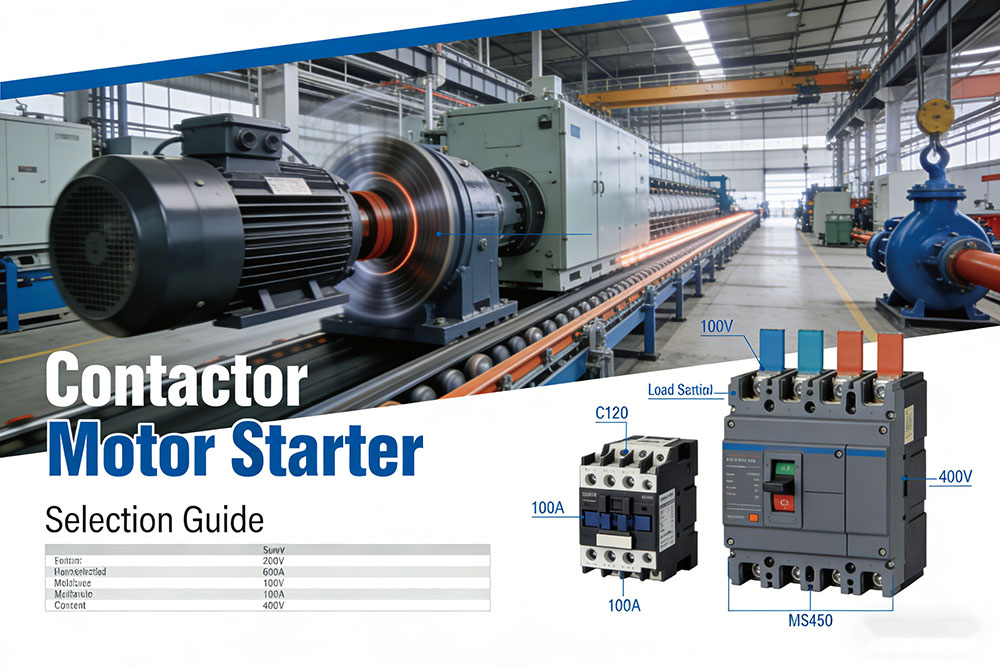
KRIPAL offers a wide range of contactors that can perfectly solve any issues you may face in this area. Visit our product page to find the solution that suits your needs.
FAQs
Q: What is a contactor?
A contactor is an electrical switch used to control the flow of electricity to a motor or other load, often integrated with a control circuit.
Q: How is a motor starter different from a contactor?
A motor starter includes a contactor along with protection features such as overload and short-circuit protection, preventing motor damage.
Q: How do I choose the right contactor?
When selecting a contactor, consider the motor’s power, type (single-phase or three-phase), and the temperature and humidity of the operating environment.
Q: What protection features should a motor starter have?
A motor starter should provide overload protection, short-circuit protection, and possibly phase failure protection to ensure the motor operates safely.
Q: What’s the difference between an energy-efficient contactor and a traditional one?
Energy-efficient contactors are designed to optimize energy use, reducing power consumption and lowering long-term energy costs.
Q: In which environments can motor starters be used?
Motor starters can be used in various environments, but for harsh conditions, more durable models should be selected.
Related Resources
Explore News >

How can we assist you?
Tell us a bit more so we can route your request to the right expert.