Search
News
Common Causes of Circuit Breaker Tripping
Circuit breakers exist to protect electrical circuits from damage, but sometimes they trip too often. A breaker that keeps tripping signals that there is an issue somewhere in the circuit.
 November 06, 2025
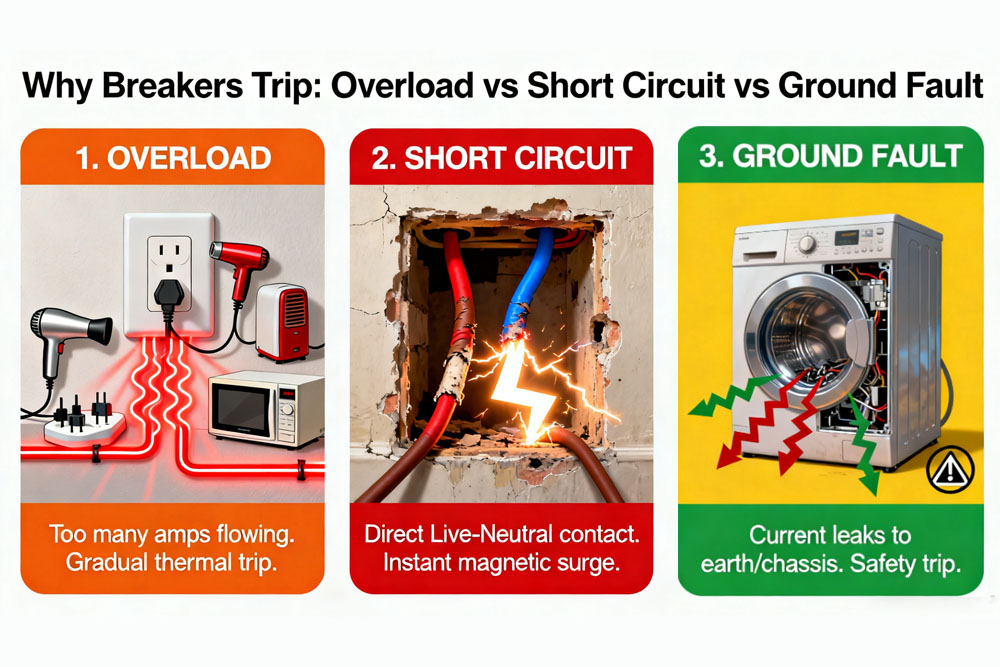
Circuit breakers exist to protect electrical circuits from damage, but sometimes they trip too often. A breaker that keeps tripping signals that there is an issue somewhere in the circuit. Understanding common causes helps you troubleshoot and correct the problem.
Why Breakers Trip
When a breaker trips it interrupts the circuit because it detects abnormal current or fault conditions. Typical triggers include overload, short circuit, ground fault or wiring problems. These conditions can stress wiring, devices or the safety of people.
Frequent or repeated trips often point toward deeper issues than a one-time overload. In those cases investigating wiring integrity, load balance, device condition or the breaker itself may reveal problems that need correction.
Common Causes at a Glance
Overload of the Circuit
When a single circuit supplies too many devices or high-power loads, the total current drawn may exceed what the breaker or wiring was designed for. Under such overload, current remains above safe limits for extended time. This causes heater elements inside the breaker to warm and eventually trip the circuit. Overload trips often occur when several appliances run simultaneously or when a load gradually increases beyond original capacity.
Short Circuit Between Conductors
A short circuit happens when a live (hot) conductor touches neutral or another live conductor, often due to damaged insulation, wire fault, or improper wiring. Such contact creates a very low resistance path, causing a sudden surge of extremely large current. The breaker reacts almost immediately to interrupt this fault current. Short circuit trips often show clear signs such as sparks, burning smell, outlet damage or smoke.
Ground Fault or Leakage to Earth
Ground fault occurs when current leaves the intended path (live to neutral) and travels to earth. For example, via damaged insulation, moisture, water ingress, or contact with grounded metal surfaces. In circuits protected by earth-fault sensitive breakers or residual current devices, this imbalance triggers a trip. This protects people and equipment from leakage paths and prevents fire or shock hazards.
Faulty Appliance or Internal Load Failure
Sometimes the trip is not caused by wiring or overall circuit stress but by a faulty appliance or equipment. Internal short, insulation breakdown, motor winding failure or internal component damage can draw excessive current or cause arcing. Each time that particular appliance is powered on the breaker may trip. This signals that the defect lies within the device rather than the branch circuit or breaker.
Wiring Issues, Loose Connections or Insulation Aging
Over time wiring may degrade. Insulation becomes brittle, connections loosen, terminals corrode, mechanical damage occurs, or insulation is compromised by heat or moisture. These issues can create intermittent faults, leakage, or unexpected current paths. Such conditions may trigger breaker trips even when load seems reasonable. Old or improperly installed wiring therefore increases risk of repeated trips.
Environmental Factors and Transient Conditions
External conditions such as moisture, humidity, dust, heat, or exposure to water can affect wiring insulation and appliances. Wet environments, damp outlets, condensation, or outdoor exposure may cause leakage or ground faults. Transient surges, like lightning strikes or sudden power fluctuations, may also stress the circuit and cause the breaker to trip.
How to Troubleshoot a Tripping Breaker
Here is a simple checklist to guide troubleshooting when a breaker keeps tripping
- Turn off and unplug all devices on the affected circuit, then reset the breaker. If it holds, plug devices back one at a time to identify a faulty load.
- Inspect wiring, switches and outlets for damage, discoloration or loose connections. Signs of overheating or burning suggest insulation breakdown or poor contact.
- Check whether the total load on the circuit exceeds breaker rating. Distribute heavy loads across different circuits if needed.
- If ground fault seems possible (for example near water or metal housing), verify grounding and insulation condition.
- If breaker trips even with no load or obvious wiring fault, consider that the breaker itself may have aged or internal mechanism failed. Replace with a rated breaker and test again.
Why Understanding the Cause Matters
When the root cause is overload, redistributing load or upgrading wiring and breaker rating may solve the problem.
If the issue is short circuit, ground fault or wiring damage, ignoring the fault risks fire, equipment damage or electric shock. Proper repair or rewiring becomes necessary.
If a fault lies within a particular device, removing or repairing that device restores circuit stability while preserving safety.
Preventive Measures to Reduce Nuisance Trips
To avoid frequent tripping and maintain stable electrical system operation consider the following good practices
- Avoid overloading a single circuit by balancing loads, especially high-power devices
- Periodically inspect wiring and connections for wear, damage or loose terminals
- Use rated and properly installed breakers for circuit protection
- Avoid extension cords or overloaded power strips for heavy loads
- Replace old or faulty appliances rather than relying on repeated breaker resets
These measures help maintain circuit integrity and reduce the risk of repeated trips or hidden hazards.
Conclusion
Frequent breaker trips often point to overloads, shorts, ground faults, faulty loads or wiring issues. Careful troubleshooting helps identify whether the problem lies with wiring, load balance, devices or the breaker itself. Addressing the root cause restores safe, stable operation and protects wiring and equipment.
If you want reliable circuit breakers or need help identifying protection solutions for your installation, contact Kripal for a quote.
Related Resources
Explore News >
How can we assist you?
Tell us a bit more so we can route your request to the right expert.