Arc Quenching
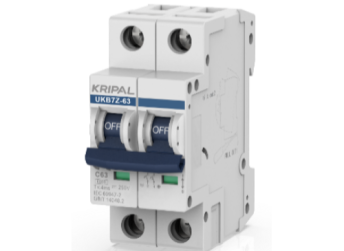
When a circuit breaker interrupts a high current, an electrical arc (spark) is generated. MCBs contain “arc chutes”—special chambers that split and cool this arc to extinguish it safely. Isolators lack this feature, which is why opening an isolator under a heavy load can be dangerous and cause arcing.
Number of Poles
You will often see Single Pole (1P) MCBs protecting individual lights or sockets. However, Isolators are typically Double Pole (2P) or higher because their job is to completely separate the installation from the live and neutral supply, ensuring total safety for the electrician.
Common Questions About Isolator and mcb
Can I use an Isolator instead of an MCB?
No, you must never do this. An Isolator provides zero protection against overloads or short circuits. Using it in place of an MCB leaves your wiring vulnerable to melting and fire hazards.
Can I use an MCB instead of an Isolator?
Technically yes, but it is not best practice. An MCB can manually switch off a circuit and effectively isolate it. However, a dedicated Isolator is preferred for main incomers and heavy machinery because it typically has a larger gap between contacts when open. This provides a more secure and visible guarantee that the power is truly disconnected.
How can I visually tell the difference between them?
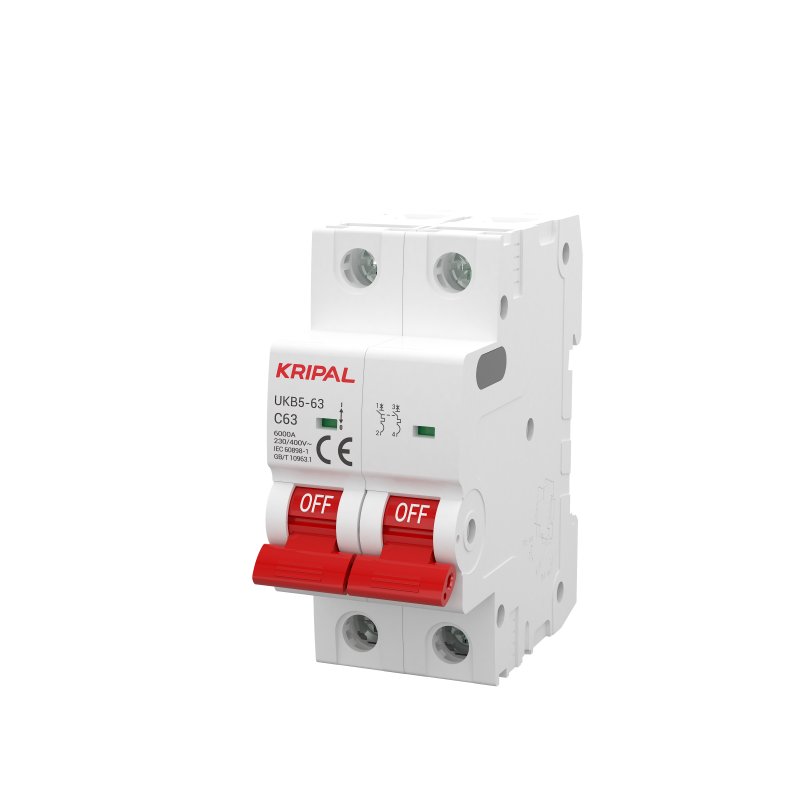
You can distinguish them by inspecting the diagram printed on the front of the device. An MCB symbol includes a specific curve or rectangle that represents the thermal and magnetic protection elements. In contrast, an Isolator symbol typically shows a simple straight line which indicates a basic switch function. Additionally, MCBs often display a tripping curve code such as B, C, or D followed by a number (e.g., C16), whereas Isolators usually display only the amperage rating (e.g., 63A).
Why didn’t my Isolator trip during a short circuit?
An Isolator is purely a manual device and lacks the internal sensing mechanism required to detect faults. It does not have the thermal strip or magnetic coil found in an MCB. Consequently, if a short circuit occurs, the Isolator will remain in the ON position and current will continue to flow until a connected MCB or main fuse intervenes to cut the power.
What current rating should I choose for an Isolator Switch?
You should always select an Isolator with a current rating equal to or higher than the upstream protective device. Since the Isolator does not protect itself, it must be robust enough to carry the maximum potential current of the circuit. For example, if your main supply is protected by a 63 Amp MCB, your Isolator must be rated at minimum 63 Amps or higher to operate safely without overheating.
Conclusion
In summary, while the MCB and the Isolator Switch may look similar on a switchboard, they play different roles in the electrical ecosystem. The MCB is your automatic bodyguard that protects your home from electrical faults. The Isolator is your manual safety gate that ensures safe conditions for maintenance. A well-designed electrical system utilizes both devices where Isolators allow for safe work and MCBs ensure continuous protection.
To ensure your installation meets the highest safety standards, it is vital to select high-quality components you can trust. Visit kripal.net today to explore our extensive range of certified MCBs and Isolator Switches tailored for your specific electrical requirements.



 Search
 January 01, 2026