News

Do You Need an External DC Isolator if Your Inverter Has a Built-in Switch? (2026 Guide)

Do you need an external DC isolator if your inverter has a built-in switch? 2026 guide covers regulations, safety, and when an external DC isolator is required.

date April 06, 2026

Do You Need an External DC Isolator if Your Inverter Has a Built-in Switch? (2026 Guide)
Home > Resources > Do You Need an External DC Isolator if Your Inverter Has a Built-in Switch? (2026 Guide)
In photovoltaic power systems, safety is always a core concern in design and installation. As a critical safety component, the DC isolator has been widely used, and as more inverters are equipped with built in DC isolation functions, a common question arises about whether an additional external DC isolator is still required when the inverter already includes one. This article explores this topic to help you make a more informed decision.

Key takeaways

• In most cases, an inverter with a built in DC isolator can meet basic safety needs
• Whether an additional isolator is required depends on local regulations and installation standards
• External DC isolators still offer advantages in maintenance and emergency shutdown situations
• A balanced decision should consider safety, cost, and compliance

What is a DC isolator?

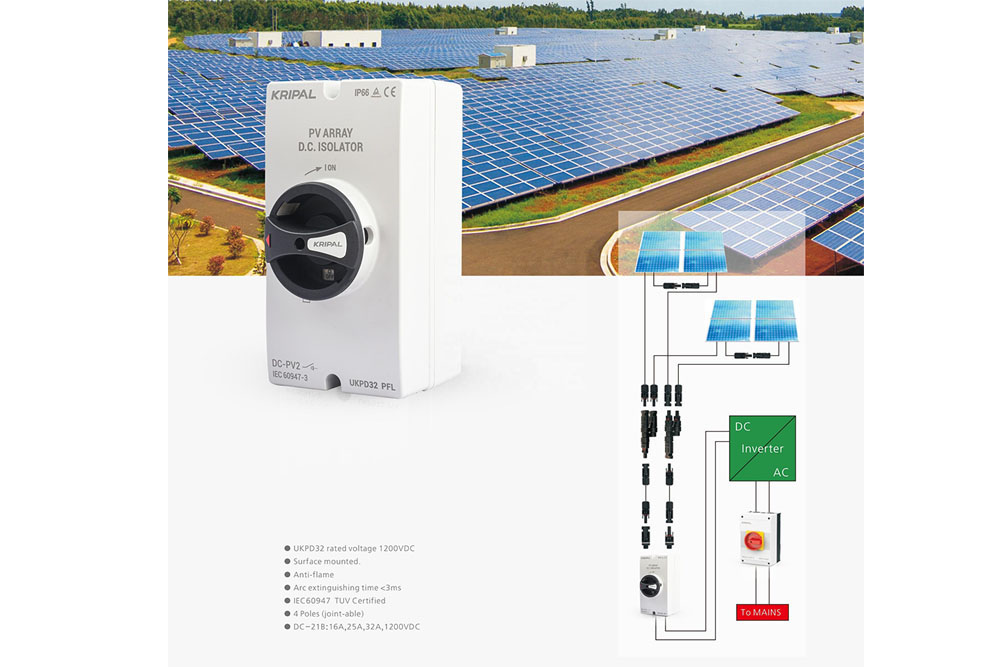
A DC isolator is a safety device that is used to disconnect a direct current circuit and is commonly applied in photovoltaic systems. Its main function is to safely disconnect the electrical connection between solar panels and the inverter during maintenance, fault handling, or emergency situations.
PV DC Isolator

Unlike standard switches, a DC isolator is specifically designed for direct current applications, which allows it to handle higher voltage levels and arc risks, thereby ensuring safer operation. In a photovoltaic system, it is usually installed between the solar modules and the inverter, which helps maintain system safety.

How the built in DC isolator in an inverter works?

The inverter’s built-in DC isolator is an integrated switching device with the same working principle as an external isolator, but in a more compact design.

During normal operation, it stays closed to let PV DC current pass into the inverter. For maintenance or emergencies, it can be manually switched off to disconnect the PV array from the inverter.

It uses arc-resistant structures to quickly break the circuit and suppress DC arcs. Some advanced models also support automatic disconnection under faults or overvoltage for better safety.

As it is integrated inside the inverter, it simplifies wiring and installation, and reduces failure risks from rain, dust and other environmental factors.

Is an additional DC isolator still required?

Regulations and standards

Whether an additional DC isolator is required depends first on local electrical regulations and industry standards. In some regions, external DC isolators were once mandatory, while in recent years, certain areas have relaxed these requirements and allow the use of only the built in isolator in the inverter.

Therefore, the latest regulations should be checked before system design and installation so that compliance issues can be avoided.

Inverter installation location and accessibility

The location of the inverter affects whether an additional isolator is needed. If the inverter is installed in an easily accessible place such as on the ground, in a garage, or on an indoor wall, the built in isolator is usually sufficient for daily operation and emergency shutdown.

If the inverter is installed on a roof or in a location that is difficult to access, an external DC isolator can provide a more convenient and safer way to disconnect power.

Safety and emergency needs

From a safety perspective, an external DC isolator provides an additional point of disconnection. In situations such as fire, electrical faults, or urgent maintenance, power can be cut off quickly without approaching the inverter, which can be beneficial in certain scenarios.

If the system is properly designed and the inverter is reliable with adequate protection functions, relying on the built in isolator is generally acceptable in many cases.

Maintenance and service convenience

During system maintenance, a DC isolator plays a significant part. An external isolator allows technicians to disconnect power before accessing the system, which improves maintenance efficiency and reduces risk.

It also provides flexibility when different parts of the system need to be tested separately. At the same time, adding external components increases system complexity and requires additional inspection and upkeep.

What are the functions of internal and external DC isolators?

Internal DC isolator

  • Equipment maintenance is supported because the DC input can be quickly disconnected when the inverter is serviced, which helps protect personnel
  • System protection is supported because it works with protection mechanisms when faults or overvoltage are detected
  • System structure is simplified because fewer external components and wiring are required, which improves reliability
  • Environmental protection is improved because it is located inside the inverter, which reduces exposure to rain and dust
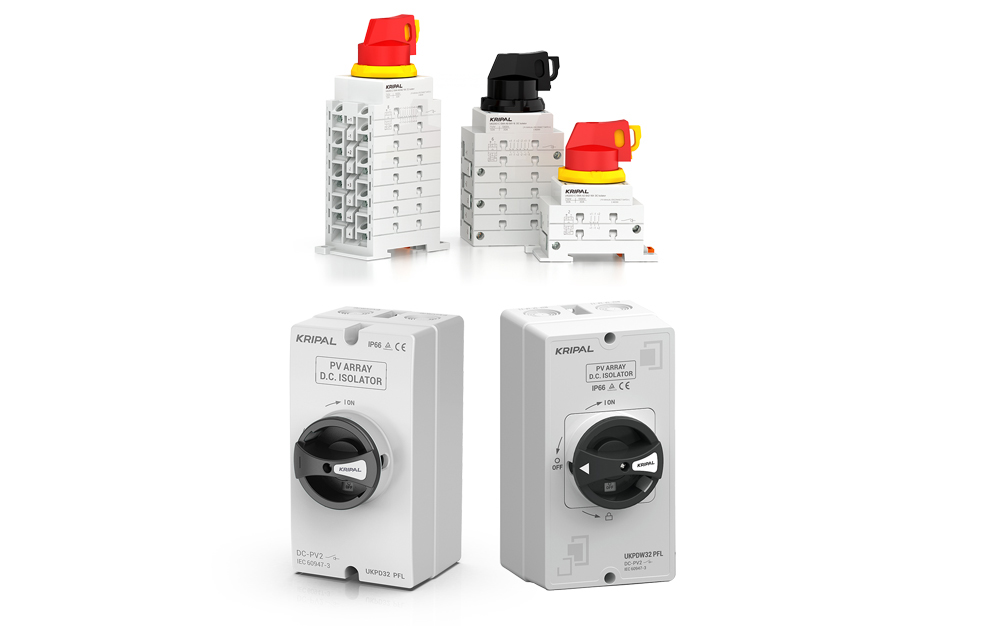
External DC isolator

  • Emergency shutdown is enabled because power can be cut off quickly during fire or accident situations without accessing the inverter
  • Operation at a distance is supported because it provides a more convenient shutdown method when the inverter is not easily accessible
  • Maintenance flexibility is improved because disconnection can be completed before system access, which enhances safety
  • Compliance is supported because it is required in certain regions
Feature Built-in (Internal) DC Isolator KRIPAL External DC Isolator
Primary Purpose Basic inverter maintenance and equipment protection. Emergency rapid shutdown and full circuit isolation.
Accessibility Limited. Must be operated at the inverter location. High. Can be mounted in accessible, ground-level locations.
Fire Safety Low. If the inverter is on fire, the switch may be unreachable. High. Provides a safe disconnection point away from the fault area.
Maintenance Depth Only isolates internal inverter components. Provides physical isolation for the entire DC run and inverter replacement.
Durability Sheltered inside the inverter casing. Specialized IP66/IP67 weather-proof and UV-resistant housing.
Arc Quenching Standard integrated mechanism. Professional Magnetic Blowout technology with <3ms switching time.
Regulatory Compliance Sufficient for basic manufacturer standards. Necessary to meet strict global standards like AS/NZS 5033 or IEC 60364.

If required, how to choose a high quality DC isolator?

Rated voltage and current

When selecting a DC isolator, its rated voltage and current should be higher than the actual system values. Common voltage ratings include 600V, 1000V, and 1500V DC, while current ratings include 16A, 32A, and 40A.

Since DC arcs are harder to interrupt, insufficient ratings can lead to safety risks, so the isolator rating should be equal to or greater than the maximum system voltage and current.

Certification and standards

High quality DC isolators should comply with international or local standards such as IEC 60947 3, UL, CE, or TUV. These certifications indicate that the product has passed strict testing for safety, durability, and arc performance.

Products with multiple certifications are generally more reliable and easier to approve during project inspection.

Protection level

If the isolator is installed outdoors, its protection level is highly relevant. Products with IP65 or IP66 ratings are recommended, as they provide strong resistance to water and dust. Resistance to ultraviolet exposure should also be considered, as long term sunlight can cause material aging and affect performance.

Arc extinguishing capability

The main difference between a DC isolator and a standard switch lies in its arc control capability. Since direct current does not have a natural zero crossing point, arcs are harder to extinguish, so specialized designs such as rapid contact separation, magnetic blowout, or special contact materials are used. The product should be specifically designed for DC applications rather than adapted from standard switches.

Conclusion

Whether an additional DC isolator is required depends on local regulations, system design, and installation conditions. Regardless of the chosen approach, ensuring that equipment meets standards, is properly installed, and offers reliable performance is the foundation for safe photovoltaic system operation.

PV Solar DC isolator switch

When choosing a high-quality DC isolator, KRIPAL’s UKPD32 series or UKGD63 series are specifically engineered for PV systems. With IP66 ratings and less than 3ms arc extinguishing time, they exceed standard safety requirements.

FAQs

Q Do you still need an external DC isolator if the inverter has one?

Generally not needed unless required by local rules.

Q Is an external DC isolator safer?

It’s easier to use in emergencies but more exposed to weather.

Q Will a DC isolator affect system efficiency?

No, it has almost no effect on efficiency when closed.

Q Is a DC isolator prone to failure?

Good ones last long; poor installation or harsh conditions may cause faults.

Q Can a standard switch be used instead of a DC isolator?

No. Standard switches can’t safely break DC circuits.

Still Unsure About Your System’s Compliance? Don’t risk your solar investment with subpar safety components. [Contact KRIPAL Experts Today] for a professional consultation or [Download Our DC Isolator Selection Guide].

How can we assist you?

Tell us a bit more so we can route your request to the right expert.